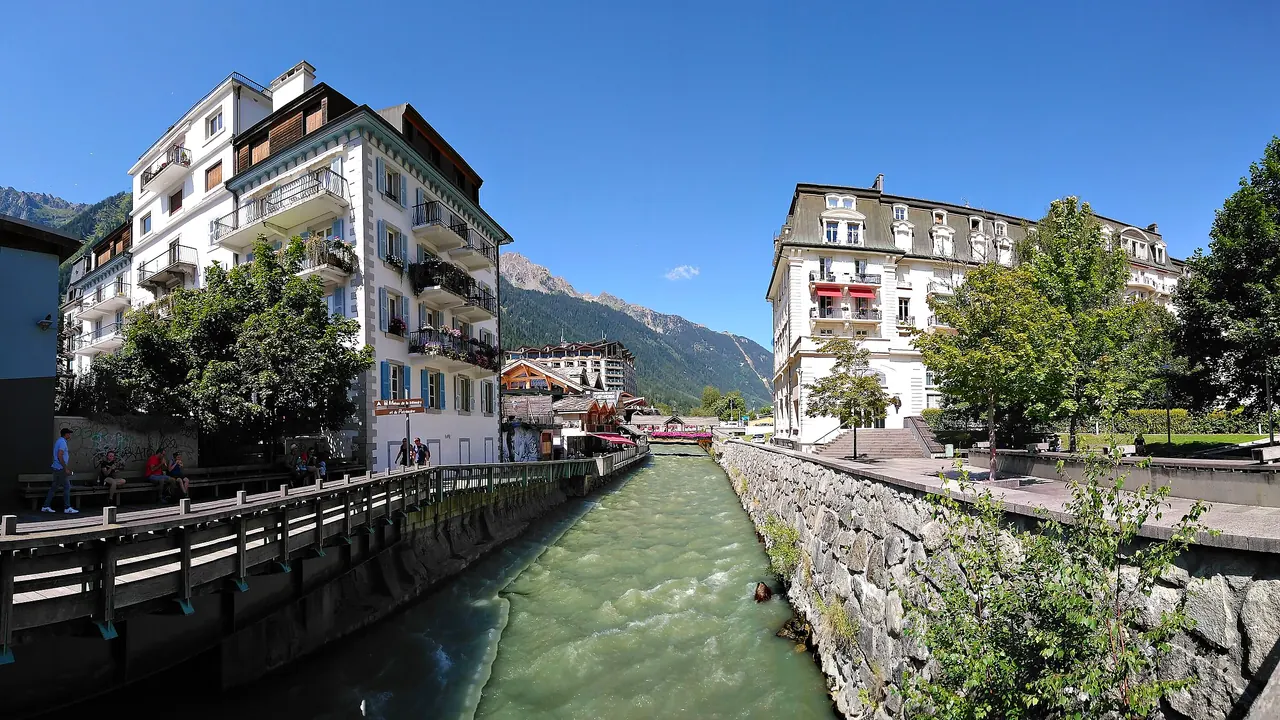
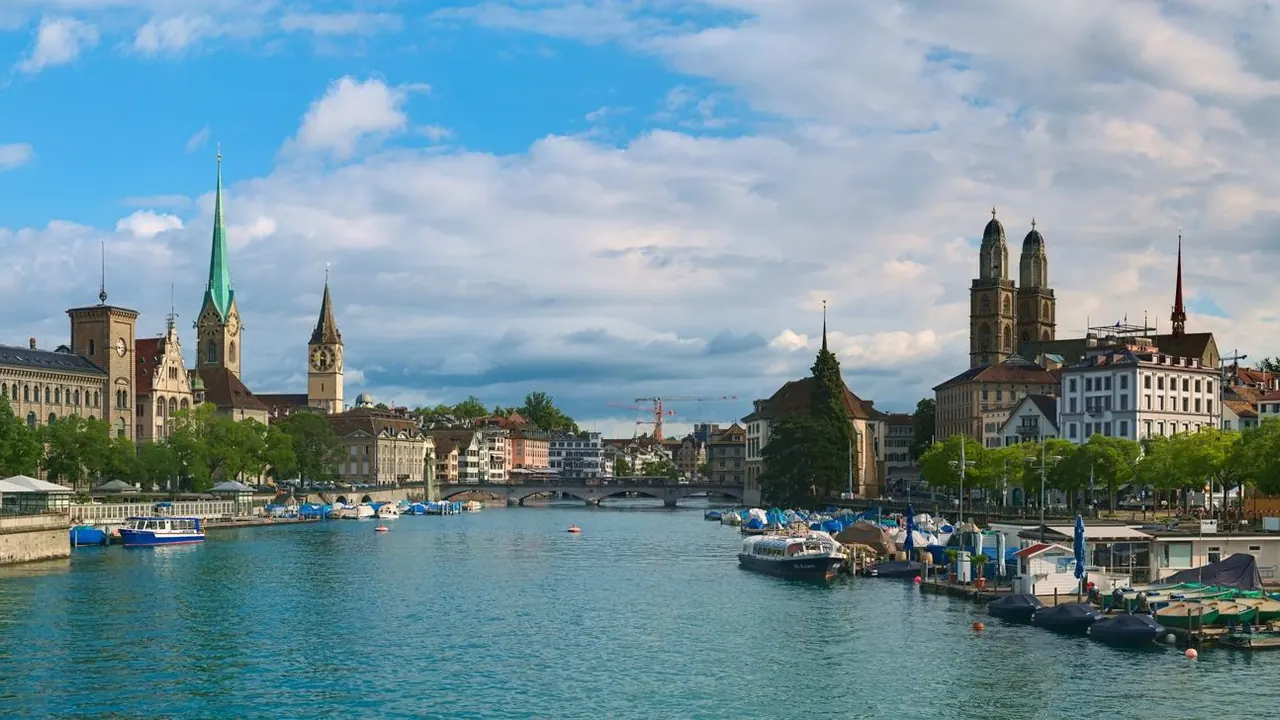
Photos: Chamonix by Tiia Monto, CC BY-SA 3.0, cropped; Zurich by Daniel Kraft, CC BY-SA 3.0, cropped.
Chamonix or Zurich?
Our verdict in twelve categories, each scored against the same fixed benchmark cities, and the climate month by month, so you can choose for your trip.
Choose Chamonix for
- nature and the outdoors
- prices
Chamonix is for travellers who come for the mountains themselves. Cable cars lift you from the town centre into glacier country, trails to Lac Blanc and the Grand Balcon start at the edge of town, and winter brings steep skiing and the Vallée Blanche. Evenings are fondue and a loud après-ski lane. Museums, concerts and shopping barely come into it, and nobody here expects them to.
Choose Zurich for
- live music and the arts
- culture and sights
- shopping
If you want a city that does a bit of everything, Zurich is the better pick. It has strong art collections, a serious opera house, clubs that run until morning, summer swimming in a clean lake and trains that reach Lucerne, Bern or the Rhine Falls in about an hour. Mountains are a day out from Zurich rather than the view from your window, and you pay even more for the comfort than you would in Chamonix.
Scoreboard
Twelve categories on one fixed scale from 0 to 100. The shaded stretch is the gap between the two.
Your match
Pick a travel style or drag the sliders, and both match scores follow your weighting.
Wins on nature and the outdoors and prices with your weighting.
Wins on live music and the arts and culture and sights with your weighting.
What matters to you?
Category by category
What the scores mean for a trip.
Beaches & swimming
Neither has a sea, but Zurich gives you far more swimming. All summer its lake is clean and clear, with wooden bathing houses and lawned lidos along the shore, and you can float down the Limmat at the Letten river baths, all within a tram ride of the old town.
In Chamonix, swimming means the municipal pool or a drive to Lac de Passy, a small mountain lake with a sandy strip facing Mont Blanc. Lake Annecy makes a fine summer day out, but in either place a swim is an afternoon off, not part of daily life.
Food & drink
Chamonix eats one way, and does it well. Expect fondue, tartiflette and raclette made with Reblochon and Beaufort from the nearby pastures, eaten on refuge terraces facing the glaciers. Away from the cheese, menus start to look alike, and many places close between seasons.
Zurich has more range. There is veal Geschnetzeltes with rösti in wood-panelled guild houses, chocolate and Luxemburgerli from the old tea rooms on Paradeplatz, and more casual international cooking around Langstrasse. You get more variety, though not more excitement, and it costs a lot.
Culture & sights
Zurich wins easily here. The Kunsthaus runs from Swiss painters to Monet and Giacometti, the National Museum fills its castle-like building by the station, and the Altstadt on both banks has the Grossmünster, the Fraumünster's Chagall glass and the guild houses. That is two or three good days.
Chamonix's heritage is the story of alpinism: the 1786 ascent of Mont Blanc, the first Winter Olympics, the Musée Alpin and the climbers' cemetery. It is interesting, but it takes half a day.
Nightlife
Zurich has a real club scene. Electronic music runs late at weekends in Kreis 4 and 5 and the old industrial spaces of Zurich West, Langstrasse mixes bars and kebab counters, and the Street Parade takes over the lake shore every August. Weeknights are calm, and rounds are very expensive.
Chamonix goes out mostly in winter. Après-ski starts at the foot of the slopes, then moves to a short lane of pubs full of guides, seasonal workers and young English-speaking visitors, with a couple of small clubs. It is sociable and loud, but small, and it fades in summer and between seasons.
Nature & outdoors
Chamonix is in a class of its own. The Mont Blanc massif rises almost 4km above the town, the Aiguille du Midi lift climbs to 3,842m, and the rack railway runs up to the Mer de Glace. From the doorstep you have mountaineering with the oldest guiding company in the world, ski touring, via ferrata and the Tour du Mont Blanc.
Zurich's outdoors are gentler. There are lakeside promenades, forest trails on the Uetliberg and boats to the lake villages, with the snowy Glarus Alps on the horizon. The high mountains of Rigi and Pilatus are a good day out, about an hour away, but Zurich does not sit among them the way Chamonix does.
Day trips
Zurich is the better base for day trips, because it sits at the hub of Swiss rail. Lucerne, Bern, Basel and St Gallen's abbey library are all about an hour or less away by train, as are the Rhine Falls and Stein am Rhein, and none of them needs a car.
Chamonix has a different strength: three countries within reach. The tunnel leads to Courmayeur and the Roman town of Aosta, Annecy and Geneva are a little over an hour away, and the Mont Blanc Express runs to Martigny. After those, mountain roads make journeys slow and most destinations are other resorts.
Good for families
Zurich suits more kinds of family. It is clean and safe, the trams take buggies, the zoo's Madagascar rainforest hall is a guaranteed hit, and the shallow lake lidos fill summer afternoons. The Technorama in Winterthur or the Transport Museum in Lucerne helps on a rainy day.
Chamonix is a fine choice for active families, with nursery slopes, sledging, the summer luge, the Merlet animal park and the little red train to the Mer de Glace. The highest lifts are too much for toddlers, though, and on a wet day there is not much else to do.
Getting around
Zurich is about as easy as cities get. Trams, S-Bahn, funiculars and even the lake boats share one ticket, services run to time, and the airport is a short train ride from the main station.
Chamonix is easy too, on a smaller scale. The flat centre is walkable, the Aiguille du Midi and Montenvers stations are in town, and valley buses and trains are free with the guest card. In winter, though, the ski buses get crowded, the evening services are thin, and reaching the spread-out ski areas takes time.
Shopping & style
Zurich is the shopping city of the two. Bahnhofstrasse runs from the station to the lake past watchmakers, jewellers and long-established department stores, and the Altstadt lanes and the Zurich West viaduct arches add boutiques and design shops.
Chamonix's shopping is specialist. Its pedestrian streets are lined with climbing and ski shops, some generations old, where serious mountaineers save up to buy their gear. Beyond that there are cheeses, génépi, crystals and souvenirs.
Affordability
Both are expensive, but Chamonix lets your money go further. Apartments and supermarkets make self-catering easy, the valley transport is free, and many trails start without a lift. The shoulder seasons are much cheaper than February, Christmas or high summer, though lifts, guides and paragliding still add up.
Zurich is among the most expensive cities in the world, with high prices for rooms, lunches, drinks and museums alike. Supermarket picnics by the lake, the free lidos and the visitor card help only a little.
Live music & performing arts
This is one of the biggest gaps between the two. Zurich has the Opernhaus on the lake shore with its full opera and ballet season, the Tonhalle Orchestra in a restored nineteenth-century hall and the Schauspielhaus, mostly in German. The Rote Fabrik and Kreis 4 venues cover jazz and indie.
Chamonix has a summer jazz festival with sets high in the mountains, some church concerts and mountain film evenings. For anything more, you go to Geneva.
Wellness & relaxation
The two are fairly close here, but they relax in different ways. In Chamonix you unwind after effort. There is a large Italian-style day spa with hot outdoor pools facing the glaciers, chalet saunas, and the warm springs of Saint-Gervais down the valley. But early starts and crowds in high season mean the town is not a quiet retreat.
Zurich is slightly better for doing nothing. The city is calm, its thermal bath fills the stone vaults of an old brewery and has a rooftop pool, and in winter the wooden lake houses become saunas with cold plunges. Roman Baden is twenty minutes away by train.
When should you go?
Pick your month. The climate figures are measured averages, not a forecast.
Chamonix in July
Zurich in July
Daytime high, °C
Rainfall in the month, mm
Where the figures come from
Chamonix's temperatures are measured 35 km from the centre, at Bourg-St-Maurice.
Chamonix has no rain gauge within 25 km of the centre, so its rainfall comes from a gridded climate dataset read at the city rather than from a gauge further away.
Temperature and rainfall are climate normals, averaged over the years shown. Chamonix: 1999-2020 (rainfall 1991-2020) normals, Bourg-St-Maurice (34.9 km from centre). Zurich: 1991-2020 normals, Zurich Town / Ville. (2.2 km from centre).
Summer is when Chamonix is at its best. June to September is the stretch for hiking and high-mountain days, and in July the valley floor warms to about 27°C, which is warmer than Zurich gets. Rain falls all through the year with no truly dry season, and it is heaviest from late autumn into winter, at about 169mm in December. Winter brings cold days in the valley, and that is the ski season. Spring and autumn sit between the two, and the weather in the high mountains can turn quickly whatever the month.
Zurich has milder summers, with highs of around 24°C in July and August, and that is when the lake is warm enough for swimming, roughly June to early September. Summer is also its wettest time of year, though it is the sunniest too, with about 225 hours of sunshine in July. Winter is the time to avoid for walking the streets. Days are cold, grey and short on sun, and fog often sits over the lake, so late spring through early autumn is the most pleasant time for sightseeing on foot.
Which traveller are you?
On an outdoors trip, Chamonix is the clear choice. You can be on a glacier by cable car from the town centre, the Tour du Mont Blanc and the Lac Blanc trails start from the valley, and climbing, paragliding and steep skiing are all on hand.
For a culture and arts trip, choose Zurich. The Kunsthaus, the Swiss National Museum, the Chagall windows of the Fraumünster and a full opera and ballet season will fill several days. Chamonix offers a mountaineering museum and very little stage life.
For a short city break, Zurich works better. The airport train drops you in the centre, trams cover everything on one ticket, and in a long weekend you can fit in the Altstadt, a lake swim in summer and a night out in Kreis 4 or 5.
Before you go
| Measure | Chamonix | Zurich |
|---|---|---|
| Official language | French | French, German, Italian, Romansh |
| Currency | Euro (EUR) | Swiss Franc (CHF) |
| Sockets | CE230 V, 50 Hz | CJ230 V, 50 Hz |
| Driving side | Right | Right |
| Time zone | UTC+1, UTC+2 in summer | UTC+1, UTC+2 in summer |
| Emergency number | 112 | 112 |
| Elevation | 995 m | 408 m |
| Main airport | Geneva International Airport (GVA)68 km from centre150 non-stop destinations | Zürich Airport (ZRH)9 km from centre226 non-stop destinations |
| Public holidays this year | 11 days | 10 days |
By the numbers
| Measure | Chamonix | Zurich |
|---|---|---|
| City population | 8,705 | 440,935 |
| People per km² | 75 | 5,016 |
| Museums within 10 km | 3 | 63 |
| UNESCO World Heritage sites within 50 km | 0 | 1 |
Where else could you go?
Every comparison below shares a destination with this one, so you can follow Chamonix or Zurich somewhere new.
- Lucernevs Zurich
- Annecyvs Chamonix
- Genevavs Chamonix
- Lausannevs Chamonix
- Baselvs Zurich
- Interlakenvs Zurich