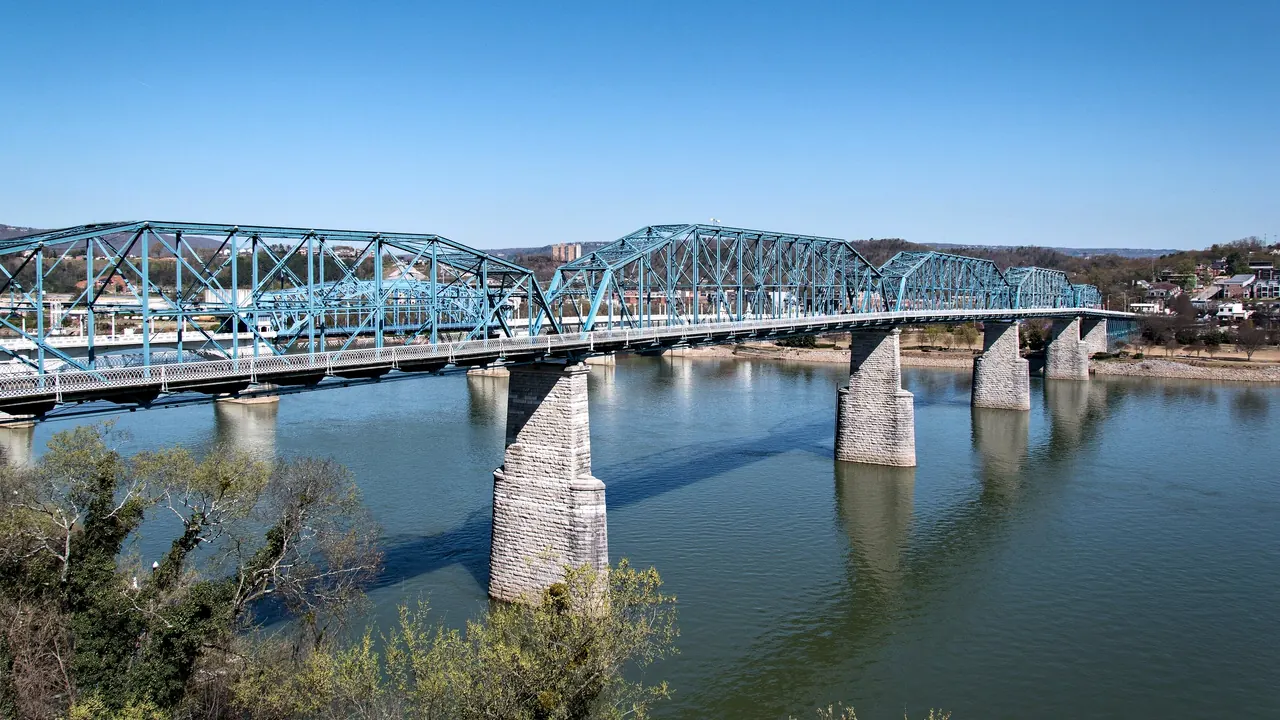
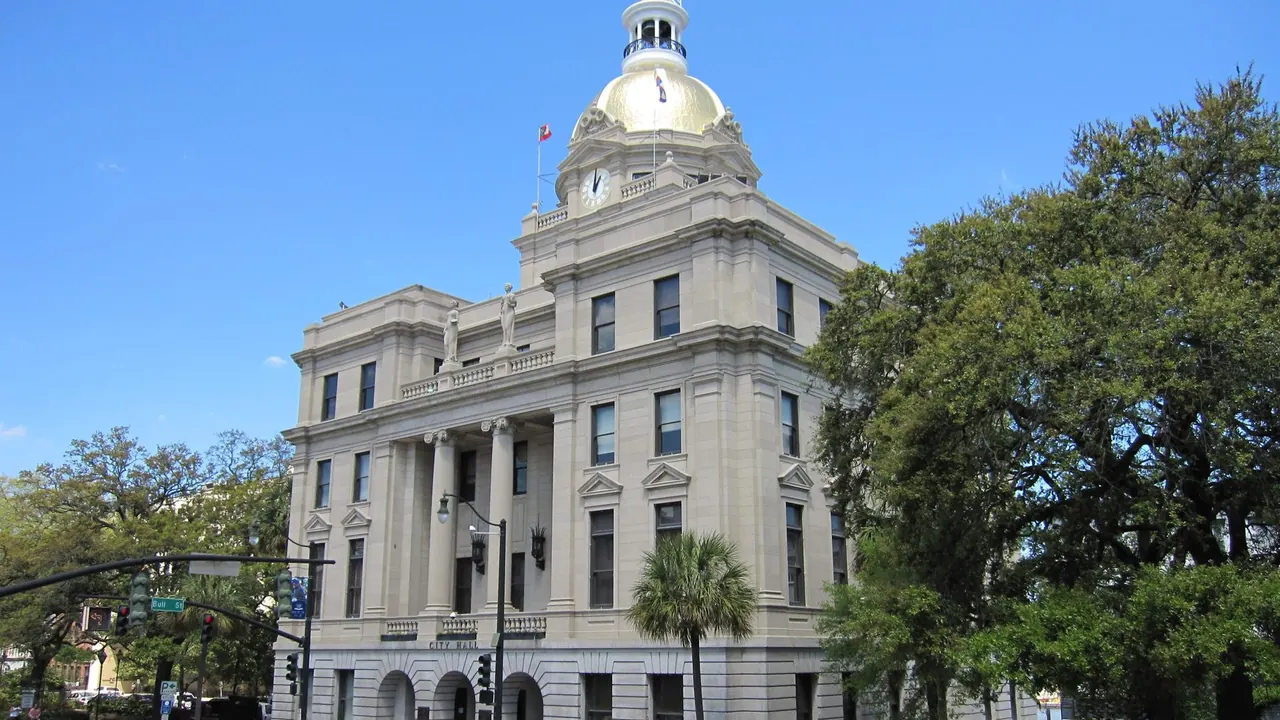
Photos: Chattanooga by Ɱ, CC BY-SA 4.0, cropped; Savannah by Chris M Morris, CC BY 2.0, cropped.
Chattanooga or Savannah?
Our verdict in twelve categories, each scored against the same fixed benchmark cities, and the climate month by month, so you can choose for your trip.
Choose Chattanooga for
- nature and the outdoors
- families
- prices
Chattanooga is the pick for an active trip. The mountains rise straight out of town, so climbing, hiking, mountain biking and river paddling are all close at hand, and the aquarium, the Incline Railway and Ruby Falls make it easy with children. Come for the ridges and the river, and don't expect much from the city once the sun goes down.
Choose Savannah for
- beaches
- culture and sights
- getting around
Savannah suits travellers who want the place itself to be the attraction. The garden squares, old houses and live oaks make every walk worthwhile, the Lowcountry cooking has more character, and evenings are more sociable. Tybee Island also gives it a real Atlantic beach, which Chattanooga cannot match.
Scoreboard
Twelve categories on one fixed scale from 0 to 100. The shaded stretch is the gap between the two.
Your match
Pick a travel style or drag the sliders, and both match scores follow your weighting.
Wins on nature and the outdoors and families with your weighting.
Wins on beaches and culture and sights with your weighting.
What matters to you?
Category by category
What the scores mean for a trip.
Beaches & swimming
Savannah has a beach and Chattanooga does not. Tybee Island is about half an hour's drive away and has wide, flat Atlantic sand and warm summer water. The sea is greenish-brown from the marshes, but it is good for a lazy day and for children paddling.
Chattanooga is far inland, so swimming means small lake beaches at Chickamauga and Harrison Bay or cool swimming holes on the plateau. These are fine for an hour on a hot afternoon, not for a beach day.
Food & drink
Both cities cook Southern food, but Savannah's is more distinctive and more interesting. Its Lowcountry dishes are built around the coast: wild Georgia shrimp, she-crab soup, oyster roasts and family-style dining rooms where platters are passed down long tables. On top of that it has a small group of serious chef-led restaurants in restored townhouses.
Chattanooga's food is inland and plainer: meat-and-three plates, barbecue, catfish and biscuits, with the better restaurants and breweries on the Southside and Main Street. Neither city offers much beyond Southern cooking, but Savannah gives a food lover more to look for.
Culture & sights
In Savannah, the city itself is the main sight. Oglethorpe's grid of shaded squares, the Federal and Greek Revival houses, Factors Walk and Bonaventure Cemetery reward slow walking, and the Telfair Museums and Owens-Thomas House add depth.
Chattanooga's history is spread more widely and is more military. The Civil War battlefields on Lookout Mountain and Missionary Ridge, the old Terminal Station, the Hunter Museum and the Walnut Street Bridge make two or three good days, but the centre has nothing like Savannah's setting.
Nightlife
Savannah is the livelier place for a night out. Drinks in to-go cups are allowed in the historic district, so an evening moves from River Street to City Market to cocktail rooms in old townhouses, and art students keep the dive bars busy. Weekends can be loud, and St Patrick's Day is huge.
Chattanooga's evenings are quieter: breweries, cocktail bars and patios on the Southside, with Station Street as its busiest block. Both cities close early and neither has much club life.
Nature & outdoors
This is where Chattanooga is clearly stronger. The Tennessee River cuts through the Cumberland Plateau right at the city, so climbing bluffs, hang-gliding launches, gorge paddling and mountain-bike trails are all minutes away. The Ocoee whitewater, Cloudland Canyon and Fall Creek Falls are within easy reach.
Savannah's landscape is low and watery: salt marsh, tidal creeks and barrier islands, best seen by kayak, on a dolphin-spotting boat or with binoculars for the herons and wood storks. It is lovely but gentle, with no hills, and summer insects and humidity make outings tiring.
Day trips
Savannah has the better trips out, starting with Charleston, about two hours north. Beaufort, Hilton Head, Fort Pulaski and the Georgia islands of Jekyll and St Simons are all closer, so a week can include several coastal towns.
From Chattanooga the main options are bigger cities: Nashville or Atlanta, each about two hours away, plus the rocket centre at Huntsville and the Jack Daniel's distillery at Lynchburg. Both cities need a car for almost all of these trips.
Good for families
Chattanooga is easier with children. The riverfront aquarium and the Creative Discovery Museum are a few blocks apart, Lookout Mountain has the Incline Railway, Ruby Falls and Rock City, and the carousel and splash fountains in Coolidge Park fill a spare afternoon.
Savannah works for families but is not built around them. Children get trolley tours, the free ferry, forts, ghost walks for older ones and a day at Tybee with its sea-turtle centre, but there is no aquarium or theme park, and summer heat makes long walks hard for small children.
Getting around
Savannah is the easier city without a car. The historic district is flat and compact, most hotels, restaurants and sights are a short walk apart, and a free shuttle and a small ferry fill the gaps.
Chattanooga's walkable core is smaller, linked across the river by the Walnut Street Bridge and its own free shuttle, but its main attractions are out of town. Lookout Mountain, the trails and the climbing areas all mean driving, so most visitors hire a car. In Savannah you only need one for Tybee, Wormsloe and day trips.
Shopping & style
Neither city is a reason to shop, but Savannah makes a better afternoon of browsing. Broughton Street has boutiques and home-goods shops, and the art school's influence shows in shops selling students' work, with antique dealers and bookshops around the squares.
Chattanooga's speciality is outdoor gear, found with small boutiques along Frazier Avenue and in the converted Warehouse Row. For everything else, it has a big mall out of town.
Affordability
Chattanooga's costs come from what you do rather than where you sleep. Rooms and casual meals cost less than in the big American cities, and the trails, parks and riverfront walks are free, but full admissions at the aquarium and on Lookout Mountain, plus a hire car and fuel, add up quickly for a family.
In Savannah the room is the big expense, since inns in the historic district are priced for a popular weekend destination and spring weekends push them higher still. Against that, its main pleasures cost nothing: walking the squares, Forsyth Park and the riverfront. If you stay downtown, you may not need a car at all. Overall, the two cities cost about the same, just in different ways.
Live music & performing arts
Both cities offer a modest programme, but at different times. Savannah's comes in seasons: the spring music festival fills historic theatres and churches with chamber music, jazz and blues, and an autumn jazz festival takes over Forsyth Park.
Chattanooga's is steadier through the year: touring shows and the symphony and opera at the gilded Tivoli Theatre, plus bluegrass and Americana bands in Southside bars. If you can plan your dates, Savannah's spring festival is worth timing a trip around.
Wellness & relaxation
Neither city has a spa culture, so rest here means pace rather than treatments. Savannah does slowness better: a bench under the oaks or a courtyard in a quiet inn on one of the southern squares makes for an easy, idle day, though River Street at weekends breaks the calm.
Chattanooga is quiet enough, with porches in Bluff View and an unhurried riverfront, but people come here to climb and hike, not to rest.
When should you go?
Pick your month. The climate figures are measured averages, not a forecast.
Chattanooga in July
Savannah in July
Daytime high, °C
Rainfall in the month, mm
Temperature and rainfall are climate normals, averaged over the years shown. Chattanooga: 1991-2020 (sunshine 1981-2010) normals, Lovell Field (6.3 km from centre). Savannah: 1991-2020 (sunshine 1981-2010) normals, Savannah Airport (9.9 km from centre).
Chattanooga has proper seasons. Winter highs are around 11°C in January, July and August are hot and humid, and rain falls steadily all year, with the wettest months in winter and early spring. The best months for walking and the trails are April, May and October: warm days, plenty of sun and green or turning woods.
Savannah is milder in winter, at around 16°C in January, which makes it a pleasant place to walk the squares from November to March. Summer is harder going, with highs near 34°C in July and the heaviest rain in June, at about 169mm, mostly as afternoon storms. The sea at Tybee reaches 29°C by midsummer and stays warm enough for swimming from late May into October. Spring and autumn are the best seasons in both cities, but Savannah's good season lasts longer through the winter.
Which traveller are you?
For an outdoors trip, choose Chattanooga. Lookout, Signal and Raccoon Mountains are right above town, with sandstone bluffs for climbing, trails in Prentice Cooper and paddling in the Tennessee River Gorge. Savannah's flat marshes are better for gentle kayaking and birdwatching.
On a culture and arts trip, Savannah gives you more. Its 1733 plan of garden squares, the Telfair Museums and the Owens-Thomas House reward days of walking. Chattanooga's Civil War sites and the Hunter Museum add up to a shorter, thinner list.
On a family trip with young children, Chattanooga is better set up. It has the two-building Tennessee Aquarium, a children's museum, the Incline Railway, Ruby Falls and Rock City. Savannah has trolleys, forts and the beach at Tybee, but no aquarium, zoo or theme park.
Before you go
| Measure | Chattanooga | Savannah |
|---|---|---|
| Currency | US Dollar (USD) | US Dollar (USD) |
| Sockets | AB120 V, 60 Hz | AB120 V, 60 Hz |
| Driving side | Right | Right |
| Time zone | UTC-5, UTC-4 in summer | UTC-5, UTC-4 in summer |
| Emergency number | 911 | 911 |
| Elevation | 206 m | 15 m |
| Main airport | Chattanooga Metropolitan Airport (Lovell Field) (CHA)6 km from centre15 non-stop destinations | Savannah Hilton Head International Airport (SAV)12 km from centre39 non-stop destinations |
| Public holidays this year | 13 days | 12 days |
By the numbers
| Measure | Chattanooga | Savannah |
|---|---|---|
| City population | 181,099 | 147,780 |
| People per km² | 484 | 524 |
| Museums within 10 km | 7 | 19 |
| UNESCO World Heritage sites within 50 km | 0 | 0 |
| Swim season, months above 21 °C | - | 6 months |
Where else could you go?
Every comparison below shares a destination with this one, so you can follow Chattanooga or Savannah somewhere new.
- Charlestonvs Savannah
- Atlantavs Chattanooga
- Pigeon Forgevs Chattanooga
- Gatlinburgvs Chattanooga
- Nashvillevs Chattanooga
- St. Augustinevs Savannah