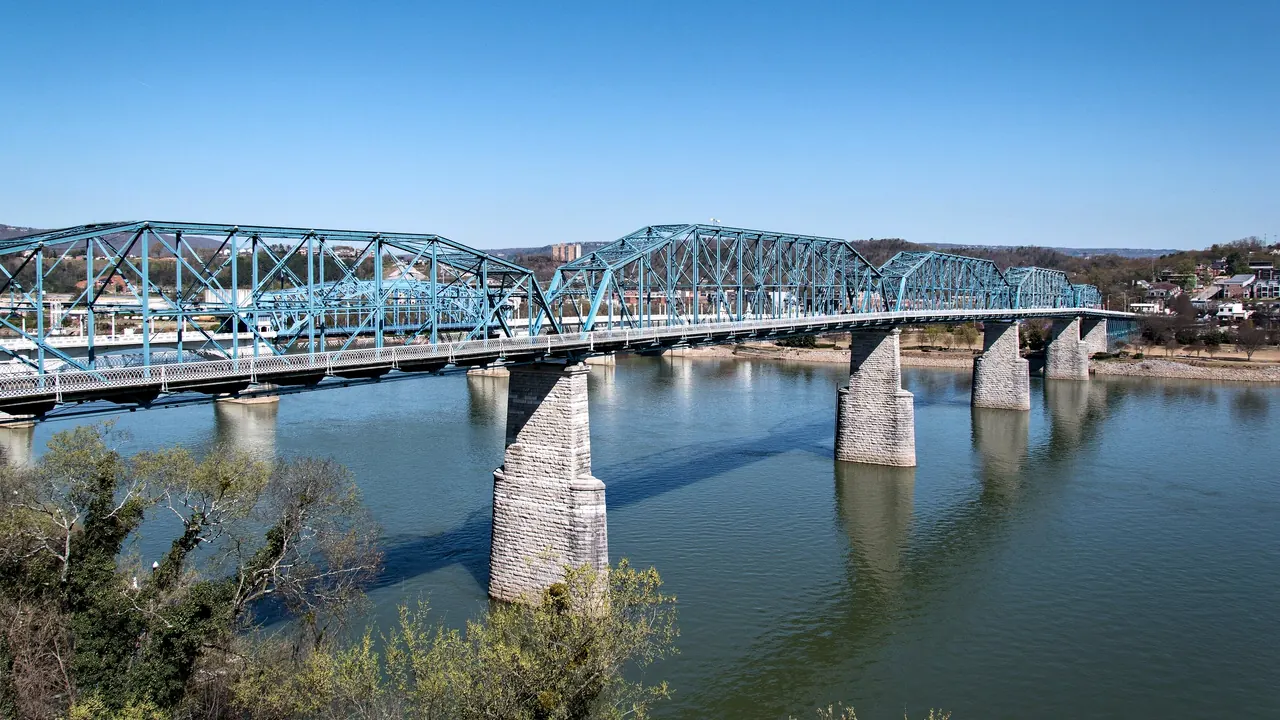
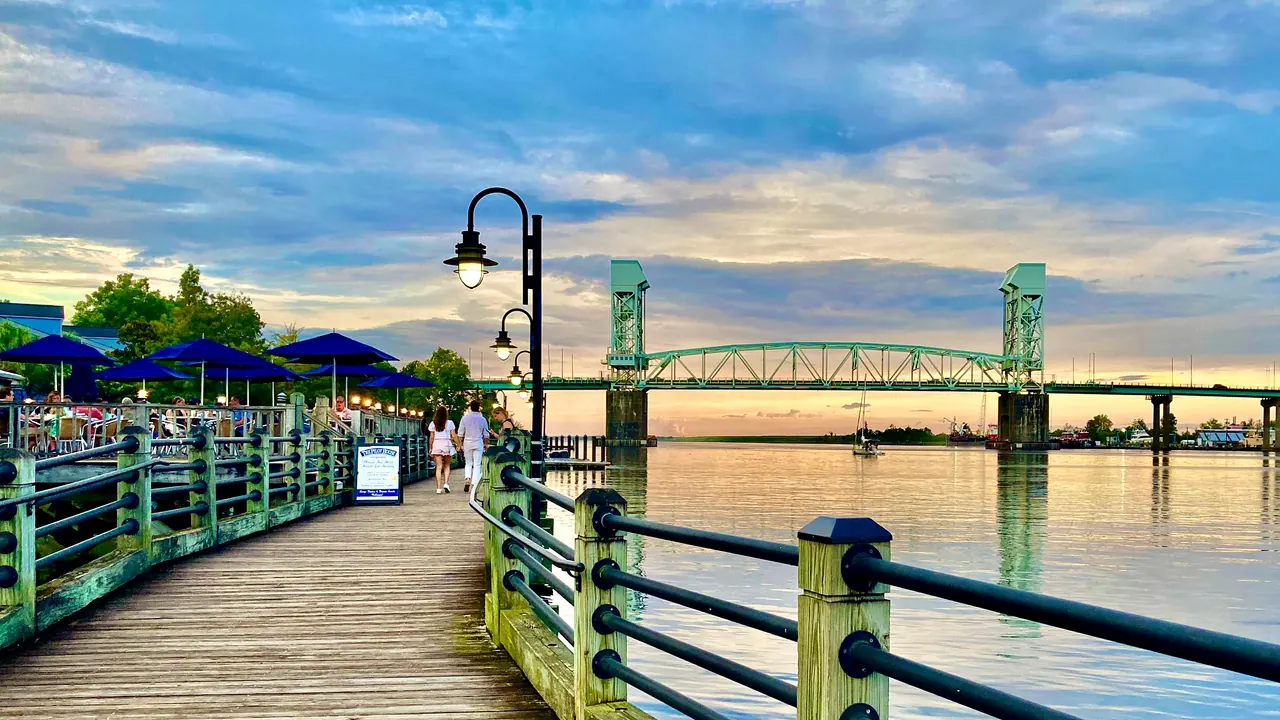
Photos: Chattanooga by Ɱ, CC BY-SA 4.0, cropped; Wilmington by Unexpected Snacks, CC BY-SA 4.0, cropped.
Chattanooga or Wilmington?
Our verdict in twelve categories, each scored against the same fixed benchmark cities, and the climate month by month, so you can choose for your trip.
Choose Chattanooga for
- nature and the outdoors
- day trips
- getting around
Chattanooga is the pick for travellers who want to be active. It sits among forested ridges and sandstone bluffs, with climbing, hang gliding, whitewater and waterfall hikes all within easy reach. Its family attractions are close together on the riverfront and up Lookout Mountain, and the walkable centre gives you more to do without the car.
Choose Wilmington for
- beaches
- nightlife
- wellness
Wilmington is for anyone whose ideal day ends with sand on their feet. Three different beach towns lie within half an hour, the Atlantic is warm through summer, and a brick historic district gives you something to do in the evening. Nights out are a little livelier, and the pace is slower and easier to unwind into, which makes it the better choice for a relaxed summer trip by the sea.
Scoreboard
Twelve categories on one fixed scale from 0 to 100. The shaded stretch is the gap between the two.
Your match
Pick a travel style or drag the sliders, and both match scores follow your weighting.
Wins on nature and the outdoors and day trips with your weighting.
Wins on beaches and nightlife with your weighting.
What matters to you?
Category by category
What the scores mean for a trip.
Beaches & swimming
This is the biggest gap between the two. Wilmington has proper Atlantic beaches: the wide pale sand of Wrightsville, Carolina Beach's boardwalk and quieter Kure, with the sea warm from late May into October. Watch for rip currents and the summer parking hunt.
Chattanooga is a long way from any coast. Swimming there means roped-off lake areas at Chickamauga and Harrison Bay or a cool creek pool on the plateau, which is fine for an hour on a hot afternoon but not a beach trip.
Food & drink
The two eat about equally well, from different kitchens. Chattanooga is inland Southern cooking: meat-and-three plates, fried chicken, biscuits and smoked brisket, with the best restaurants and breweries around the Southside and Main Street. Wilmington cooks from the coast, with local shrimp, flounder and oyster bars and the vinegar-sauced whole-hog barbecue of eastern North Carolina. Neither offers much international food.
Culture & sights
Each city has two or three days of sightseeing, of different kinds. Chattanooga's history is military and industrial: the 1863 battlefields on Lookout Mountain and Missionary Ridge, the old Terminal Station, and the Hunter Museum of American Art up on its bluff.
Wilmington's appeal is the historic district itself, with streets of antebellum and Victorian houses under live oaks, the Bellamy Mansion's account of the old port's enslaved labour, and the Second World War battleship moored across the river.
Nightlife
Wilmington gives you more of a night out. On weekends Front Street fills with students in its bars, pubs and rooftop terraces, and in summer the beach towns add bars on the sand.
Chattanooga's evenings are quieter. You get brewery taprooms, cocktail bars and the short strip on Station Street, and most places wind down early. Neither city has real club life.
Nature & outdoors
Here Chattanooga clearly leads, because of its terrain. The Tennessee River cuts through the Cumberland Plateau, and you can climb sandstone, launch a hang glider from Lookout Mountain, mountain-bike Prentice Cooper or raft the Olympic water of the Ocoee, with Cloudland Canyon and Fall Creek Falls within a drive.
Wilmington's outdoors is flat and wet: salt marsh, tidal creeks and longleaf pine. It is very good for kayaking out to Masonboro Island, surfing and fishing, and for seeing wild Venus flytraps, but there is no high ground to walk up.
Day trips
Chattanooga has more to reach. Nashville and Atlanta are each about two hours by car, Huntsville's rocket centre is closer, and the Jack Daniel's distillery town and Sewanee make quieter outings.
Wilmington's trips are mostly small coastal towns: riverside Southport and the ferry to car-free Bald Head Island, Fort Fisher, and colonial New Bern and Beaufort further north. They make pleasant days, but there is no large city within easy reach.
Good for families
Chattanooga is slightly easier with children because its attractions are close together. The two-building Tennessee Aquarium, the Creative Discovery Museum, the carousel in Coolidge Park, and Ruby Falls and Rock City on the mountain will fill several days.
Wilmington works best for families in summer, when the beach and the rides on the Carolina Beach boardwalk are the main draw. The aquarium at Fort Fisher and the battleship cover rainy days, but they are further apart.
Getting around
Both centres are walkable, but Chattanooga's covers more ground. The riverfront, Bluff View and the Southside are within walking distance, the Walnut Street Bridge crosses to the North Shore, and a free shuttle runs through downtown.
In Wilmington you are on foot only in the historic district and on the riverwalk. The beaches are 15km or more away along suburban roads, so you will be in a car most days, often in summer traffic.
Shopping & style
Neither is a shopping destination, and the small shops each has differ. Chattanooga's speciality is outdoor gear, found along Frazier Avenue and in the converted Warehouse Row. Wilmington has antique dealers, bookshops and galleries on Front Street and in the Cotton Exchange, plus surf wear in the beach towns.
Affordability
The two cost about the same, but the spending falls in different places. In Chattanooga the outlay goes on full-price admission for the aquarium and the mountain attractions, though the trails and the shuttle are free. In Wilmington it rises with the season, when beachfront rooms and rental houses fill up in summer, so a visit outside summer costs noticeably less. In both cities you should allow for a hire car, sales tax and tipping.
Live music & performing arts
The two are about level on stage life, and the difference is mostly in where it happens. Chattanooga's is largely indoors. The gilded 1920s Tivoli Theatre and the Walker Theatre take touring shows and the small symphony and opera company, a community theatre on the North Shore puts on plays and musicals, and the bar bands on the Southside lean towards bluegrass and Americana.
Wilmington's anchor is Thalian Hall, a restored 19th-century opera house, along with a community symphony and several small theatre companies. In the warm months the music moves outside to stages by Greenfield Lake and on the riverfront, and long-standing jazz and blues festivals are also part of the city's year. Neither city is worth the trip for its stages alone.
Wellness & relaxation
Wilmington is the better place to unwind. It has resort spas near the beaches and yoga studios, and calm evenings on the waterfront. Outside summer weekends the town is quiet.
Chattanooga offers little beyond hotel spas, a slow afternoon in Bluff View and an unhurried riverfront. People go there to be active, and neither city has thermal baths or a proper spa retreat.
When should you go?
Pick your month. The climate figures are measured averages, not a forecast.
Chattanooga in July
Wilmington in July
Daytime high, °C
Rainfall in the month, mm
Temperature and rainfall are climate normals, averaged over the years shown. Chattanooga: 1991-2020 (sunshine 1981-2010) normals, Lovell Field (6.3 km from centre). Wilmington: 1991-2020 normals, Wilmington / The Palms Mobile Home Park (5.3 km from centre).
Chattanooga is at its best in April and May and again from late September through October, when days are warm enough for the trails and bluffs without the heavy humidity. From June to August highs reach about 32°C, too sticky for long hikes in the middle of the day. Winters are cool, and rain falls fairly steadily all year, a little more in the cold months.
Wilmington is milder through the winter, and the beach season is what matters there. The sea reaches about 28°C in August and stays pleasant from late May into October. The catch is late summer, when rain builds to a peak of around 221mm in September and showers come with the heat. June and October give the best balance: the sea is already or still warm, at about 26°C in June, the days are sunny and there is much less rain than in August and September.
Which traveller are you?
For a beach and sun trip, Wilmington is the clear choice. Wrightsville, Carolina and Kure beaches all lie a short drive away and the Atlantic is warm for months. Chattanooga can only offer lake swimming areas and creek pools on the plateau.
On an outdoors trip, Chattanooga comes out ahead. Ridges rise straight above town, there are climbing bluffs, gorge paddling and the Ocoee whitewater, and the waterfalls are within an hour or two. Wilmington's flat marshes and barrier islands suit kayaking and fishing, but there are no hills to hike.
On a family trip with children, Chattanooga gives you more to fill the days. The riverfront aquarium, the discovery museum, the Incline Railway and Ruby Falls are all close together. Wilmington is a good option if a beach rental house is the main point of the trip.
Before you go
| Measure | Chattanooga | Wilmington |
|---|---|---|
| Currency | US Dollar (USD) | US Dollar (USD) |
| Sockets | AB120 V, 60 Hz | AB120 V, 60 Hz |
| Driving side | Right | Right |
| Time zone | UTC-5, UTC-4 in summer | UTC-5, UTC-4 in summer |
| Emergency number | 911 | 911 |
| Elevation | 206 m | 9 m |
| Main airport | Chattanooga Metropolitan Airport (Lovell Field) (CHA)6 km from centre15 non-stop destinations | Wilmington International Airport (ILM)5 km from centre25 non-stop destinations |
| Public holidays this year | 13 days | 14 days |
By the numbers
| Measure | Chattanooga | Wilmington |
|---|---|---|
| City population | 181,099 | 115,451 |
| People per km² | 484 | 839 |
| Museums within 10 km | 7 | 2 |
| UNESCO World Heritage sites within 50 km | 0 | 0 |
| Swim season, months above 21 °C | - | 6 months |
Where else could you go?
Every comparison below shares a destination with this one, so you can follow Chattanooga or Wilmington somewhere new.
- Myrtle Beachvs Wilmington
- Atlantavs Chattanooga
- Pigeon Forgevs Chattanooga
- Gatlinburgvs Chattanooga
- Nashvillevs Chattanooga
- Charlestonvs Wilmington