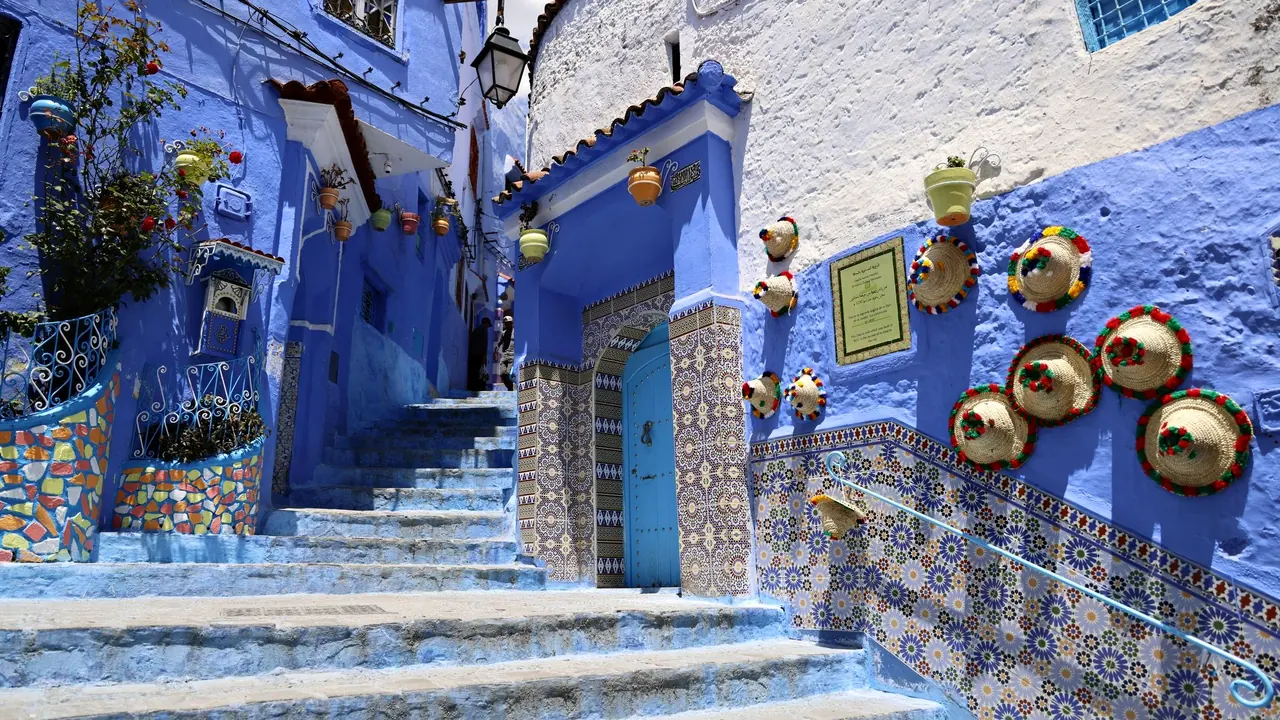
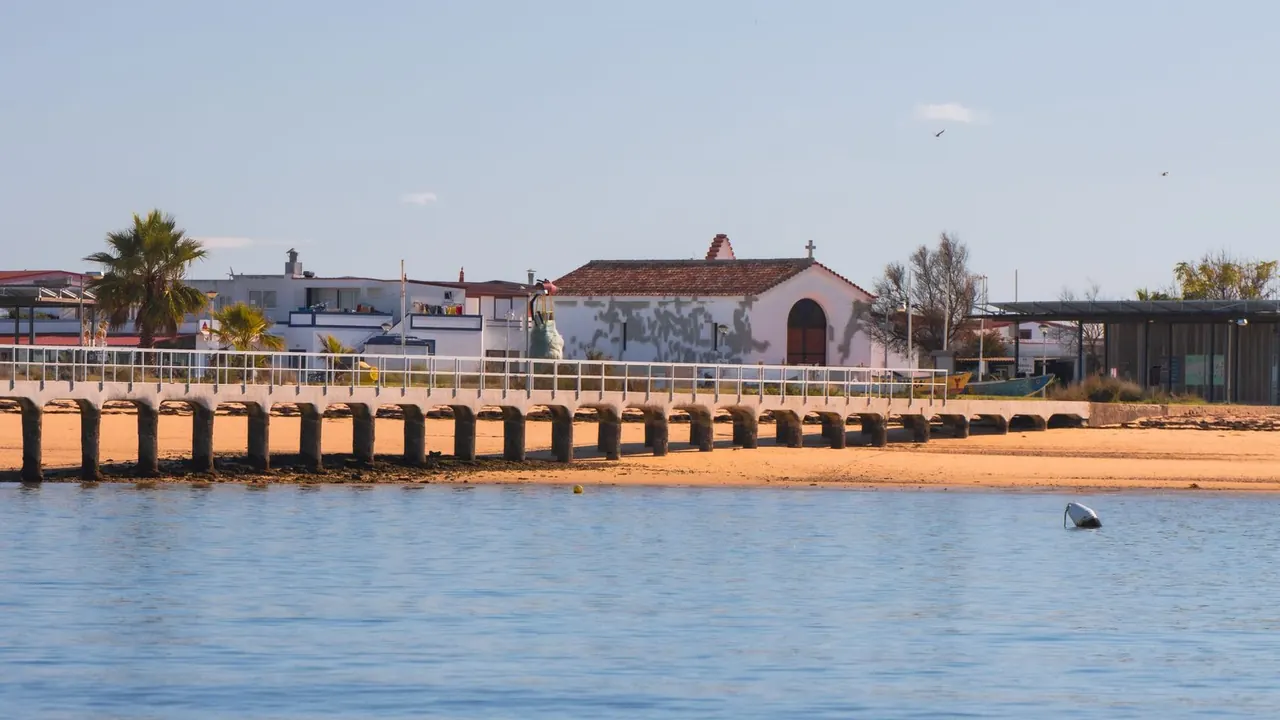
Photos: Chefchaouen by Christophe RASCLE, Pexels License; Faro by Vitor Oliveira, CC BY-SA 2.0, cropped.
Chefchaouen or Faro?
Our verdict in twelve categories, each scored against the same fixed benchmark cities, and the climate month by month, so you can choose for your trip.
Choose Chefchaouen for
- prices
- wellness
- nature and the outdoors
Chefchaouen suits the traveller who wants to slow right down for a few days in a blue-washed mountain medina, with the Rif hills starting at the town walls. It is the better pick for walkers heading into Talassemtane, for anyone on a tight budget, and for those who like quiet evenings over mint tea instead of a night out. It is best as a stop on a longer route through northern Morocco, not as a base for a week.
Choose Faro for
- beaches
- day trips
- families
Faro is the stronger choice for a sun-and-sand trip with more to do around it. The barrier-island beaches, the easy train to Tavira and Olhão, the gentle lagoon and the child-friendly pace make it the better base for families and for anyone who wants to see the wider Algarve. It costs more, but in return you get swimming, seafood with a glass of wine and an evening out.
Scoreboard
Twelve categories on one fixed scale from 0 to 100. The shaded stretch is the gap between the two.
Your match
Pick a travel style or drag the sliders, and both match scores follow your weighting.
Wins on prices and wellness with your weighting.
Wins on beaches and day trips with your weighting.
What matters to you?
Category by category
What the scores mean for a trip.
Beaches & swimming
This is where the two part company most. Chefchaouen is inland in the Rif, and the sea means a grand taxi down to the grey sand at Oued Laou, a day out you have to plan. The cold river pools at Akchour are only good for a quick dip.
Faro's beaches are a short bus or ferry ride away on the Ria Formosa islands, where Ilha Deserta and Culatra offer kilometres of sand backed by dunes and calm water. Neither town has the sea at its door, but only Faro makes a beach trip easy.
Food & drink
Faro eats better, mainly because of the lagoon: clams, oysters and cockles from the Ria Formosa, fish grilled and sold by weight, and cataplana, with Olhão's markets one stop up the line and wine on every table. It is honest regional food rather than a reason to go.
Chefchaouen's restaurants mostly repeat the same menu of tagine and couscous. The rewards are local and simple: Rif goat cheese wrapped in palm leaf, bissara for breakfast, and bread from the communal ovens. With alcohol scarce, there is little to explore after a few meals.
Culture & sights
The two are fairly evenly matched, and both can be seen in a day or two, but the experience is different. In Chefchaouen the sight is the whole town: a medina founded by Andalusian refugees, with blue stairways, tiled doorways and the red-walled kasbah on Outa el-Hammam. You take it in by wandering and photographing rather than by visiting.
Faro offers separate monuments in a small walled Cidade Velha: the cathedral with its lagoon view, a Roman mosaic in a convent cloister, and the bone-lined Capela dos Ossos at the Carmo church. These sights are more varied, but the setting is less striking.
Nightlife
Chefchaouen goes quiet after dinner. There is a stroll through the lit lanes and tea in the square, alcohol is limited to a couple of hotel bars, and that is all. Faro is no party town either, but Rua do Prior and the marina lanes have terraces and a few small clubs that stay open late, especially in term time. Albufeira's big clubs are about forty minutes away if you want more.
Nature & outdoors
Chefchaouen has the edge for anyone who wants to walk. Paths climb from Ras el-Maa into the Rif, and the gorge at Akchour leads to waterfalls and God's Bridge. Talassemtane's cedar forests hold Barbary macaques. Trails are poorly marked, so a guide helps.
Faro's nature is flat and watery rather than mountainous. You kayak or paddleboard the Ria Formosa channels, watch flamingos and spoonbills on the salt pans at Ludo, and cycle along the lagoon. Hill walking in the Serra do Caldeirão is gentler than anything in the Rif.
Day trips
Faro wins easily as a base. Tavira, Olhão, Loulé and the Roman ruins at Milreu are all close, Silves, Lagos and Sagres make longer outings, and Seville is reachable for a long day across the border.
From Chefchaouen, Tetouan's large UNESCO-listed medina is the one strong day out, with Martil's coast beyond it. Tangier and Fes are far enough to make better next stops than return trips.
Good for families
Faro is much easier with children. There are sandy, gentle lagoon beaches, boat rides to the islands, a hands-on science centre and a compact, flat old town. The Algarve's marine and water parks are within half an hour or so by car, and Portuguese restaurants welcome children late into the evening.
Chefchaouen is calm and friendly to children, with little traffic in the medina. But the stepped lanes defeat pushchairs, there is little aimed at children, and offers of hashish in the lanes are awkward. It works best as a short stop with older children who can manage the climbs.
Getting around
Faro is the easier town to move around. Its centre is small and flat, the airport is close, buses reach Praia de Faro, and ferries leave from the quay below the walls. A slow coastal railway links the main towns, although a hire car still helps for inland villages and the west.
Chefchaouen can be crossed on foot in a quarter of an hour, but almost every route involves steep, polished steps. There is no railway and no real public transport, so you arrive by long-distance bus and rely on petit taxis or shared grand taxis.
Shopping & style
Neither is a shopping destination, and they offer different things. In Chefchaouen you buy crafts made in the region: thick woollen blankets and striped Rif weavings, sometimes straight off the loom in the shopfront, plus djellabas and blue pigment, with gentle bargaining. Faro offers Portuguese high-street chains on Rua de Santo António and a mall for brands. Its local finds are cork, painted ceramics, tinned fish and salt flower from the lagoon.
Affordability
Chefchaouen is much the cheaper of the two. Guesthouses, meals in the medina and shared taxis cost little, and walking the town is free. Even the better riads and the restaurants on the square stay modest.
Faro's day-to-day costs are moderate, with fish lunches, coffee and buses all reasonable. Accommodation is the expensive part in July and August, and touring the Algarve usually means paying for a hire car.
Live music & performing arts
Faro has a small but genuine programme. The ornate Teatro Lethes stages chamber music and plays, and the Teatro das Figuras hosts the regional orchestra, dance and touring concerts, with outdoor shows in summer. Chefchaouen has no venue at all. Apart from occasional Andalusian music at festivals, the call to prayer over the rooftops is all most visitors hear.
Wellness & relaxation
Chefchaouen is the more restful place. Mornings on a roof terrace, cool mountain air and the slow pace of the town keep people longer than they planned, and the neighbourhood hammams give a real scrub for very little. Polished spa treatments are rare, though.
In Faro, pampering means resort spas along the golf coast, and the old spring-water spa at Caldas de Monchique is over an hour away. Relaxing there is more a matter of long lunches and evening walks by the lagoon.
When should you go?
Pick your month. The climate figures are measured averages, not a forecast.
Chefchaouen in July
Faro in July
Daytime high, °C
Rainfall in the month, mm
Where the figures come from
Chefchaouen has no weather station within reach, so its figures come from a gridded climate model rather than a measured record, and read a broad area rather than the city itself.
Temperature and rainfall are climate normals, averaged over the years shown. Chefchaouen: 2001-2020 normals, NASA POWER reanalysis grid, no weather station within 90 km. Faro: 1991-2020 normals, Faro / Aeroporto (2.8 km from centre).
Chefchaouen has a sharp contrast between seasons. Summer in the mountains is dry but hot, with July and August reaching around 35°C, which makes the steep lanes hard going in the middle of the day. From October to April the rain is heavy, peaking at around 141mm in November, and winter days are cool. May, early June and September are the best months for walking the medina and the hills. The sea at Oued Laou reaches about 23°C only in late summer.
Faro is milder all year. Summer highs stay near 29°C, the long sunny days run from May to September, and the beach season lasts from June into early October. Rain arrives in late autumn, with December the wettest month at about 102mm, but winter days stay comfortable for strolling. That makes Faro the safer choice from November to March, when Chefchaouen is cold and wet.
Which traveller are you?
For a beach and sun trip, Faro is the clear choice. Ferries and a short bus ride reach long sandy barrier islands on a calm, warm stretch of sea. Chefchaouen's nearest beach is a winding drive away through a gorge.
On a family trip with children, Faro is easier. It has a flat, quiet old town, gentle lagoon beaches, boat trips to the islands and water parks within reach. Chefchaouen's stepped lanes rule out pushchairs and have little to hold younger children's interest.
On a tight budget, Chefchaouen goes much further. Guesthouses, tagines and shared taxis cost very little, and the main sight is the town itself, which is free to walk. Faro's everyday costs are moderate, but summer rooms and a hire car add up.
Before you go
| Measure | Chefchaouen | Faro |
|---|---|---|
| Official language | Arabic, Standard Moroccan Tamazight | Portuguese |
| Currency | Moroccan Dirham (MAD) | Euro (EUR) |
| Sockets | CE50 Hz | CF230 V, 50 Hz |
| Driving side | Right | Right |
| Time zone | UTC+1 | UTC, UTC+1 in summer |
| Emergency number | Police 19/112, ambulance 15, fire 15 | 112 |
| Elevation | 564 m | 10 m |
| Main airport | Tangier Ibn Battuta Airport (TNG)86 km from centre50 non-stop destinations | Faro - Gago Coutinho International Airport (FAO)3 km from centre91 non-stop destinations |
| Public holidays this year | 11 days | 14 days |
By the numbers
| Measure | Chefchaouen | Faro |
|---|---|---|
| City population | 46,168 | 64,560 |
| People per km² | 2,998 | 319 |
| Museums within 10 km | 1 | 2 |
| UNESCO World Heritage sites within 50 km | 1 | 0 |
| Swim season, months above 21 °C | 3 months | 3 months |
Where else could you go?
Every comparison below shares a destination with this one, so you can follow Chefchaouen or Faro somewhere new.