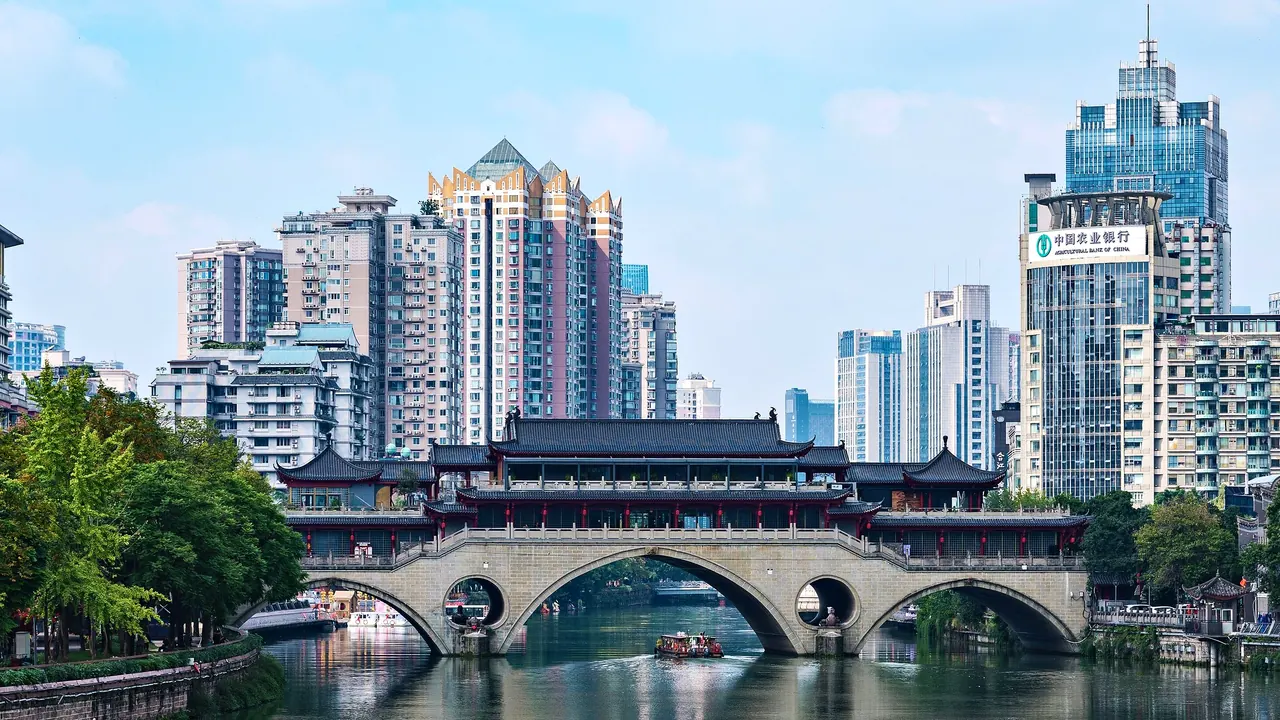
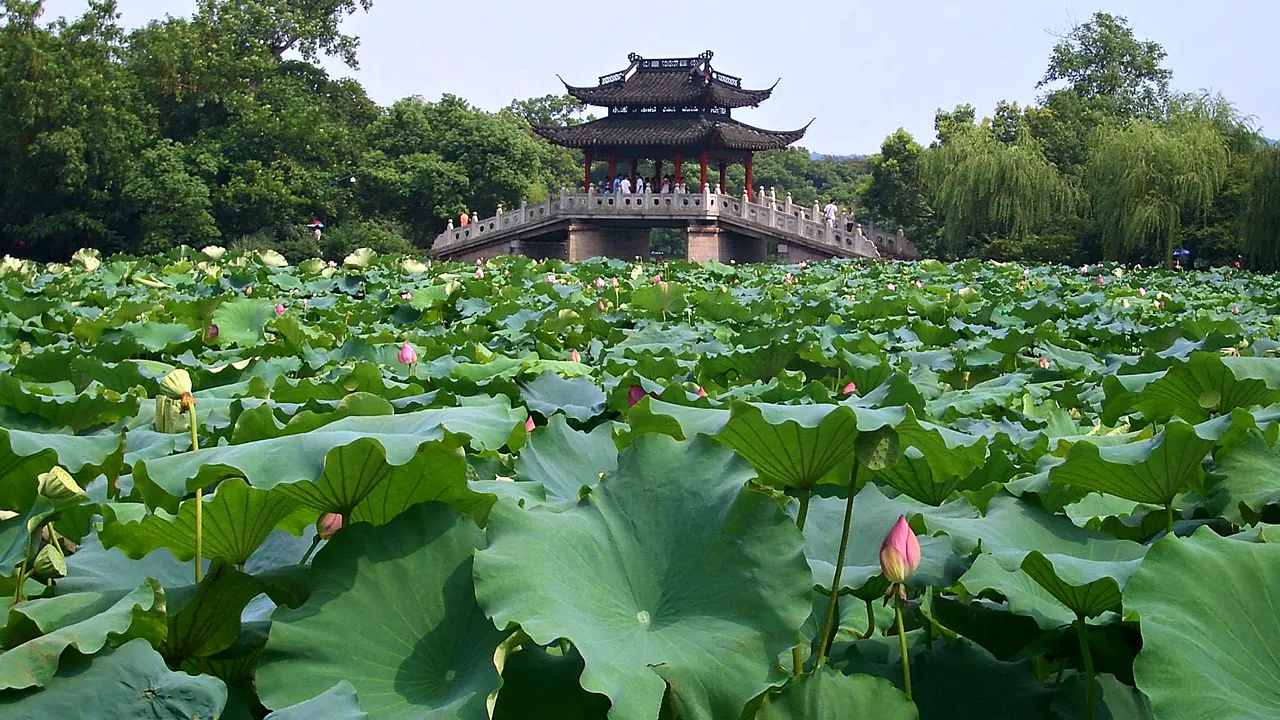
Photos: Chengdu by TurnOnTheNight, CC BY-SA 4.0, cropped; Hangzhou by Vmenkov, CC BY-SA 3.0, cropped.
Chengdu or Hangzhou?
Our verdict in twelve categories, each scored against the same fixed benchmark cities, and the climate month by month, so you can choose for your trip.
Choose Chengdu for
- nightlife
- food and drink
- getting around
Chengdu suits travellers who plan their days around the table and their nights around company. Sichuan cooking is the reason to come, from mapo tofu at a lane-side counter to hotpot that runs past midnight, and the evenings carry on along the Jin River afterwards. Add the pandas, an easy English-signed metro and costs that stay low, and it works well for food lovers, families and anyone travelling on a budget.
Choose Hangzhou for
- culture and sights
- day trips
- beaches
Hangzhou is the better pick for a slower, more scenic trip built on classical China. West Lake, Lingyin Temple and the tea hills give it a depth of landscape and heritage that Chengdu's scattered sights cannot match, and the Yangtze delta on its doorstep puts Suzhou, Shaoxing and the canal water towns within a day. Choose it for gardens, temples and tea rather than late nights or fiery food.
Scoreboard
Twelve categories on one fixed scale from 0 to 100. The shaded stretch is the gap between the two.
Your match
Pick a travel style or drag the sliders, and both match scores follow your weighting.
Wins on nightlife and food and drink with your weighting.
Wins on culture and sights and day trips with your weighting.
What matters to you?
Category by category
What the scores mean for a trip.
Beaches & swimming
Neither city is a place for sand or sea, so a beach stretch has to be planned elsewhere. In Chengdu, a swim means a hotel pool or a water park in the summer heat. Hangzhou at least has open-water swimming at Qiandao Lake, about two hours away, in a few designated areas, and its tidal Qiantang estuary is worth seeing for the bore, though not for bathing.
Food & drink
Chengdu is the stronger food city by some way. Sichuan cooking is a national cuisine at its source here, layered with numbing pepper and chilli, and it reaches from family skewer counters in residential lanes to hotpot dinners that last half the night. There are milder dishes too, but the default heat is serious.
Hangzhou cooks in a gentler, slightly sweet eastern style: West Lake fish in vinegar sauce, Dongpo pork and shrimp with Longjing tea leaves, often served banquet-style by the water. Its real strength is tea, which you can drink in the villages where it grows. Choose it for refinement, and Chengdu for range and intensity.
Culture & sights
Hangzhou has the richer heritage, and much of it is the landscape itself. West Lake, shaped over a thousand years into the model of Chinese scenery, is ringed by Lingyin Temple, the cliff carvings of Feilai Feng and old pagodas. The silk and tea museums, the end of the Grand Canal and Neolithic Liangzhu add depth.
Chengdu offers a good set of individual sights rather than a whole. These include the Wuhou Shrine, Du Fu's Thatched Cottage, working temples and the Jinsha gold and jade, all spread across a mostly modern city. Both have rebuilt old quarters, Jinli and Kuanzhai Xiangzi in Chengdu and Hefang Street in Hangzhou, that are more stage set than survival.
Nightlife
Chengdu is known within China as a late-night city, and it lives up to it. A long hotpot dinner leads to the neon bar streets by the Jin River or the craft-beer and cocktail spots of Yulin, and snack streets keep serving long after midnight.
Hangzhou's typical evening is a stroll along the lit lakeshore and a drink on a terrace near Hubin. Wulin has larger clubs and there is a student karaoke scene, but those who want a big night tend to head to Shanghai.
Nature & outdoors
The outdoors are equally good in both, but they are arranged differently. In Hangzhou, green hills begin at the city's edge: you can walk from West Lake into tea terraces and the Nine Creeks valley, or take a small boat through the Xixi wetland, all within half a day.
Chengdu sits on a flat, often hazy plain, so its nature starts about an hour out. Once there, the scenery is bigger: Qingcheng's Taoist forest trails, the long climb up Emeishan with monkeys on the path, the bamboo forests of the panda reserves and the high plateau beyond.
Day trips
Hangzhou has the edge because so much lies close together across the Yangtze delta. Shaoxing is under half an hour by fast train, Suzhou's classical gardens and Shanghai are each within about an hour and a half, and the canal water towns of Wuzhen, Xitang and Nanxun are each about an hour by road.
Chengdu's excursions are fewer but just as memorable. They include the Leshan Giant Buddha, the ancient Dujiangyan irrigation works, the strange bronze masks of Sanxingdui and old market towns such as Huanglongxi. Hillside Chongqing makes a striking contrast within two hours by train.
Good for families
Chengdu wins with children mainly because of its pandas, which are best watched in the early morning when they climb and feed in the breeding base's wooded enclosures. It also has a zoo, an aquarium park and amusement parks, though spicy food and long distances need some planning.
Hangzhou's appeal is outdoor space: pedal boats and island ferries on West Lake, wide paths for scooters, and penguins and belugas at the polar aquarium. The lakeshore gets very crowded in the national festival weeks, which can wear on small children.
Getting around
Chengdu is the easier city to manage alone. Its metro has signs and announcements in English and runs to the panda base, both airports and the rail stations, and the flat streets suit shared bikes. Sights are far apart, though, so expect long rides.
Hangzhou's metro is modern too, but the lake, temples, tea villages and wetland are spread out, so you will rely more on buses and taxis, where English is rare. Its best stretch is the cycle lanes along the lake and causeways. Both cities run on mobile payment apps, which are best set up before arrival.
Shopping & style
Chengdu is the better city for a shopping trip. Chunxi Road's big, busy malls lead the fashion scene of western China, and the low-rise quarter beside the Daci Temple adds a more traditional setting. Shu brocade, Sichuan embroidery and chilli bean paste make good local finds.
Hangzhou's specialities are silk and tea, with scarves and qipao from the silk district and Longjing bought straight from growers in the hill villages, best in spring. Its department stores in Wulin are capable but less of a draw.
Affordability
Both are good value, but Chengdu stretches a budget further. Upscale hotels there cost far less than in the coastal cities, neighbourhood noodles and dumplings cost very little, and many temples and museums are cheap or free.
Hangzhou is also inexpensive at street level, and its lake, causeways and hill walks cost nothing. The bill climbs with lakeside hotels and banquet restaurants on the water, and rates jump in festival weeks, so staying back from the shore pays off.
Live music & performing arts
Neither is a major stage city, and what each offers is different in kind. Chengdu's draw is Sichuan opera's face-changing and fire-spitting in nightly variety shows, plus one of China's livelier small-venue scenes, with indie bands and Sichuan-dialect hip-hop.
Hangzhou leans to spectacle, with an evening show staged on the surface of West Lake and Song-dynasty extravaganzas at the theme parks. There is also Yue opera, though it is rarely surtitled, and the Grand Theatre for orchestral and ballet evenings.
Wellness & relaxation
Both cities have a reputation for taking life slowly, and both have massage parlours on every street, but the calm takes different forms. In Chengdu you find it in the park teahouses, spending an afternoon in a bamboo chair in People's Park with mahjong and an ear cleaner. Hot-spring resorts lie on the outskirts and towards Qingcheng.
Hangzhou's restful hours are early mornings of tai chi and water calligraphy by the lake, and afternoons over Longjing in the hill tea houses. Its secluded retreat hotels with spas in the tea valleys suit a longer, quieter stay.
When should you go?
Pick your month. The climate figures are measured averages, not a forecast.
Chengdu in July
Hangzhou in July
Daytime high, °C
Rainfall in the month, mm
Temperature and rainfall are climate normals, averaged over the years shown. Chengdu: 1991-2020 normals, Chengdu (4.5 km from centre). Hangzhou: 1991-2020 normals, Hangzhou (1.9 km from centre).
Both cities are at their best in spring and autumn. April, May and October bring warm, comfortable days for walking in each, and both get hot and humid in midsummer, though Hangzhou is the more oppressive, with July highs around 34°C against about 31°C in Chengdu. Rain is the clearest difference. Hangzhou is wet all year and wettest in the June plum rains, at about 254mm. Chengdu has a dry winter, with only about 8mm in January, and a wet peak in July and August, when August brings around 211mm.
Chengdu's dry months are not bright ones, though. Sunshine is low all year and lowest in the cool, grey winter. Hangzhou's winters are damp and similarly chilly, so neither city is a winter sun choice. The sea off the Hangzhou coast is warm in July and August, but the city has no bathing shore of its own, so that warmth matters little for a stay there.
Which traveller are you?
On a food and nightlife trip, Chengdu is the clear choice. Sichuan cooking is the main draw, from red-oil cold dishes to beef-tallow hotpot, and dinners roll on into the Jiuyanqiao bar streets and late snack lanes, where Hangzhou's quiet evenings cannot keep up.
For a culture and arts trip, Hangzhou has more to offer. West Lake's causeways and pagodas, Lingyin Temple with the Feilai Feng carvings, and the silk and tea museums make a fuller heritage stay than Chengdu's shrines, which are good but spread across a mostly modern city.
On a family trip with children, Chengdu has the stronger pull. Pandas in their home province are something children remember, and the English-signed metro makes the outing easy. Hangzhou gives children more open space by the lake, but it has nothing that draws them in the same way.
Before you go
| Measure | Chengdu | Hangzhou |
|---|---|---|
| Official language | Putonghua | Putonghua |
| Currency | Yuan Renminbi (CNY) | Yuan Renminbi (CNY) |
| Sockets | ACI220 V, 50 Hz | ACI220 V, 50 Hz |
| Driving side | Right | Right |
| Time zone | UTC+8 | UTC+8 |
| Emergency number | Police 110, ambulance 120, fire 119 | Police 110, ambulance 120, fire 119 |
| Elevation | 500 m | 19 m |
| Main airport | Chengdu Shuangliu International Airport (CTU)16 km from centre77 non-stop destinations | Hangzhou Xiaoshan International Airport (HGH)25 km from centre132 non-stop destinations |
| Public holidays this year | 6 days | 6 days |
By the numbers
| Measure | Chengdu | Hangzhou |
|---|---|---|
| Population | 20,937,757 | 11,936,010 |
| People per km² | 1,456 | 708 |
| Museums within 10 km | 10 | 13 |
| UNESCO World Heritage sites within 50 km | 0 | 3 |
| Swim season, months above 21 °C | - | 5 months |
Where else could you go?
Every comparison below shares a destination with this one, so you can follow Chengdu or Hangzhou somewhere new.
- Suzhouvs Hangzhou
- Shanghaivs Hangzhou
- Chongqingvs Chengdu
- Lijiangvs Chengdu
- Xi'anvs Chengdu
- Zhangjiajievs Chengdu