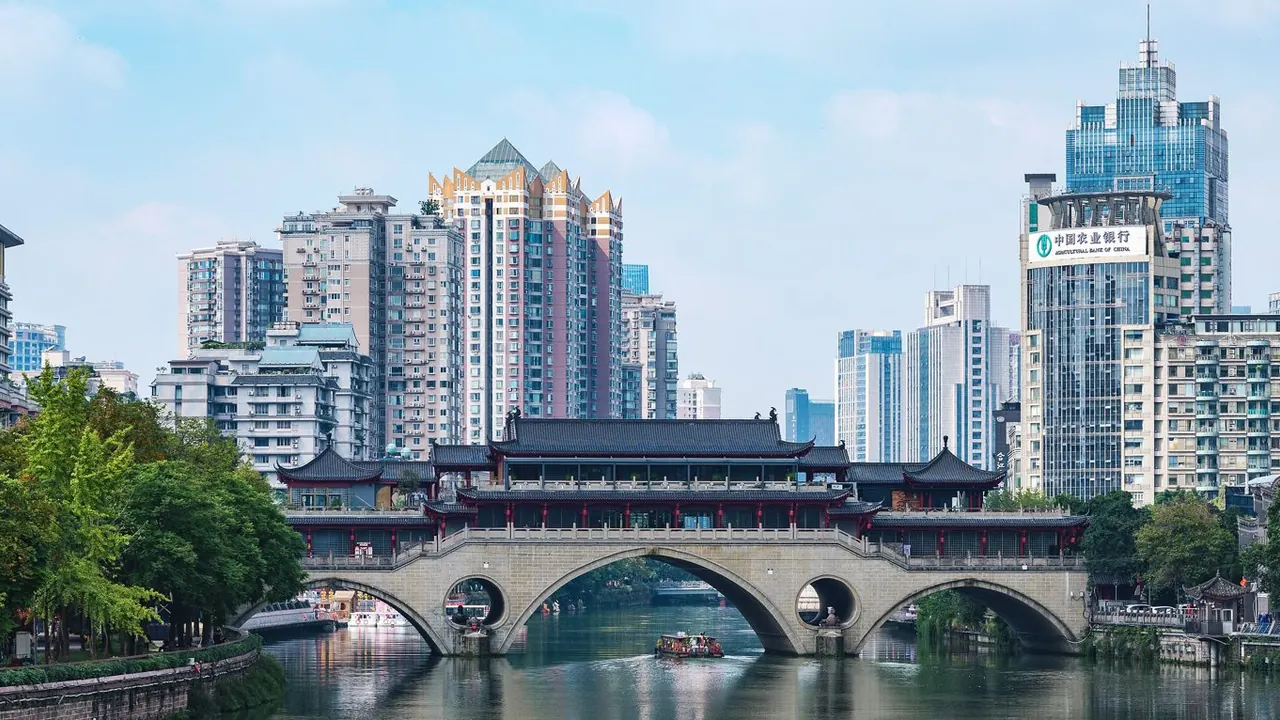
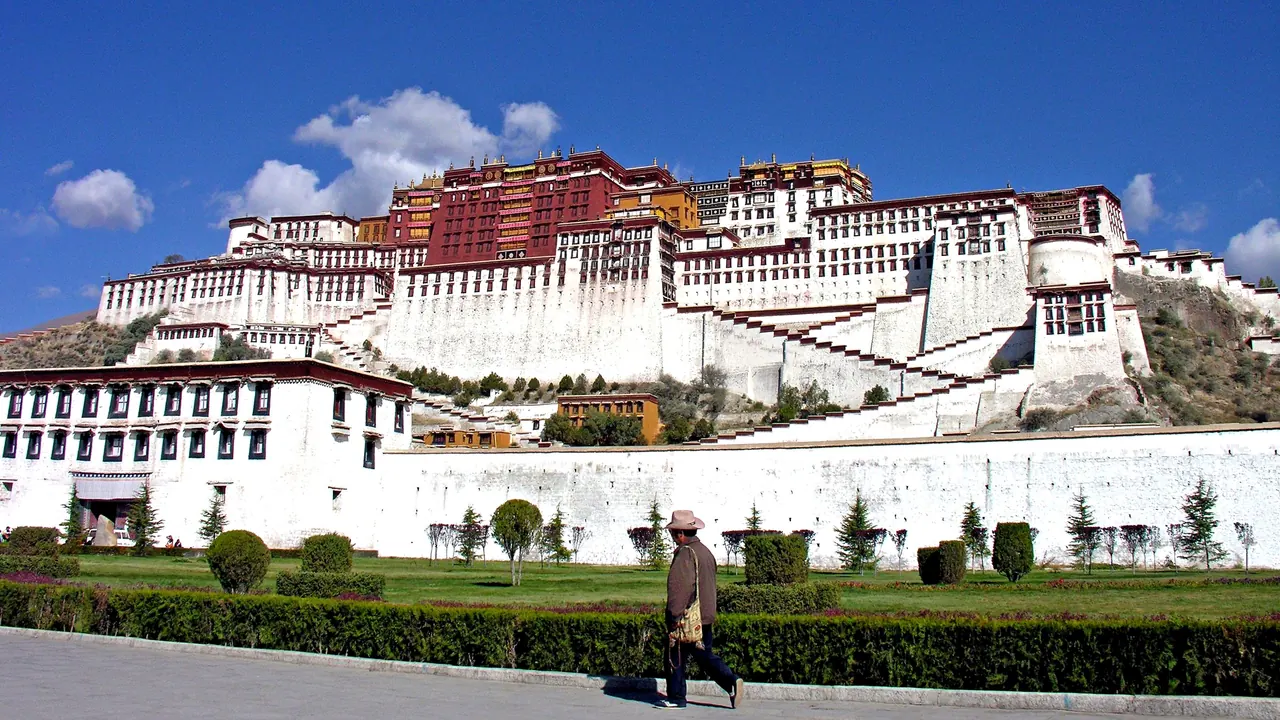
Photos: Chengdu by TurnOnTheNight, CC BY-SA 4.0, cropped; Lhasa by Dennis G. Jarvis, CC BY-SA 2.0, cropped.
Chengdu or Lhasa?
Our verdict in twelve categories, each scored against the same fixed benchmark cities, and the climate month by month, so you can choose for your trip.
Choose Chengdu for
- families
- nightlife
- food and drink
Chengdu suits travellers who want an easy, generous trip where the city does much of the work: the cooking of Sichuan at its source, long evenings that run from hotpot to the riverside bars, pandas for the children and a train network that puts the Leshan Giant Buddha and Dujiangyan within a day's reach. It is cheaper to run, simpler to move around and far kinder to families.
Choose Lhasa for
- culture and sights
Lhasa is the choice for someone who travels for one overwhelming purpose: to stand beneath the Potala, walk the Barkhor among pilgrims and sit in on the monks' debates at Sera. Everything else is secondary here, the food plain and the nights quiet, and the altitude, guided travel and hired cars ask for more patience and planning. In return it offers sights and a living faith that Chengdu cannot match.
Scoreboard
Twelve categories on one fixed scale from 0 to 100. The shaded stretch is the gap between the two.
Your match
Pick a travel style or drag the sliders, and both match scores follow your weighting.
Wins on families and nightlife with your weighting.
Wins on culture and sights with your weighting.
What matters to you?
Category by category
What the scores mean for a trip.
Beaches & swimming
Neither city is anywhere near the sea, so swimming in either means a hotel pool. Chengdu at least adds leisure water parks for its hot summers, while in Lhasa the cold river and the high sacred lakes of Yamdrok and Namtso are for looking at, not bathing in.
Food & drink
Chengdu is one of the great eating cities of China, and many visitors plan the whole trip around it: mapo tofu, dan dan noodles, red-oil cold dishes, beef-tallow hotpot and family counters selling skewers in every lane, with milder sweet-and-sour and smoky dishes for those who need a break from the heat.
Lhasa feeds you honestly rather than memorably. Momos, thukpa, tsampa and butter tea suit the altitude, and an afternoon in a sweet tea house is a highlight, but the range is narrow and fresh vegetables are scarce. Tellingly, many of its non-Tibetan restaurants serve Sichuan food.
Culture & sights
Lhasa holds some of the most remarkable sights in Asia. The Potala climbing its rock, the Jokhang with pilgrims prostrating outside, the Norbulingka and the hillside monastery towns of Drepung and Sera form a set where the devotion around the buildings is as striking as the buildings themselves.
Chengdu is a modern city with good individual sights, such as the Wuhou Shrine, the Du Fu Thatched Cottage, Wenshu Monastery and the gold of the Jinsha Site Museum. Its old lanes at Kuanzhai Xiangzi and Jinli are rebuilt, pleasant rather than profound.
Nightlife
Chengdu is known across China for staying out late. A night here starts with a long hotpot dinner and moves on to the neon bars and clubs around Jiuyanqiao or the quieter cocktail and craft-beer places of Yulin, with snack streets open well after midnight.
Lhasa offers an evening walk round the lit Barkhor and a beer in a traveller café, and the altitude makes most visitors glad to stop there. The nangma halls, with Tibetan pop and group dancing, are the local alternative and worth one night for the curiosity.
Nature & outdoors
Both cities give strong access to mountains, but of very different kinds. From Chengdu the forested Taoist trails of Qingcheng and the cloud forest and monkeys of Emeishan are green, humid and easy to reach, with panda country towards Wolong beyond.
Lhasa's landscape is bare, high and starkly beautiful: brown ridges strung with prayer flags, deep blue skies and the turquoise of Yamdrok Lake below the Kamba La pass. It is more dramatic, but acclimatising and the need for a guide make it harder to use on a short stay.
Day trips
Chengdu has the richer and easier choice. The Leshan Giant Buddha is about an hour by fast train, the ancient irrigation works at Dujiangyan and the bronze masks of Sanxingdui are close, and old market towns such as Huanglongxi and Pingle add a gentler day. Even Chongqing is within reach.
From Lhasa almost every outing is a monastery, reached by hired car with a guide. Ganden on its mountain bowl, the caves of Drak Yerpa and Samye are deeply impressive, but there is little variety beyond them.
Good for families
Chengdu works well with children: the Giant Panda Breeding Research Base is a real highlight, backed by a zoo, an aquarium park and big weekend parks, and the main hurdles are summer heat, spicy food and Chinese-only menus.
Lhasa is a genuinely hard choice for young children, since altitude sickness is a serious risk and they may not be able to say how they feel. The sights mean steep stairs and quiet, smoky chapels, so it is better kept for robust teenagers with a real interest in Tibet.
Getting around
Chengdu's metro, signed in English, reaches the panda base, the main sights, the airports and the rail stations, with cheap taxis and shared bikes filling the gaps. The city is vast, though, so days involve long rides as well as walking.
Lhasa's centre is small enough to walk, with the Barkhor, Jokhang and Potala close together, but the thin air makes even stairs tiring at first. Buses and taxis cover the monasteries on the edge of town; beyond that you depend on a hired car and driver.
Shopping & style
Chengdu offers more of everything, from the busy luxury malls around Chunxi Road and the traditional-style quarter beside the Daci Temple to Shu brocade, Sichuan embroidery, chilli bean paste and mountain green teas.
Lhasa's shopping is narrower but more particular, concentrated around the Barkhor: prayer wheels, turquoise and coral jewellery, yak-wool shawls and hand-painted thangkas, where a careful eye separates workshop pieces from mass-produced stock.
Affordability
Chengdu stretches a budget a long way, with comfortable hotels, neighbourhood noodles, metro rides and most temple entries all costing little, and day trips by train adding only modestly.
Lhasa is cheap day to day, but the shape of a trip lifts the total. A licensed guide, a hired car for every excursion and substantial entry fees at the headline sights push a stay into the middle range, and hotels cost more in summer.
Live music & performing arts
Chengdu has more to see after dark on stage. Nightly Sichuan opera shows with face-changing and fire-spitting are easy to catch, and the livehouses host indie, folk and Sichuan-dialect hip-hop.
In Lhasa the highlight is Ache Lhamo, masked Tibetan opera, best seen at the Norbulingka during the Shoton festival. The rest of the year brings little beyond nangma song and dance and staged spectacles.
Wellness & relaxation
Chengdu makes rest easy in small, pleasant doses: whole afternoons in bamboo chairs in People's Park with tea and mahjong, ear cleaners doing their rounds, inexpensive foot massage on almost every street and hot-spring resorts towards Qingcheng.
Lhasa's calm is contemplative rather than pampering, found walking the kora at dawn or sitting in a monastery courtyard. Altitude headaches and poor sleep in the first days work against real relaxation, and the nearest soak is at Yangpachen, a couple of hours away.
When should you go?
Pick your month. The climate figures are measured averages, not a forecast.
Chengdu in July
Lhasa in July
Daytime high, °C
Rainfall in the month, mm
Temperature and rainfall are climate normals, averaged over the years shown. Chengdu: 1991-2020 normals, Chengdu (4.5 km from centre). Lhasa: 1991-2020 normals, Lhasa (2.4 km from centre).
Chengdu is at its best in spring and autumn, roughly April to May and late September to October, when days are warm enough for walking and the hills nearby are good for hiking. Summer turns hot and sticky, with highs around 31°C and the heaviest rain arriving in July and August, peaking at about 211mm. Winter is mild but grey and dim, with very little sunshine from November to February.
Lhasa runs to a different rhythm. It is bright almost all year, with far more sunshine than Chengdu in every month, and stays cool even in midsummer, peaking at about 24°C in June. Its rain also falls in July and August, mostly as showers, while October to April is almost dry. Winter days are clear but cold, with highs near 8°C and much colder nights, so May, June, September and October are the most comfortable months, when the passes are open and walking at altitude is easier.
Which traveller are you?
For a food and nightlife trip, Chengdu wins without contest. Sichuan cooking at its source, late hotpot and skewer dinners, snack streets open past midnight and bars along the Jin River make a full night out, while Lhasa goes to bed early.
On a culture and arts trip built around great sights, Lhasa is the stronger pull. The Potala, the Jokhang, the Barkhor and the monasteries of Drepung and Sera are extraordinary, though Chengdu has more on stage, from Sichuan opera to livehouses.
On a family trip with young children, Chengdu is the sensible choice. The panda base, the zoo, aquarium and parks give children plenty to do, while Lhasa's altitude, steep stairs and basic medical care make it a risky place for little ones.
Before you go
| Measure | Chengdu | Lhasa |
|---|---|---|
| Official language | Putonghua | Putonghua |
| Currency | Yuan Renminbi (CNY) | Yuan Renminbi (CNY) |
| Sockets | ACI220 V, 50 Hz | ACI220 V, 50 Hz |
| Driving side | Right | Right |
| Time zone | UTC+8 | UTC+8 |
| Emergency number | Police 110, ambulance 120, fire 119 | Police 110, ambulance 120, fire 119 |
| Elevation | 500 m | 3,650 m |
| Main airport | Chengdu Shuangliu International Airport (CTU)16 km from centre77 non-stop destinations | Lhasa Gonggar International Airport (LXA)45 km from centre49 non-stop destinations |
| Public holidays this year | 6 days | 6 days |
By the numbers
| Measure | Chengdu | Lhasa |
|---|---|---|
| City population | 20,937,757 | 867,891 |
| People per km² | 1,456 | - |
| Museums within 10 km | 10 | 5 |
| UNESCO World Heritage sites within 50 km | 0 | 1 |
Where else could you go?
Every comparison below shares a destination with this one, so you can follow Chengdu or Lhasa somewhere new.
- Chongqingvs Chengdu
- Thimphuvs Lhasa
- Darjeelingvs Lhasa
- Lijiangvs Chengdu
- Kathmanduvs Lhasa
- Xi'anvs Chengdu