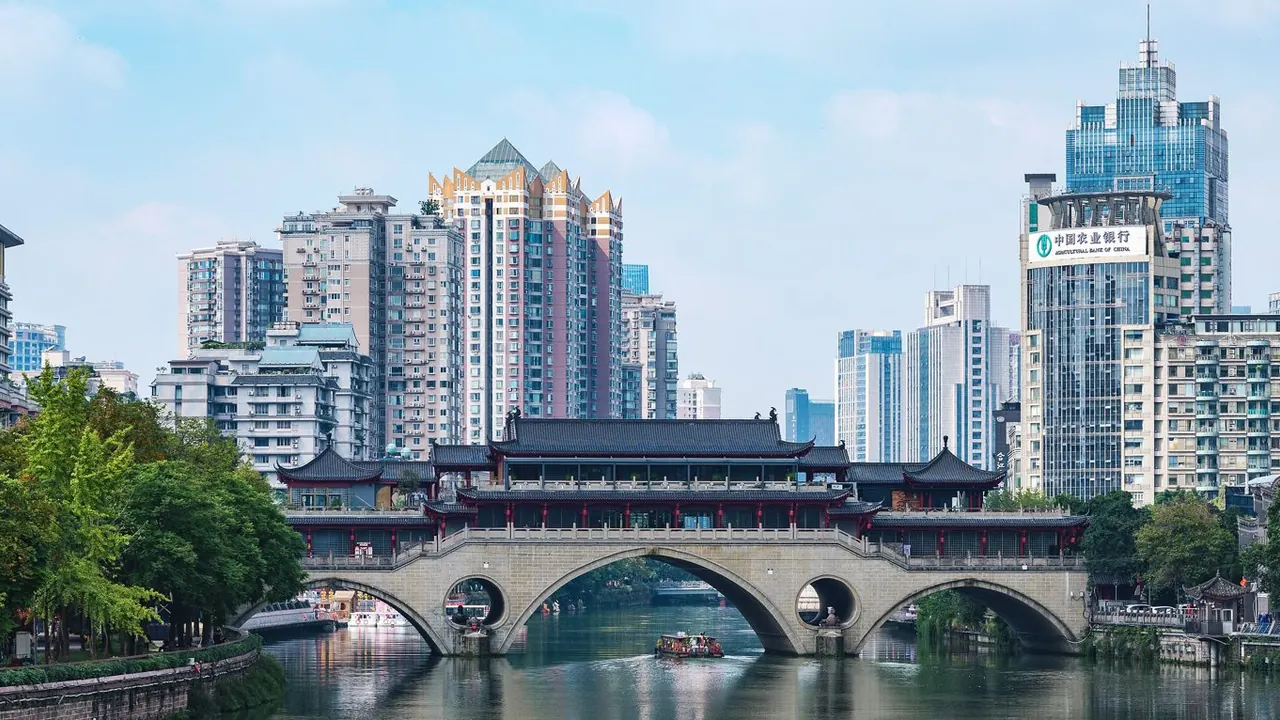
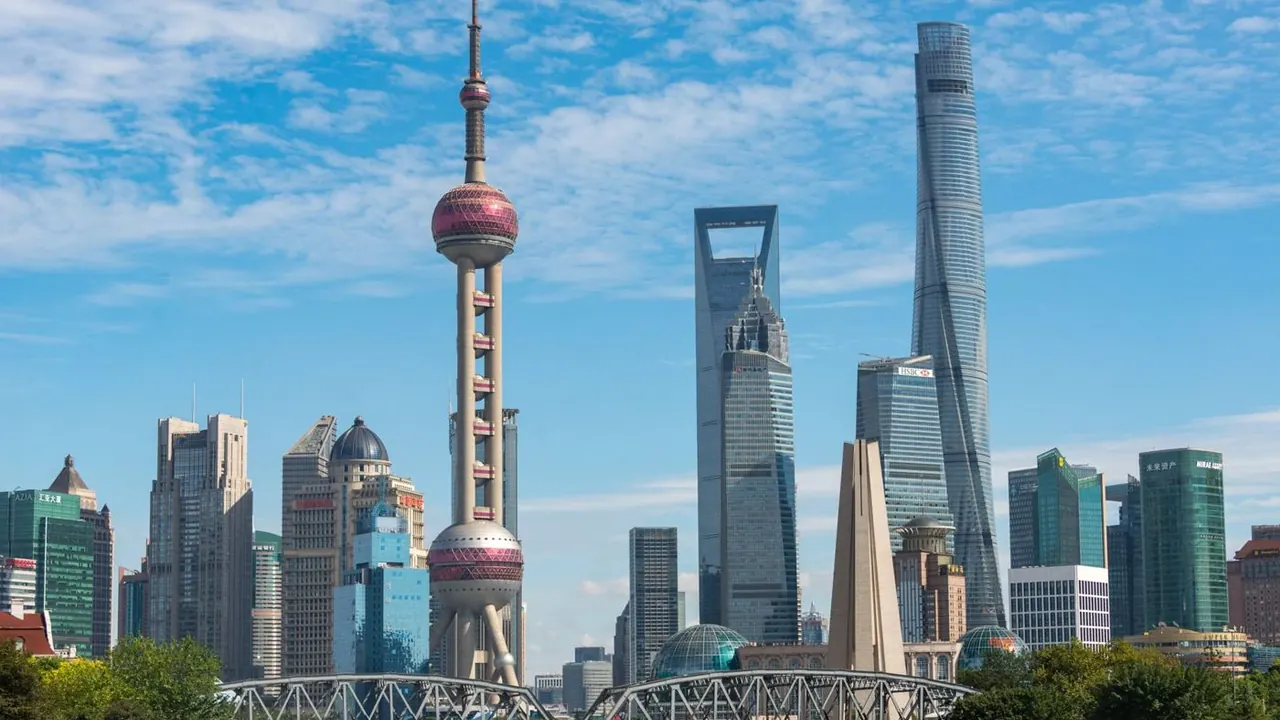
Photos: Chengdu by TurnOnTheNight, CC BY-SA 4.0, cropped; Shanghai by xiquinhosilva, CC BY 2.0, cropped.
Chengdu or Shanghai?
Our verdict in twelve categories, each scored against the same fixed benchmark cities, and the climate month by month, so you can choose for your trip.
Choose Chengdu for
- nature and the outdoors
- prices
- wellness
Chengdu suits travellers who want to eat their way through a region and then head for the mountains. Sichuan cooking is the reason many people come. The slow teahouse rhythm softens a huge city, and Qingcheng, Emeishan and the panda country to the west give it an outdoors side that Shanghai cannot match. Money also goes noticeably further, especially on hotels.
Choose Shanghai for
- shopping
- live music and the arts
- families
For a more polished city trip with more choice, Shanghai is the better pick. It has the Bund and the former French Concession, a deeper cocktail and club scene, serious shopping and a fuller evening programme of opera, acrobatics and concerts. Families have more to do here, and with Suzhou, Hangzhou and the canal towns close by on fast trains, it is the richer base for days out.
Scoreboard
Twelve categories on one fixed scale from 0 to 100. The shaded stretch is the gap between the two.
Your match
Pick a travel style or drag the sliders, and both match scores follow your weighting.
Wins on nature and the outdoors and prices with your weighting.
Wins on shopping and live music and the arts with your weighting.
What matters to you?
Category by category
What the scores mean for a trip.
Beaches & swimming
Neither city is a place to swim. Chengdu lies deep inland, so swimming means hotel pools and summer water parks. Shanghai is on the coast, but its shore is Yangtze mudflats, and the nearest sand is the walled, filtered bay at Jinshan, about an hour and a half away in an industrial setting. From either city, a real beach means a separate trip, to Hainan for example.
Food & drink
Both cities are among the best places in China to eat, but the food tastes very different. Chengdu is about chilli heat and the numbing tingle of Sichuan pepper. Expect mapo tofu, dan dan noodles, skewers from family counters and beef-tallow hotpot late into the night. The local kitchen goes much deeper than the international one.
Shanghai's own cooking is sweet and soy-rich, with red-braised pork, soup dumplings and hairy crab in autumn. On top of that it has dishes from every Chinese region, a deep international scene, fine dining and serious coffee in the lanes of the former French Concession. Go to Chengdu for one cuisine at full strength and to Shanghai for range.
Culture & sights
Shanghai has more to see in the city itself. The neoclassical and Art Deco frontage of the Bund faces the Lujiazui towers across the river, the former French Concession has plane-tree avenues and shikumen lane houses, and the Shanghai Museum holds bronzes and ceramics of the first rank. Modern art along the West Bund adds more.
Chengdu is a modern city with a handful of good sights, spread far apart: the Wuhou Shrine, the Du Fu Thatched Cottage, the working Wenshu Monastery and the gold and jade of the Jinsha Site Museum. Its old-looking lanes at Kuanzhai Xiangzi are rebuilt. In both cities, much of the region's classical heritage is reached on day trips.
Nightlife
Shanghai offers the bigger and more varied night out. There are speakeasy cocktail bars in the former French Concession and hotel bars high above the Bund. Clubs range from polished rooms with international DJs to small techno and house spaces that stay open until dawn at weekends.
In Chengdu the night is built around food. A long hotpot dinner leads on to the neon-lit bars and clubs of Jiuyanqiao on the Jin River, or to craft beer in Yulin, and the snack streets stay open past midnight. The mood is friendly and easy-going, but the city has nothing like Shanghai's underground club scene.
Nature & outdoors
Chengdu is the city for the outdoors. The city itself sits flat and often hazy on the floor of the Sichuan Basin, but the mountains rise close by to the west. Qingcheng's forested Taoist trails are about an hour away. Emeishan, a sacred peak whose summit tops 3,000m, has cloud forest and wild monkeys along the paths on its slopes, and there are bamboo forests and panda reserves towards Wolong.
Shanghai sits on the flat Yangtze delta, and its outdoors amounts to Century Park, running paths along the Huangpu, the low Sheshan hills and the Dongtan wetlands on Chongming Island for birdwatching. Proper hiking means a trip of more than a day to Moganshan.
Day trips
Both cities are excellent bases, but Shanghai has more to choose from. By fast train, Suzhou's gardens are half an hour away, Hangzhou's West Lake about an hour and Nanjing about an hour and a half. Canal towns such as Zhujiajiao, Tongli and Wuzhen fill shorter days.
Chengdu has fewer trips, but they are striking. You can see the Leshan Giant Buddha carved into a riverside cliff, the irrigation works at Dujiangyan that are more than two thousand years old, the bronze masks of Sanxingdui and old market towns such as Huanglongxi and Pingle. Trips from Chengdu lean towards mountains and the ancient Shu culture, while Shanghai's lean towards gardens and water towns.
Good for families
Shanghai has more for children. Beyond its theme parks there are hands-on science and natural history museums, an aquarium at the foot of the Pudong towers, a zoo and the open space of Century Park.
Chengdu has the single most memorable outing, the Giant Panda Breeding Research Base early in the morning, along with a zoo and amusement parks. Parents there have more to manage, though: the food is spicy by default and signs and menus are often only in Chinese. Both cities are safe and welcoming to children, and in both the humid summer makes days tiring.
Getting around
Both cities have clean metros with English signs and cheap taxis, and in both you need mobile payment set up before you arrive. Shanghai's network is one of the largest in the world, with lifts at most stations. The Maglev runs in from Pudong airport and ferries across the Huangpu make a scenic shortcut, so the sprawling city is easier to cover.
Chengdu's metro reaches the panda base, both airports and the rail stations, and shared bikes suit its flat streets. Sights sit far apart, though, and daily life depends more heavily on Chinese-language apps.
Shopping & style
Shanghai is the stronger city for shopping, and not only for the luxury flagships on West Nanjing Road and in Lujiazui. The more interesting shops are on Wukang Road and Anfu Road, selling Chinese designer fashion, ceramics and homeware, and the fabric markets tailor a suit or qipao in a few days.
Chengdu's malls around Chunxi Road are busy and full of fashion, but there are few independent shops. The better buys there are regional: Shu brocade, Sichuan embroidery, chilli bean paste, Sichuan pepper and green teas from the surrounding mountains.
Affordability
Chengdu is the cheaper stay, and the gap shows most in hotels. Comfortable and even upscale rooms there cost far less, while good central hotels in Shanghai are priced like those in a European capital.
In both cities local food, the metro and taxis are cheap, and costs rise with cocktails, imported wine and Western restaurants. In Chengdu the main extras are train fares and entry tickets for day trips. In Shanghai, it is comfort itself that costs.
Live music & performing arts
In Chengdu, an evening at the theatre usually means a Sichuan opera variety show, with face-changing, fire-spitting, puppetry and comic sketches. It is good fun but more showcase than full opera. The city's real strength is its small livehouses, which host indie bands, folk and Sichuan-dialect hip-hop.
Shanghai's stages offer far more for anyone who plans evenings around a performance. Acrobatics are the usual night out for visitors, and Kunqu, Yue and Peking opera all have a home here, the last at the Yifu Theatre. The Shanghai Symphony Orchestra, the Shanghai Grand Theatre and the Oriental Art Center add classical music, ballet and touring musicals, and the city's jazz tradition goes back to the 1930s.
Wellness & relaxation
Neither city is a calm retreat, and in both you find rest in pockets rather than for a whole stay. Chengdu's version is an afternoon in a teahouse in People's Park: bamboo chairs, mahjong and roving ear-cleaners, with cheap foot massage on every street and hot springs out towards Qingcheng.
Shanghai has a bigger bathing culture. Large bath centres have hot pools, saunas and rest halls where people stay overnight, and there are also hotel spas, acupuncture clinics and morning tai chi in the parks.
When should you go?
Pick your month. The climate figures are measured averages, not a forecast.
Chengdu in July
Shanghai in July
Daytime high, °C
Rainfall in the month, mm
Temperature and rainfall are climate normals, averaged over the years shown. Chengdu: 1991-2020 normals, Chengdu (4.5 km from centre). Shanghai: 1991-2020 normals, Shanghai / Hongqiao (8.1 km from centre).
Chengdu is at its best in April and May, and again from late September through October, when the days are warm but not heavy. July and August reach about 31°C and bring the heaviest rain, up to 211mm in August. Winter is cool and very dry, but grey, with little sunshine. Neither city is a beach destination in any month.
Shanghai follows a similar pattern but is hotter and wetter in summer, reaching 33°C in midsummer, with June and August the rainiest months. It also gets more rain than Chengdu in winter, yet it has far more sunshine through the whole year. Spring and the stretch from October into early November are the comfortable months for walking. The sea warms to 28°C in August, but nobody swims off the city.
Which traveller are you?
On an outdoors trip, Chengdu is the clear choice. Qingcheng Mountain's forested Taoist trails are about an hour away and Emeishan offers a long climb through cloud forest. From Shanghai, the nearest real hills at Moganshan need more than a day.
For a trip on a tight budget, Chengdu makes money last longer. Comfortable hotels cost far less than in central Shanghai, noodles and dumplings from neighbourhood counters are cheap, and most temples and museums charge little or nothing to get in.
On a family trip with children, Shanghai keeps young ones busier. Shanghai Disney Resort, Legoland and the Haichang Ocean Park make several big days out, and the metro copes well with buggies. Chengdu's pandas are a superb morning, but there is less to follow them.
Before you go
| Measure | Chengdu | Shanghai |
|---|---|---|
| Official language | Putonghua | Putonghua |
| Currency | Yuan Renminbi (CNY) | Yuan Renminbi (CNY) |
| Sockets | ACI220 V, 50 Hz | ACI220 V, 50 Hz |
| Driving side | Right | Right |
| Time zone | UTC+8 | UTC+8 |
| Emergency number | Police 110, ambulance 120, fire 119 | Police 110, ambulance 120, fire 119 |
| Elevation | 500 m | 4 m |
| Main airport | Chengdu Shuangliu International Airport (CTU)16 km from centre77 non-stop destinations | Shanghai Pudong International Airport (PVG)33 km from centre207 non-stop destinations |
| Public holidays this year | 6 days | 6 days |
By the numbers
| Measure | Chengdu | Shanghai |
|---|---|---|
| City population | 20,937,757 | 24,870,895 |
| People per km² | 1,456 | 3,922 |
| Museums within 10 km | 10 | 45 |
| UNESCO World Heritage sites within 50 km | 0 | 0 |
| Swim season, months above 21 °C | - | 5 months |
Where else could you go?
Every comparison below shares a destination with this one, so you can follow Chengdu or Shanghai somewhere new.