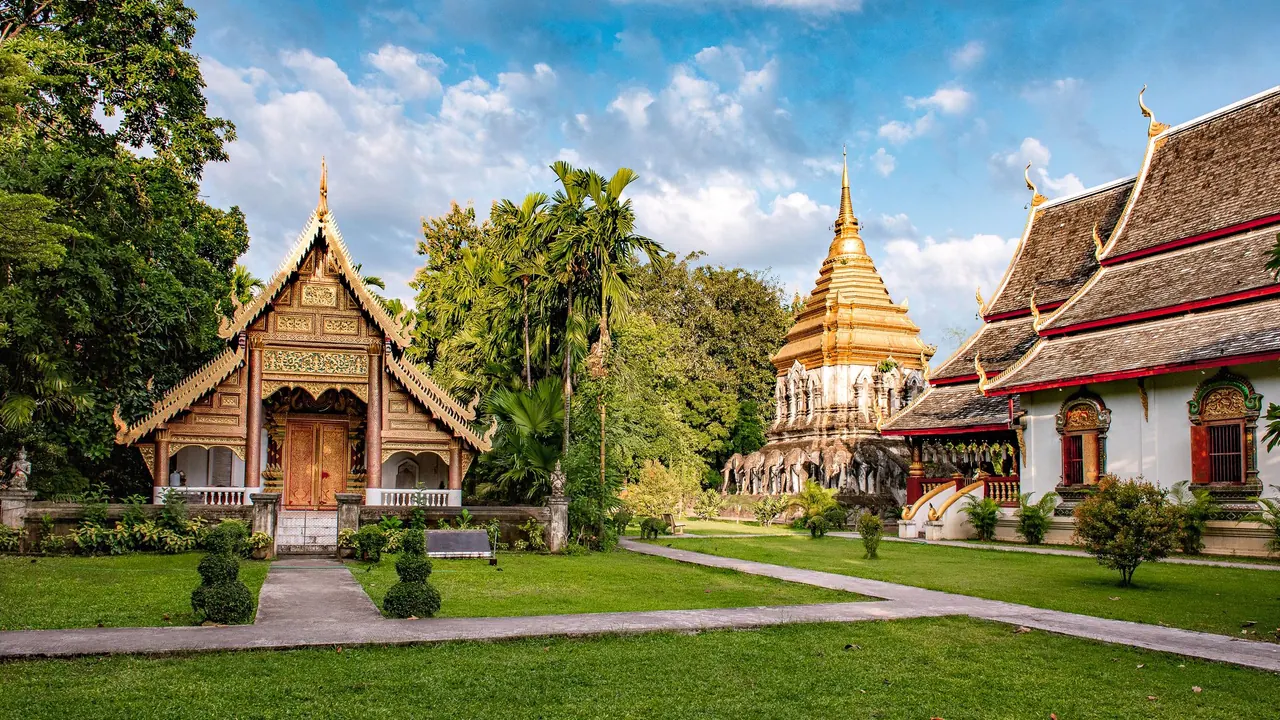
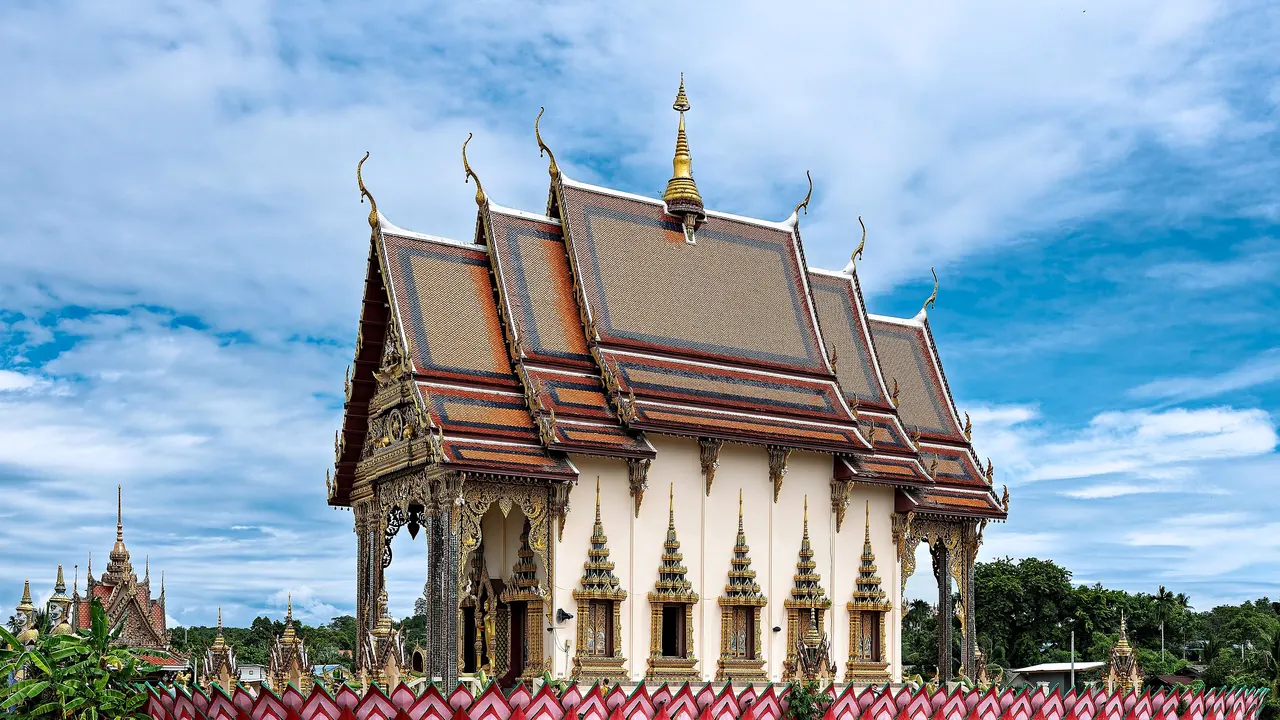
Photos: Chiang Mai by Gije Cho, Pexels License; Koh Samui by Mustang Joe, CC0.
Chiang Mai or Koh Samui?
Our verdict in twelve categories, each scored against the same fixed benchmark cities, and the climate month by month, so you can choose for your trip.
Choose Chiang Mai for
- culture and sights
- shopping
- prices
Chiang Mai suits travellers who want a place to explore rather than a place to lie down. Its moated old city full of Lanna temples, the northern cooking at morning markets and street stalls, the mountains rising straight from the edge of town and the evening craft markets give a week of variety. It also costs a good deal less day to day. What it cannot give you is a beach.
Choose Koh Samui for
- beaches
- nightlife
- families
Koh Samui is the better choice when sand and warm sea are the point of the trip. Its long east-coast beaches, the calmer bays of the north, boat trips to Ang Thong and nights out in Chaweng make it a resort island first, with retreat-style spas in the quieter corners. Sightseeing is thin and stays cost more, so it suits people happy to swim, eat and rest more than to go out looking for things to see.
Scoreboard
Twelve categories on one fixed scale from 0 to 100. The shaded stretch is the gap between the two.
Your match
Pick a travel style or drag the sliders, and both match scores follow your weighting.
Wins on culture and sights and shopping with your weighting.
Wins on beaches and nightlife with your weighting.
What matters to you?
Category by category
What the scores mean for a trip.
Beaches & swimming
This is the clearest gap between the two. Koh Samui is built around its beaches. There is the long white curve of Chaweng and livelier Lamai on the east coast, gentle swimming in the sheltered bay at Choeng Mon, and small boulder coves such as Silver Beach. The quieter north-coast beaches get shallow at low tide.
Chiang Mai is a long day's travel from any sea. Swimming there means the reservoir below Doi Suthep, old quarry lakes, waterfall pools or the hotel pool. Visitors combining the two usually save the sand for Samui.
Food & drink
Chiang Mai is the stronger place to eat. It has a distinct northern cuisine: khao soi, herby sai ua sausage and chilli dips with sticky rice, served at Warorot market and the stalls by Chang Phueak Gate. It also has a café culture built on coffee grown in the surrounding hills.
Samui's cooking is southern Thai, with fiery curries, coconut soups and grilled seafood. It is best at the night markets in Lamai, Maenam and Fisherman's Village. The Chaweng strip serves a lot of uneven food aimed at tourists, so eating well there means looking harder.
Culture & sights
Chiang Mai can fill two or three unhurried days with temples alone. The ruined chedi of Wat Chedi Luang, the Lanna wooden halls of Wat Phra Singh and the silver temple of Wat Sri Suphan all sit within the moat, and Doi Suthep looks down from above. Museums are few, but the old city itself is the attraction.
Samui's heritage fits into a single loop of the island: the Big Buddha on its causeway, the many-armed Guanyin at Wat Plai Laem, the mummified monk at Wat Khunaram and the old Chinese shophouses of Fisherman's Village. They are pleasant breaks from the beach, but not a reason to visit.
Nightlife
Koh Samui has the bigger night out. Clubs in the lanes behind Chaweng beach and beach parties with DJs and fire shows run well past midnight in high season, and the Haad Rin full moon parties on Koh Phangan are a short boat ride away. Some of it is generic and seedy, and the north and west coasts go quiet after dinner.
Chiang Mai is gentler: cocktail and craft beer bars in Nimmanhaemin, backpacker terraces around Tha Phae Gate, and most places closing around midnight. It suits an evening of drinks and conversation, not dancing until dawn.
Nature & outdoors
Chiang Mai has more to offer outdoors, and most of it is on land. Doi Suthep-Pui National Park starts at the edge of town, Doi Inthanon's cloud forest is an hour and a half away, and the Mae Taeng valley offers rafting, ziplines and treks to hill villages. Haze in the burning season and mud in the rains limit the best time to the cool, dry months.
Samui's natural highlights are at sea: the limestone islands and emerald lake of Ang Thong for kayaking and snorkelling, and diving at Sail Rock towards Koh Tao. The island's own hills are modest, with waterfalls and plantation tracks.
Day trips
Chiang Mai has the better spread of short trips. Gilded Lamphun is half an hour away, and Lampang, with its horse carriages and teak mansions, is a little further. The weaving and umbrella villages are easy half days, and Chiang Rai and Pai suit an overnight stay.
From Samui, a day out means a boat. Koh Phangan's quieter beaches and Koh Tao's sandbar islets at Koh Nang Yuan make good days at sea, but the mainland port has nothing to see and there are no historic towns within reach.
Good for families
The two are about equal for families, but the days look very different. Chiang Mai gives children outings: elephant sanctuaries, the zoo and Night Safari, ziplines and waterfall walks. The trade-off is broken pavements, heavy traffic around the moat, and burning-season haze that is best avoided with small children.
Samui is a beach-and-pool vacation. Resorts with kids' clubs and the calm, shallow water at Choeng Mon, Bophut and Maenam work well, as long as you stay away from Chaweng. There is little to do beyond that, and midday heat and the autumn rains keep everyone indoors.
Getting around
Neither has proper public transport, and both rely on shared songthaew pickups, ride-hailing and hired scooters. In Chiang Mai you can walk around the old city, and an app ride takes you easily to Nimmanhaemin or the airport. Doi Inthanon and other rural trips need a driver or a tour.
On Samui everything sits on one 51km ring road. Each beach area is walkable, but moving between them means negotiating a taxi fare or hiring wheels. Wet, hilly roads make scooters riskier here.
Shopping & style
Chiang Mai is the place to shop for handmade things. The Sunday Walking Street on Ratchadamnoen and the Saturday market on Wualai Road sell textiles, carved wood and hill-tribe embroidery. Bo Sang makes paper umbrellas and San Kamphaeng weaves silk, and celadon and lacquerware are local traditions.
Samui sells mostly beachwear, linen, tailored suits and copies. The Friday walking street in Fisherman's Village is a pleasant evening browse, but the island has little craft of its own.
Affordability
Chiang Mai is much the cheaper of the two, and the gap is widest where most of a trip's money goes: the bed and the evening drinks. A comfortable room in the old city costs a fraction of a similar one near the sand on Samui. A round in a Nimmanhaemin bar costs far less than the same round at a Chaweng beach bar. In Chiang Mai the bigger bills come from booked activities, such as sanctuary visits, treks and cooking classes.
At street level the two are much closer. A bowl of khao soi at Warorot and grilled squid at the Maenam night market both cost little, and a massage is an everyday pleasure on a Samui beach mat just as it is in an old-city parlour. Travellers who eat and unwind this way on the island close much of the gap. Samui still costs more overall, though it remains cheaper than most Western beach resorts.
Live music & performing arts
Neither offers formal theatre or concerts, but Chiang Mai has more worth seeking out. There are nightly jazz and blues jam sessions near the north gate and bands around Nimmanhaemin, and khantoke dinners with Lanna dance. Festivals such as Yi Peng bring processions into the streets.
Samui's shows are aimed at visitors on a night out: cabaret, fire dancers on the sand, cover bands and Muay Thai bouts around Chaweng and Lamai.
Wellness & relaxation
Both are excellent places to slow down, in different ways. Chiang Mai is where people come to learn Thai massage, at long-established schools. Meditation retreats are held at forest temples such as Wat Umong, and there are hot-spring pools at San Kamphaeng.
Samui is about retreat stays: detox and fasting programmes around Lamai and hillside spas overlooking the Gulf. The quiet coasts around Maenam and Lipa Noi are best for long, empty afternoons, but there is no bathing tradition, and noisy Chaweng is the wrong base for rest.
When should you go?
Pick your month. The climate figures are measured averages, not a forecast.
Chiang Mai in July
Koh Samui in July
Daytime high, °C
Rainfall in the month, mm
Where the figures come from
Koh Samui has no rain gauge within 25 km of the centre, so its rainfall comes from a gridded climate dataset read at the destination rather than from a gauge further away.
Temperature and rainfall are climate normals, averaged over the years shown. Chiang Mai: 1991-2020 normals, Chiang Mai (0.6 km from centre). Koh Samui: 1991-2020 normals, Ko Samui (7.4 km from centre).
Chiang Mai is at its best from November to February, when the valley is dry and sunny and days of around 30°C are comfortable for temple walks and hill trails. From March it heats up, reaching about 37°C in April, and the burning-season haze hangs over the valley. The rains arrive in May and are heaviest in August and September, with much less sunshine.
Koh Samui runs to a different calendar. The sea is warm enough to swim in every month, between 28°C and 30°C, and from January to September rain comes in short showers, with February the driest month. The northeast monsoon arrives from October to December, peaking at around 372mm in November, and the east coast turns choppy. January and February suit both places. In late autumn they swap: Chiang Mai is drying out just as Samui is at its wettest, while in the summer rains it is the island that stays drier.
Which traveller are you?
On a beach and sun trip, Koh Samui is the only real option. Chiang Mai sits inland in a mountain valley, while Samui has the fine sand of Chaweng, sheltered Choeng Mon and a warm sea all year, with island-hopping boats on the doorstep.
For a culture and arts trip, Chiang Mai is clearly the place. Dozens of Lanna temples sit inside the moat, Doi Suthep looks down from its mountain, and there are folklife museums and nightly jazz sessions. Samui's sights fit into half a day.
On a trip on a tight budget, Chiang Mai goes much further. Teak-house guesthouses, market meals, cheap songthaews and free temples keep daily costs very low, while Samui's resorts, taxis and flights push the bill up unless you stay well away from the beachfront.
Before you go
| Measure | Chiang Mai | Koh Samui |
|---|---|---|
| Official language | Thai | Thai |
| Currency | Baht (THB) | Baht (THB) |
| Sockets | ABCF220 V, 50 Hz | ABCF220 V, 50 Hz |
| Driving side | Left | Left |
| Time zone | UTC+7 | UTC+7 |
| Emergency number | Police 191, ambulance 1669, fire 199 | Police 191, ambulance 1669, fire 199 |
| Elevation | 310 m | - |
| Main airport | Chiang Mai International Airport (CNX)3 km from centre28 non-stop destinations | Samui International Airport (USM)10 non-stop destinations |
By the numbers
| Measure | Chiang Mai | Koh Samui |
|---|---|---|
| Population | 1,198,000 | 62,500 |
| People per km² | 2,958 | 273 |
| Museums within 10 km | 6 | - |
| UNESCO World Heritage sites within 50 km | 0 | - |
| Swim season, months above 21 °C | - | 12 months |
Where else could you go?
Every comparison below shares a destination with this one, so you can follow Chiang Mai or Koh Samui somewhere new.
- Koh Phanganvs Koh Samui
- Koh Taovs Koh Samui
- Paivs Chiang Mai
- Chiang Raivs Chiang Mai
- Krabivs Koh Samui
- Koh Lantavs Koh Samui