China
Lijiang
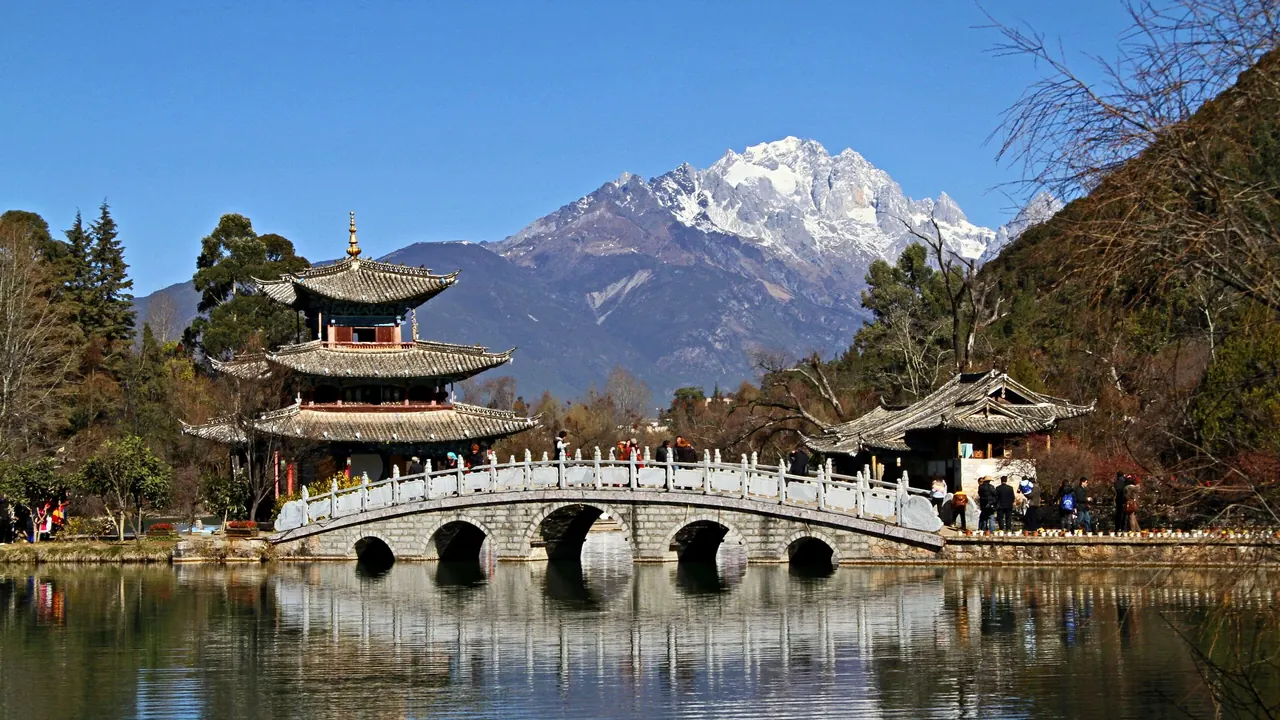
Black Dragon Pool with the Jade Dragon Snow Mountain beyond
- Nature & outdoors86
- Affordable cities74
- Day trips67
Photo: Miltos Gikas from Lutsa, Attiki, Greece, CC BY 2.0, cropped
Match
44
Every category weighted equally
- Beach & sun41
- Culture & arts46
- Food & nightlife41
- Family trip45
- Outdoors52
- Relax & unwind43
- Shopping & style41
- On a budget48
Lijiang in twelve categories
Our verdict on each, scored 0 to 100 against the same fixed benchmark cities, so a score means the same thing on every page.
Beaches & swimming. Scores 5 out of 100.
Food & drink. Scores 38 out of 100.
Culture & sights. Scores 57 out of 100.
Nightlife. Scores 42 out of 100.
Nature & outdoors. Scores 86 out of 100.
Day trips. Scores 67 out of 100.
Good for families. Scores 33 out of 100.
Getting around. Scores 35 out of 100.
Shopping & style. Scores 30 out of 100.
Affordability. Scores 74 out of 100.
Live music & performing arts. Scores 34 out of 100.
Wellness & relaxation. Scores 32 out of 100.
Lijiang category by category
Beaches & swimming
5Lijiang sits high on a plateau in northwest Yunnan, days from any sea, and beach life plays no part in a stay. Lashi Lake and the mountain lakes are for looking at, boating or birdwatching. At this altitude the water is cold and nobody swims in it, and few hotels have a pool.
Food & drink
38Eating here means Naxi and broader Yunnan cooking: Lijiang baba, a layered flatbread sold sweet or savoury, chicken and black-goat hotpots, yak meat, cured ham, Yunnan rice noodles and, in the summer rains, wild mushrooms cooked every way. Breakfasts of noodles and flatbread at simple counters are the most authentic meals a visitor will find.
The Old Town lanes are lined with restaurants serving much the same menus at tourist prices, so better meals tend to be found just outside the walls or in the newer town. Pu'er and other Yunnan teas are easy to find and good, and courtyard cafés are everywhere. There is little fine dining and not much international range, so this is a pleasant place to eat rather than a reason to come.
Culture & sights
57The heart of the city is the Old Town of Dayan, a UNESCO-listed maze of grey-tiled Naxi houses, stone lanes and canals fed by mountain water. The Mu Family Mansion, the restored seat of the local chieftains, stands at its southern edge, and Black Dragon Pool, with the snow mountain reflected behind its pavilions, holds a museum of Dongba culture. This is the place to see the pictographic Dongba script, one of the few such writing systems still in use.
Outside the centre, Baisha keeps Ming-era murals mixing Buddhist, Taoist and Tibetan styles, and Shuhe is a quieter old market town. Visitors should know that much of Dayan was rebuilt after the 1996 earthquake and almost every house is now a shop or an inn. The setting is lovely, but it feels more like a stage set than a lived-in town. Two or three days cover it.
Nightlife
42Lijiang's nightlife is known across China, and almost all of it is on one strip of the Old Town around the canals. There, open-fronted bars use singers, drums and loud sound systems to pull in tour groups and young domestic travellers, and the lanes stay crowded well past midnight. It is lively and very easy to find, but it all feels the same. Anyone after a quiet drink will find it in courtyard bars further back in the Old Town or in Shuhe, and there is little else on offer, whether proper clubs or serious cocktail bars.
Nature & outdoors
86The glaciated Jade Dragon Snow Mountain dominates the horizon, about 30km north of town. Cable cars lift visitors to around 4,500 m among the glaciers, and lower down are alpine meadows and the turquoise terraced pools of Blue Moon Valley. The thin air is real at the top, and the mountain is heavily visited and tightly managed, so it feels more like an organised excursion than wild country.
The great walk is Tiger Leaping Gorge, about two hours away, where a high trail runs for two days above the Jinsha River, with Haba Snow Mountain on one side and Jade Dragon on the other. Closer in, Lashi Lake has wetlands with wintering birds and horse trails, and the valley around Baisha is good for cycling. Spring and autumn are clearest, while summer brings the monsoon and cloud.
Day trips
67The two old Naxi villages of Shuhe and Baisha are only a short taxi ride from the Old Town and quieter than the centre. Further out, Shigu, on the great first bend of the Yangtze, is about an hour's drive.
The two big outings are by train. Dali, under two hours south, has a walled old town, the Three Pagodas and Bai villages such as Xizhou on the shore of Erhai Lake. Shangri-La, about an hour and a half north, gives a first taste of Tibetan culture at the hillside Songzanlin Monastery and in the old quarter of Dukezong. Lugu Lake and the market village of Shaxi reward a visit but need an overnight stay.
Good for families
33Children tend to enjoy the car-free Old Town, with its streams to follow, flatbreads to snack on and the park at Black Dragon Pool, and the climate is mild for most of the year. Beyond that there is very little made for families, with no zoo, aquarium or theme park worth the name. The city already sits at about 2,400 m, and the snow mountain excursions go far higher, so they are best avoided with young children. Crowded lanes and uneven stone paving make pushchairs hard work, while quiet courtyard inns in Shuhe or Baisha make a calmer base with children.
Getting around
35The Old Town is closed to traffic and small enough to walk anywhere, although its lanes twist and are easy to get lost in. Once you leave it, getting around is harder. There is no rail transit, local buses are hard to use without Chinese, and the snow mountain, Baisha, Lashi Lake and Tiger Leaping Gorge are spread across the valley and beyond. Most visitors use taxis, a hired driver for the day or ride-hailing apps that rely on a Chinese payment setup. Trains to Dali and Shangri-La leave from a station outside the centre.
Shopping & style
30In the Old Town nearly every house front is a shop. They sell hand drums, silver jewellery, scarves, yak-bone trinkets, Pu'er tea cakes, flower pastries and woodcarvings painted with Dongba pictographs. A few workshops still hammer silver or carve wood in view, but much of the stock repeats from lane to lane and was made far from Lijiang. Tea is the most rewarding purchase, along with silver bought after some comparison. There is no fashion or design shopping to speak of.
Affordability
74Day to day, Lijiang is inexpensive. There are plenty of courtyard guesthouses and small inns, and they are good value outside the busy national festival weeks, when domestic travellers fill the town. Noodle and flatbread breakfasts cost very little, and taxis are cheap. The costs come from the sights. Visitors pay a fee to enter the Old Town area, and the snow mountain, with its cable cars and shuttle buses, is one of the dearest outings in the region. Restaurants and bars on the main Old Town lanes charge well above local norms, so eat a few streets away.
Live music & performing arts
34The city's real musical tradition is Naxi ancient music, a Taoist ritual repertoire with roots in Song, Yuan and Ming tunes, which older Naxi musicians have kept alive. Visitors can hear it in evening concerts in a hall in the Old Town. Besides this, there are large-scale ethnic song-and-dance spectacles, some performed outdoors with the snow mountain as the backdrop, and these are polished productions aimed squarely at tour groups. Beyond these, the city has no theatre, classical or jazz scene.
Wellness & relaxation
32Lijiang has no bathing or spa tradition, and wellness is limited to hotel spas and simple foot-massage shops. What it does have is a slow way of passing time. Typical days are spent over tea in a sunny courtyard inn, reading under the mountain light, or wandering Shuhe and Baisha in the morning before the tour groups arrive. Those who want rest should stay outside the main Old Town lanes, which are packed by day and noisy at night.
When should you go?
Pick a month to see what it is like. The climate figures are measured averages, not a forecast.
Lijiang in July
Daytime high, °C
Rainfall in the month, mm
The whole year
Shaded against this city’s own year: the deepest cell is its best month for that figure and the palest its weakest.
Temperature and rainfall are climate normals, averaged over the years shown. Lijiang: 1991-2020 normals, Lijing (23.5 km from centre).
Before you go
| Measure | Lijiang |
|---|---|
| Official language | Putonghua |
| Currency | Yuan Renminbi (CNY) |
| Sockets | ACI220 V, 50 Hz |
| Driving side | Right |
| Time zone | UTC+8 |
| Emergency number | Police 110, ambulance 120, fire 119 |
| Elevation | 2,400 m |
| Main airport | Lijiang Sanyi International Airport (LJG)22 km from centre60 non-stop destinations |
| Public holidays this year | 6 days |
By the numbers
| Measure | Lijiang |
|---|---|
| City population | 1,253,878 |
| Museums within 10 km | 2 |
| UNESCO World Heritage sites within 50 km | 1 |
Compare Lijiang with
Every comparison with a written verdict behind it.