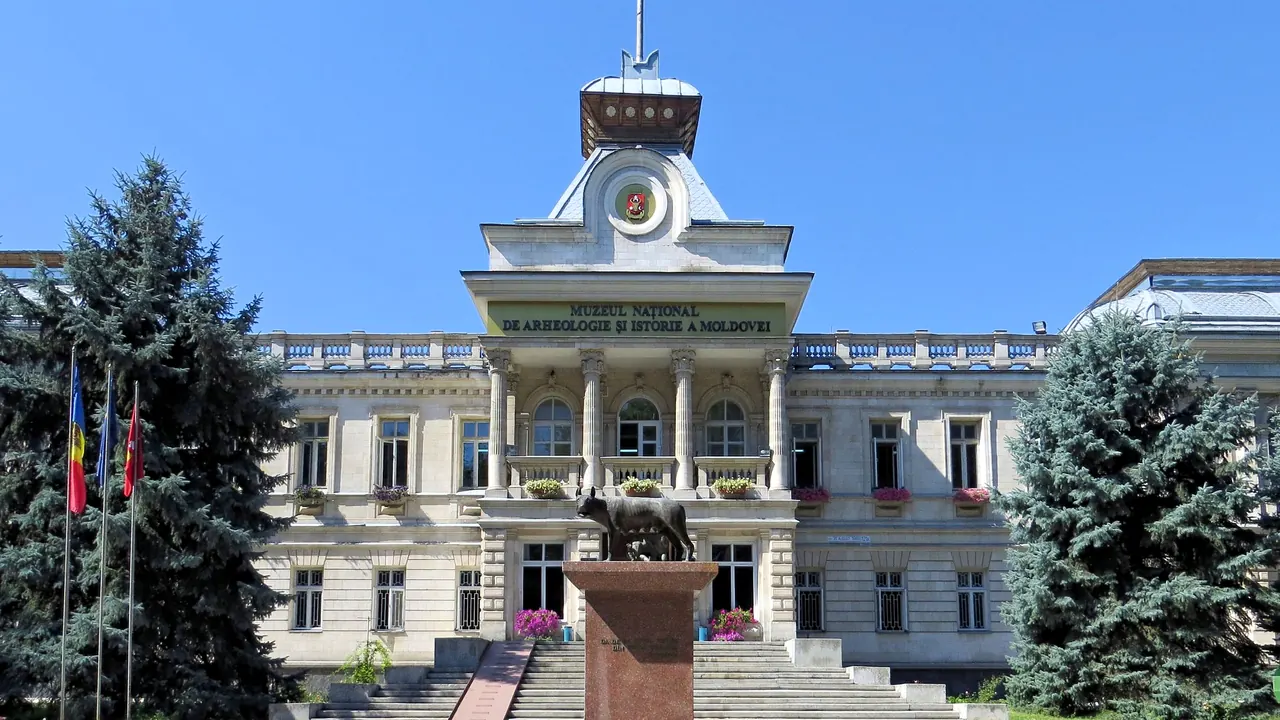
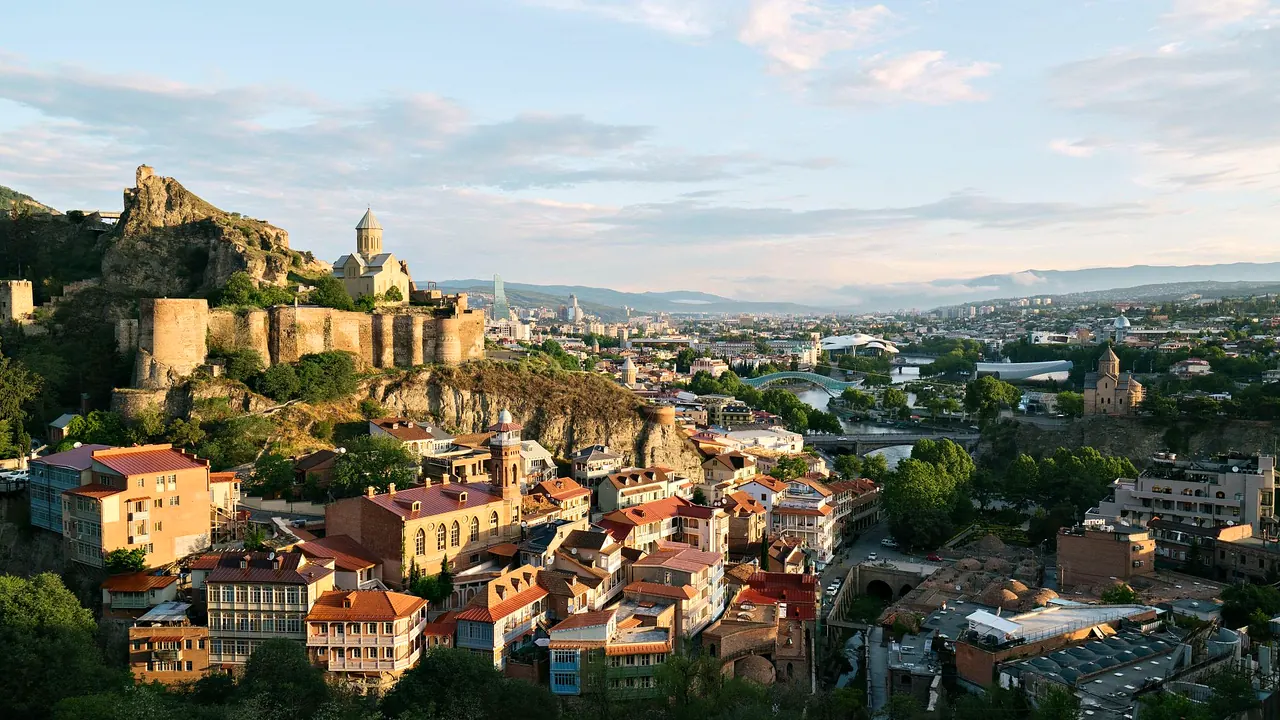
Photos: Chișinău by Alexandru Panoiu, CC BY 2.0, cropped; Tbilisi by ArtHouse Studio, Pexels License.
Chișinău or Tbilisi?
Our verdict in twelve categories, each scored against the same fixed benchmark cities, and the climate month by month, so you can choose for your trip.
Choose Chișinău for
- beaches
- getting around
- prices
Chișinău suits a calm, unhurried trip built around wine. Its biggest draws are the vast underground cellar towns of Cricova and Mileștii Mici and the cliff monastery at Orheiul Vechi. In between, a flat, compact centre of limestone boulevards takes a couple of easy days to see. It fits travellers who like Soviet modernism, cheap nights at the opera and a city that asks little of them, and who don't mind thin nightlife or a short list of museums.
Choose Tbilisi for
- wellness
- nightlife
- culture and sights
Tbilisi is the better choice for almost every other kind of trip. The food is more distinctive, the old town of carved balconies and early churches below Narikala gives you more to explore, and the sulphur baths, the techno clubs and the Caucasus within a morning's drive add things Chișinău simply lacks. The cost is steep cobbled streets, heavy traffic and a hot valley summer, but for food, culture, going out or mountains it gives far more back.
Scoreboard
Twelve categories on one fixed scale from 0 to 100. The shaded stretch is the gap between the two.
Your match
Pick a travel style or drag the sliders, and both match scores follow your weighting.
Wins on beaches and getting around with your weighting.
Wins on wellness and nightlife with your weighting.
What matters to you?
Category by category
What the scores mean for a trip.
Beaches & swimming
Neither city is a place to swim, and both rely on fresh water in summer. Chișinău's main option is the river at Vadul lui Vodă, about half an hour east, where people spread out on sandy and grassy banks beside the slow, warm Dniester.
Tbilisi offers the big reservoir known as the Tbilisi Sea and the small lakes on the hills above town, Turtle Lake and Lisi Lake. Its Black Sea coast is about five hours away, a separate trip rather than a day out.
Food & drink
Tbilisi eats better. Khinkali, khachapuri still hot from the oven, walnut sauces, pomegranate and shoti bread from clay ovens add up to a cuisine many people travel for, and the supra feast is still how Georgians celebrate. Moldovan food is simpler and more filling: plăcinte, mămăligă with brânză and zeamă soup, alongside Russian and Ukrainian staples.
Both are wine countries, but the experience differs. In Chișinău you drink local reds such as Fetească Neagră in wine bars, while Tbilisi pours amber qvevri wines from Kakheti in the old houses of Sololaki. Both cities have a market worth a morning, the Central Market and the Dezerter Bazaar, and neither has much fine dining.
Culture & sights
Tbilisi has much more to see. Its old town is a tangle of crooked lanes and wooden balconies below Narikala, with sixth-century Anchiskhati, Sioni Cathedral and Metekhi on its cliff. The Georgian National Museum and its Colchian gold give it a collection Chișinău cannot match.
Chișinău is a tidy 19th-century grid around Ștefan cel Mare Boulevard and Cathedral Park. Its best museum is the Ethnography and Natural History museum in its Moorish-revival building, and its most distinctive sight is Soviet modernism such as the Gates of the City towers. Two days are enough, where Tbilisi rewards several.
Nightlife
This is one of the widest gaps between the two. Tbilisi has a techno scene known across Europe, with large clubs in industrial buildings, strict doors and dancing well past sunrise at weekends, and Sololaki and Marjanishvili have plenty of wine bars and courtyard bars for gentler evenings.
Chișinău's nights out happen on a few streets in the old centre, with cocktail bars, craft beer pubs and summer terraces, plus a handful of lounges that stay open late at weekends. It is friendly and inexpensive but small, and midweek it goes quiet.
Nature & outdoors
Tbilisi has the landscape. Steep green hills rise on both sides of the city, a funicular climbs Mtatsminda, and trails lead from Turtle Lake into the forested national park. Within about two hours on the Military Road you reach Gudauri for skiing, hiking and paragliding below the high Caucasus.
Around Chișinău the country is gentler: farmland, vineyards and the oak and beech woods of the Codri hills. The Răut gorge at Orheiul Vechi is the most dramatic walk, and Valea Morilor park gives space for a run, but there are no mountains.
Day trips
Both cities make good bases, and Tbilisi has the wider and grander choice. UNESCO-listed Mtskheta is half an hour away. Further out you can reach the rock-cut town of Uplistsikhe, walled Sighnaghi and the qvevri cellars of Kakheti, the cave monastery of David Gareja in the semi-desert, and Ananuri on the way to the mountains.
Chișinău's trips are narrower in theme but distinctive. Cricova and Mileștii Mici are underground wine towns with many kilometres of tunnels, and Orheiul Vechi has a monastery carved into a cliff above a river bend. In both cities, a driver or a tour makes most outings easier.
Good for families
Tbilisi has more to do with children. The funicular up to the Ferris wheel at Mtatsminda and the cable car to Narikala are real treats, and children are welcome at restaurant tables late into the evening. The downside is the steep cobbles, the underpasses with stairs and the summer heat, all hard work with a pushchair.
Chișinău is flatter and calmer, but it has less for children: the zoo, the playgrounds at Valea Morilor and the Dendrarium, and shows at the Soviet-built circus. It works for a short stop rather than as a family base.
Getting around
Both are easy enough to get around, but the city layouts differ. Chișinău's centre is a flat grid you can walk, with trolleybuses running along the main boulevards. Tbilisi's central districts are close together too, but the walking is often uphill and many crossings mean an underpass.
Tbilisi has a two-line metro with deep stations that covers its main axis. In both cities, visitors lean on cheap ride-hailing apps, struggle to read the minibus routes, and use a driver for trips out of town.
Shopping & style
Tbilisi gives you more to browse. The Dry Bridge market spreads Soviet badges, old silver, cameras and paintings along the river, workshops sell cloisonné enamel and felt, and a few Georgian designers have boutiques in Vera and Sololaki.
In Chișinău, wine is the main purchase: cellar shops stock sparkling wines and divin brandy from every region. Beyond that there are embroidered blouses and pottery at craft stalls, the Central Market and a few malls.
Affordability
Both cities are very cheap by European standards, so the difference is in the details. In Chișinău almost nothing is expensive, and wine by the glass or on a cellar tour and seats at the opera are particular bargains.
In Tbilisi, eating and drinking Georgian costs little, and most churches are free. However, the boutique hotels in the old town and Sololaki, cocktails and imported goods come closer to Western prices.
Live music & performing arts
Both cities have a full opera and ballet season in a grand house, but Tbilisi adds something unique. Its national dance ensembles perform athletic folk choreography, and the ancient polyphonic singing, which UNESCO recognises, can be heard in concert or at a church service. The Gabriadze marionette theatre stages puppet plays that need no translation.
Chișinău's strengths are classical. Beyond the opera house, the Organ Hall puts on chamber and organ concerts and the National Philharmonic has orchestral programmes, all at very low ticket prices. Fewer performances happen in summer, and the jazz scene is small.
Wellness & relaxation
The gap here is wide. Tbilisi was built on warm springs, and the domed bathhouses of Abanotubani still offer private sulphur pools and the kisi scrub, a centuries-old ritual worth planning an afternoon around.
Chișinău has no bathing tradition of its own. Relaxing there means a hotel spa, a sanatorium out in the countryside or simply a slow afternoon with wine in the shade of its boulevards. It is the calmer city to walk around, though.
When should you go?
Pick your month. The climate figures are measured averages, not a forecast.
Chișinău in July
Tbilisi in July
Daytime high, °C
Rainfall in the month, mm
Temperature and rainfall are climate normals, averaged over the years shown. Chișinău: 1991-2020 normals, Kisinev (11.2 km from centre). Tbilisi: 1991-2020 (sunshine 1961-1990) normals, Tbilisi (13.8 km from centre).
Chișinău has a sharply continental year. Winters are properly cold, with daytime highs around 1°C in January and short grey days, so the season really runs from May to September. July and August reach about 29°C with long, bright days, though early summer brings the year's heaviest rain, so pack for the odd downpour in June and July. Late spring and September are the most comfortable months for walking and for vineyard trips.
Tbilisi is milder in winter, around 7°C in January, so a city break in the cold season is more realistic than in Chișinău. Its summer is hotter, at about 32°C in July and August, and in the low valley walking is hard in the middle of the day. May is the wettest month, at close to 97mm, so the best times for the hills and the old town are early spring and the weeks from mid-September through October. Neither city is a swimming destination, but from June to August both are warm enough for a dip in a lake.
Which traveller are you?
For a food and nightlife trip, Tbilisi is the clear pick. Khinkali, khachapuri and amber qvevri wines make some of the region's best eating. After dinner come techno clubs that run past dawn and courtyard bars near Marjanishvili.
On a relaxing and wellness trip, Tbilisi wins because of Abanotubani: a private sulphur pool and a kisi scrub under brick domes, a ritual Chișinău cannot match. In Chișinău, unwinding means a hotel spa or a slow afternoon on a terrace.
On a trip on a tight budget, either city works, with a slight edge to Chișinău, where hotels, meals, taxis, cellar tours and opera tickets all cost very little. In Tbilisi, the old town's boutique hotels and cocktail bars come closer to European prices.
Before you go
| Measure | Chișinău | Tbilisi |
|---|---|---|
| Official language | Romanian | Georgian |
| Currency | Moldovan Leu (MDL) | Lari (GEL) |
| Sockets | CF220 V, 50 Hz | CF220 V, 50 Hz |
| Driving side | Right | Right |
| Time zone | UTC+2, UTC+3 in summer | UTC+4 |
| Emergency number | 112 | 112 |
| Elevation | 85 m | 575 m |
| Main airport | Chişinău International Airport (RMO)13 km from centre76 non-stop destinations | Tbilisi International Airport (TBS)15 km from centre64 non-stop destinations |
| Public holidays this year | 16 days | 17 days |
By the numbers
| Measure | Chișinău | Tbilisi |
|---|---|---|
| Population | 567,038 | 1,331,485 |
| People per km² | 4,610 | 1,849 |
| Museums within 10 km | 13 | 29 |
| UNESCO World Heritage sites within 50 km | 0 | 1 |
Where else could you go?
Every comparison below shares a destination with this one, so you can follow Chișinău or Tbilisi somewhere new.
- Yerevanvs Tbilisi
- Batumivs Tbilisi
- Brasovvs Chișinău
- Bucharestvs Chișinău
- Sibiuvs Chișinău
- Cluj-Napocavs Chișinău