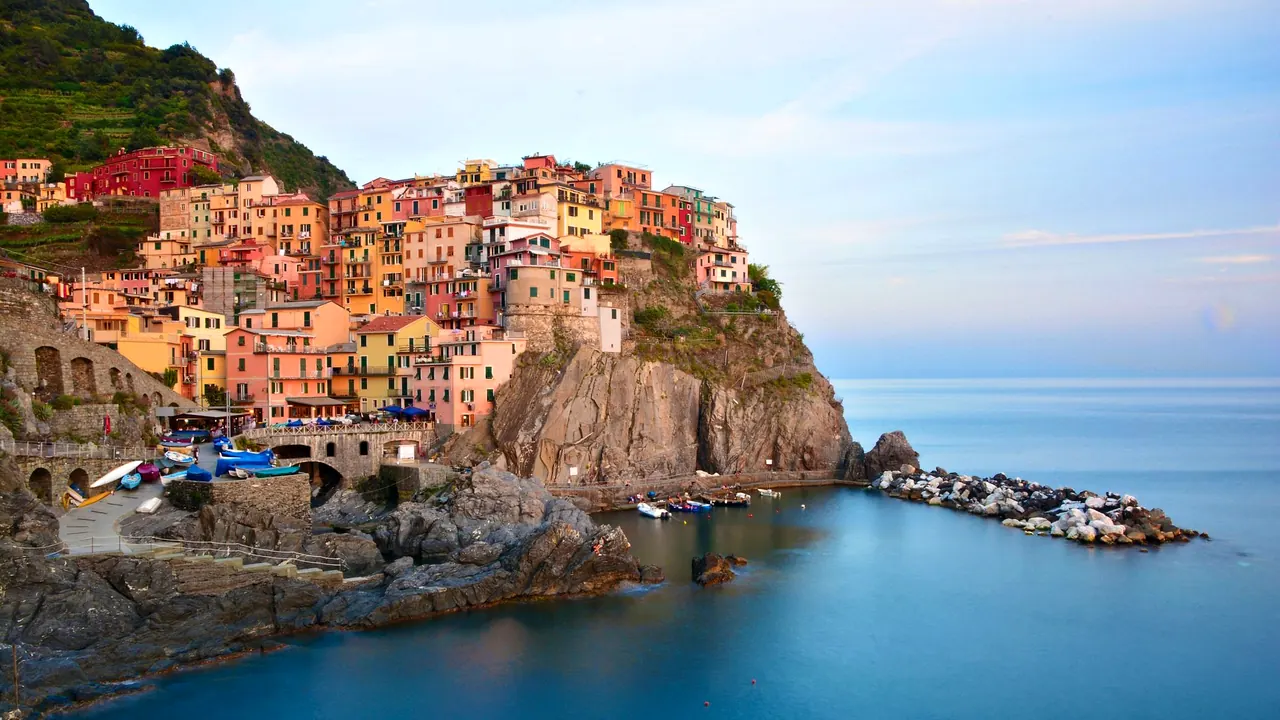
Photos: Cinque Terre by Narcisa Aciko, Pexels License.
Cinque Terre or Puglia?
Our verdict in twelve categories, each scored against the same fixed benchmark cities, and the climate month by month, so you can choose for your trip.
Choose Cinque Terre for
- getting around
- nature and the outdoors
Cinque Terre is for walkers who want a compact, car-free stretch of coast. Its five cliff villages are joined by trail, train and boat, so the days go on the paths between vineyards and the evenings on a quiet harbour wall. It suits a few days of hiking and swimming off the rocks for fit adults, and once you are there it needs very little planning.
Choose Puglia for
- nightlife
- live music and the arts
- families
Puglia gives more of almost everything else: long sandy beaches, a much deeper food culture, baroque Lecce and the trulli, summer nights in Gallipoli and a slower, roomier pace that works well for families. What it asks in return is distance. It is a region to drive around for a week or more, with a car and often two bases, rather than one short coast to walk.
Scoreboard
Twelve categories on one fixed scale from 0 to 100. The shaded stretch is the gap between the two.
Your match
Pick a travel style or drag the sliders, and both match scores follow your weighting.
Wins on getting around and nature and the outdoors with your weighting.
Wins on nightlife and live music and the arts with your weighting.
What matters to you?
Category by category
What the scores mean for a trip.
Beaches & swimming
Puglia is the beach destination of the two. The Ionian shore of the Salento has long stretches of pale sand and shallow turquoise water. The Adriatic side adds rock platforms at Polignano and coves near Otranto, and the Gargano has sea caves around Vieste.
The sea at Cinque Terre is just as clear, but the shore is mostly cliff. Fegina at Monterosso is the only real beach. Everywhere else you swim off harbour slipways and rocks at Vernazza or Manarola, which is fine for a dip between walks but not for a full day on the sand.
Food & drink
Both regions cook simply from local produce, but Puglia has far more to eat. Cinque Terre's Ligurian table is narrow: trofie with pesto, focaccia, Monterosso anchovies and a cone of fried fish, with Sciacchetrà to finish. In the busier villages, many menus are written for day-trippers.
In Puglia you can eat burrata from the Murge, orecchiette, panzerotti, Lecce's pasticciotto, sea urchins on the Bari waterfront and meat from the butcher-grill houses of the Valle d'Itria, with Primitivo or Negroamaro to drink. Neither is the place for serious fine dining.
Culture & sights
In Cinque Terre the landscape is the monument: terraced cliffs and five villages, listed by UNESCO together. Beyond that there are modest striped churches and the watchtower above Vernazza, and a day or two covers it all.
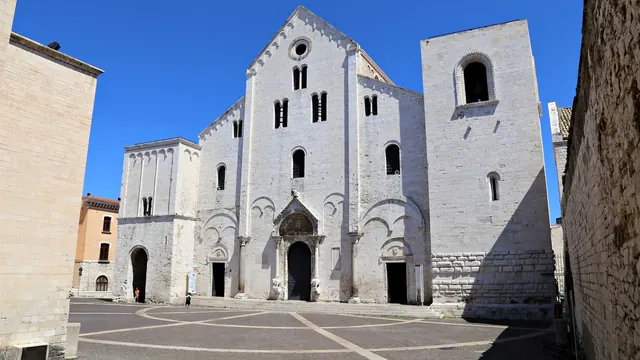
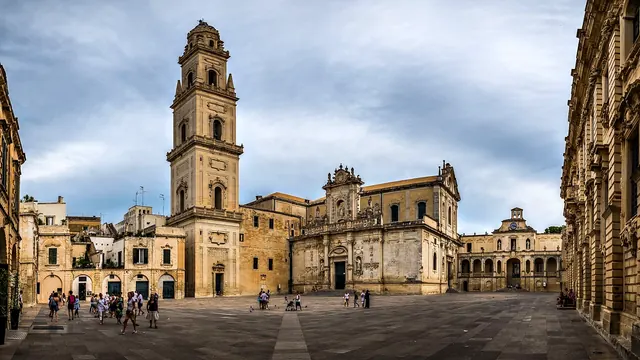
Puglia has much more to see, though it is spread over a wide area. There is Lecce's baroque and its Roman amphitheatre, the trulli of Alberobello, Castel del Monte and a line of Romanesque cathedrals from Trani to Otranto. Expect to drive between them.
Nightlife
An evening in Cinque Terre means a sunset glass of white on a harbour wall, perhaps a few bars in Monterosso or Riomaggiore, and bed before midnight. Puglia has a real summer scene, with Gallipoli's beach clubs running into the small hours and Lecce's baroque lanes full of people drinking. Outside July and August the Puglian coast goes quiet too, but Bari's old town keeps its bars open all year.
Nature & outdoors
Cinque Terre is the better place to walk. The Sentiero Azzurro along the cliffs, the Sentiero Rosso on the ridge and the old mule tracks give steep, varied hiking with the sea always below, and the marine reserve adds kayaking and diving.
Puglia's countryside is softer: olive groves and dry-stone walls, best seen by bike. Its drama is all in the Gargano, with the Foresta Umbra, the sea caves and the Tremiti islands, which is a long way from the Salento.
Day trips
Both make good bases for outings, and Puglia has more variety close at hand. From Cinque Terre, boats run to Portovenere and the train takes you to Pisa, Lucca or Genoa in under two hours. That gives a mix of Tuscan cities and Riviera ports without needing a car.
In Puglia a day out means hopping between towns by car: Ostuni, Locorotondo and Martina Franca in the Valle d'Itria, Trani on the Adriatic, and Otranto from Lecce. Most visitors put Matera's cave dwellings first, about an hour from Bari.
Good for families
Cinque Terre is hard work with small children. The villages are built of steps, the trains are packed in summer, and Corniglia sits hundreds of steps above its station. It works for older children who like walking, and families with toddlers usually stay in flat Monterosso.
Puglia is much easier. It has shallow sandy beaches on the Ionian side, villas and masserie with pools, the safari park at Fasano, and a way of life in which children stay up late in the piazza. You will need a car.
Getting around
Cinque Terre is the easier place to get around. A coastal train links the five villages a few minutes apart, boats run between the harbours in season and the trails connect the rest, so a car only gets in the way. The catch is the summer crush on platforms and the steep paths.
Puglia is long and spread out, and you more or less need a car. The main railway line serves Bari, Polignano, Monopoli and Lecce, but local trains and buses to the inland towns and the Salento are slow, and the Gargano is four to five hours from the southern tip.
Shopping & style
Neither is a place to go shopping. In Cinque Terre it ends with pesto, anchovies, lemon liqueur and wine. Puglia goes further into crafts, with the ceramic workshops of Grottaglie, papier-mache from Lecce and linen from the Valle d'Itria, and Bari's streets around Via Sparano have the usual Italian chains.
Affordability
Puglia is the cheaper trip. The main reason is Cinque Terre's accommodation: its few village rooms cost far more in season than similar rooms elsewhere on the Italian coast, and you also pay to use the paths. Many travellers on a budget sleep in La Spezia or Levanto instead.
In Puglia, eating out costs less than in most of northern Italy, and staying inland or going in June or September keeps room costs down. Car hire and the paid lidos add to the bill.
Live music & performing arts
Cinque Terre has little beyond the bands at feast-day processions and the odd concert in a church, and for anything more you go to La Spezia or Genoa. Puglia has opera at Bari's Teatro Petruzzelli and a summer opera festival in the courtyard of Martina Franca's ducal palace. It also has pizzica, the folk dance of the Salento, which fills the open-air Notte della Taranta at Melpignano each August.
Wellness & relaxation
Neither has a spa culture, and in both the rest comes from the pace. In Cinque Terre the calm comes from car-free lanes and a terrace above the sea, and it is best in spring, in autumn or early in the morning, before the day visitors arrive.
Puglia offers more. There are masserie among the olive groves with pools and their own spas, the sulphur springs of Santa Cesarea Terme in sea caves, and the long-established thermal spa at Torre Canne.
When should you go?
Pick your month. The climate figures are measured averages, not a forecast.
Cinque Terre in July
Puglia in July
Daytime high, °C
Rainfall in the month, mm
Where the figures come from
Cinque Terre's temperatures are measured 78 km from the centre, at Pisa / S. Giusto.
Cinque Terre has no rain gauge within 25 km of the centre, so its rainfall comes from a gridded climate dataset read at the destination rather than from a gauge further away.
Puglia's temperatures are measured 64 km from the centre, at Brindisi.
Puglia has no rain gauge within 25 km of the centre, so its rainfall comes from a gridded climate dataset read at the destination rather than from a gauge further away.
Temperature and rainfall are climate normals, averaged over the years shown. Cinque Terre: 1991-2020 normals, Pisa / S. Giusto (77.8 km from centre). Puglia: 1991-2020 (sunshine 1981-2010) normals, Brindisi (64.4 km from centre).
The two have almost the same temperatures through the year. Both have a sea warm enough for swimming from June to September, and both reach about 30°C in July and August, too hot for long walks or a day on the village stairways. The real difference is rain. Cinque Terre stays fairly dry from May to August, then turns wet in September, and October and November bring around 170mm a month, enough to close sections of the coastal path. That makes April and May the best months for hiking there, warm enough for the trails, drier than autumn and already getting long sunny days.
Puglia is drier all year, and its wettest month gets about half Cinque Terre's autumn rain. It is also a little sunnier, and the sea is a degree warmer, reaching 26°C in August. So September stays reliable for a beach trip in Puglia after Cinque Terre's weather has turned, and early October is often still mild. Winters are mild in both and slightly milder in Puglia, but neither is a beach destination in that season.
Which traveller are you?
For an outdoors trip, Cinque Terre is the stronger choice. Walking is the whole point of the place: the paths lead from village to village above the sea, so a day's hike ends with a short train ride back. Puglia's outdoors is gentler and much more spread out.
On a family trip with young children, Puglia is far easier. It has calm water and room to spread out, and Italian family life welcomes children everywhere. Cinque Terre, built almost entirely of steps, really only works with older children who enjoy walking.
For a food and nightlife trip, Puglia comes out well ahead. Its cooking has enough range to fill a week of meals without repeating, and in summer the evenings go on late. Cinque Terre's menus are narrow, and its villages go quiet early.
Before you go
| Measure | Cinque Terre | Puglia |
|---|---|---|
| Official language | Italian | Italian |
| Currency | Euro (EUR) | Euro (EUR) |
| Sockets | CFL230 V, 50 Hz | CFL230 V, 50 Hz |
| Driving side | Right | Right |
| Time zone | UTC+1, UTC+2 in summer | UTC+1, UTC+2 in summer |
| Emergency number | 112 | 112 |
| Main airport | Pisa International Airport (PSA)82 non-stop destinations | Bari Karol Wojtyła International Airport (BRI)104 non-stop destinations |
| Public holidays this year | 13 days | 13 days |
By the numbers
| Measure | Cinque Terre | Puglia |
|---|---|---|
| Population | - | 3,866,174 |
| People per km² | - | 198 |
| Swim season, months above 21 °C | 4 months | 4 months |
Where else could you go?
Every comparison below shares a destination with this one, so you can follow Cinque Terre or Puglia somewhere new.
- Portofinovs Cinque Terre
- Lake Gardavs Cinque Terre
- Lake Comovs Cinque Terre
- Amalfi Coastvs Puglia
- Venicevs Cinque Terre
- Hvarvs Puglia