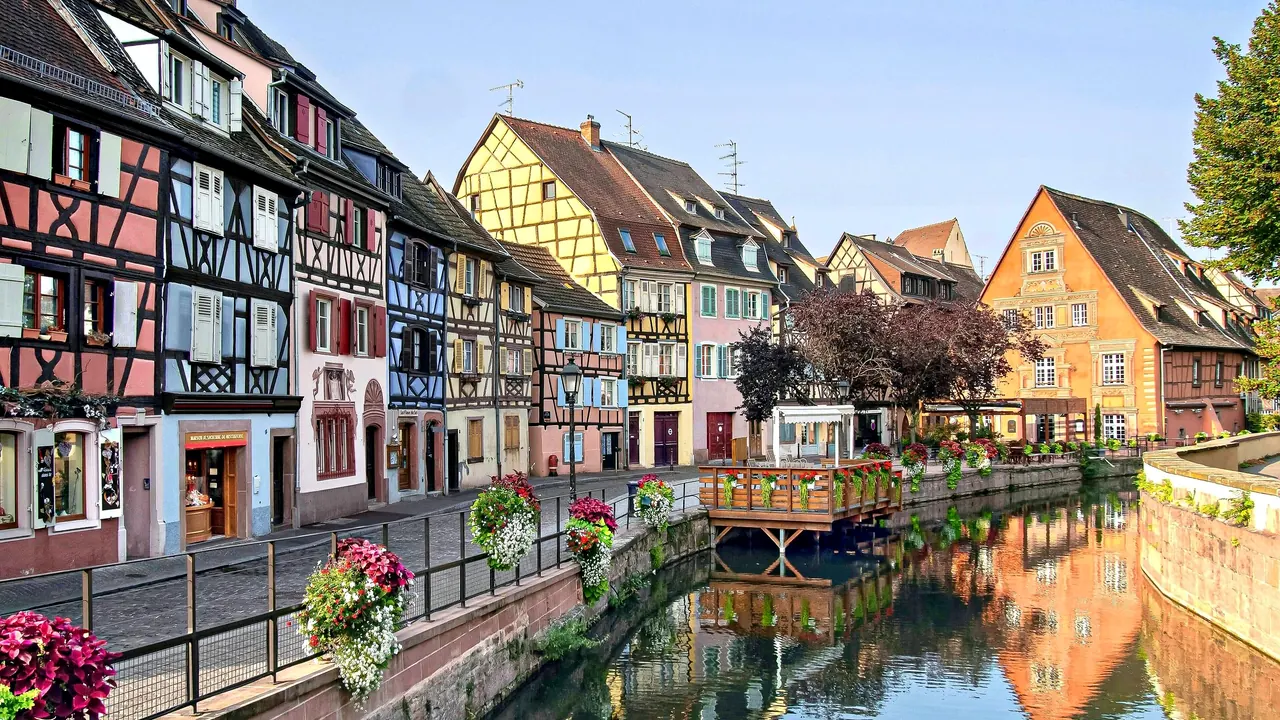
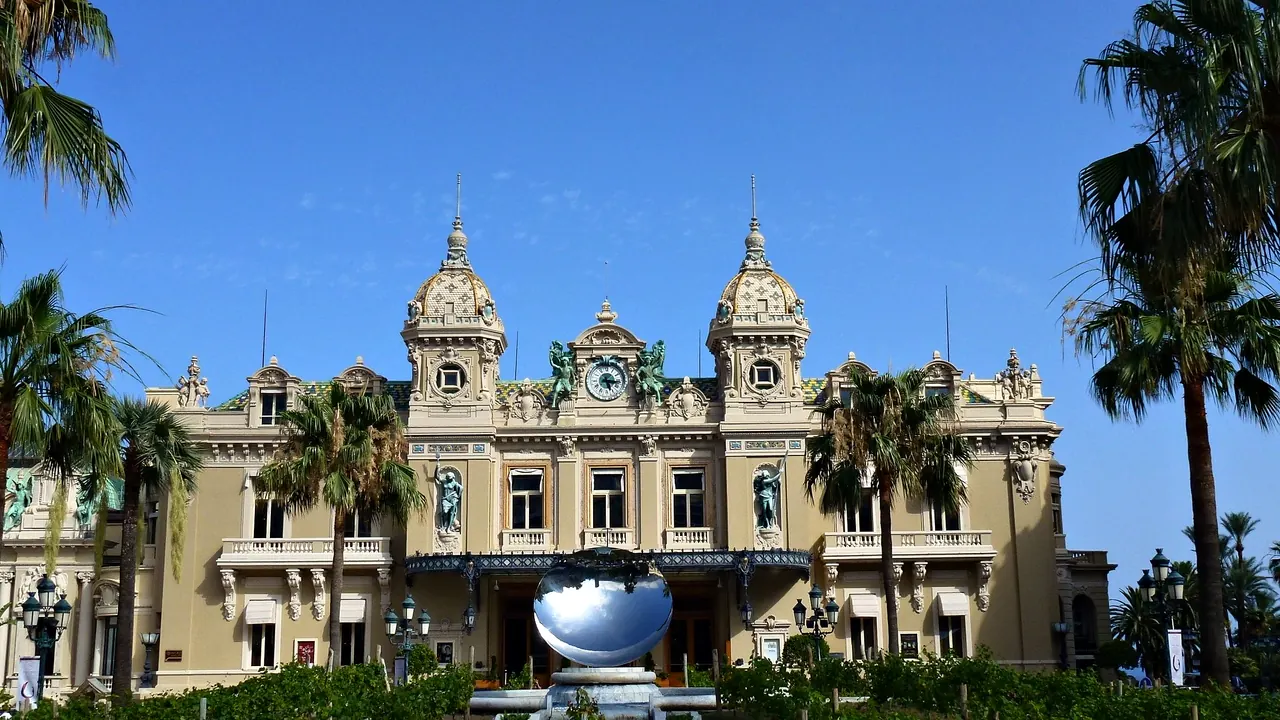
Photos: Colmar by Rolf Kranz, CC BY-SA 4.0, cropped; Monaco by otterboris, CC BY 3.0, cropped.
Colmar or Monaco?
Our verdict in twelve categories, each scored against the same fixed benchmark cities, and the climate month by month, so you can choose for your trip.
Choose Colmar for
- nature and the outdoors
- prices
- food and drink
Colmar suits travellers who want a painted medieval town, a serious wine region and open country, all at a moderate cost. Its old town and the Isenheim Altarpiece reward a slow look, the winstubs serve a hearty Franco-German table, and the vineyards and Vosges ridges begin almost at the edge of town. Choose it for wine, walking, cycling and evenings spent over a long dinner rather than out on the town.
Choose Monaco for
- beaches
- live music and the arts
- nightlife
Monaco is the pick for a short, polished stay on the sea, where you can swim from Larvotto, take in an opera at the Salle Garnier and finish the night on the casino square. It is compact, easy to cross on foot and by lift, and the coastal railway puts Nice, Menton and the Italian Riviera within easy reach. It does ask for a large budget, and it offers almost nothing in the way of wild landscape.
Scoreboard
Twelve categories on one fixed scale from 0 to 100. The shaded stretch is the gap between the two.
Your match
Pick a travel style or drag the sliders, and both match scores follow your weighting.
Wins on nature and the outdoors and prices with your weighting.
Wins on beaches and live music and the arts with your weighting.
What matters to you?
Category by category
What the scores mean for a trip.
Beaches & swimming
For swimming there is no contest. Colmar lies in the Alsace plain hundreds of kilometres from any coast, and a dip means a municipal pool or a small lake up in the Vosges valleys.
Monaco has the Mediterranean, though on a modest scale: one landscaped beach at Larvotto with clear, calm water, plus rocky platforms and a summer seawater pool on the port. Larvotto is short and crowded on summer weekends, but it is a proper swim in warm sea, which Colmar cannot offer at all.
Food & drink
Colmar eats better for most visitors because its table is rooted in a region. Winstubs serve choucroute, baeckeoffe, tarte flambée and munster cheese, the covered market by the Lauch is good for charcuterie and gingerbread, and the local Riesling and Gewurztraminer are poured everywhere, with cellars a short drive away.
Monaco's strength lies at the top end, in grand hotel dining rooms and starred tables around the casino, with Ligurian-Provençal dishes such as barbajuans and stocafi at the Condamine market. Casual eating is thin and expensive, so it suits a special dinner more than a week of good everyday meals.
Culture & sights
Colmar gives the richer cultural visit. Its old town survives as a coherent whole of half-timbered houses, canals and carved façades such as the Maison Pfister, and the Unterlinden Museum holds Grünewald's Isenheim Altarpiece, a masterpiece worth the journey on its own.
Monaco's sights are more about the state's spectacle than its art: the Prince's Palace and the changing of the guard, the Grimaldi tombs in the cathedral, the cliff-top Oceanographic Museum and the Belle Époque casino. Both fill a day or two, but Colmar's art and architecture go deeper.
Nightlife
Monaco has much more going on after dark, though of a narrow, glamorous kind. Hotel bars, the gaming rooms, famous clubs and seafront lounges on Avenue Princesse Grace run until dawn in summer, with strict door policies and very expensive drinks.
Colmar's evening is dinner followed by a glass of Alsace wine in a wine bar or on a Petite Venise terrace, and the streets go quiet early. For anything resembling a club night you would take the train to Strasbourg.
Nature & outdoors
This is where the two cities are furthest apart. From Colmar the vineyards rise straight onto the forested Vosges, with glacial lakes, summer pastures, ridge-top views towards the Black Forest and the Alps, and quiet roads for cycling along the wine route.
Monaco is almost entirely built up, and its nature consists of designed gardens such as the Exotic Garden and the rose garden in Fontvieille. Its outdoor life is on the water, snorkelling in the protected area off Larvotto or chartering a boat, and real hiking means crossing into the French hills behind.
Day trips
Both make excellent bases, and the difference is in the setting. From Colmar you visit inland wine country: Eguisheim, Riquewihr and Kaysersberg a few kilometres apart, Haut-Koenigsbourg on its ridge, Strasbourg by train, and Basel and Freiburg across the borders. The villages are best reached by car or bike.
Monaco's outings run along the coast, and the railway makes them easy without a car: Nice, Menton and Villefranche are close, Èze and Cap Ferrat sit above the sea, and Sanremo and Dolceacqua lie just over the Italian border.
Good for families
Colmar works better for children overall. The flat old town has boat rides through Petite Venise and storks on the roofs, and around it lie the stork and otter park at Hunawihr, free-roaming macaques at Kintzheim, the railway and car museums at Mulhouse and Europa-Park across the Rhine, though most of these need a car.
Monaco is safe and spotless, and its aquarium, with sharks and a touch pool, is a real highlight, as is Larvotto's shallow water. Beyond that the principality is aimed at adults, and the cost makes a long family stay hard to justify.
Getting around
Both centres are walkable, but Monaco is easier to use as a whole. Its free lifts, escalators and tunnels flatten the steep tiers, buses reach every district, and the coastal railway takes you along the Riviera without a car.
Colmar's compact old town is easy on foot, and trains run quickly to Strasbourg and Mulhouse. The difficulty lies between the towns: buses to the wine villages and the Vosges are limited, so a hired car or bicycle becomes almost essential.
Shopping & style
Monaco is the stronger shopping destination, provided luxury is what you are after. The circuit around the casino, Avenue des Beaux-Arts and the Métropole arcades gathers fashion houses, jewellers and watchmakers in a few polished streets, while Boulevard des Moulins covers everyday needs.
Colmar is about taking the region home: wine bought from the producer, Soufflenheim pottery, printed table linen and gingerbread, and the Christmas markets across several squares. It is charming but small, with little fashion.
Affordability
Colmar is far kinder to the wallet, costing about what you would expect of a French provincial town. Meals and wine are reasonable, and village tastings are often free, but rooms are the pinch point in summer and during the Christmas markets.
Monaco is among the most expensive places in the world to stay, from hotel rooms to a casual café meal. Its free lifts, cheap buses and walks around the port soften the cost a little, and many visitors keep it affordable by sleeping in a nearby French town.
Live music & performing arts
Monaco has a genuinely serious stage for its size. The Opéra de Monte-Carlo in the gilded Salle Garnier, the Philharmonic and Les Ballets de Monte-Carlo carry international weight, with opera concentrated in winter and the Printemps des Arts in spring.
Colmar's small municipal theatre and touring visits from the Opéra national du Rhin are modest by comparison. Its musical life comes in festival bursts, classical music in July and jazz in autumn, and outside them a proper concert means going to Strasbourg or Basel.
Wellness & relaxation
For pampering, Monaco is the place. A large thalassotherapy centre beside the casino offers heated seawater pools and hammams overlooking the sea, and the grand hotels add their own spas, all at a price.
Colmar has only hotel spas, but it offers a different kind of rest: a slow pace once the day-trippers leave, canal-side evenings and unhurried walks through the vines. Its calm comes from the town itself, whereas Monaco's is something you book.
When should you go?
Pick your month. The climate figures are measured averages, not a forecast.
Colmar in July
Monaco in July
Daytime high, °C
Rainfall in the month, mm
Temperature and rainfall are climate normals, averaged over the years shown. Colmar: 1991-2020 normals, Ihringen (21.1 km from centre). Monaco: 1991-2020 normals, Nice (19.9 km from centre).
Colmar has a continental year. Summers are warm, peaking around 27°C in August, and the long, sunny days of June to August suit vineyard walks and the Vosges ridges, though May to July is also when the heaviest rain falls, often in showers. September and October are mild and comfortable for walking, and autumn is the loveliest season among the vines. From November to February highs hover around 6°C with little sun, which is cold for sightseeing but fits a winter trip built around the town itself.
Monaco is milder and much sunnier in every month, and its winters stay pleasant for walking. From June to September the sea is warm enough to swim, reaching about 25°C in August. The driest, sunniest stretch runs from May to August, with only around 13mm of rain in July, so late spring and early summer give the best mix of warmth and dry days. September stays warm and the sea is still inviting, but the rain is noticeably heavier. October and November are the wettest months, with up to 138mm.
Which traveller are you?
On a beach and sun trip, Monaco is the clear choice. Larvotto's calm, clear water, the summer seawater pool on the port and long dry summers give you real swimming, while Colmar sits far inland with only pools and mountain lakes.
For an outdoors trip, Colmar wins easily. Waymarked paths run through the vines between wine villages, the Route des Crêtes climbs past the Hohneck and the Grand Ballon, and the plain is good for cycling. Monaco is built up, with gardens rather than countryside.
On a trip with a tight budget, Colmar is far easier to manage. Set lunches, regional wine and village tastings stay reasonable, and staying outside the centre cuts the cost of a room. In Monaco almost everything costs a lot, so budget travellers usually sleep in France.
Before you go
| Measure | Colmar | Monaco |
|---|---|---|
| Official language | French | French |
| Currency | Euro (EUR) | Euro (EUR) |
| Sockets | CE230 V, 50 Hz | CEF230 V, 50 Hz |
| Driving side | Right | Right |
| Time zone | UTC+1, UTC+2 in summer | UTC+1, UTC+2 in summer |
| Emergency number | 112 | 112 |
| Elevation | 185 m | 68 m |
| Main airport | EuroAirport Basel–Mulhouse–Freiburg (BSL)55 km from centre112 non-stop destinations | Nice-Côte d'Azur Airport (NCE)18 km from centre130 non-stop destinations |
| Public holidays this year | 11 days | 12 days |
By the numbers
| Measure | Colmar | Monaco |
|---|---|---|
| Population | 66,970 | 38,857 |
| People per km² | 1,006 | 18,503 |
| Museums within 10 km | 9 | 14 |
| UNESCO World Heritage sites within 50 km | 3 | 2 |
| Swim season, months above 21 °C | - | 4 months |
Where else could you go?
Every comparison below shares a destination with this one, so you can follow Colmar or Monaco somewhere new.