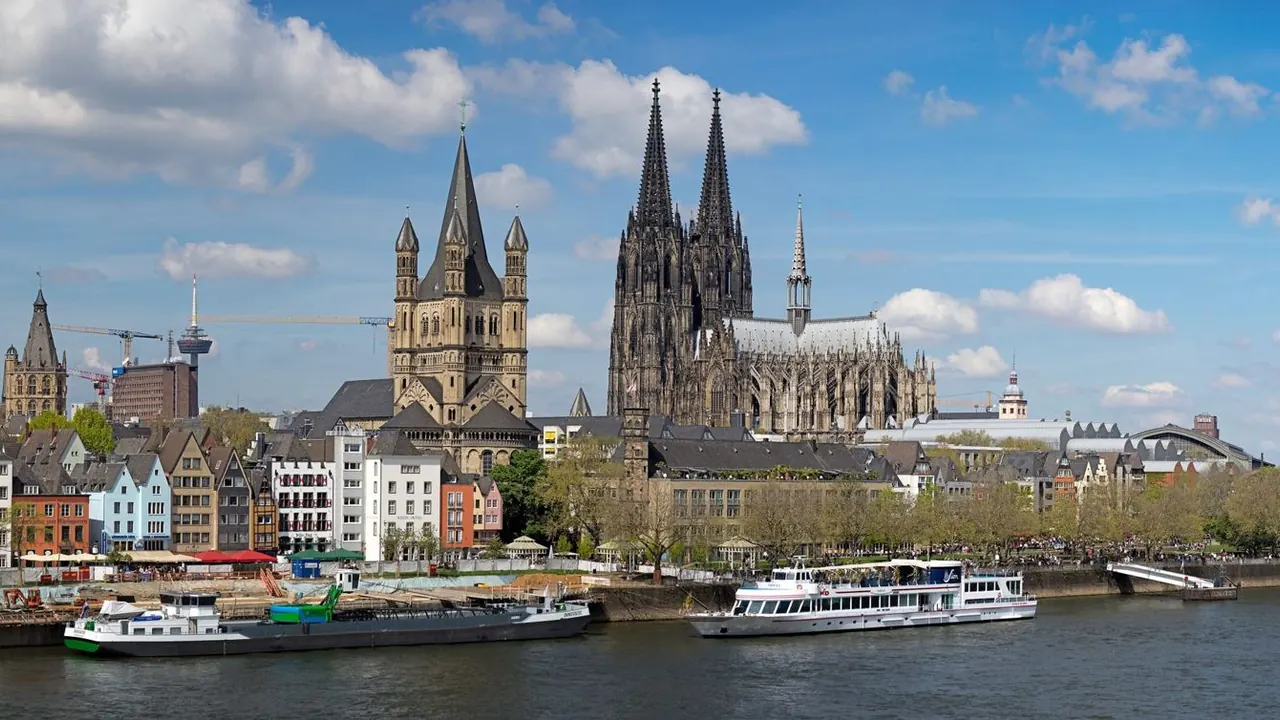
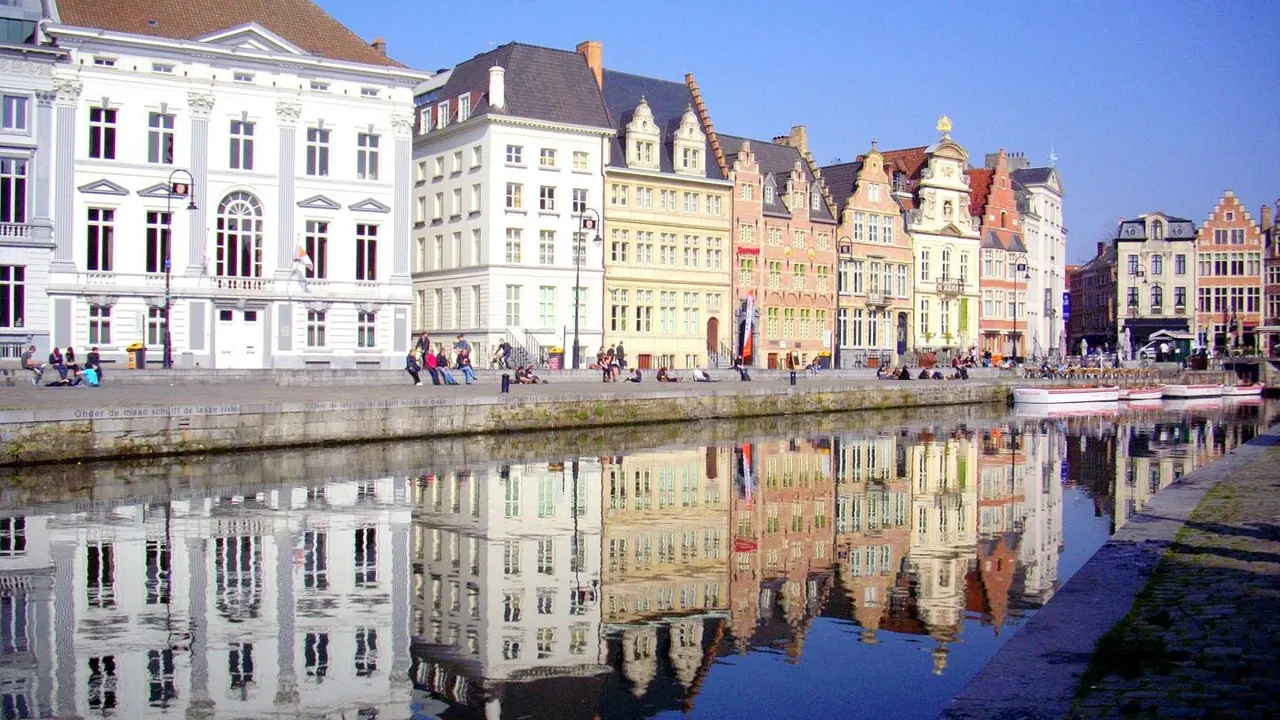
Photos: Cologne by Jörg Braukmann, CC BY-SA 4.0, cropped; Ghent by ykeiko, CC BY-SA 3.0, cropped.
Cologne or Ghent?
Our verdict in twelve categories, each scored against the same fixed benchmark cities, and the climate month by month, so you can choose for your trip.
Choose Cologne for
- nature and the outdoors
- families
- wellness
Cologne suits travellers who want more going on around the sightseeing. Its nights out run from Kölsch brewhouses to factory clubs in Ehrenfeld, its concert life is deeper, and it has a real sauna and thermal bath culture. The wooded hills of the Siebengebirge and the Eifel are close enough for a day's walking. It is also the easier choice with children, and costs a little less day to day.
Choose Ghent for
- beaches
- food and drink
- day trips
If you care most about the look and feel of an old city, Ghent is the better choice. The medieval quays, the castle and the van Eyck altarpiece all sit in a car-free centre you can cross on foot in minutes. Belgian beer and Flemish cooking make the evenings worthwhile, and Bruges, Brussels and Antwerp are each a short train ride away. It is calmer and more compact, and works well as a base for exploring Flanders.
Scoreboard
Twelve categories on one fixed scale from 0 to 100. The shaded stretch is the gap between the two.
Your match
Pick a travel style or drag the sliders, and both match scores follow your weighting.
Wins on nature and the outdoors and families with your weighting.
Wins on beaches and food and drink with your weighting.
What matters to you?
Category by category
What the scores mean for a trip.
Beaches & swimming
Neither city is right for a swimming vacation, but Ghent has the better option because the sea is close enough for a day out. Ostend is about an hour away by train, and the coast tram links wide sandy beaches and dunes. The North Sea is cold and often windy, though. On hot afternoons in town, the Blaarmeersen lake has a sandy shore and supervised swimming.
Cologne has no coast within a day's reach, and the Rhine is unsafe for swimming. What it has is gravel-pit lakes such as Fühlinger See and Otto-Maigler-See, with grassy banks and warmer water than the North Sea. They are fine for a lazy summer afternoon, but that is all.
Food & drink
Ghent is the more rewarding place to eat and drink. The brown cafés around the Vrijdagmarkt serve long lists of Trappist, lambic and abbey beers. The Patershol lanes hold the better restaurants, serving waterzooi, beef stewed in beer and grey shrimp croquettes. Vegetarians are unusually well looked after.
Cologne's food is more one-note. It revolves around the Brauhaus, with hearty plates like Himmel un Ääd alongside the Köbes and the endless small glasses of Kölsch. That ritual is great fun, and Ehrenfeld's Venloer Strasse adds good Turkish food, but beyond that the range is narrower.
Culture & sights
The two are broadly level for sightseeing, but in different ways. Ghent's strength is the whole townscape. The guildhalls of the Graslei and Korenlei, the moated Gravensteen and the three towers seen from St Michael's Bridge make up a medieval centre that is still lived in. At its heart is the van Eyck altarpiece in St Bavo's.
Cologne offers standout buildings and collections in a plain postwar city. The cathedral alone is worth the trip, and the ring of twelve Romanesque churches and the Roman remains add depth. For modern art Cologne goes further, with Museum Ludwig's Pop Art, while Ghent leans towards the Flemish masters.
Nightlife
Cologne offers the fuller night out. A typical evening starts in the Altstadt brewhouses and moves on to cocktail bars in the Belgian Quarter, the student strip on Zülpicher Strasse or the clubs in Ehrenfeld's old factories. It also has one of Germany's biggest gay scenes around Rudolfplatz. Carnival, in the days before Lent, turns the whole city into a costumed party.
Ghent's nights are good for its size but narrower. Evenings mean long sessions over strong beer in the old cafés, or the loud student bars of the Overpoort in term time, and there are only a few small clubs. Its big moment comes in summer, when the Gentse Feesten fills the centre for ten days every July.
Nature & outdoors
Cologne has much better countryside within reach. In under an hour you can be on the trails of the Siebengebirge below the Drachenfels, in the reservoir valleys of the Bergisches Land or among the Eifel's crater lakes and Ahr vineyards. Closer in, the Grüngürtel parks and Rhine cycle paths cover easier days.
Ghent is surrounded by flat farmland. The outdoors there means riding the Leie paths to Sint-Martens-Latem, birdwatching in the Bourgoyen-Ossemeersen wetland or heading out to the Zwin reserve on the coast. It is pleasant, but there are no hills to climb.
Day trips
Both are excellent bases, but Ghent has the richer set of trips on its doorstep. Bruges is under half an hour away and Brussels about the same, Antwerp is under an hour, and Mechelen, Leuven and Lille are all close. Most of these are medieval art cities. Ypres and the First World War battlefields add a sombre, very different day.
Cologne's day trips are more varied in kind but more spread out. Brühl's rococo palaces, Bonn and Aachen's Carolingian chapel are all quick by train. The castles and wine towns of the Rhine Gorge take longer, and Brussels is nearly two hours away.
Good for families
Cologne is clearly better with children. There is a long-established zoo with an elephant park, a chocolate fountain at the riverside Chocolate Museum, the cable car to the Rheinpark playgrounds, and one of Europe's big theme parks just south at Brühl. The one time to avoid with small children is Carnival.
Ghent is safe and easy, since cars are kept out of the centre. Children usually love the Gravensteen's battlements, the canal boats and the old toys at the House of Alijn. After that the options thin out, because the zoo is in Antwerp, and the cobbles make pushchairs hard work.
Getting around
Both cities are easy to get around without a car, but they work differently. Ghent is mostly done on foot or by bike, as its car-free medieval core takes minutes to cross. The catch is that the main station is a twenty-minute walk south, so a tram ride is part of arriving.
In Cologne you step off the train beside the cathedral, right in the old town. However, reaching Ehrenfeld, the Belgian Quarter or the zoo means using the Stadtbahn, whose map is confusing and whose trams can be crowded.
Shopping & style
Cologne has slightly more to offer shoppers, mainly in volume. Schildergasse and Hohe Strasse are among Germany's busiest high streets, and Ehrenstrasse and the Belgian Quarter add independent fashion. Eau de Cologne from the old perfume houses on Glockengasse makes a classic souvenir, and the Advent Christmas markets are a draw.
Ghent is better for browsing. The best of it is the weekend flea market at Sint-Jacobs, the Sunday flower market on the Kouter and the design shops of the Serpentstraat, and the things worth taking home are edible, like cuberdons, mustard and beer.
Affordability
Cologne is the somewhat cheaper stay. A brewhouse dinner with a few Kölsch costs less than a sit-down meal with Belgian beers in Ghent, where restaurant bills add up quickly. In both cities the main churches are free to enter.
Your dates matter more than the city. Cologne's hotel rates jump during the big Messe trade fairs and at Carnival. Ghent's rooms fill and get pricier during the Gentse Feesten in July, but they are reasonably priced the rest of the year.
Live music & performing arts
Cologne has the bigger stage life. The Philharmonie beside the cathedral is home to two major orchestras, and the WDR broadcaster adds a big band and choirs. There are also the opera and theatre, a long electronic and jazz tradition, and a large arena for touring acts. The Carnival sessions, with their dialect songs, are found nowhere else.
Ghent is strong for a mid-sized city. It has the opera house shared with the Flemish national company, and De Bijloke's concerts in a medieval hospital. NTGent's productions are well known, though mostly performed in Dutch. Early-music lovers are well served in both cities, in Cologne's Romanesque churches and at De Bijloke.
Wellness & relaxation
For actual spa time Cologne is far ahead. Germany's sauna culture is part of local weekend life there, the mineral-spring thermal bath in the Rheinpark looks across to the cathedral, and Aachen's hot springs are close by. The city itself is busy, though, and Carnival is anything but restful.
Ghent has no bathing culture, only a few hotel spas. What it offers instead is calm: the enclosed beguinage gardens, slow walks along the Coupure canal and quiet Sundays. It suits unwinding after sightseeing rather than a wellness trip.
When should you go?
Pick your month. The climate figures are measured averages, not a forecast.
Cologne in July
Ghent in July
Daytime high, °C
Rainfall in the month, mm
Where the figures come from
Ghent has no rain gauge within 25 km of the centre, so its rainfall comes from a gridded climate dataset read at the city rather than from a gauge further away.
Ghent's sunshine is measured 45 km from the centre, at Vlissingen.
Temperature and rainfall are climate normals, averaged over the years shown. Cologne: 1991-2020 normals, Köln-Stammheim (5.4 km from centre). Ghent: 2009-2025 (sunshine 1991-2020, rainfall 1991-2020) normals, Melle / Kalverhaag (10.1 km from centre).
Cologne has the warmer summer. Highs reach about 25°C in July and August, which is warm enough for an afternoon at the lakes and still fine for walking. Midsummer is also its wettest time, though, so expect showers just when it is warmest. From December to February it is grey and chilly, with highs of only 6°C to 7°C. Those months suit the museums and brewhouses better than long days outside, and March and November are milder but still dull.
Ghent has almost the same winter but a cooler summer. It peaks near 23°C, which is comfortable for sightseeing on foot all day. The nearby North Sea reaches only about 19°C in August, so a swim there is bracing. Ghent gets more sun than Cologne in every month and is at its best in April and May, which are bright and fairly dry. Rain builds there from late summer and stays heavy through autumn. Go to Cologne for high summer and to Ghent in spring.
Which traveller are you?
On a family trip with children, choose Cologne, because it can keep children busy for a week without repeating itself. Ghent is safe and mostly car-free, but its child-friendly options run out after a day or two.
For an outdoors trip, Cologne is the clear pick if you want hills under your feet, since proper wooded day hikes are a short train ride away. Ghent's flat surroundings make outdoor days easy cycling rather than real walking.
For a short city break, Ghent is the better fit. Everything worth seeing sits in one compact medieval centre, so a weekend on foot covers it without public transport. In Cologne the highlights are single buildings spread through a largely rebuilt city.
Before you go
| Measure | Cologne | Ghent |
|---|---|---|
| Official language | German | French, German, Dutch |
| Currency | Euro (EUR) | Euro (EUR) |
| Sockets | CF230 V, 50 Hz | CE230 V, 50 Hz |
| Driving side | Right | Right |
| Time zone | UTC+1, UTC+2 in summer | UTC+1, UTC+2 in summer |
| Emergency number | 112 | 112 |
| Elevation | 59 m | 12 m |
| Main airport | Cologne Bonn Airport (CGN)15 km from centre115 non-stop destinations | Brussels Airport (BRU)56 km from centre191 non-stop destinations |
| Public holidays this year | 11 days | 14 days |
By the numbers
| Measure | Cologne | Ghent |
|---|---|---|
| City population | 1,025,523 | 272,657 |
| People per km² | 2,532 | 1,728 |
| Museums within 10 km | 40 | 30 |
| UNESCO World Heritage sites within 50 km | 3 | 5 |
| Swim season, months above 21 °C | - | None |
Where else could you go?
Every comparison below shares a destination with this one, so you can follow Cologne or Ghent somewhere new.