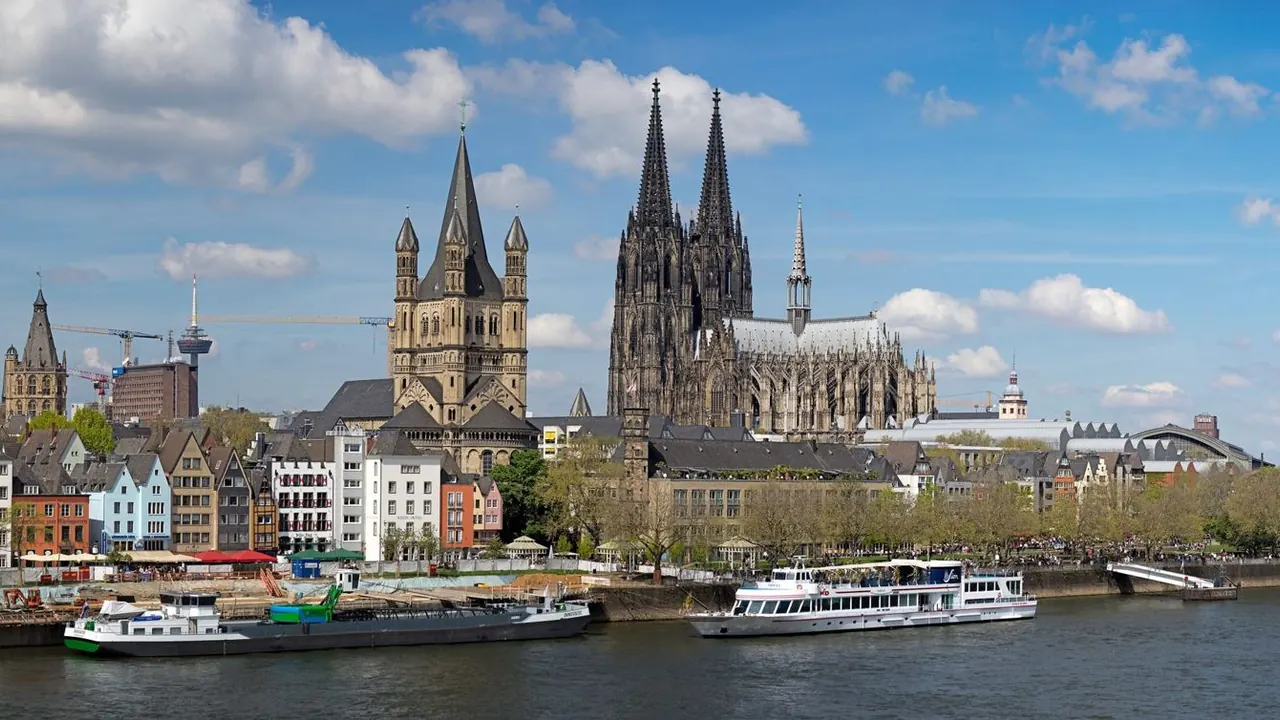
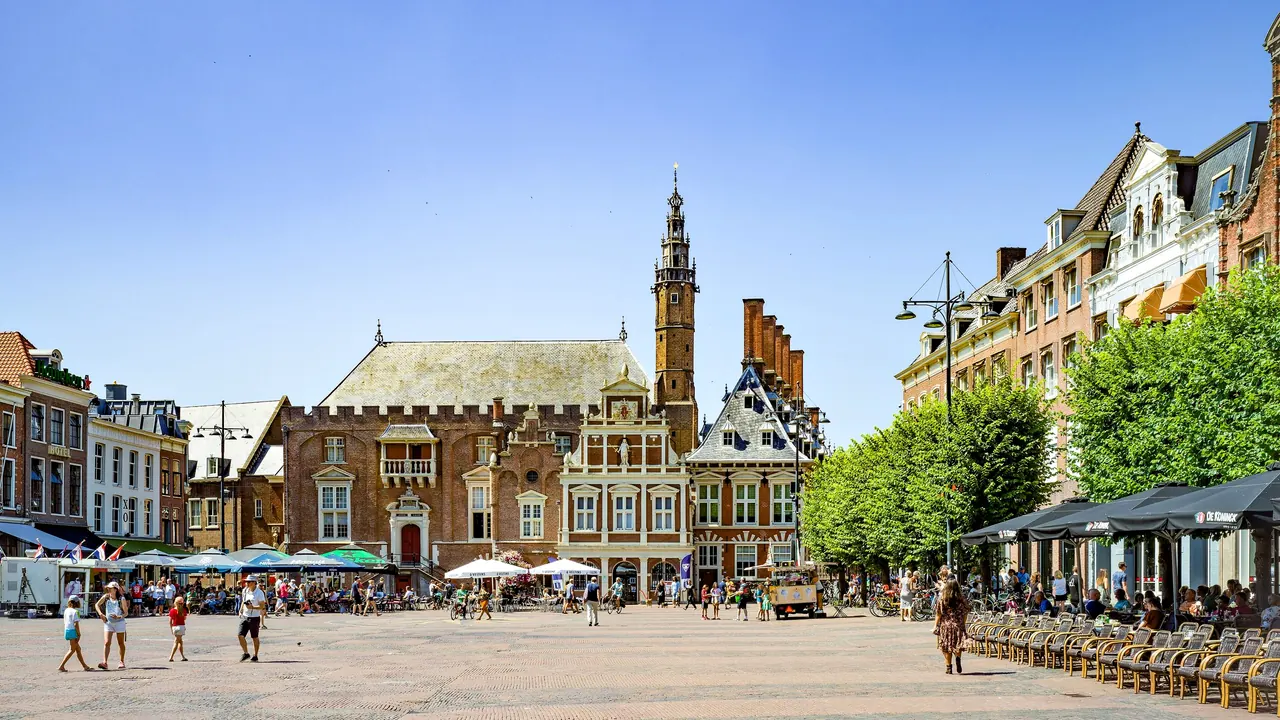
Photos: Cologne by Jörg Braukmann, CC BY-SA 4.0, cropped; Haarlem by Moroder, CC BY-SA 4.0, cropped.
Cologne or Haarlem?
Our verdict in twelve categories, each scored against the same fixed benchmark cities, and the climate month by month, so you can choose for your trip.
Choose Cologne for
- nightlife
- live music and the arts
- families
Cologne suits travellers who want a proper city around them in the evening. Its brewhouses, the Belgian Quarter's bars and the Ehrenfeld clubs give it a night scene Haarlem cannot match. It also has the bigger stage life, with an opera house and two major orchestras, and more for children, from the zoo to Phantasialand. The cathedral and Museum Ludwig carry the sightseeing, and it is the cheaper of the two places to stay.
Choose Haarlem for
- beaches
- day trips
- nature and the outdoors
Haarlem is the better pick for a calmer, more picturesque stay. Its centre of canals, gabled houses and hidden almshouse courtyards survived intact, while Cologne's was largely rebuilt after the war. The dunes and a sandy North Sea beach start at the edge of town, and Amsterdam, Leiden and The Hague are all close by train. Choose it if you would rather explore by bike by day and spend quiet evenings on a café terrace than go out late.
Scoreboard
Twelve categories on one fixed scale from 0 to 100. The shaded stretch is the gap between the two.
Your match
Pick a travel style or drag the sliders, and both match scores follow your weighting.
Wins on nightlife and live music and the arts with your weighting.
Wins on beaches and day trips with your weighting.
What matters to you?
Category by category
What the scores mean for a trip.
Beaches & swimming
Haarlem has a real beach on its doorstep. Zandvoort's long sands are a short train ride away, and quieter Bloemendaal aan Zee is reached by bike through the dunes. The North Sea stays cool and windy, though, so most beach days are for walking and sitting out of the wind, with a quick swim at most.
Cologne has no coast at all and cannot swim in the Rhine. Its summer swimming happens at the gravel-pit lakes on the city's edge, such as Fühlinger See, which are warmer than the North Sea but make an afternoon out rather than a beach.
Food & drink
Cologne gives you more to choose from. The beer halls around the cathedral serve heavy Rhineland plates such as Himmel un Ääd, black pudding with apple and mash, or sauerbraten. Beyond them there is a second layer: bistros in the Belgian Quarter, Turkish and Middle Eastern kitchens along Ehrenfeld's Venloer Strasse, and a few ambitious fine-dining rooms. A week of dinners need not repeat itself, even if few people come here just to eat.
Haarlem eats in a narrower, more homely register. Dutch cooking is plain by tradition, so the pleasure lies more in the setting than on the plate: a terrace on the Grote Markt, a dark-panelled brown café, a glass from one of the town's craft brewers. The most memorable bite is often at the Saturday market, standing with a raw herring or a paper cone of fried fish. Where Cologne puts German, Turkish and modern cooking side by side, a longer stay in Haarlem tends to circle back to the same few good bistros.
Culture & sights
Cologne has the bigger individual sights. The cathedral with its Shrine of the Three Kings, the ring of Romanesque churches, the Roman remains and museums of the calibre of Museum Ludwig and the Wallraf-Richartz could fill several days. The catch is a mostly post-war townscape, so you go from one landmark to the next through plain streets.
Haarlem works the other way round. Its pleasure is the intact old town itself, with canals, hofjes and the Grote Kerk with Mozart's organ, plus two fine museums in the Frans Hals and Teylers. It is smaller in scale and easily seen in a couple of unhurried days.
Nightlife
Cologne is a city that goes out. Evenings run from the Altstadt brewhouses to the Belgian Quarter's bars, the packed Zülpicher Strasse and late clubs in Ehrenfeld's old factories. It also has one of Germany's largest gay scenes around Rudolfplatz, and Carnival turns the whole city into a street party.
Haarlem's nights are sociable terrace evenings in the bars around the Grote Markt and Botermarkt, and they end well before dawn. Anyone wanting a club goes to Amsterdam.
Nature & outdoors
The two are broadly level, but the landscapes differ. Haarlem's countryside begins at the town edge, with the dunes, woods and grazing ponies of Zuid-Kennemerland, deer in the water-supply dunes and spring bulb fields, all flat and best seen by bike.
Cologne's own green belt and Rhine meadows are good for runs and rides, and it has hills within reach: the Siebengebirge and Drachenfels, the Bergisches Land and the Eifel's crater lakes offer proper day hikes with some climbing.
Day trips
Both are excellent bases, and Haarlem has a slight edge. Amsterdam is close enough to visit on a whim, and Leiden, The Hague, Delft, Utrecht and Rotterdam are all short hops on a dense network, with Keukenhof, Alkmaar and Zaanse Schans close too. Because the distances are so short, you can fit several outings into one stay.
Cologne's outings are spread over a wider area and vary more in kind. You can choose between Brühl's palaces, Bonn and Aachen, the castle towns of the Rhine Gorge, and a cross-border trip to Maastricht or Brussels.
Good for families
Cologne has far more that is built for children: a big zoo with an elephant park, the Chocolate Museum's working production line, the cable car to the Rheinpark playgrounds and Phantasialand a short trip south. The one period to avoid with small children is Carnival.
Haarlem is relaxed and car-free in the centre, with Teylers' fossils and the dunes and beach to run in. Beyond that, families have to travel for zoos and science museums.
Getting around
Neither city needs a car, but they work differently. Haarlem is a small place for walking and cycling: you can cross the centre on foot in about twenty minutes, and bike paths run straight out to the dunes and the sea.
Cologne's sights are also walkable from the station beside the cathedral, but reaching Ehrenfeld, the zoo or the suburbs means its trams and Stadtbahn. That network is larger, but it is less intuitive and sometimes crowded.
Shopping & style
The two are about equal for shopping, but in different ways. Cologne is a high-street city, with Schildergasse and Hohe Strasse full of chains and department stores, plus Eau de Cologne from its historic perfume houses and the Advent Christmas markets.
Haarlem is better for an afternoon of small independents in Gierstraat and Kleine Houtstraat, among boutiques, design shops and delicatessens, with flower and cheese stalls on market days.
Affordability
Cologne is the easier one on the wallet. Brewhouse meals are good value and the cathedral and many churches are free to enter. Hotel rooms only become scarce and expensive during trade fairs and Carnival, so check the dates before booking.
Haarlem is priced like the prosperous Dutch northwest. It has few hotels for the demand, and the rooms are small for what they cost. Train fares for regular outings and museum tickets add up over a stay.
Live music & performing arts
Cologne has a much bigger stage life. There is an opera house and theatre on Offenbachplatz, and the Philharmonie by the cathedral is home to the Gürzenich and WDR orchestras. There is also jazz, electronic music and gigs most nights in Ehrenfeld and the Südstadt, plus the Carnival sessions, which you will not find anywhere else.
Haarlem has a respectable programme for its size, and its speciality is the organ: concerts on St Bavo's great instrument and a long-running international organ festival. For opera or a major orchestra, Haarlem visitors head to Amsterdam.
Wellness & relaxation
Cologne has more to offer for formal unwinding. It has large German sauna landscapes, a thermal bath in the Rheinpark fed by mineral springs and facing the cathedral, and Aachen's hot springs within easy reach. The centre itself is busy, though.
Haarlem relaxes you through its pace instead. There are quiet canals after dark, long café afternoons and rides in the dunes. It has no thermal springs, and its larger day-spas are out in the wider region.
When should you go?
Pick your month. The climate figures are measured averages, not a forecast.
Cologne in July
Haarlem in July
Daytime high, °C
Rainfall in the month, mm
Where the figures come from
Haarlem has no rain gauge within 25 km of the centre, so its rainfall comes from a gridded climate dataset read at the city rather than from a gauge further away.
Haarlem's sunshine is measured 49 km from the centre, at De Bilt.
Temperature and rainfall are climate normals, averaged over the years shown. Cologne: 1991-2020 (sunshine 1981-2010) normals, Köln-Stammheim (5.4 km from centre). Haarlem: 1991-2020 normals, Amsterdam Airport Schiphol (12.7 km from centre).
Both cities share the same mild, often grey northern weather, and both are at their best from May to September. Cologne gets noticeably warmer in high summer, with July and August highs around 25°C against about 22°C in Haarlem. That warmth makes it the better choice for long days outdoors and for swimming in its lakes, though July and August are also its wettest months. In Haarlem the North Sea only reaches about 19°C in August, so a swim there is brief even at the peak, and the coastal breeze keeps summer days fresh.
The two years split in autumn. Cologne's rain stays fairly even, so September and October are still good months for walking the streets. Haarlem's wettest stretch runs from September into winter, peaking around 109mm in October, which makes late spring its strongest season, when April and May are dry, sunny and the bulb fields are out. Winters in both cities are cold, dark and damp, better for museums and Advent markets than for wandering around.
Which traveller are you?
On a food and nightlife trip, Cologne is the clear choice. The Kölsch ritual in the Altstadt brewhouses leads on to cocktail bars, a student strip and late clubs in Ehrenfeld, while in Haarlem the evening fades out early around the Grote Markt.
On a family trip with children, Cologne has much more made for young visitors: a large zoo with an aquarium, the Chocolate Museum, the cable car over the Rhine and Phantasialand nearby. In Haarlem families mostly rely on the dunes and outings to Amsterdam.
On a beach and sun trip, Haarlem is the only one of the two with a real coast. Zandvoort is ten minutes away by train and the dunes lead to Bloemendaal's beach. Expect cool water and wind, though, not a swimming vacation. Cologne has only its lakes.
Before you go
| Measure | Cologne | Haarlem |
|---|---|---|
| Official language | German | Dutch |
| Currency | Euro (EUR) | Euro (EUR) |
| Sockets | CF230 V, 50 Hz | CF230 V, 50 Hz |
| Driving side | Right | Right |
| Time zone | UTC+1, UTC+2 in summer | UTC+1, UTC+2 in summer |
| Emergency number | 112 | 112 |
| Elevation | 59 m | 2 m |
| Main airport | Cologne Bonn Airport (CGN)15 km from centre115 non-stop destinations | Amsterdam Airport Schiphol (AMS)12 km from centre287 non-stop destinations |
| Public holidays this year | 11 days | 11 days |
By the numbers
| Measure | Cologne | Haarlem |
|---|---|---|
| City population | 1,025,523 | 162,543 |
| People per km² | 2,532 | 5,064 |
| Museums within 10 km | 40 | 28 |
| UNESCO World Heritage sites within 50 km | 3 | 5 |
| Swim season, months above 21 °C | - | None |
Where else could you go?
Every comparison below shares a destination with this one, so you can follow Cologne or Haarlem somewhere new.
- Amsterdamvs Haarlem
- Dusseldorfvs Cologne
- The Haguevs Haarlem
- Utrechtvs Haarlem
- Rotterdamvs Haarlem
- Maastrichtvs Cologne