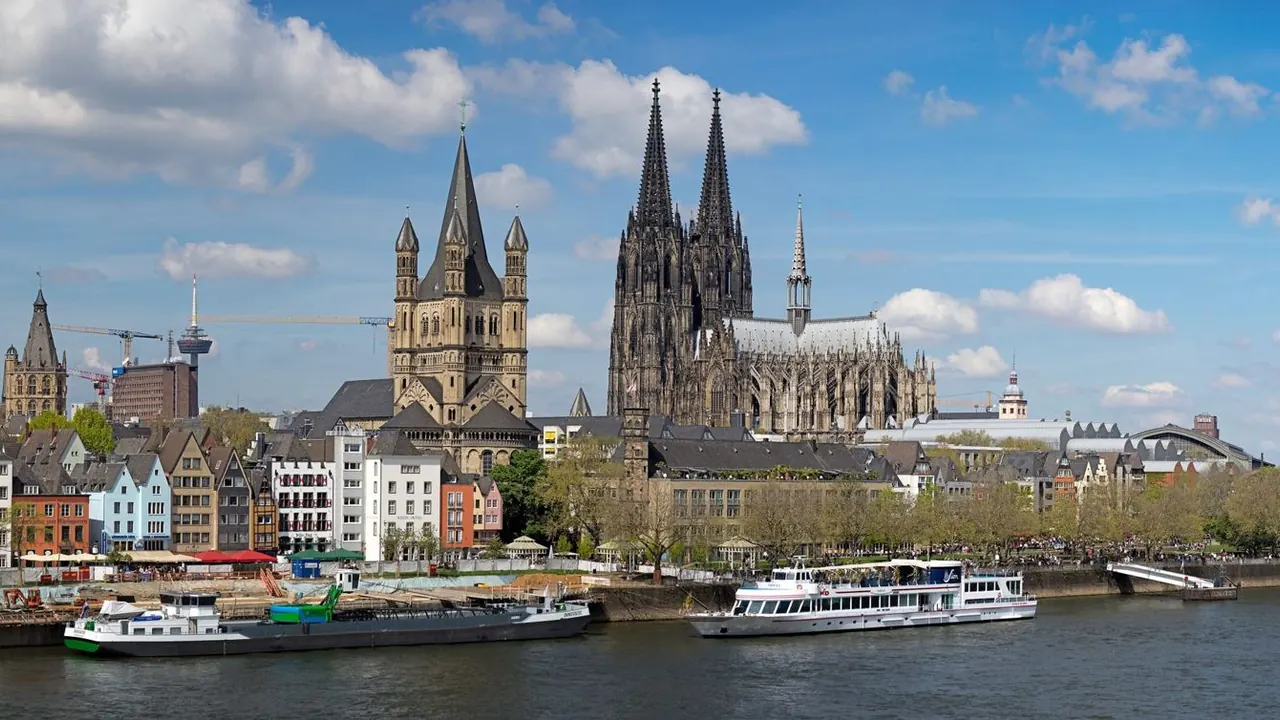
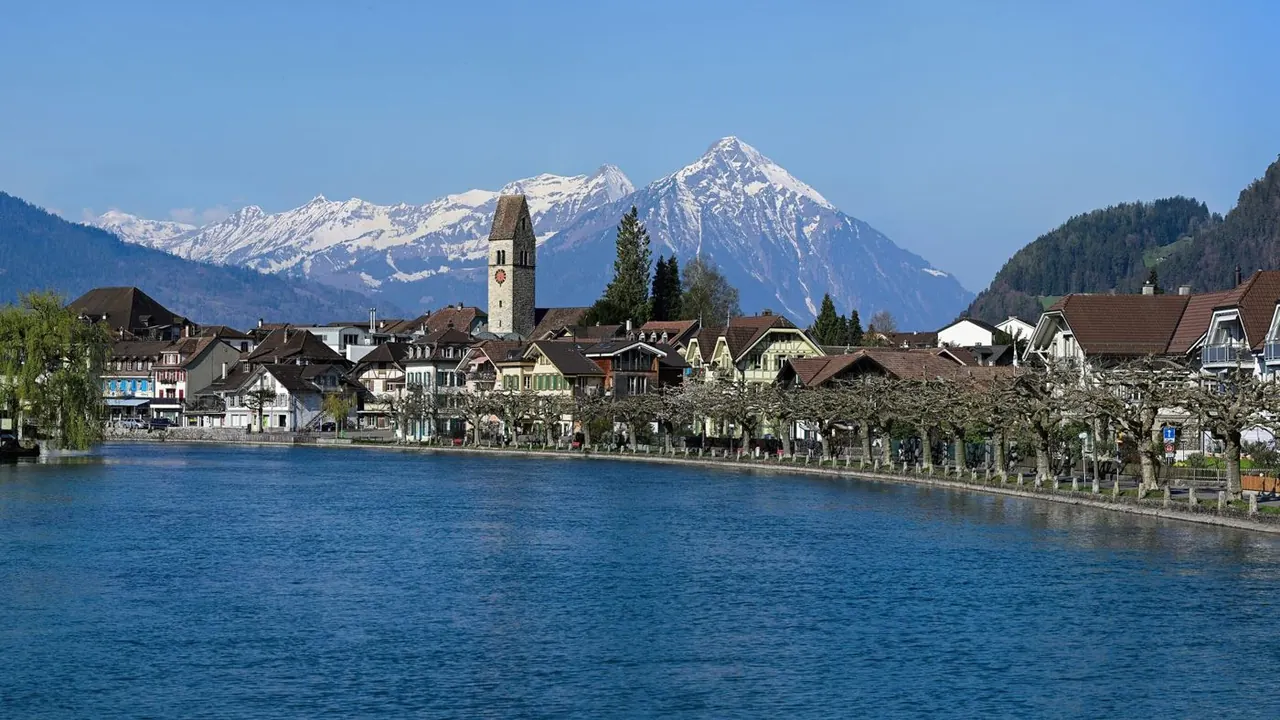
Photos: Cologne by Jörg Braukmann, CC BY-SA 4.0, cropped; Interlaken by Roy Egloff, CC BY-SA 4.0, cropped.
Cologne or Interlaken?
Our verdict in twelve categories, each scored against the same fixed benchmark cities, and the climate month by month, so you can choose for your trip.
Choose Cologne for
- culture and sights
- live music and the arts
- nightlife
Cologne is the better pick if you want a city with plenty in it. The cathedral, the twelve Romanesque churches and the art in Museum Ludwig fill several days. The Brauhaus evenings, the Ehrenfeld clubs and a proper opera and concert hall carry on well past dinner. It also costs much less than Interlaken, and fast trains reach Bonn, Aachen, the Rhine Gorge and Brussels.
Choose Interlaken for
- nature and the outdoors
- beaches
- getting around
Interlaken suits travellers who come for the landscape and spend their days outside. The Eiger, Mönch and Jungfrau, the Lauterbrunnen valley and a dense web of mountain railways are all within an hour, with paragliding, canyoning and lake paddling run from the town itself. The evenings are quiet, the town has little culture of its own and everything is expensive, but nothing in the Rhineland comes close to the scenery.
Scoreboard
Twelve categories on one fixed scale from 0 to 100. The shaded stretch is the gap between the two.
Your match
Pick a travel style or drag the sliders, and both match scores follow your weighting.
Wins on culture and sights and live music and the arts with your weighting.
Wins on nature and the outdoors and beaches with your weighting.
What matters to you?
Category by category
What the scores mean for a trip.
Beaches & swimming
Neither is a beach destination, but Interlaken gives you better swimming. In July and August you can swim from grassy lidos and small shingle beaches on Lake Thun, or try the colder turquoise water of Lake Brienz at Bönigen, with snow peaks behind you.
In Cologne the Rhine is off-limits for bathing, so a swim means taking transport out to flooded gravel pits such as Fühlinger See. They are pleasant, but they don't compare with an Alpine lake.
Food & drink
Cologne has a real food ritual of its own: the Köbes refilling your Kölsch in the Altstadt brewhouses, served with Himmel un Ääd or a Halve Hahn. Ehrenfeld's Turkish and Middle Eastern cooking and a few serious fine-dining kitchens add range.
Interlaken's restaurants serve fondue, rösti and international dishes to visitors, and they do it reliably rather than memorably. Its best food moments are a hut terrace above Mürren, a cheese from a mountain dairy or a glass of Lake Thun white wine.
Culture & sights
This is the widest gap between the two. Cologne has its twin-spired cathedral with the Shrine of the Three Kings, twelve Romanesque churches, Roman mosaics and museums like the Wallraf-Richartz and Kolumba. The rebuilt post-war streets are plain, but the individual sights are outstanding.
Interlaken offers a row of grand hotels on the Höheweg, a few timber houses in Unterseen and a small local museum. For history and art you take the train to Bern.
Nightlife
Cologne has a proper night out. You can start with Kölsch in the Altstadt, move on to cocktail bars in the Belgian Quarter or the student crowd on Zülpicher Strasse, and finish in the factory clubs of Ehrenfeld. The city also has one of Germany's largest gay scenes, and at Carnival the whole city celebrates in the streets.
Interlaken goes to bed early because most visitors are up for the first train. It has a few backpacker pubs and basement clubs, plus the casino.
Nature & outdoors
Interlaken is surrounded by some of the most dramatic mountain scenery in Europe. The Jungfraujoch railway looks over the Aletsch glacier, the waterfalls of Lauterbrunnen are close by, and the Schynige Platte ridge and Grindelwald First have trails that cable cars make easy to reach. Low cloud is the only real limit.
Cologne has the Grüngürtel parks and long Rhine cycle paths, with the Siebengebirge and the Eifel within reach for day hikes. It is good walking country, but there are no mountains.
Day trips
Both are excellent bases, but the outings are different. From Cologne, fast trains reach other cities and border towns: Bonn, Düsseldorf, Charlemagne's chapel in Aachen, Maastricht and Brussels. The castle towns of the Rhine Gorge and Zollverein in the Ruhr are also within easy reach.
From Interlaken the trips are slower and more scenic. You can take a paddle steamer to the castles at Spiez and Oberhofen, see the arcaded old town of Bern, or visit the rural buildings at Ballenberg. Lucerne is a longer ride over the Brünig Pass.
Good for families
Both work well with children, in different ways. Cologne has the classic attractions: the zoo with its elephant park, the Chocolate Museum's fountain, the cable car across the Rhine and Phantasialand just south of the city. Avoid Carnival week with small children.
In Interlaken the mountain itself is the entertainment, with rack railways, summer toboggan runs and summit playgrounds, plus the St Beatus caves. Rainy days are harder to fill, and the highest summits may not suit very young children.
Getting around
Interlaken has the edge, because one connected system of mainline trains, mountain railways, gondolas and lake steamers covers the whole Jungfrau region. Many hotels give guests a regional transport card. The one drawback is crowding on the popular summit trains.
Cologne is easy in its own way. You arrive next to the cathedral, and the main sights are within a flat, walkable centre. The trams and Stadtbahn can be crowded and hard to work out.
Shopping & style
Cologne is a shopping city, Interlaken is not. Schildergasse and Hohe Strasse cover the high street, Ehrenstrasse and the Belgian Quarter have independent and design shops, and you can buy Eau de Cologne at its historic perfume houses. The Advent markets are the city's big shopping season.
Interlaken's Höheweg mostly sells watches, army knives and cuckoo clocks to tour groups. Woodcarving from Brienz is the one local craft worth looking for.
Affordability
Cologne costs a good deal less. Hotels are moderately priced outside the big trade fairs and Carnival, brewhouse meals are fair, and many churches, including the cathedral, are free to enter.
Interlaken is expensive at every level. Hotels, meals and drinks are at full Swiss prices, and the mountain railways, the Jungfraujoch above all, take a large share of any budget. Picnics and transport passes help, but only so far.
Live music & performing arts
Two resident symphony orchestras on one side and an amateur forest staging on the other sum up the gap. In Cologne the opera and the Schauspiel share Offenbachplatz, the Gürzenich and WDR orchestras play in the Philharmonie beneath the square by the cathedral, and early music sounds in the Romanesque churches. Most nights there is jazz or electronic music in the small clubs of Ehrenfeld and the Südstadt, and the dialect songs of the Carnival sessions are found nowhere else.
Interlaken's stage is mainly a summer one. Local amateurs have performed Schiller's William Tell in the open air in the woods for more than a century, and folklore evenings bring out the alphorns and yodelling. For a real concert or theatre night you take the train to Bern.
Wellness & relaxation
Cologne gives you more to work with. Locals use the large German sauna complexes as a weekend habit, and the mineral-spring thermal bath in the Rheinpark looks across the river to the cathedral. Aachen's old hot springs are close by.
Interlaken has no bathing tradition of its own, so relaxing there means a grand-hotel spa, an early walk by the lake or a slow steamer crossing. If you want real quiet, stay up in Wengen or Mürren rather than in the busy town centre.
When should you go?
Pick your month. The climate figures are measured averages, not a forecast.
Cologne in July
Interlaken in July
Daytime high, °C
Rainfall in the month, mm
Where the figures come from
Interlaken has no rain gauge within 25 km of the centre, so its rainfall comes from a gridded climate dataset read at the city rather than from a gauge further away.
Temperature and rainfall are climate normals, averaged over the years shown. Cologne: 1991-2020 normals, Köln-Stammheim (5.4 km from centre). Interlaken: 2005-2020 (rainfall 1991-2020) normals, Meiringen / Unterbach (19.3 km from centre).
Both are at their best from June to September. Cologne reaches about 25°C in July and August, warm enough for the lakes on the city's edge, and May to August bring the most sunshine. Summer is also its wettest stretch, around 81mm a month in July and August, so expect showers. Spring and early autumn are mild and good for walking the city. Winter is grey and cool, but the museums, churches and brewhouses work in any weather.
Interlaken is a few degrees cooler all year, peaking near 24°C in July. Only July and August are warm enough to swim in its lakes. Spring and September are drier than midsummer and good for walking in the valleys, although the high trails depend on snow and cloud. Winter is cold, with January highs around 3°C, and that is the time for skiing, not for sightseeing on foot.
Which traveller are you?
On an outdoors trip, Interlaken is the obvious choice. Cog railways and cable cars take you straight to high Alpine trails, and the town runs paragliding, canyoning and rafting. In winter there is skiing. Cologne offers riverside cycling and gentle hills, nothing like this.
For a culture and arts trip, choose Cologne. It has a great Gothic cathedral, a ring of Romanesque churches, Roman remains, strong museums of modern and older art, and a full programme of opera, orchestras and jazz. Interlaken has almost nothing comparable without taking a train to Bern.
On a trip with a tight budget, Cologne is far easier on the wallet. Brewhouse meals are good value, the cathedral is free and public transport is fairly priced. In Interlaken, Swiss hotel and restaurant prices and the steep mountain fares hit the bill from the first day.
Before you go
| Measure | Cologne | Interlaken |
|---|---|---|
| Official language | German | French, German, Italian, Romansh |
| Currency | Euro (EUR) | Swiss Franc (CHF) |
| Sockets | CF230 V, 50 Hz | CJ230 V, 50 Hz |
| Driving side | Right | Right |
| Time zone | UTC+1, UTC+2 in summer | UTC+1, UTC+2 in summer |
| Emergency number | 112 | 112 |
| Elevation | 59 m | 571 m |
| Main airport | Cologne Bonn Airport (CGN)15 km from centre115 non-stop destinations | Zürich Airport (ZRH)100 km from centre226 non-stop destinations |
| Public holidays this year | 11 days | 10 days |
By the numbers
| Measure | Cologne | Interlaken |
|---|---|---|
| City population | 1,025,523 | 6,123 |
| People per km² | 2,532 | 1,424 |
| Museums within 10 km | 40 | 3 |
| UNESCO World Heritage sites within 50 km | 3 | 2 |
Where else could you go?
Every comparison below shares a destination with this one, so you can follow Cologne or Interlaken somewhere new.