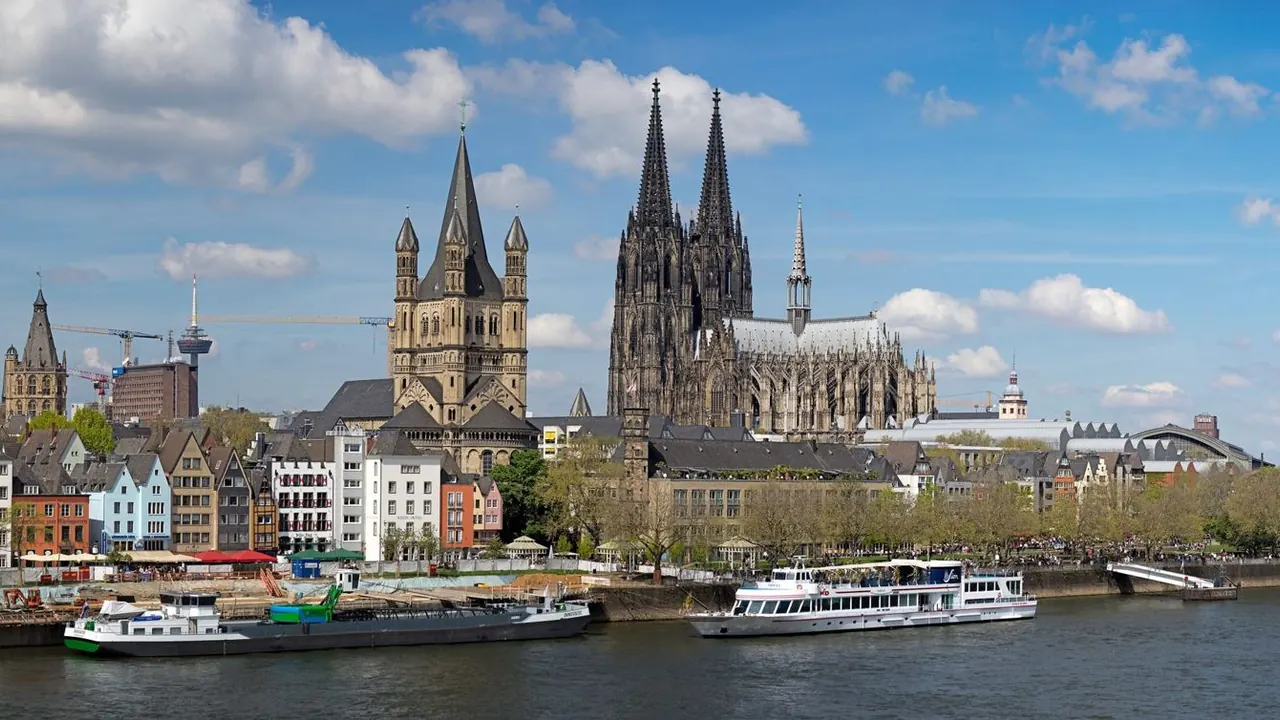
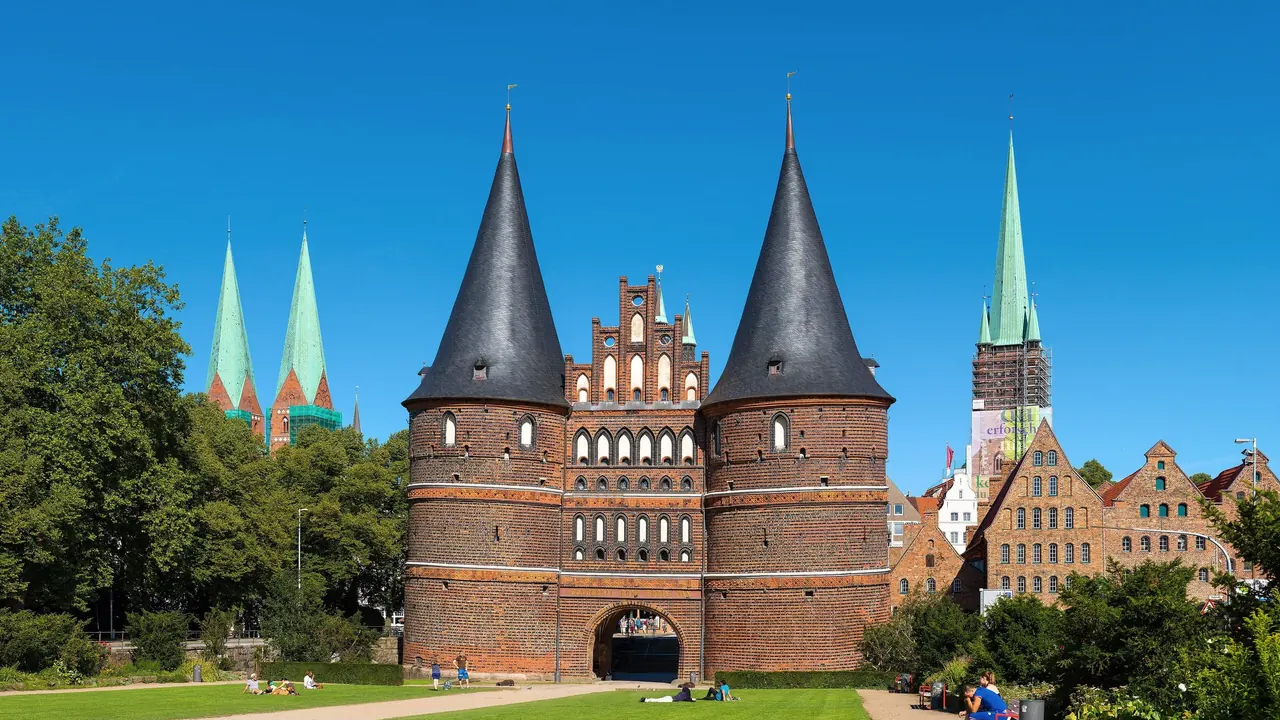
Photos: Cologne by Jörg Braukmann, CC BY-SA 4.0, cropped; Lubeck by Christian Wolf (www.c-w-design.de), CC BY-SA 3.0 DE, cropped.
Cologne or Lubeck?
Our verdict in twelve categories, each scored against the same fixed benchmark cities, and the climate month by month, so you can choose for your trip.
Choose Cologne for
- nightlife
- live music and the arts
- shopping
Cologne suits travellers who want a bigger city with more going on. Evenings start in the brewhouses and carry on in the bars of the Belgian Quarter and Ehrenfeld. There is a full calendar of opera and concerts, and fast trains reach Bonn, Aachen, the Rhine Gorge and Brussels. It is also the easier choice with children and the better one for shopping.
Choose Lubeck for
- beaches
- prices
- culture and sights
Lübeck is for a slower, smaller trip. Its island old town survives as one preserved Hanseatic whole, not a scattering of standout buildings, and evenings end early. In summer the Baltic beach at Travemünde is a short train ride away, which Cologne cannot match. Choose it for a few quiet days of walking, marzipan and sea air.
Scoreboard
Twelve categories on one fixed scale from 0 to 100. The shaded stretch is the gap between the two.
Your match
Pick a travel style or drag the sliders, and both match scores follow your weighting.
Wins on nightlife and live music and the arts with your weighting.
Wins on beaches and prices with your weighting.
What matters to you?
Category by category
What the scores mean for a trip.
Beaches & swimming
Neither city is a beach destination, but Lübeck at least has the sea within its own boundaries. Travemünde's sandy shore with its wicker beach chairs, and the bay resorts of Timmendorfer Strand and Scharbeutz beyond it, have calm, shallow Baltic water that is easy for paddling, though cool.
Cologne has only the Rhine, which is too fast and too busy with shipping for swimming. A summer swim there means a gravel-pit lake such as Fühlinger See on the edge of the city. That makes a pleasant afternoon, but not a day at the seaside.
Food & drink
Cologne eats better, largely thanks to the Brauhaus ritual: Kölsch arrives in small glasses until you cover yours with a beer mat, alongside plates of Himmel un Ääd and sauerbraten. Away from the beer halls there is Turkish and Middle Eastern cooking along Ehrenfeld's Venloer Strasse, and there are a few serious fine-dining kitchens.
Lübeck's food is narrower and more coastal: marzipan from the old confectioners near the town hall, herring and fish sandwiches by the harbour, and Rotspon wine aged in the city's cellars. It is enjoyable to eat your way through, but there is little range beyond those specialities.
Culture & sights
The two are evenly matched, but in different ways. Cologne's strength lies in individual monuments and collections: the cathedral with the Shrine of the Three Kings, twelve Romanesque churches, Roman remains, and museums with real depth such as Museum Ludwig and the Wallraf-Richartz. Around them, though, the townscape is mostly plain post-war rebuilding.
Lübeck works the other way round. The whole medieval island town is a UNESCO site, with its brick Gothic churches, the Holstentor, gabled merchants' houses and hidden courtyards, plus smaller museums on the Hanseatic League and Thomas Mann. Cologne repays days in its museums, while Lübeck repays wandering and is seen well in two days.
Nightlife
Cologne offers a much fuller night out. Evenings move from the Altstadt brewhouses to cocktail bars in the Belgian Quarter, the student crowds of Zülpicher Strasse or the clubs in Ehrenfeld's old factories. The gay scene around Rudolfplatz is one of Germany's largest, and at Carnival the whole city sings in costume in the streets.
Lübeck has pubs, wine bars and a few places along the Obertrave, and Travemünde's promenade gets a little busier on summer nights. Most of the town is asleep by midnight, though, and anyone wanting more takes the train to Hamburg.
Nature & outdoors
Cologne has the better outdoor options, though neither city offers anything wild. Beyond its flat, park-ringed centre, the wooded volcanic hills of the Siebengebirge and the Drachenfels crag are less than an hour away. The Eifel's crater lakes and the vineyard slopes of the Ahr valley are within reach for longer hikes.
Lübeck's surroundings are gentler and lean towards water rather than hills. There is canoeing through the reeds of the Wakenitz, a clifftop walk along the crumbling Brodtener Steilufer, the lakes of Holstein Switzerland and sailing on the bay in summer.
Day trips
Cologne is the better base by some distance. Fast trains put Brühl's palaces, Bonn, Düsseldorf and Aachen within about forty minutes, and the castle-topped wine towns of the Rhine Gorge within about an hour and a half. Across the borders, Maastricht, Liège and Brussels are all within reach.
Lübeck has one outstanding outing in Hamburg, about three quarters of an hour away. Wismar and Schwerin's island castle are around an hour off, and there are smaller lake towns such as Ratzeburg and Eutin. After those the choice soon runs out.
Good for families
Cologne gives children more to do in any weather: the zoo with its elephant park, the Chocolate Museum, the cable car over the Rhine to the Rheinpark playgrounds, and a major theme park a short trip south at Brühl. Carnival is the one time to avoid with small children.
Lübeck's appeal for families depends on summer. Travemünde's shallow, calm beach, the promenades along the bay and the amusement park at Sierksdorf make a good seaside stay. Outside the warm months, there is far less aimed at children.
Getting around
Both are easy without a car, but in different ways. Cologne's main station stands beside the cathedral and the centre is flat and walkable. Reaching the Belgian Quarter, Ehrenfeld or the zoo, however, means trams, the Stadtbahn or the S-Bahn, and the network can be crowded and hard to follow.
Lübeck hardly needs public transport at all. Its island old town is about 2km long and largely pedestrianised, and buses and a twenty-minute train to Travemünde cover the rest.
Shopping & style
Cologne is clearly the better place to shop. Schildergasse and Hohe Strasse are among Germany's busiest shopping streets, and Ehrenstrasse and the Belgian Quarter add independent fashion and design. Eau de Cologne from the historic perfume houses makes a souvenir with a story behind it.
Lübeck's Breite Strasse and Königstrasse cover the chain-store basics, with craft shops and galleries tucked into the side passages, and marzipan is what everyone takes home. For serious fashion, people go to Hamburg.
Affordability
Both cities are mid-priced, and Lübeck is slightly easier on the budget. Rooms in its old town rarely carry big-city premiums, and fish kiosks, bakeries and the inexpensive regional train to the coast keep daily costs down. Travemünde does get dearer in July and August.
In Cologne, brewhouse meals and the free churches help, but hotel rates jump during the big trade fairs at the Messe and at Carnival. Your dates matter more there.
Live music & performing arts
Cologne has the deeper stage life. There is opera and drama on Offenbachplatz, two orchestras in the Philharmonie beside the cathedral, and jazz and electronic music in Ehrenfeld and the Südstadt. Big touring acts play the arena in Deutz, and the dialect songs of the Carnival sessions are a tradition of their own.
Lübeck works on a smaller scale. Theater Lübeck, the Philharmonic and the summer Schleswig-Holstein Music Festival cover the classical side, and organ music in the Marienkirche, where Buxtehude played, is its particular draw. Rock and jazz, though, are thin.
Wellness & relaxation
The real difference is bathing against quiet. Cologne has the stronger spa side, with large German sauna landscapes that have steam rooms and cold plunges, and a mineral-spring thermal bath in the Rheinpark that looks across the river to the cathedral. Aachen's hot springs, used since Roman times, are less than forty minutes away. The city itself is busy, though, and Carnival is anything but restful.
Lübeck has fewer places to book a treatment but far more calm. Travemünde has been a seaside spa resort since the early nineteenth century, and there are wellness hotels around the bay and an indoor seawater pool at Scharbeutz. Back in town, the old courtyards and benches by the river make it easy to spend a few days doing very little.
When should you go?
Pick your month. The climate figures are measured averages, not a forecast.
Cologne in July
Lubeck in July
Daytime high, °C
Rainfall in the month, mm
Temperature and rainfall are climate normals, averaged over the years shown. Cologne: 1991-2020 (sunshine 1981-2010) normals, Köln-Stammheim (5.4 km from centre). Lubeck: 1991-2020 normals, Luebeck-Blankensee (6 km from centre).
Both cities are at their best from May to September. Cologne is a degree or two warmer all year and reaches about 25°C in July and August, but those are also its wettest months, with about 81mm of rain. Lübeck stays a little cooler. From April to September it gets clearly more sunshine than Cologne, and May is its brightest month at about 229 hours.
Only Lübeck has a sea, and the Baltic is cool. It reaches about 19°C at best in August, so beach days really mean July and August. From November to February both cities are grey and chilly, and Lübeck is the colder of the two at around 4°C in January. Those months suit short walks between indoor sights better than long days outside.
Which traveller are you?
For a food and nightlife trip, Cologne is the clear choice. Kölsch brewhouses lead on to Belgian Quarter bars, Ehrenfeld's factory clubs and late weekend nights, with good Turkish food on Venloer Strasse. Lübeck's evenings wind down well before midnight.
On a beach and sun trip, Lübeck wins easily. Travemünde's sandy Baltic shore is part of the city, its summers are sunnier, and the bay resorts are close by. The sea stays cool, but Cologne offers only gravel-pit lakes.
On a shopping trip, Cologne has far more to offer: the long high streets of Schildergasse and Hohe Strasse, independent design around Ehrenstrasse and the Belgian Quarter, and Eau de Cologne from its historic houses. Lübeck covers the basics and marzipan, and for anything more people go to Hamburg.
Before you go
| Measure | Cologne | Lubeck |
|---|---|---|
| Official language | German | German |
| Currency | Euro (EUR) | Euro (EUR) |
| Sockets | CF230 V, 50 Hz | CF230 V, 50 Hz |
| Driving side | Right | Right |
| Time zone | UTC+1, UTC+2 in summer | UTC+1, UTC+2 in summer |
| Emergency number | 112 | 112 |
| Elevation | 59 m | 13 m |
| Main airport | Cologne Bonn Airport (CGN)15 km from centre115 non-stop destinations | Hamburg Helmut Schmidt Airport (HAM)53 km from centre120 non-stop destinations |
| Public holidays this year | 11 days | 10 days |
By the numbers
| Measure | Cologne | Lubeck |
|---|---|---|
| City population | 1,025,523 | 217,061 |
| People per km² | 2,532 | 1,013 |
| Museums within 10 km | 40 | 23 |
| UNESCO World Heritage sites within 50 km | 3 | 1 |
| Swim season, months above 21 °C | - | None |
Where else could you go?
Every comparison below shares a destination with this one, so you can follow Cologne or Lubeck somewhere new.
- Dusseldorfvs Cologne
- Hamburgvs Lubeck
- Maastrichtvs Cologne
- Frankfurtvs Cologne
- Luxembourgvs Cologne
- Utrechtvs Cologne