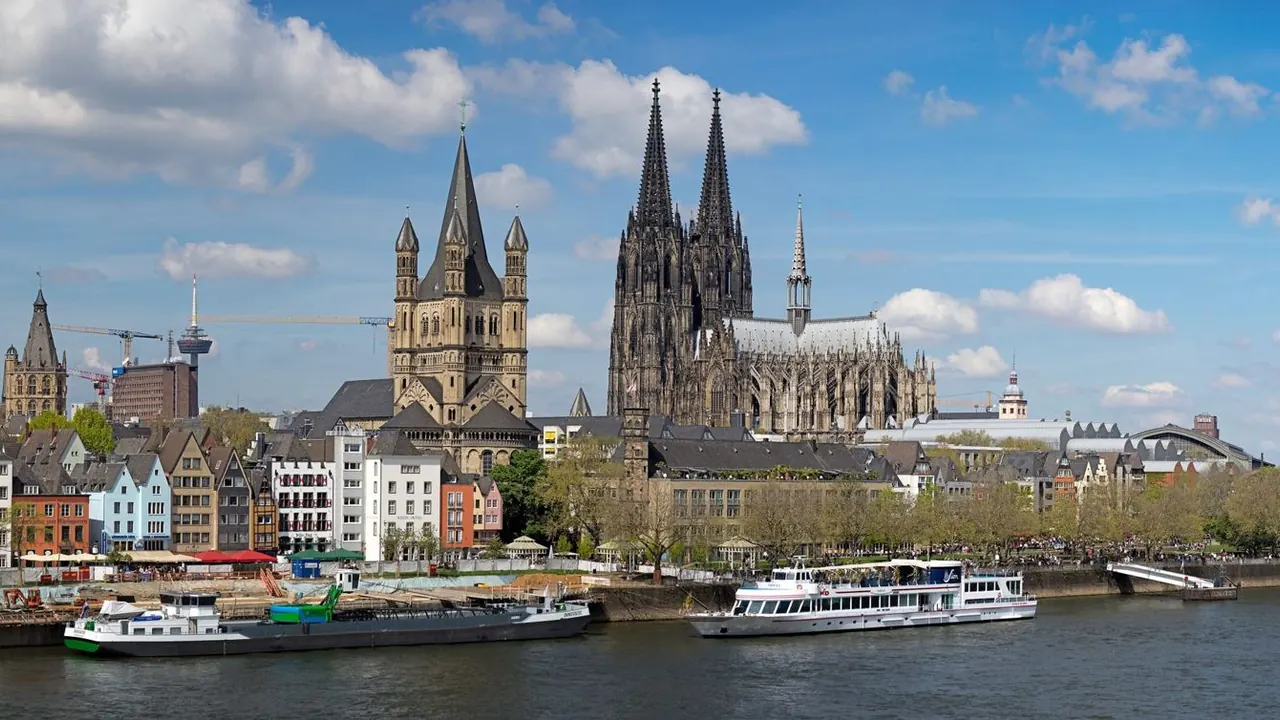
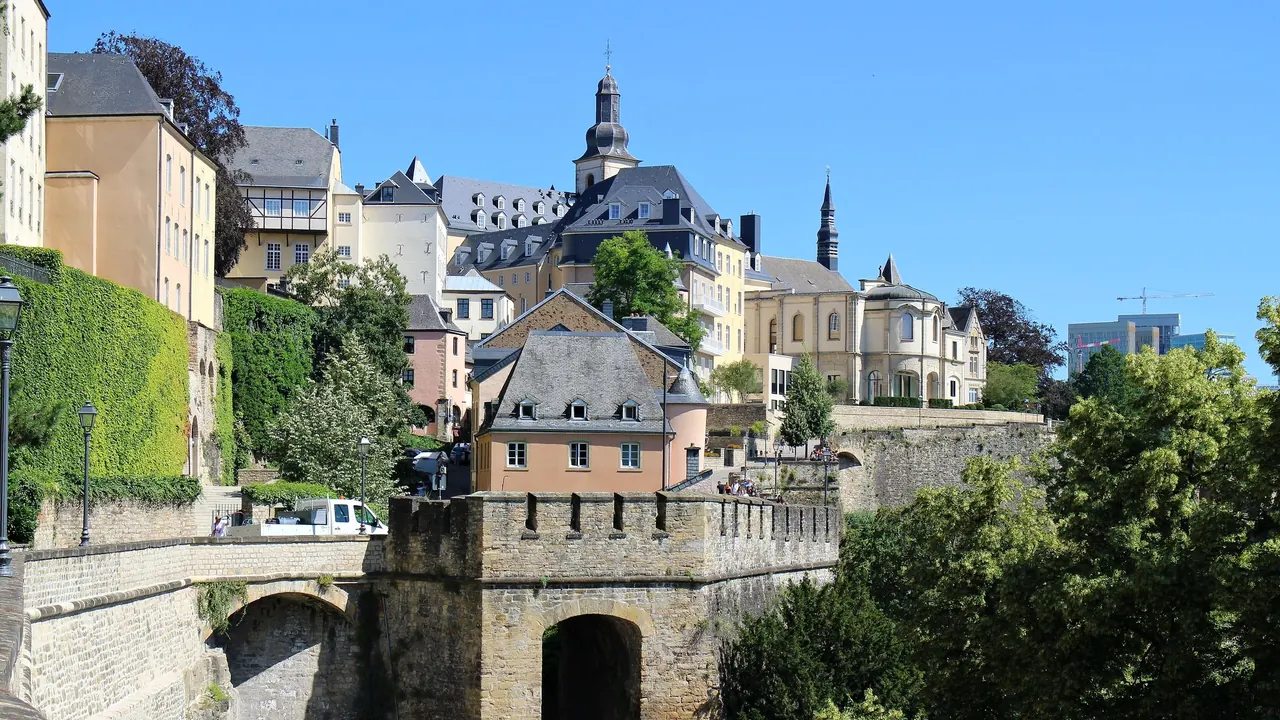
Photos: Cologne by Jörg Braukmann, CC BY-SA 4.0, cropped; Luxembourg by Suicasmo, CC BY-SA 4.0, cropped.
Cologne or Luxembourg?
Our verdict in twelve categories, each scored against the same fixed benchmark cities, and the climate month by month, so you can choose for your trip.
Choose Cologne for
- nightlife
- prices
- families
Cologne is the better pick for anyone who wants a city with plenty going on. The cathedral, the Romanesque churches and museums such as Museum Ludwig make for a fuller cultural stay. Evenings that begin over Kölsch in a brewhouse can run late at weekends. Children have more to do, and the bills stay moderate unless a trade fair is on. It holds up well for a week as well as a long weekend.
Choose Luxembourg for
- getting around
- nature and the outdoors
- beaches
If you want a quieter, more scenic short break, Luxembourg is the one. Its old town stands on a fortress rock above wooded gorges, the Müllerthal's sandstone forests are close by, and buses and trains within the country cost nothing. Hotels and restaurants are expensive, though, and the nights end early. It suits couples and walkers looking for two or three peaceful days more than anyone after a night out.
Scoreboard
Twelve categories on one fixed scale from 0 to 100. The shaded stretch is the gap between the two.
Your match
Pick a travel style or drag the sliders, and both match scores follow your weighting.
Wins on nightlife and prices with your weighting.
Wins on getting around and nature and the outdoors with your weighting.
What matters to you?
Category by category
What the scores mean for a trip.
Beaches & swimming
Neither has a beach, and in both cases a swim means a lake on a warm day. Cologne's flooded gravel pits, such as Fühlinger See and Otto-Maigler-See, sit on the edge of the city and are an easy tram-and-towel afternoon.
Luxembourg's best water is the Upper Sûre reservoir, about an hour north among wooded hills, which makes more of a scenic day out. Remerschen's gravel pits in the Moselle valley are the closer option.
Food & drink
The two eat about equally well, but in very different ways. In Cologne the experience is the Brauhaus: a Köbes keeps the Kölsch coming alongside black pudding with apple or sauerbraten. Ehrenfeld's Turkish and Middle Eastern cooking makes casual eating cheap and easy.
Luxembourg leans French, with a surprisingly serious fine-dining tier for a small capital. Its real treat is Moselle Riesling and crémant by the glass. The everyday, inexpensive meal is harder to find there, so lunch menus do the work that Cologne's brewhouses do.
Culture & sights
Cologne has the weightier sightseeing. The cathedral alone justifies a visit, and behind it stand twelve Romanesque churches, Roman remains and museums of real standing, from Museum Ludwig's Pop Art to Kolumba. What it lacks is a historic townscape, because much of the city was rebuilt plainly after the war.
Luxembourg works the other way round. Its strength is the whole setting rather than individual treasures: a UNESCO fortress city on a rock, casemate tunnels to walk through and the Grund below. The museums and palace are good but compact, and two days covers them.
Nightlife
This is where the two differ most. Cologne goes out with enthusiasm, from brewhouse evenings to student crowds on Zülpicher Strasse, late clubs in Ehrenfeld and one of Germany's largest gay scenes around Rudolfplatz. Carnival turns the whole city into a street party.
Luxembourg's evenings are small and early. The Rives de Clausen and the Grund's pubs draw an international office crowd on Thursdays and Fridays, and many residents leave town at weekends. Anyone hoping for a night out should pick Cologne.
Nature & outdoors
They are close here, but the landscapes differ. Luxembourg has wilder country on its doorstep. Wooded gorges run through the centre, and the Müllerthal's sandstone passages and beech forest are half an hour away, with the Ardennes beyond.
Cologne is flat and greener than expected, with the Grüngürtel parks and long Rhine cycle paths. For hills you take a train to the Siebengebirge's Drachenfels or further to the Eifel's crater lakes.
Day trips
Both are excellent bases, so the choice comes down to which region you want to see. Cologne's fast trains reach Bonn, Düsseldorf, Aachen's Carolingian cathedral and the castle towns of the Rhine Gorge, and Brussels is close enough for a day too.
Luxembourg looks towards Roman Trier, Gothic Metz and the grand squares of Nancy. Within the country, Vianden's castle, Echternach and the Moselle wine villages are all reachable on free buses and trains. From either city, the day trips are among the best parts of the stay.
Good for families
Cologne gives children far more to do. The zoo with its elephant park, the Chocolate Museum's fountain, the cable car to the Rheinpark's playgrounds and Phantasialand at Brühl can fill a week. Only Carnival is a time to avoid with small children.
Luxembourg is calm and safe, and the casemate tunnels and ramparts feel like an adventure. Beyond those, the small Parc Merveilleux is the only attraction made for families. It works for a quiet two or three days, not a long school vacation.
Getting around
Luxembourg is the easier of the two. Trams, buses and trains are free across the country, so you never buy a ticket, and public lifts and a funicular link the town's different levels, which also makes life easier with a buggy.
Cologne is simple enough too. The station stands beside the cathedral, and the centre is flat and walkable. Its tram and Stadtbahn map takes some working out, though, and the trams can be crowded.
Shopping & style
Cologne is the better place to shop. Schildergasse and Hohe Strasse cover the high street, and Ehrenstrasse and the Belgian Quarter add independent fashion and design. Eau de Cologne from the historic perfume houses and the Advent markets give it local character.
Luxembourg's Grand-Rue is about luxury labels for a wealthy clientele, with little independent design or bargain hunting. The best things to take home are Villeroy & Boch porcelain and a few bottles of crémant.
Affordability
Cologne is much kinder to the wallet. A brewhouse meal with Kölsch is good value and the cathedral is free. Hotels are the main cost, and only during trade fairs and Carnival do they become steep.
Luxembourg is one of the dearer stays in Western Europe, with hotels priced for business travel and costly restaurants. Free transport, free museums and lunch menus help. Some visitors sleep in Trier or Metz and come in for the day.
Live music & performing arts
Cologne has the broader stage life. The opera and theatre share Offenbachplatz, and the Philharmonie beneath the square by the cathedral is home to two orchestras. The city also has a strong tradition of electronic and experimental music, jazz in the Südstadt and the dialect bands of the Carnival sessions.
Luxembourg's Philharmonie on Kirchberg is a fine hall that draws touring orchestras, and the Grand Théâtre and the Rotondes keep the calendar full. Most of what plays there comes from elsewhere, though.
Wellness & relaxation
The two are evenly matched, but the setting differs. Cologne has the German sauna habit on its doorstep, including a mineral-spring thermal bath in the Rheinpark facing the cathedral, and Aachen's hot springs are a short train ride away. The city itself rarely feels slow, though.
Luxembourg sends you half an hour out to the spa park at Mondorf-les-Bains. Its main gift is the pace: quiet evenings and calm walks through the Pétrusse valley and the Grund.
When should you go?
Pick your month. The climate figures are measured averages, not a forecast.
Cologne in July
Luxembourg in July
Daytime high, °C
Rainfall in the month, mm
Temperature and rainfall are climate normals, averaged over the years shown. Cologne: 1991-2020 (sunshine 1981-2010) normals, Köln-Stammheim (5.4 km from centre). Luxembourg: 1991-2020 normals, Luxembourg / Luxembourg (6.3 km from centre).
The two share a mild, damp central European climate. Late spring to early autumn is the time for either. Cologne is a degree or so warmer all year, reaching about 25°C in July and August. Those are also its wettest months, at around 81mm, so summer brings showers. Luxembourg peaks a touch cooler but is clearly sunnier from April to September, with about 258 hours of sunshine in July. That makes May, June and September especially pleasant for walking its gorges and ramparts.
Only July and August are warm enough for an afternoon at the lakes outside either city. Neither gets too hot for sightseeing. From November to February both are grey and cold. Luxembourg is the chillier of the two, with highs near 4°C in January and its heaviest rain in December.
Which traveller are you?
For a food and nightlife trip, Cologne is the clear pick. A round of Kölsch in an Altstadt brewhouse leads easily on to cocktail bars in the Belgian Quarter or late clubs in Ehrenfeld. Luxembourg's few bar quarters are busiest on Thursdays and Fridays and empty out at weekends.
On a family trip with children, it depends on how long you are staying. Cologne can carry a whole week of school vacation without running short. Luxembourg's safe, calm streets and fortress tunnels suit two or three gentle days, and its prices soon add up for a family.
On a tight budget, Cologne is the realistic choice. Brewhouse meals, cheap Turkish food on Venloer Strasse and free entry to the cathedral keep daily costs down, as long as you avoid trade-fair weeks. In Luxembourg the free transport helps, but hotels and meals stay expensive.
Before you go
| Measure | Cologne | Luxembourg |
|---|---|---|
| Official language | German | French, German, Luxembourgish |
| Currency | Euro (EUR) | Euro (EUR) |
| Sockets | CF230 V, 50 Hz | CF230 V, 50 Hz |
| Driving side | Right | Right |
| Time zone | UTC+1, UTC+2 in summer | UTC+1, UTC+2 in summer |
| Emergency number | 112 | 112 |
| Elevation | 59 m | 300 m |
| Main airport | Cologne Bonn Airport (CGN)15 km from centre115 non-stop destinations | Luxembourg-Findel International Airport (LUX)6 km from centre115 non-stop destinations |
| Public holidays this year | 11 days | 12 days |
By the numbers
| Measure | Cologne | Luxembourg |
|---|---|---|
| City population | 1,025,523 | 137,678 |
| People per km² | 2,532 | 2,663 |
| Museums within 10 km | 40 | 19 |
| UNESCO World Heritage sites within 50 km | 3 | 4 |
Where else could you go?
Every comparison below shares a destination with this one, so you can follow Cologne or Luxembourg somewhere new.
- Dusseldorfvs Cologne
- Maastrichtvs Cologne
- Maastrichtvs Luxembourg
- Frankfurtvs Cologne
- Strasbourgvs Luxembourg
- Utrechtvs Cologne