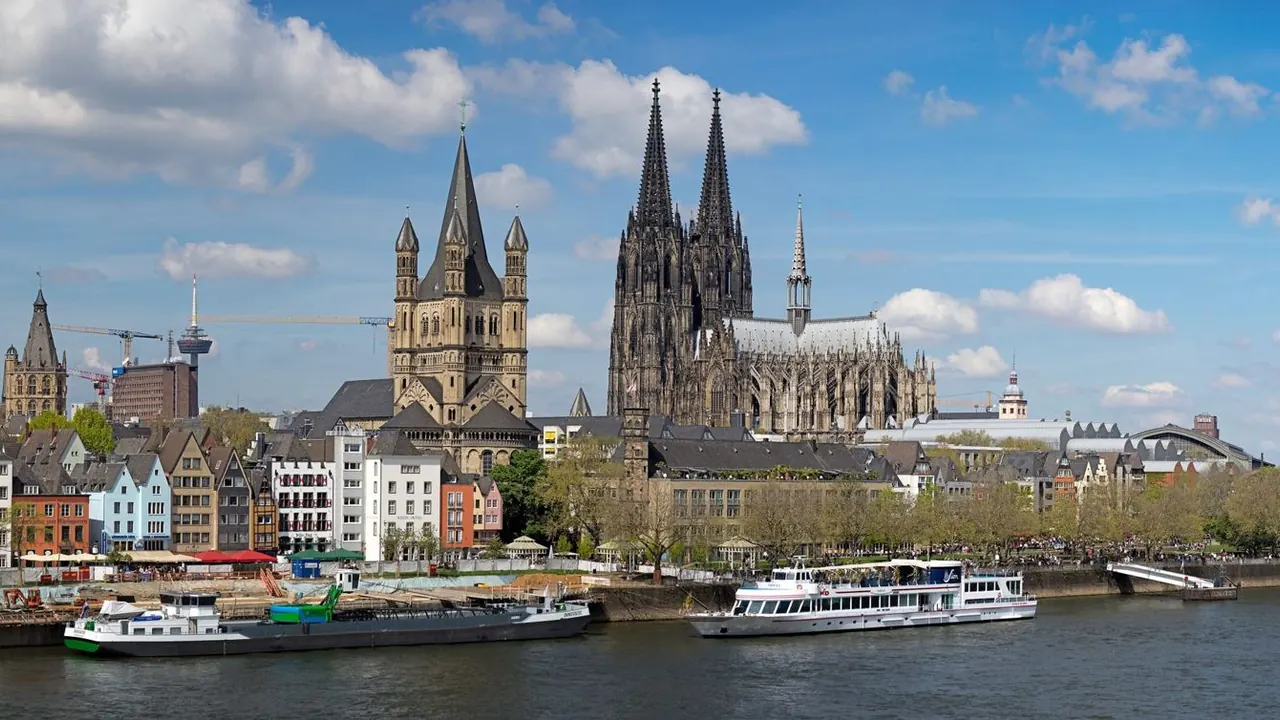
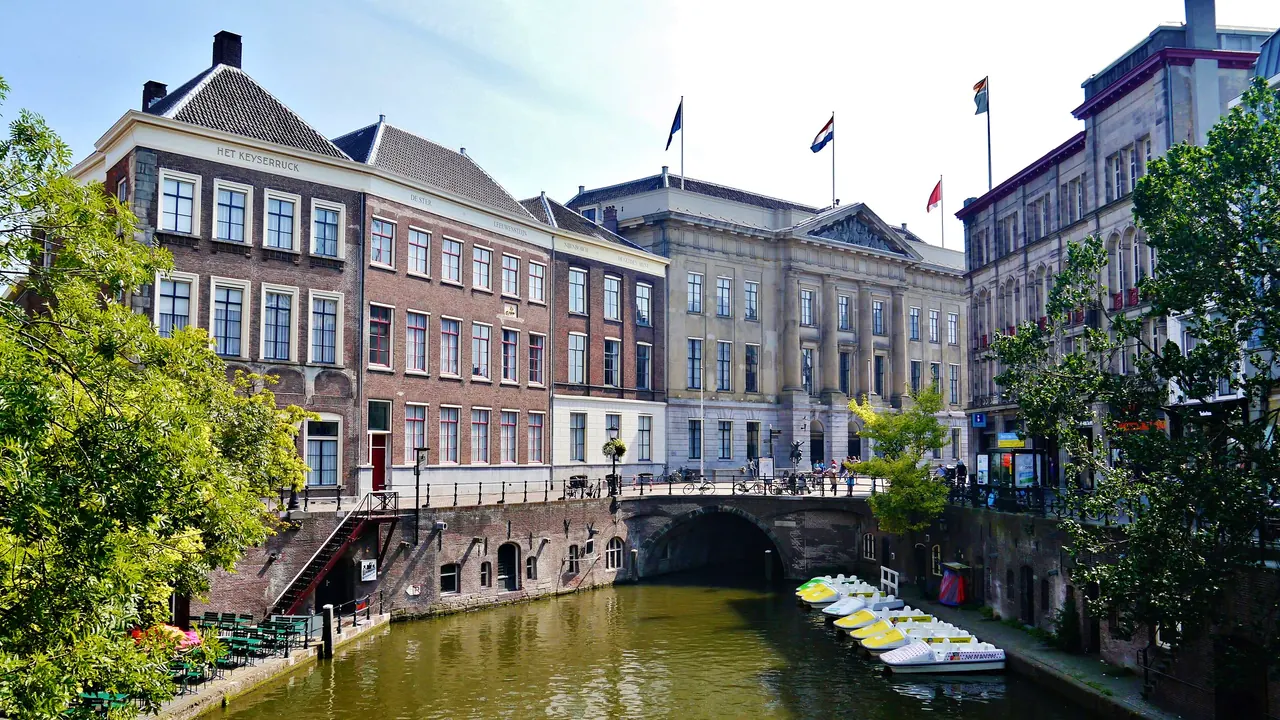
Photos: Cologne by Jörg Braukmann, CC BY-SA 4.0, cropped; Utrecht by Zairon, CC BY-SA 4.0, cropped.
Cologne or Utrecht?
Our verdict in twelve categories, each scored against the same fixed benchmark cities, and the climate month by month, so you can choose for your trip.
Choose Cologne for
- nightlife
- prices
- food and drink
Cologne suits travellers who want more city for their time. It has a Gothic cathedral and a ring of Romanesque churches, art museums of real weight, an opera company and two major orchestras. Evenings run from the Kölsch brewhouses to Ehrenfeld's late clubs. It is also the easier of the two on the wallet, and its sauna culture and thermal bath make for a slow day when you need one.
Choose Utrecht for
- getting around
- day trips
- beaches
Utrecht is better for a calm, compact stay with the rest of the Netherlands close by. The medieval centre and the two-level Oudegracht are a pleasure to wander, almost everything is a short walk from the station, and Amsterdam, Rotterdam, Delft and Haarlem are easy train rides away. Choose it for gentle days and day trips rather than big nights out or a full cultural programme.
Scoreboard
Twelve categories on one fixed scale from 0 to 100. The shaded stretch is the gap between the two.
Your match
Pick a travel style or drag the sliders, and both match scores follow your weighting.
Wins on nightlife and prices with your weighting.
Wins on getting around and day trips with your weighting.
What matters to you?
Category by category
What the scores mean for a trip.
Beaches & swimming
Neither city has a beach worth travelling for. In both, a summer swim means a lake on the edge of town rather than the river or the sea. Cologne's gravel-pit lakes, such as Fühlinger See, warm to about 22°C on hot days, but the Rhine itself is off limits. Utrecht has the Maarsseveense Plassen and the Loosdrecht lakes, and it can also reach the North Sea at Zandvoort or Scheveningen in about an hour, which Cologne cannot do for a day out.
Food & drink
Cologne has the stronger food identity, and it is built around the Brauhaus. The Köbes keep refilling small glasses of Kölsch, the plates are Himmel un Ääd and sauerbraten, and the ritual is worth experiencing for its own sake. Ehrenfeld's Turkish and Middle Eastern kitchens and a few serious fine-dining rooms add range.
Utrecht has no cuisine of its own, and a meal there is more about the setting than the food. You might eat on a terrace on the Oudegracht wharves at water level, try Indonesian or Surinamese food, or buy cheese and herring at the Vredenburg market. Neither city is a food destination, but Cologne gives you more to seek out.
Culture & sights
Cologne has more to see. The cathedral is a sight of European importance, and the twelve Romanesque churches and the Roman remains add a deep second layer of history. Museum Ludwig and the Wallraf-Richartz are major collections. The drawback is the plain post-war townscape between the landmarks.
Utrecht is the other way round. Its medieval centre has largely survived, and with the free-standing Dom Tower and the two-level Oudegracht, the streets themselves are the sight. Its museums, from the Centraal Museum's De Stijl collection to the Rietveld Schröder House, are smaller, and two or three days covers them.
Nightlife
Cologne is the much better night out. An evening can start in the Altstadt brewhouses, move to cocktail bars in the Belgian Quarter and end in late clubs in Ehrenfeld's old factories. The city has one of Germany's largest gay scenes, around Rudolfplatz, and Carnival turns the whole place into a street party.
Utrecht's nights belong to its students. They mean drinking by the canal on the Oudegracht, terraces on the Neude and brown cafés, busy even midweek but with few clubs. Visitors who want more usually take the short train to Amsterdam.
Nature & outdoors
Both are flat cities in green country, but Cologne has more varied landscapes within reach. The volcanic hills of the Siebengebirge and the Drachenfels crag are about forty minutes away. The Eifel's crater lakes and the vineyards of the Ahr valley make for proper day hikes.
Utrecht's countryside is gentler and best seen by bike: along the Vecht past country estates and windmills, across the polders, or onto the low wooded ridges and heath of the Utrechtse Heuvelrug. It suits easy cycling and sailing on the Loosdrecht lakes rather than hill walking.
Day trips
Both are excellent bases, but Utrecht puts more within easy reach. Amsterdam is under half an hour away, and Rotterdam and The Hague are well under an hour. Delft, Leiden, Haarlem and Gouda are simple trips too, so you can see a whole country of old towns from one hotel.
Cologne also has a wide range, from Bonn and Brühl's rococo palace to Aachen and the castle towns of the Rhine Gorge, with Maastricht and Brussels across the border. The best of these trips take longer, so it is a little less effortless as a base.
Good for families
Both cities are relaxed with children, and the difference lies in what you do there. Cologne has bigger attractions: a large zoo with an elephant park, the Chocolate Museum, the cable car over the Rhine and a major theme park a short trip south at Brühl. Carnival week is best avoided with small children.
Utrecht is calmer and smaller in scale. It has the national Railway Museum, the Miffy museum for toddlers and Kasteel de Haar for a fairy-tale outing. Zoos and theme parks mean a journey, and the steady stream of bikes needs watching.
Getting around
Utrecht is the easier city to get around. Centraal station sits on the edge of the old town, nearly everything a visitor wants is a short, flat walk away, and one tap-in card covers trains, buses and trams. Cycling is the local habit, and there is a vast cycle park under the station.
Cologne is also simple, with the main station beside the cathedral and a walkable centre. Reaching Ehrenfeld or the zoo, though, means using a Stadtbahn network whose map is less intuitive and whose trams can be crowded.
Shopping & style
Neither city is a shopping destination, and they differ in style. Cologne's strength is size. Schildergasse and Hohe Strasse are among Germany's busiest shopping streets, and there is independent fashion on Ehrenstrasse and in the Belgian Quarter. It also has Eau de Cologne from its historic perfume houses, and Christmas markets in Advent.
Utrecht is better for browsing small streets. Independent shops line the Oudegracht wharves and the Twijnstraat, the chains are kept together in the Hoog Catharijne mall, and there are flower and textile markets. Neither city has many luxury labels.
Affordability
Cologne is clearly easier on the budget. Brewhouse meals with Kölsch cost less than in most capitals, and the cathedral is free to enter. Hotels are moderate except during trade-fair weeks and Carnival, when rates jump.
In Utrecht, the main cost is the hotel. There are few hotels in the historic centre, they charge big-city rates, and restaurants charge normal Dutch prices on top. Day-to-day spending is easier, since you can walk or rent a bike instead of paying for transport, and student lunch cafés serve cheap meals. Even so, the total bill comes out higher than in Cologne.
Live music & performing arts
Cologne has the richer stage life. Its opera and the Schauspiel share the theatre complex on Offenbachplatz, and the Philharmonie is home to two major orchestras, with the broadcaster's big band and choirs adding more. There is a long tradition of electronic music, jazz in the clubs of Ehrenfeld and the Südstadt, and the Carnival sessions, which are found nowhere else.
Utrecht does well for its size. Its music life centres on TivoliVredenburg, whose stacked halls host classical, pop and jazz, and its Festival Oude Muziek is a major draw for early-music lovers. It has no opera house, though, and its theatre is mostly in Dutch.
Wellness & relaxation
Cologne offers more ways to unwind. Saunas are an everyday habit there, the thermal bath in the Rheinpark looks across the river to the cathedral, and Aachen's hot springs are under forty minutes away.
Utrecht has no bathing tradition, and its sauna complexes are in the green belt outside the centre. Its strength is a quiet pace once the day-trippers leave, with evenings on the canal wharves and the Pandhof cloister garden beside the Dom.
When should you go?
Pick your month. The climate figures are measured averages, not a forecast.
Cologne in July
Utrecht in July
Daytime high, °C
Rainfall in the month, mm
Temperature and rainfall are climate normals, averaged over the years shown. Cologne: 1991-2020 normals, Köln-Stammheim (5.4 km from centre). Utrecht: 1991-2020 normals, De Bilt (4.3 km from centre).
Both cities share a mild northern climate, and the comfortable months for walking the streets are May to September. Cologne runs a little warmer in summer, with highs of around 25°C in July and August against Utrecht's 23°C. Winters are cold and short of daylight in both. Neither suits a beach trip. The lakes around each city are for a warm spell in July or August, and the North Sea within reach of Utrecht only reaches about 19°C at its warmest.
Rain falls all year in both, but at different times. Cologne's wettest stretch is high summer. Utrecht stays damp from July through autumn and into December, so October and November are wetter there, although Utrecht still gets a little more sun than Cologne in those months. It is also slightly sunnier in spring, and April, its driest month, is a good time to walk the canals.
Which traveller are you?
For a food and nightlife trip, Cologne is clearly the better pick. The Brauhaus ritual of Kölsch and hearty Rhineland plates leads on to the Belgian Quarter's bars, Zülpicher Strasse and Ehrenfeld's factory clubs. Utrecht's student terraces and brown cafés stay modest by comparison.
On a trip on a tight budget, Cologne goes further. Brewhouse meals are reasonable, the cathedral and many churches are free to enter, and hotels are moderate outside fair weeks and Carnival. In Utrecht, scarce rooms in the historic centre push the overall cost up.
For a short city break, Utrecht has the edge. The station opens straight onto the medieval centre, and the Dom Tower, the canals and the museums are a short, flat walk apart. Two or three days covers the city without hurry.
Before you go
| Measure | Cologne | Utrecht |
|---|---|---|
| Official language | German | Dutch |
| Currency | Euro (EUR) | Euro (EUR) |
| Sockets | CF230 V, 50 Hz | CF230 V, 50 Hz |
| Driving side | Right | Right |
| Time zone | UTC+1, UTC+2 in summer | UTC+1, UTC+2 in summer |
| Emergency number | 112 | 112 |
| Elevation | 59 m | 5 m |
| Main airport | Cologne Bonn Airport (CGN)15 km from centre115 non-stop destinations | Amsterdam Airport Schiphol (AMS)34 km from centre287 non-stop destinations |
| Public holidays this year | 11 days | 11 days |
By the numbers
| Measure | Cologne | Utrecht |
|---|---|---|
| City population | 1,025,523 | 359,370 |
| People per km² | 2,532 | 3,619 |
| Museums within 10 km | 40 | 28 |
| UNESCO World Heritage sites within 50 km | 3 | 5 |
| Swim season, months above 21 °C | - | None |
Where else could you go?
Every comparison below shares a destination with this one, so you can follow Cologne or Utrecht somewhere new.