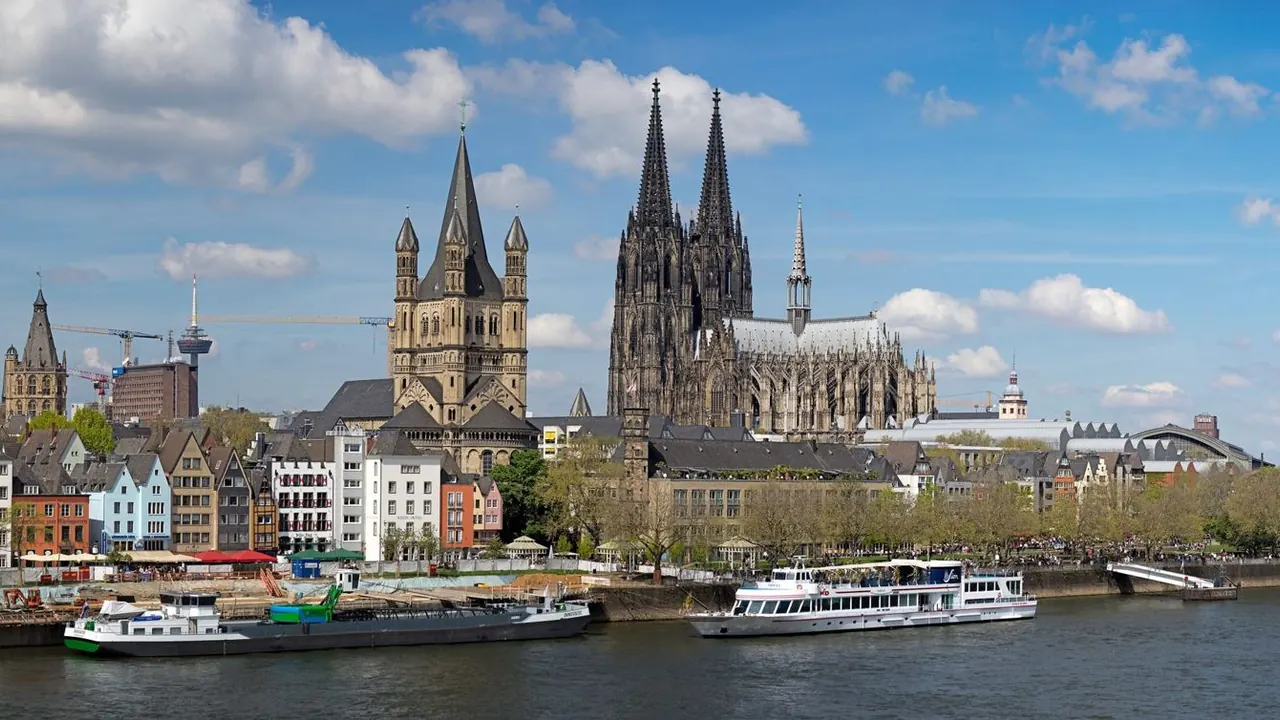
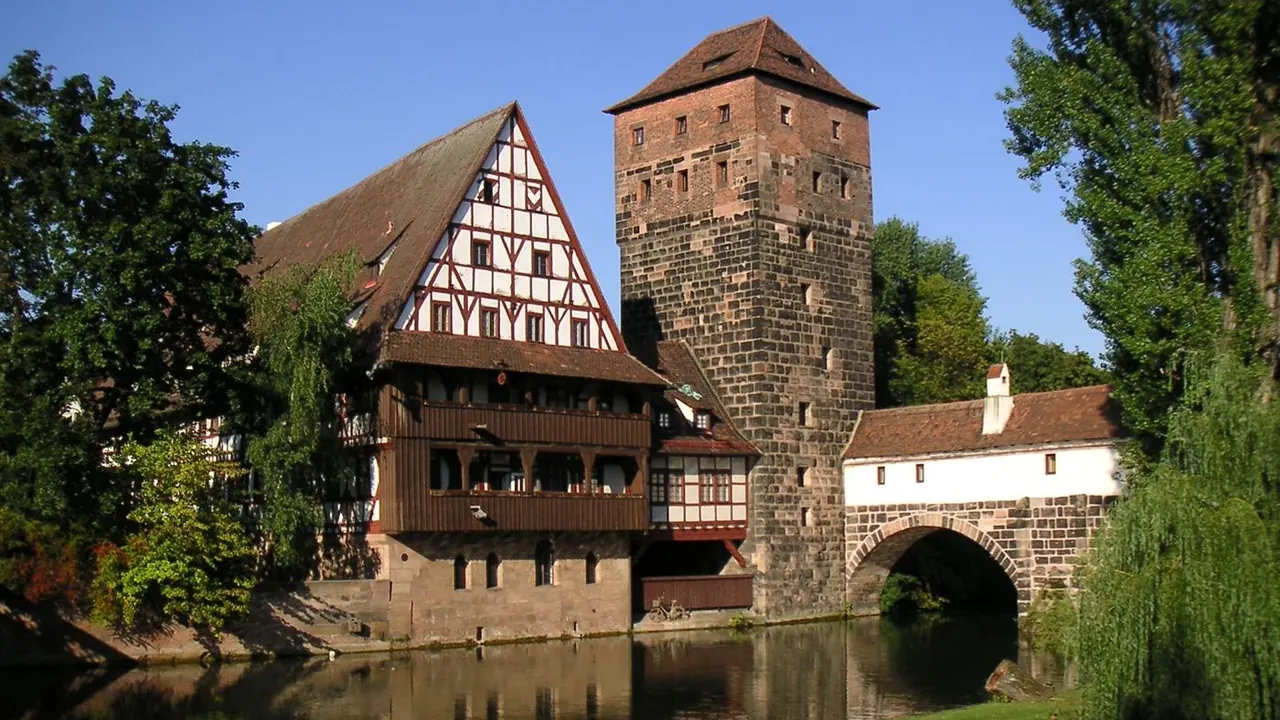
Photos: Cologne by Jörg Braukmann, CC BY-SA 4.0, cropped; Nuremberg by Horst Gutmann, CC BY 2.0, cropped.
Cologne or Nuremberg?
Our verdict in twelve categories, each scored against the same fixed benchmark cities, and the climate month by month, so you can choose for your trip.
Choose Cologne for
- nightlife
- live music and the arts
- shopping
Cologne suits travellers who want their evenings to count. Brewhouse rounds of Kölsch lead on to the Belgian Quarter's bars and Ehrenfeld's clubs, and the Philharmonie, the opera and a deep jazz and electronic scene fill the nights between. It also has more to give families, with Phantasialand and the Chocolate Museum, and more for shoppers. The cathedral and the Romanesque churches are the anchors of a stay in a city that is otherwise more lively than handsome.
Choose Nuremberg for
- getting around
- prices
- culture and sights
Pick Nuremberg if you want the old town itself to be the attraction. Inside its medieval walls you walk between the Kaiserburg, Gothic churches and half-timbered lanes, and you can see it all on foot. It pairs that with a serious reckoning with the twentieth century at the Rally Grounds and Courtroom 600, and with Franconian beer culture. Nights are quieter, so it fits a slower, history-minded trip better than a lively one.
Scoreboard
Twelve categories on one fixed scale from 0 to 100. The shaded stretch is the gap between the two.
Your match
Pick a travel style or drag the sliders, and both match scores follow your weighting.
Wins on nightlife and live music and the arts with your weighting.
Wins on getting around and prices with your weighting.
What matters to you?
Category by category
What the scores mean for a trip.
Beaches & swimming
Neither city is a swimming destination, and the Rhine and the Pegnitz are not for bathing. The difference is how far you go for a swim. Cologne's gravel-pit lakes such as Fühlinger See lie on the edge of the city, close enough for an afternoon on a hot day. From Nuremberg, the Brombachsee and the other Franconian lakes are about an hour away, which makes swimming a planned outing, though there is sailing and paddling once you are there.
Food & drink
Both cities feed you heavily and around beer, but the beer works differently in each. In Cologne the ritual is the thing: in the big Altstadt brewhouses the Köbes keeps the small glasses of Kölsch coming, alongside Himmel un Ääd or a Halve Hahn. When you want a change from Rhineland cooking, Turkish and Middle Eastern kitchens are concentrated along Venloer Strasse in Ehrenfeld, one well-known street you can head to on purpose.
Nuremberg rests on the beechwood-grilled finger bratwurst, Schäufele and Lebkuchen. Its beer is regional more than ritual, with Franconia's small breweries pouring Kellerbier in taverns and beer gardens along the Pegnitz. Beyond these local staples, the wider restaurant scene in both cities is sound rather than memorable.
Culture & sights
The two are well matched, but in different ways. Cologne's strength lies in single great buildings and collections: the cathedral with the Shrine of the Three Kings, the ring of Romanesque churches, Roman remains and Museum Ludwig's Pop Art. Between them, much of the post-war city is plain.
Nuremberg gives you a whole townscape instead, with the walls, the Kaiserburg, St Lorenz and Dürer's house all inside one walk. It adds the Germanisches Nationalmuseum and twentieth-century sites that Cologne has nothing like: the Rally Grounds and the courtroom of the war crimes trials.
Nightlife
Cologne is the far better night out. An evening can move from Altstadt brewhouses to Belgian Quarter wine bars, the packed student strip or late clubs in Ehrenfeld's factories. The gay scene around Rudolfplatz is one of Germany's largest, and Carnival turns the whole city into a street party.
Nuremberg's going out is mostly bars: taverns in the old town, students on the riverbanks in summer and the small alternative places of Gostenhof. It makes for a good evening, but few people come for it.
Nature & outdoors
Both are flat cities with good walking and cycling nearby rather than real wilderness. Cologne leans on its river. You get long Rhine cycle paths, the Grüngürtel parks and then the volcanic Siebengebirge and the Eifel's crater lakes.
Nuremberg starts in pine forest, with the Reichswald at the edge of town. Its best country is Franconian Switzerland, whose limestone towers and caves draw climbers as well as hikers.
Day trips
Both are excellent bases, and the choice comes down to what you want to see. From Cologne the trains run to Bonn, Aachen and Brühl's palaces, south into the castle-lined Rhine Gorge and across borders to Maastricht, Liège and Brussels.
Nuremberg's radius is a run of historic Franconian and Bavarian towns: Bamberg, Regensburg on the Danube, Würzburg's Residence, the walled towns of the Romantic Road, Wagner's Bayreuth, and Munich within about an hour.
Good for families
Cologne gives children more, mainly because of Phantasialand at Brühl, one of Europe's big theme parks. Add the Chocolate Museum's fountain, the cable car to the Rheinpark playgrounds and the zoo's elephant park. Carnival week is the time to avoid with small children.
Nuremberg plays on its toy-making past with the Toy Museum, full-size locomotives at the railway museum and a play park in Zirndorf. Its zoo in old quarries has dolphins and manatees. It is good for a few days, but the cobbled climb to the castle tires small legs.
Getting around
Both cities are easy without a car, and both put the main station on the edge of the old centre. Nuremberg's walled core is compact enough to cover on foot, and one ticket covers the U-Bahn, trams and trains out to Fürth and Erlangen. Cologne's sights are also walkable from the cathedral, but reaching Ehrenfeld or the zoo means using a Stadtbahn network that is harder to read and sometimes irregular.
Shopping & style
Cologne is the better place to shop. Schildergasse and Hohe Strasse are among Germany's busiest high streets, and Ehrenstrasse and the Belgian Quarter add independent fashion and design. Eau de Cologne from the historic perfume houses makes a souvenir with a real story.
In Nuremberg the main streets are serviceable chain shopping. What you take home is local: Lebkuchen tins, wooden toys and crafts from the Handwerkerhof. In Advent the famous Christkindlesmarkt becomes the main event.
Affordability
Costs are much the same in both, with filling meals, local beer and fairly priced transport, and in both the hotels are the main expense. What differs is when rooms get scarce. In Cologne it happens during the Messe trade fairs and Carnival, though the free entry to the cathedral helps. In Nuremberg it is the toy fair and the Advent market season.
Live music & performing arts
Cologne has a much fuller stage life. The Philharmonie beside the cathedral houses two orchestras, the WDR ensembles add a big band and choirs, and the opera and Schauspiel share Offenbachplatz. Below that sit jazz, a long electronic tradition, club gigs in Ehrenfeld and the Südstadt, and the dialect Carnival sessions.
Nuremberg offers solid regional fare. The Staatstheater stages opera and ballet in its Art Nouveau house, the orchestras give an open-air concert in the Luitpoldhain, and in summer there is the free Bardentreffen folk weekend.
Wellness & relaxation
Both cities share the German habit of sauna landscapes, and both have a historic spa town within an hour. In Cologne, the Rheinpark thermal bath looks across to the cathedral, and Aachen's Roman-era springs are close by, but the centre itself is busy and rarely restful. Nuremberg sends you to the thermal spa in Fürth or to float in Bad Windsheim's saline pools, and its old town and beer gardens are slower places to spend an afternoon.
When should you go?
Pick your month. The climate figures are measured averages, not a forecast.
Cologne in July
Nuremberg in July
Daytime high, °C
Rainfall in the month, mm
Temperature and rainfall are climate normals, averaged over the years shown. Cologne: 1991-2020 normals, Köln-Stammheim (5.4 km from centre). Nuremberg: 1991-2020 normals, Nuernberg (5.5 km from centre).
The two cities share the same summer: both reach about 25°C in July and August, and from late May to mid-September it is comfortable for long days of walking. That is also the only time the lakes outside either city are warm enough for a swim. Nuremberg is clearly sunnier through the warm months, while Cologne's July and August are a little wetter, with showers of about 81mm a month.
Winter is where they part. Nuremberg is colder, with daytime highs near 4°C from December to January, but it is drier, at about 40mm in January. Cologne stays a touch milder at around 6°C but is grey and damp from autumn through winter. Spring and early autumn are mild in both, and April is a good, fairly dry month in Nuremberg.
Which traveller are you?
For a food and nightlife trip, Cologne is the clear pick. The Kölsch brewhouses lead on to cocktail bars in the Belgian Quarter, the student strip on Zülpicher Strasse and clubs in old Ehrenfeld factories. Nuremberg's evenings in tavern and Gostenhof bars are pleasant but quieter.
On a family trip with children, Cologne has the edge. Phantasialand is a short ride south, and the Chocolate Museum, the cable car over the Rhine and the zoo fill the other days. Nuremberg's toy and railway museums are good, but there is less to choose from.
For a short city break, Nuremberg works neatly. The sights sit inside walls about 1.5km across, from the station gate up to the Kaiserburg, so a weekend goes on walking, not travelling. Cologne's highlights are more spread out, across a plainer rebuilt townscape.
Before you go
| Measure | Cologne | Nuremberg |
|---|---|---|
| Official language | German | German |
| Currency | Euro (EUR) | Euro (EUR) |
| Sockets | CF230 V, 50 Hz | CF230 V, 50 Hz |
| Driving side | Right | Right |
| Time zone | UTC+1, UTC+2 in summer | UTC+1, UTC+2 in summer |
| Emergency number | 112 | 112 |
| Elevation | 59 m | 209 m |
| Main airport | Cologne Bonn Airport (CGN)15 km from centre115 non-stop destinations | Nuremberg Airport (NUE)5 km from centre56 non-stop destinations |
| Public holidays this year | 11 days | 12 days |
By the numbers
| Measure | Cologne | Nuremberg |
|---|---|---|
| City population | 1,025,523 | 531,159 |
| People per km² | 2,532 | 2,848 |
| Museums within 10 km | 40 | 50 |
| UNESCO World Heritage sites within 50 km | 3 | 1 |
Where else could you go?
Every comparison below shares a destination with this one, so you can follow Cologne or Nuremberg somewhere new.