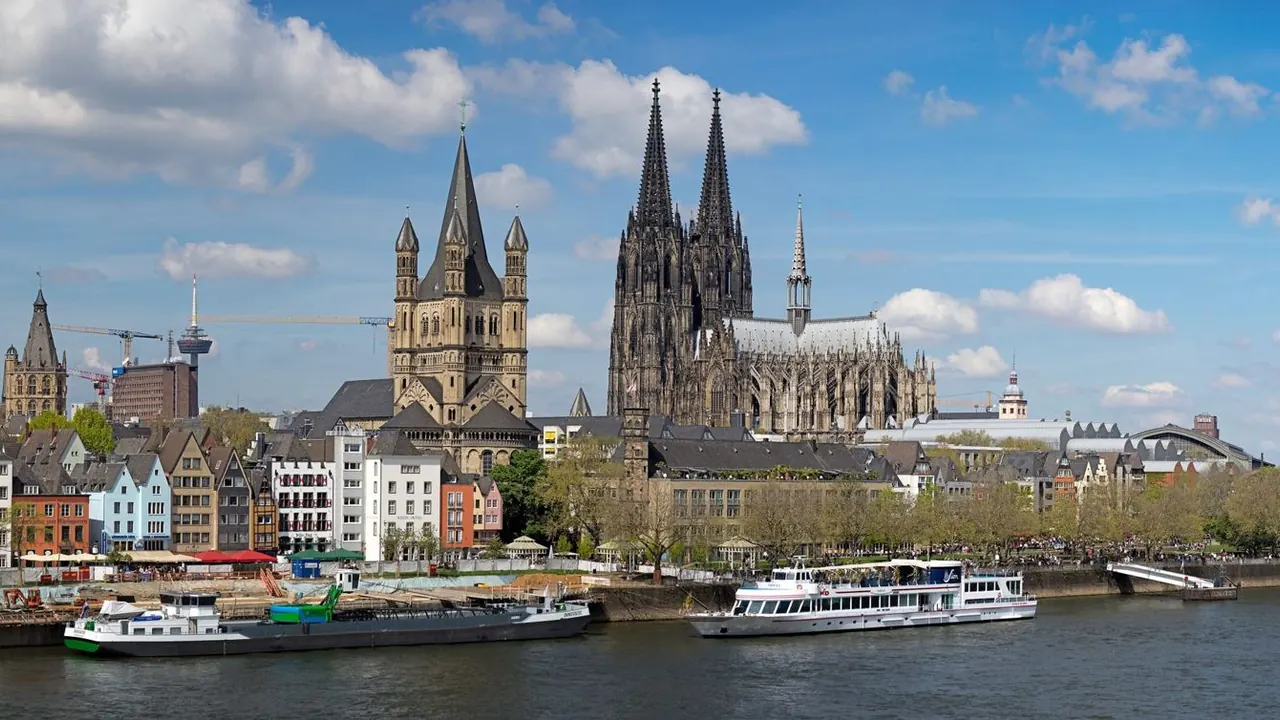
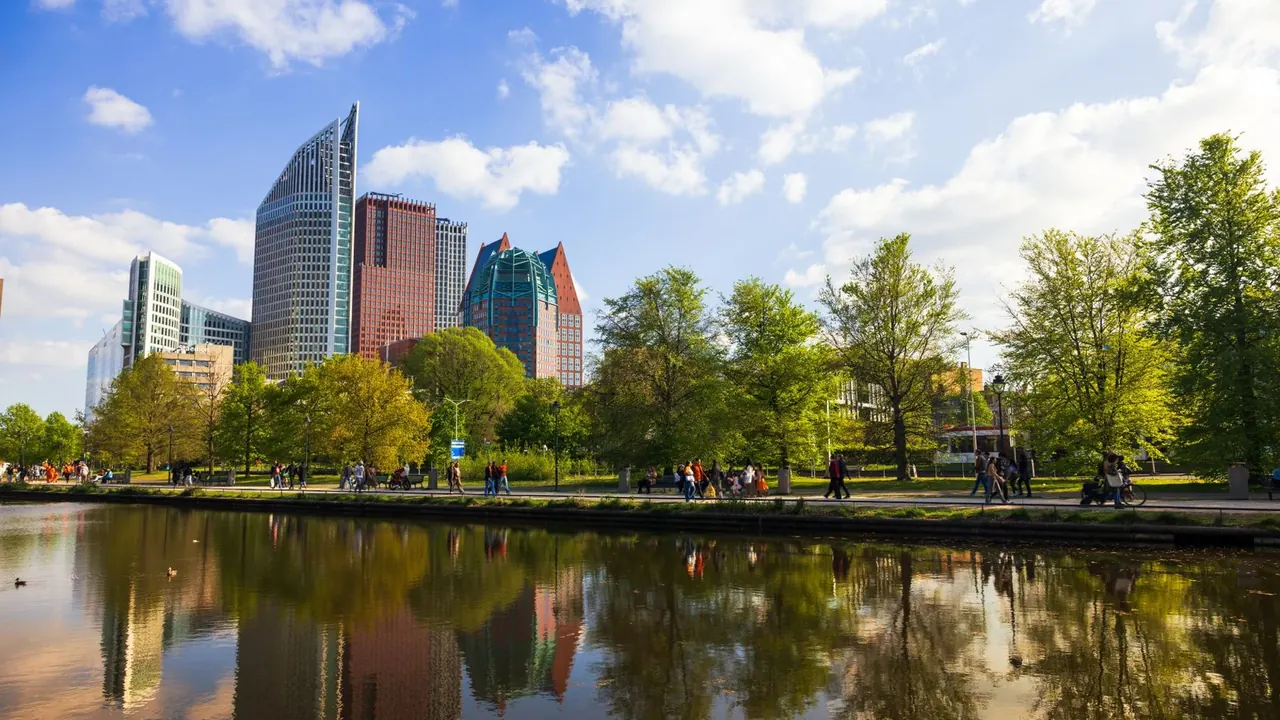
Photos: Cologne by Jörg Braukmann, CC BY-SA 4.0, cropped; The Hague by Bráulio jardim, Pexels License.
Cologne or The Hague?
Our verdict in twelve categories, each scored against the same fixed benchmark cities, and the climate month by month, so you can choose for your trip.
Choose Cologne for
- nightlife
- prices
- live music and the arts
Cologne suits travellers who want lively evenings and a full stage calendar. You get Kölsch brewhouses, Ehrenfeld's clubs, the Philharmonie and the opera, and Carnival if you time it right. It is also the cheaper of the two, and fast trains reach Bonn, Aachen and the castle towns of the Rhine Gorge.
Choose The Hague for
- beaches
- day trips
- getting around
The Hague is for a quieter, more polished stay with the sea at the end of a tram line. The Mauritshuis and the Binnenhof fill a couple of unhurried days, and Scheveningen gives you summer afternoons on the sand. Delft, Leiden and Amsterdam are all close by train. Choose it if you prefer early nights to late ones and can accept higher prices.
Scoreboard
Twelve categories on one fixed scale from 0 to 100. The shaded stretch is the gap between the two.
Your match
Pick a travel style or drag the sliders, and both match scores follow your weighting.
Too close to call, 2 points apart
Wins on nightlife and prices with your weighting.
Wins on beaches and day trips with your weighting.
What matters to you?
Category by category
What the scores mean for a trip.
Beaches & swimming
Cologne is a river city with no swimming beach. The Rhine is not safe for swimming, the sandy banks at Rodenkirchen are for sitting on, and the nearest place to bathe is a gravel-pit lake such as Fühlinger See.
The Hague has a real seaside within the city. Scheveningen has a long sandy beach with a pier and promenade, and Kijkduin is quieter, with dunes behind it. The North Sea is cold and choppy, so you sunbathe and take short dips rather than swim, but it is a proper beach day, which Cologne cannot offer.
Food & drink
Neither city is a destination for food, and the two are broadly level, but the meals you will remember are different. In Cologne it is the Brauhaus: the Köbes keeps bringing Kölsch to the table alongside Himmel un Ääd and sauerbraten, and the Turkish kitchens on Ehrenfeld's Venloer Strasse are the best change from it.
The Hague's strength comes from the former Dutch East Indies. Its Indonesian cooking, from a full rijsttafel to simple plates of rendang, is the reason to book a table. Scheveningen harbour adds fish, and street carts sell raw herring in early summer.
Culture & sights
The two are evenly matched in different ways. Cologne's main draw is one huge building, the cathedral. Around it are twelve Romanesque churches, Roman remains and the Pop Art of Museum Ludwig, set in a town largely rebuilt after the war.
The Hague offers great quality in a small space: Vermeer and Rembrandt in the Mauritshuis, the Binnenhof beside its pond, Mondrian at the Kunstmuseum and the Peace Palace. The setting is leafy and dignified, and the city rewards a slow pace.
Nightlife
Cologne is far better for going out. A typical evening moves from a brewhouse to a cocktail bar in the Belgian Quarter and then to a late club in an Ehrenfeld factory. The gay scene around Rudolfplatz is one of Germany's biggest, and Carnival turns the whole city into a street party.
Nights out in The Hague are polite and early. After-work drinks on the Plein, student terraces on the Grote Markt and summer beach pavilions cover most of it. Anyone wanting more takes the train to Rotterdam or Amsterdam.
Nature & outdoors
Both cities are flat and green, so the difference is in what lies nearby. From Cologne the land starts to rise within the hour. The wooded hills of the Siebengebirge, the Drachenfels, the Bergisches Land and the Eifel's crater lakes all make proper day hikes.
The Hague's outdoors is the coast. The dunes of Meijendel and the Westduinpark, beach walks in any weather and kitesurfing when the wind is up take the place of hills.
Day trips
Cologne is a strong rail hub. Brühl's palaces, Bonn and Düsseldorf are all within half an hour, and Aachen is not much further. The castle towns of the Rhine Gorge and trips over the border to Maastricht or Brussels take up to two hours.
The Hague does even better, because so much is so close. Delft and Leiden are about fifteen minutes away, and Gouda and Rotterdam are not much further. Amsterdam, Utrecht, the Kinderdijk windmills and Keukenhof are all within an hour, so you can see most of the country from one base.
Good for families
Both work well with children, so the choice comes down to the kind of outing. Cologne has the zoo, the Chocolate Museum, the cable car across the Rhine and Phantasialand at Brühl, a major theme park. Carnival week is best avoided with small children.
The Hague offers miniatures and the seaside: Madurodam, the beach and sea aquarium at Scheveningen, and Duinrell's water park in Wassenaar. It is a calm city where only rain spoils the plan.
Getting around
Both cities are easy without a car. In Cologne you arrive beside the cathedral and the main sights are within walking distance, though the Stadtbahn map takes some learning and the trams can be crowded.
The Hague's walkable centre is smaller and the city more spread out. Even so, frequent trams run to the beach and Madurodam, there are cycle lanes almost everywhere, and national trains make Delft and Leiden as easy to reach as a suburb.
Shopping & style
Neither city is a shopping destination, and they differ more in character than in range. Cologne offers volume on Schildergasse and Hohe Strasse and independent shops in the Belgian Quarter. Its historic perfume houses still sell Eau de Cologne, and the Christmas markets fill the squares in Advent.
The Hague is smaller and better for browsing. The Denneweg and Noordeinde have antique dealers and galleries, the glass-roofed Passage dates from the 1880s, and the Haagse Markt is one of Europe's largest open-air markets.
Affordability
Cologne is easier on the wallet. Brewhouse meals and Kölsch are fairly priced, the cathedral is free, and hotels are the main cost. Plan around the trade fairs and Carnival, when room rates jump.
The Hague charges full Northern European prices for rooms, meals and drinks, and Scheveningen's seafront hotels cost more in summer. Staying at weekends, eating at Indonesian and Surinamese places and picnicking from the market all help, but the bill still stays above Cologne's.
Live music & performing arts
Cologne has the broader stage. There are opera and drama at Offenbachplatz, two orchestras at the Philharmonie beside the cathedral, early-music concerts in the Romanesque churches, and a strong jazz and electronic scene. Most nights there is something worth seeing.
The Hague's programme is narrower but has one highlight: Nederlands Dans Theater on its home stage. The Residentie Orkest fills out the season, but the theatre is mostly in Dutch and there is no resident opera company, which limits the rest for visitors.
Wellness & relaxation
The two are close, and both have a serious sauna culture where nudity is the norm. Cologne adds natural springs: a thermal bath in the Rheinpark fed by mineral springs, with a view of the cathedral, and Aachen's ancient hot springs nearby. The city itself is busy, though.
The Hague has no historic baths still in use, but its calm pace, quiet streets and sea air make it easy to slow down.
When should you go?
Pick your month. The climate figures are measured averages, not a forecast.
Cologne in July
The Hague in July
Daytime high, °C
Rainfall in the month, mm
Where the figures come from
The Hague has no rain gauge within 25 km of the centre, so its rainfall comes from a gridded climate dataset read at the city rather than from a gauge further away.
The Hague's sunshine is measured 60 km from the centre, at De Bilt.
Temperature and rainfall are climate normals, averaged over the years shown. Cologne: 1991-2020 normals, Köln-Stammheim (5.4 km from centre). The Hague: 1991-2020 normals, Valkenburg (13.6 km from centre).
Winters are much the same in both cities. From December to February daytime highs are around 6°C, the days are short and the skies grey, so this is a season for museums, brewhouses and cafés rather than long walks. Summer is where they differ. Cologne is inland and warms to about 25°C in July and August, which is good weather for exploring the streets and for the lakes on the edge of the city. The Hague stays cooler at about 21°C, with a breeze off the sea. The North Sea reaches about 19°C at its warmest, enough for a quick dip but not a long swim.
Rain falls all year in both, with the most in high summer. In autumn The Hague stays wetter while Cologne dries out a little. The sunniest stretch runs from May to August in both cities. On the Dutch coast it peaks in May, and spring is brighter there than in Cologne, while Cologne's sunniest month is July. Late spring is a good time for either city, and September stays mild in both.
Which traveller are you?
For a food and nightlife trip, pick Cologne if you want long, sociable evenings. Hearty Rhineland food sets you up for a late night, and at weekends the city stays out well past midnight. In The Hague you get a fine Indonesian dinner, then an early night.
On a beach and sun trip, choose The Hague. Scheveningen's wide sandy beach is a short tram ride from the centre, and Kijkduin's dunes are nearby. You cannot swim in Cologne's Rhine, and its gravel-pit lakes are worth an afternoon at most.
On a tight budget, Cologne lets the same money cover more days. Everyday eating and drinking cost less, and most of the sights you came for are within walking distance of the station, so you rarely pay to get about. The Hague costs more for almost everything.
Before you go
| Measure | Cologne | The Hague |
|---|---|---|
| Official language | German | Dutch |
| Currency | Euro (EUR) | Euro (EUR) |
| Sockets | CF230 V, 50 Hz | CF230 V, 50 Hz |
| Driving side | Right | Right |
| Time zone | UTC+1, UTC+2 in summer | UTC+1, UTC+2 in summer |
| Emergency number | 112 | 112 |
| Elevation | 59 m | 1 m |
| Main airport | Cologne Bonn Airport (CGN)15 km from centre115 non-stop destinations | Rotterdam The Hague Airport (RTM)16 km from centre53 non-stop destinations |
| Public holidays this year | 11 days | 11 days |
By the numbers
| Measure | Cologne | The Hague |
|---|---|---|
| City population | 1,025,523 | 548,320 |
| People per km² | 2,532 | 5,589 |
| Museums within 10 km | 40 | 54 |
| UNESCO World Heritage sites within 50 km | 3 | 4 |
| Swim season, months above 21 °C | - | None |
Where else could you go?
Every comparison below shares a destination with this one, so you can follow Cologne or The Hague somewhere new.