Colombia
Medellin
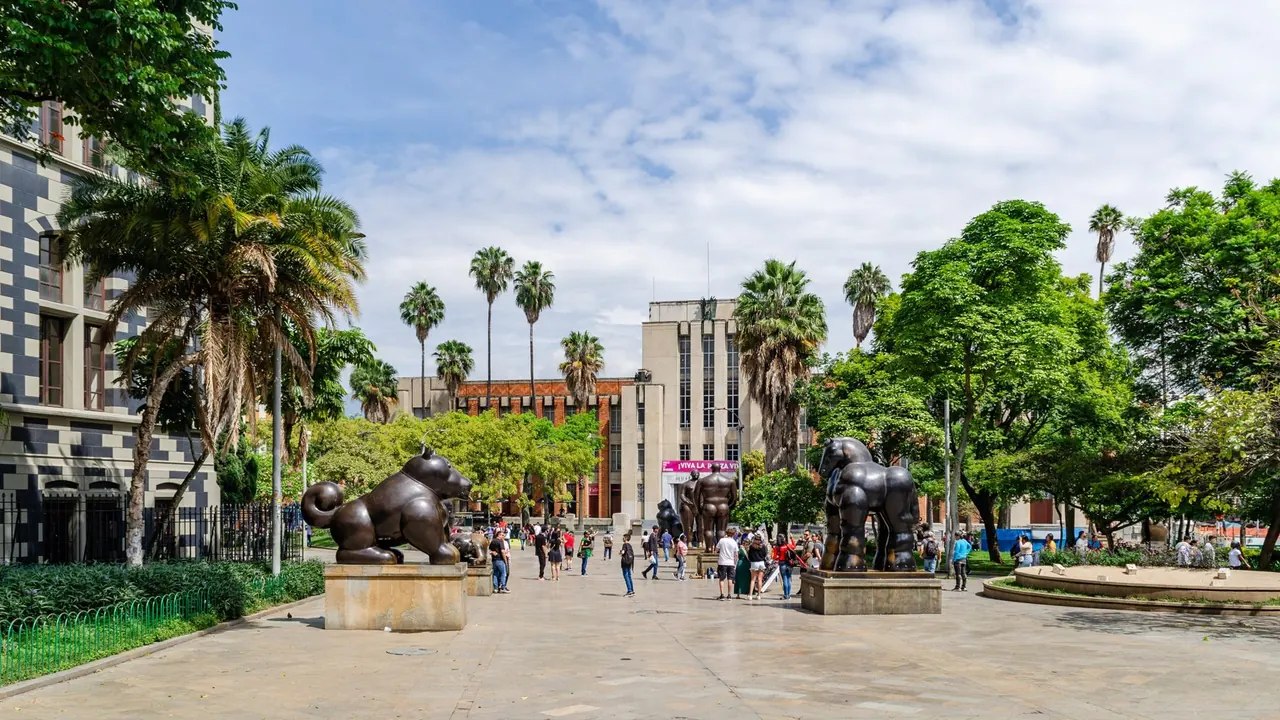
Botero sculptures on Plaza Botero
- Affordable cities80
- Nightlife76
- Nature & outdoors66
Photo: Steffen Schmitz, CC BY-SA 4.0, cropped
Match
51
Every category weighted equally
- Beach & sun47
- Culture & arts52
- Food & nightlife54
- Family trip49
- Outdoors52
- Relax & unwind45
- Shopping & style51
- On a budget54
Medellin in twelve categories
Our verdict on each, scored 0 to 100 against the same fixed benchmark cities, so a score means the same thing on every page.
Beaches & swimming. Scores 5 out of 100.
Food & drink. Scores 58 out of 100.
Culture & sights. Scores 42 out of 100.
Nightlife. Scores 76 out of 100.
Nature & outdoors. Scores 66 out of 100.
Day trips. Scores 58 out of 100.
Good for families. Scores 50 out of 100.
Getting around. Scores 55 out of 100.
Shopping & style. Scores 45 out of 100.
Affordability. Scores 80 out of 100.
Live music & performing arts. Scores 42 out of 100.
Wellness & relaxation. Scores 30 out of 100.
Medellin category by category
Beaches & swimming
5Medellín sits in a high Andean valley, and the Caribbean coast is a long road journey or a flight away. Swimming means a hotel pool, a country finca with a pool in the hills, or the reservoir at Guatapé. Visitors who want sand fly to the coast for a separate leg of the trip.
Food & drink
58The local paisa cooking is filling and plain: bandeja paisa piled with beans, rice, chicharrón, egg and arepa, sancocho stews, and arepas eaten all day long. The best things are the tropical fruit, sold as juices, in market stalls and in fruit cups on street corners, and the coffee. Antioquia is coffee country, and the city has a strong café culture serving its own beans.
For eating out, El Poblado and Provenza have the broadest range, from creative Colombian kitchens to international restaurants. Laureles feels more local and works well for long lunches. The Minorista market is the place to see the region's produce. The cuisine is not especially varied, but there are a few memorable meals to be had.
Culture & sights
42Most of Medellín was built in the last century, and little colonial fabric is left. The cultural interest lies in the city's story. The Museo de Antioquia and Plaza Botero in the old centre hold a large collection of Fernando Botero's rounded sculptures and paintings. The Museo Casa de la Memoria deals honestly with the decades of violence, and Comuna 13, a hillside district with outdoor escalators and murals, shows how poor neighbourhoods were tied back into the city.
The Metrocable gondolas over the hillside barrios are a sight in themselves. The Palacio de la Cultura, the Botanical Garden and the reconstructed village of Pueblito Paisa complete a list that takes two or three days.
Nightlife
76Going out is a big part of Medellín's appeal. The city is closely tied to reggaeton, and the clubs play it loud until late. Parque Lleras and the streets of Provenza in El Poblado are the busiest, with rooftop bars, cocktail spots and dance clubs packed at weekends. Laureles and the strip along La 70 are more local and cheaper, with outdoor drinking and salsa bars where people come to dance properly. There are also old-style tango bars in the centre.
Nights begin late and run past dawn on Fridays and Saturdays. The busiest tourist strips can feel rough, so keep valuables out of sight and use ride-hailing apps after dark rather than street taxis.
Nature & outdoors
66The city fills a narrow valley with steep green mountains on both sides, and the mild climate makes being outdoors easy all year. A cable car climbs from the metro to Parque Arví, a large upland reserve of pine and cloud forest with walking trails and pre-Hispanic paths. Paragliders launch from the ridge at San Félix above the valley, and the forests around Santa Elena are good for birdwatching.
Further out, the reservoir country around El Peñol is about two hours away, a lake landscape of drowned valleys with boating and the climb up a huge granite monolith. Rain falls heavily in the two wet seasons, though mornings are often clear.
Day trips
58Guatapé is the classic day out, about two hours east. It is a lakeside town whose houses are decorated with brightly painted relief panels called zócalos, next to El Peñol's rock. Santa Fe de Antioquia, about an hour and a half west through a tunnel, is the old colonial capital, with whitewashed streets, a cathedral and the long suspension bridge of Occidente, in a hot lowland valley.
The highland towns of El Retiro and Carmen de Viboral, the latter known for hand-painted ceramics, are closer, and coffee farms nearby offer tours. The best coffee villages, Jardín and Jericó, are worth an overnight stay rather than a day trip.
Good for families
50There is a good cluster of things for children in the north of the city. Parque Explora is a large interactive science museum with a freshwater aquarium, and the planetarium and botanical garden are next door. Children love the cable cars up to Parque Arví, and the mild weather means no heat to fight. Colombians welcome children everywhere.
On the other hand, many neighbourhoods are very steep, pavements are uneven, traffic is heavy, and families should stick to the well-known districts and use ride-hailing apps at night. Most families stay in El Poblado or Laureles and add a day at Guatapé.
Getting around
55The metro runs along the valley floor and is clean and well kept. Locals take pride in it, and it connects with Metrocable gondolas up the hillsides and a tram line to the east. That covers the centre, Botero Plaza, Comuna 13 and Parque Arví well. El Poblado and Laureles are pleasant to walk within, but the slopes are steep, and journeys between neighbourhoods usually mean a taxi or a ride-hailing app, both cheap.
Traffic jams the main roads at peak hours. The airport is up on the plateau near Rionegro, about forty-five minutes away by road. No car is needed for the city, and drivers are easy to hire for day trips.
Shopping & style
45Medellín is Colombia's textile and fashion centre, and it shows in the local clothing labels, swimwear and leather goods. Visitors mostly shop in big, air-conditioned malls in El Poblado and the boutiques on the leafy streets of Provenza. Downtown, El Hueco is a dense maze of cheap wholesale clothing and goods, crowded and best visited with care. Crafts come mostly from the region: ceramics from Carmen de Viboral, carriel shoulder bags and coffee. There is little luxury shopping.
Affordability
80Medellín is very cheap for most visitors. Set lunches in local restaurants, fruit, coffee, metro rides and taxis cost little, and good mid-range hotels and apartments are inexpensive compared with Europe or North America. El Poblado and Provenza are where prices rise most, with cocktail bars and restaurants priced for foreign visitors. Staying in Laureles and eating where the locals do keeps costs low. Most of the main sights are free or cheap.
Live music & performing arts
42Live music here is mostly local. Salsa bars play live bands, and the city has kept an odd loyalty to tango since Carlos Gardel died in a plane crash here in 1935, with tango bars and shows in the old neighbourhoods. For formal music, the Teatro Metropolitano hosts the city's philharmonic and touring concerts, and the Teatro Pablo Tobón Uribe stages theatre and dance.
The calendar also includes an international poetry festival and big free outdoor concerts, as well as the Feria de las Flores each August with music in the streets. Evening performances are mostly in Spanish, and there are no long-running seasons of opera or musicals.
Wellness & relaxation
30Medellín has no bathing tradition of its own. Wellness means hotel spas, inexpensive massage and yoga studios in El Poblado and Laureles. The city itself is loud, with motorbikes, music and traffic, and is better for energy than for rest. What helps is the mild air all year round and the countryside close by. A few nights in a finca or eco-lodge in the cool hills of Santa Elena or around the eastern lakes is the way to slow down.
When should you go?
Pick a month to see what it is like. The climate figures are measured averages, not a forecast.
Medellin in July
Daytime high, °C
Rainfall in the month, mm
The whole year
Shaded against this city’s own year: the deepest cell is its best month for that figure and the palest its weakest.
Where the figures come from
Medellin has no rain gauge within 25 km of the centre, so its rainfall comes from a gridded climate dataset read at the city rather than from a gauge further away.
Temperature and rainfall are climate normals, averaged over the years shown. Medellin: 1958-2025 (rainfall 1991-2020) normals, Medellin / Olaya Herrera (5.2 km from centre).
Before you go
| Measure | Medellin |
|---|---|
| Official language | Spanish |
| Currency | Colombian Peso (COP) |
| Sockets | AB110 V, 60 Hz |
| Driving side | Right |
| Time zone | UTC-5 |
| Emergency number | 123 |
| Elevation | 1,405 m |
| Main airport | Jose Maria Córdova International Airport (MDE)19 km from centre41 non-stop destinations |
| Public holidays this year | 19 days |
By the numbers
| Measure | Medellin |
|---|---|
| City population | 2,529,403 |
| People per km² | 6,644 |
| Museums within 10 km | 14 |
| UNESCO World Heritage sites within 50 km | 0 |
Compare Medellin with
Every comparison with a written verdict behind it.