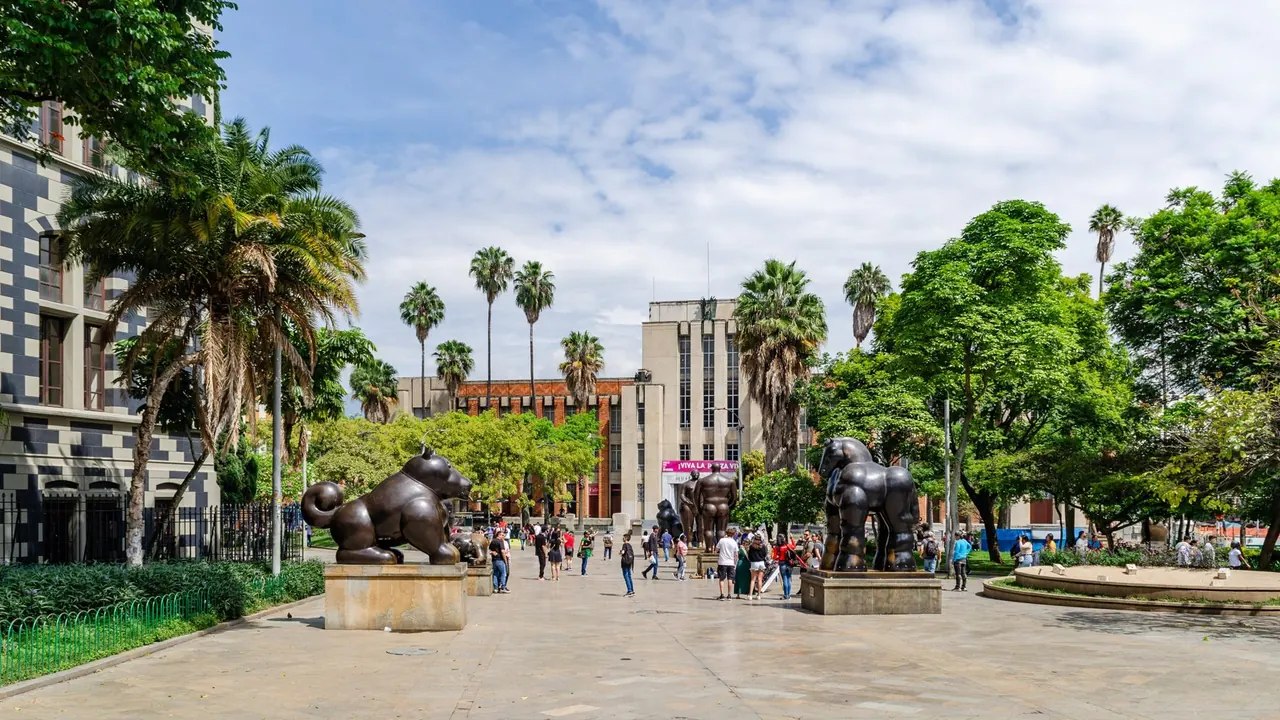
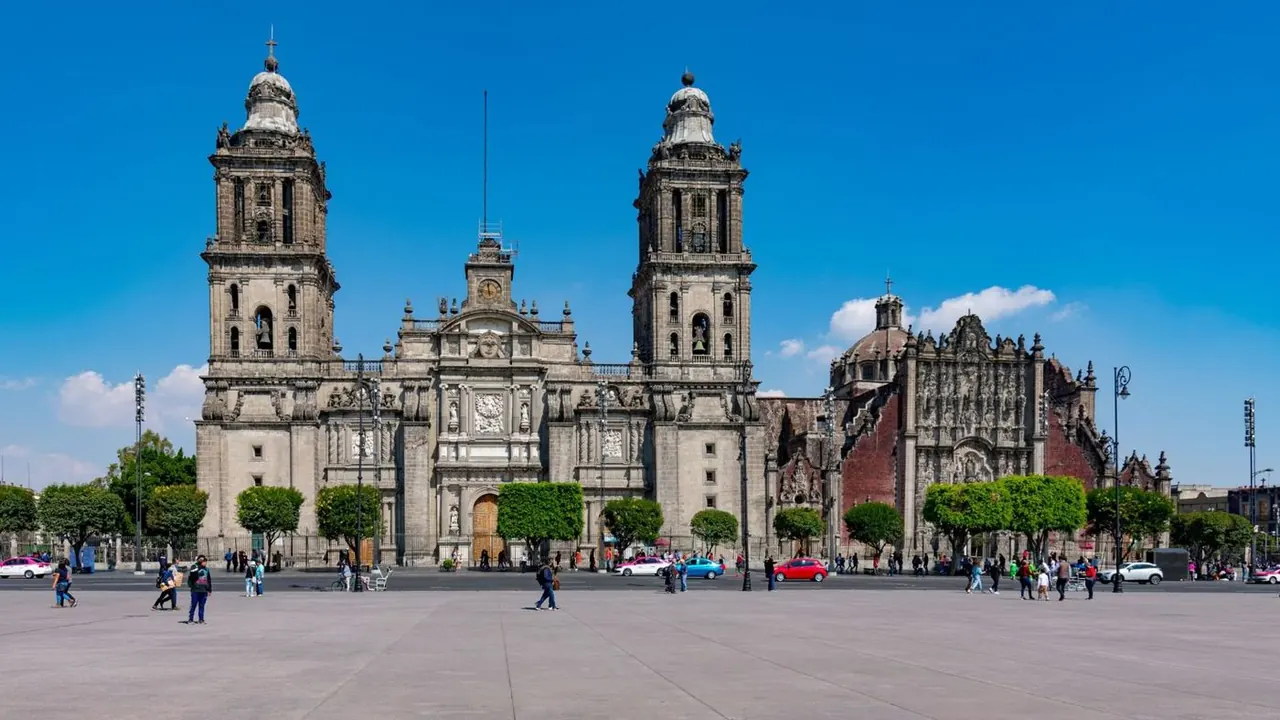
Photos: Medellin by Steffen Schmitz, CC BY-SA 4.0, cropped; Mexico City by Oscar Dominguez, Pexels License.
Medellin or Mexico City?
Our verdict in twelve categories, each scored against the same fixed benchmark cities, and the climate month by month, so you can choose for your trip.
Choose Medellin for
- nature and the outdoors
- getting around
- prices
Medellín suits travellers who want an easy, inexpensive base with mountains at the edge of town. You can take cable cars up to the forest at Parque Arví, watch paragliders over the valley and spend a day in the lake country at Guatapé, then dance to reggaeton or salsa in El Poblado and Laureles at night. The sights take only a couple of days, so it rewards people who like settling into a neighbourhood, drinking good coffee and spending the rest of the time outdoors.
Choose Mexico City for
- culture and sights
- food and drink
- shopping
Pick Mexico City when the trip is about seeing and eating. The historic centre, the Anthropology Museum, Rivera's murals and the pyramids at Teotihuacan fill more than a week, and the food runs from late-night taco stands to tasting menus. Add opera, ballet folklórico, lucha libre and serious craft markets, and it is the richer trip of the two. In return you deal with its size, its traffic and the altitude.
Scoreboard
Twelve categories on one fixed scale from 0 to 100. The shaded stretch is the gap between the two.
Your match
Pick a travel style or drag the sliders, and both match scores follow your weighting.
Wins on nature and the outdoors and getting around with your weighting.
Wins on culture and sights and food and drink with your weighting.
What matters to you?
Category by category
What the scores mean for a trip.
Beaches & swimming
Neither city is a beach destination. Both sit high inland, and swimming means a pool. Medellín at least has the reservoir at Guatapé and country fincas with pools in the hills, while Mexico City's nearest sea, at Acapulco, is several hours away by road. In both cases the coast belongs on a separate leg of the trip.
Food & drink
Medellín's paisa cooking is filling rather than varied: bandeja paisa, sancocho and arepas all day. The real pleasures are the tropical fruit and the local coffee. El Poblado, Provenza and Laureles offer enough choice for a few memorable meals.
Mexico City is a food destination in its own right. Taco stands, breakfast tamale carts and markets such as San Juan and La Merced (there is even one called Medellín in Roma) lead up to cantinas, pulquerías and some of the most respected tasting menus in the Americas. Both have good coffee, but Mexico City is the one where meals shape the whole trip.
Culture & sights
Medellín's interest lies in its recent story rather than old buildings. You can see the Botero collection at the Museo de Antioquia, the Casa de la Memoria on the decades of violence, and the murals and outdoor escalators of Comuna 13. Two or three days covers it.
Mexico City works on another scale. The Zócalo, the cathedral and the National Palace stand beside the excavated Templo Mayor, the Anthropology Museum holds the Aztec Sun Stone, and Coyoacán and San Ángel add Frida Kahlo and Diego Rivera. Even a week leaves plenty unseen.
Nightlife
Both cities go out late and keep going, so the difference is one of style. Medellín is the reggaeton city, with loud clubs and rooftop bars around Parque Lleras and Provenza, and cheaper, more local salsa bars along La 70 in Laureles.
In Mexico City a night out is usually a walk between mezcalerías and cocktail bars on the tree-lined streets of Roma and Condesa. Old cantinas in the Centro, electronic clubs that run until morning and a large LGBTQ scene in the Zona Rosa add range. In both cities, take a ride-hailing car home at the end of the night.
Nature & outdoors
Medellín has the mountains on its doorstep. The metro links to a cable car up to the cloud forest trails of Parque Arví, paragliders launch from San Félix, and the woods around Santa Elena are good for birdwatching. The mild climate makes all of this easy year-round.
Mexico City has Chapultepec, Xochimilco's canals and hiking at altitude in the Desierto de los Leones. Beyond the city lies grander scenery, from the volcanoes at Paso de Cortés to the monarch butterfly reserves in winter. Reaching it means a long drive through traffic, and the air can be poor in the dry season.
Day trips
Medellín's outings are pleasant country towns: painted Guatapé beside El Peñol's rock, colonial Santa Fe de Antioquia in its hot valley, and the ceramics of Carmen de Viboral. The best coffee villages are worth an overnight stay rather than a day out.
Mexico City's day trips are among its main attractions. The pyramids of Teotihuacan are about an hour away, and Puebla and Cholula's church-topped pyramid about two. Cuernavaca, Tepoztlán and the silver town of Taxco lie to the south. Early starts beat the traffic.
Good for families
In Medellín the children's attractions are grouped together in the north of the city. Parque Explora, a hands-on science museum with a freshwater aquarium, sits next to the planetarium and the botanical garden. Add the gondolas up to Parque Arví and the mild weather, and you have a couple of easy days, though steep streets and heavy traffic mean most families keep to El Poblado or Laureles.
Mexico City has more for children, but it is spread much further apart. There are the zoo, boating lakes and Papalote museum in Chapultepec, an aquarium in Polanco, trajinera boats at Xochimilco, lucha libre, and the pyramids outside town. It fills a longer stay better. The altitude and long rides in traffic mean planning each day around one neighbourhood.
Getting around
Medellín's system is compact and easy to learn. The clean metro runs along the valley floor, with Metrocable gondolas climbing the hillsides and a tram to the east, so Botero Plaza and Comuna 13 are a short ride apart. El Poblado and Laureles are pleasant to walk, if steep, and a cheap taxi covers the rest. The airport is about forty-five minutes away on the plateau.
Mexico City's network covers a far larger area, with Metrobús lanes and bike-share alongside the colour-coded metro. The Centro, Roma, Condesa and Coyoacán are good on foot, but the distances between them are long. Trains are packed at rush hour and pickpockets work them, so most visitors also use ride-hailing cars.
Shopping & style
Medellín's strength is clothing. As Colombia's textile centre, it sells local labels, swimwear and leather in the malls of El Poblado and the boutiques of Provenza, with wholesale chaos in El Hueco downtown. Crafts are mostly regional ceramics and carriel shoulder bags.
Mexico City goes much further. La Ciudadela gathers crafts from across the country, and San Ángel's Saturday bazaar and the Sunday flea market at La Lagunilla make for long browsing. Polanco's Avenida Masaryk has the luxury houses Medellín lacks.
Affordability
Both are cheap by international standards, and in both what you spend depends on where you stay. Medellín stays inexpensive even in good mid-range hotels. Prices climb mainly in El Poblado and Provenza, and Laureles keeps costs low.
In Mexico City the gap between districts is wider. Roma, Condesa and Polanco charge close to European-capital prices, while market lunches, the metro and a bed in the Centro stay very cheap.
Live music & performing arts
Medellín's live music is local and informal: salsa bands, and tango bars kept going since Carlos Gardel died here in 1935. The philharmonic plays at the Teatro Metropolitano, but there is no regular season of opera or musicals.
Mexico City offers the full range. The Palacio de Bellas Artes hosts the national opera and symphony and the Ballet Folklórico, which is easy to enjoy without Spanish. Around that are mariachis in Plaza Garibaldi, jazz in Roma and Coyoacán, and lucha libre at Arena México.
Wellness & relaxation
Medellín is built for energy rather than rest. Motorbikes and music keep it loud, and wellness means hotel spas, cheap massage and yoga, or escaping to a finca in the cool hills of Santa Elena.
Mexico City is hardly calmer, but it has more on offer. Spas offer the temazcal, a pre-Hispanic steam bath, and Polanco, Roma and Condesa have good day spas. Coyoacán's shaded plazas give quieter hours, and Cuernavaca and Tepoztlán to the south suit a real retreat.
When should you go?
Pick your month. The climate figures are measured averages, not a forecast.
Medellin in July
Mexico City in July
Daytime high, °C
Rainfall in the month, mm
Where the figures come from
Medellin has no rain gauge within 25 km of the centre, so its rainfall comes from a gridded climate dataset read at the city rather than from a gauge further away.
Temperature and rainfall are climate normals, averaged over the years shown. Medellin: 1958-2025 (rainfall 1991-2020) normals, Medellin / Olaya Herrera (5.2 km from centre). Mexico City: 1991-2020 normals, Mexico Central, D. F. (7.9 km from centre).
Medellín is warm and much the same all year, with highs of about 28°C to 29°C in every month. Temperature never decides when to go. Rain does. There are two wet seasons, April to May and October to November, and October brings around 356mm. December to February and July to August are the drier and easier months for walking and day trips.
Mexico City is cooler and its seasons are more distinct. Highs run from about 22°C in December and January to 28°C in April. From November to April it is dry, with barely any rain and plenty of sunshine, and March is the sunniest month. From June to September it is wet. Its best months are late autumn through spring, which overlaps neatly with Medellín's drier spell around the turn of the year.
Which traveller are you?
On a culture and arts trip, Mexico City is the clear choice. It has the Templo Mayor beside the cathedral, the Anthropology Museum, Rivera's murals, Frida Kahlo's house and the national opera and ballet at Bellas Artes. Medellín's Botero collection and memory museum take two days.
For a food and nightlife trip, Mexico City is far ahead on eating, with its taco stands, markets, mezcal bars and tasting menus in Roma and Condesa. The nights are close, though, and Medellín's reggaeton clubs and salsa bars on La 70 are its own draw.
On an outdoors trip, Medellín puts the green much closer. The metro and a cable car lead straight to the forest trails of Parque Arví, paragliders launch above the valley, and the El Peñol lakes are two hours away, with no long crawl through traffic first.
Before you go
| Measure | Medellin | Mexico City |
|---|---|---|
| Official language | Spanish | Spanish, Nahuatl, Yucatec Maya |
| Currency | Colombian Peso (COP) | Mexican Peso (MXN) |
| Sockets | AB110 V, 60 Hz | AB127 V, 60 Hz |
| Driving side | Right | Right |
| Time zone | UTC-5 | UTC-6 |
| Emergency number | 123 | 911 |
| Elevation | 1,405 m | 2,240 m |
| Main airport | Jose Maria Córdova International Airport (MDE)19 km from centre41 non-stop destinations | Mexico City Benito Juárez International Airport (MEX)7 km from centre109 non-stop destinations |
| Public holidays this year | 19 days | 9 days |
By the numbers
| Measure | Medellin | Mexico City |
|---|---|---|
| City population | 2,529,403 | 9,209,944 |
| People per km² | 6,644 | 6,202 |
| Museums within 10 km | 14 | 108 |
| UNESCO World Heritage sites within 50 km | 0 | 6 |
Where else could you go?
Every comparison below shares a destination with this one, so you can follow Medellin or Mexico City somewhere new.