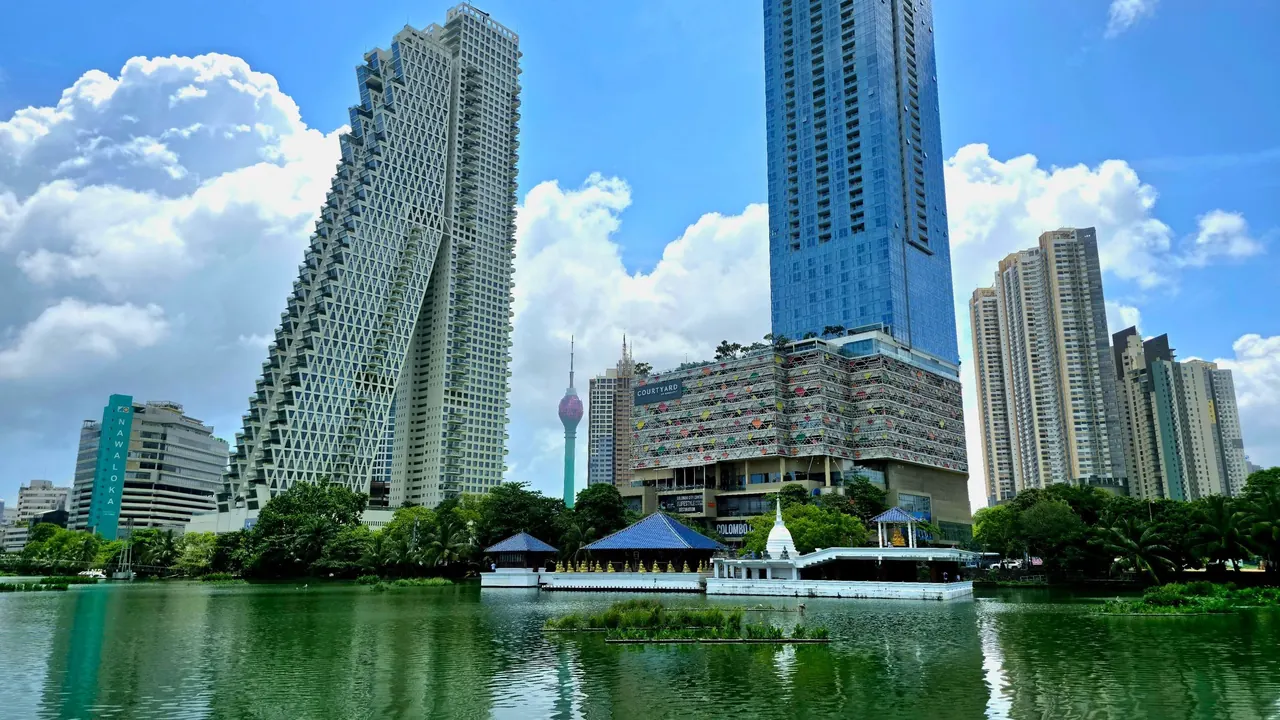
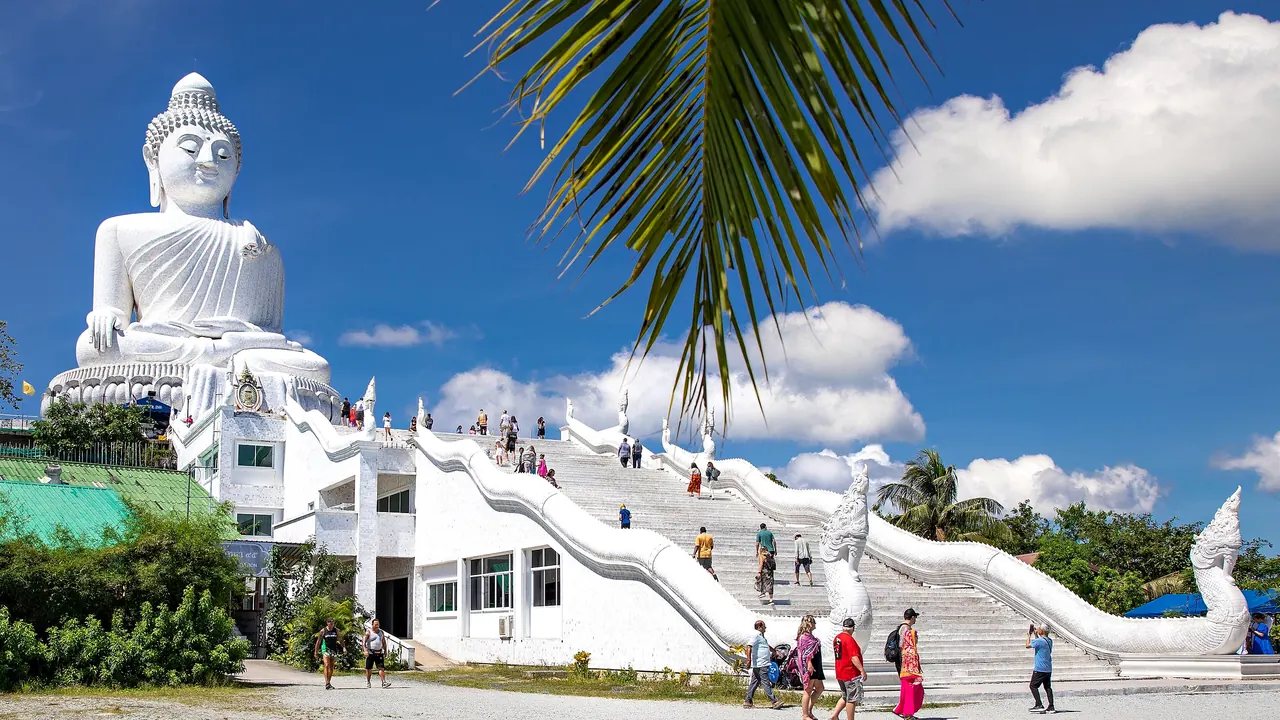
Photos: Colombo by Mohamed Ansaf, Pexels License; Phuket by Mussi Katz, CC0.
Colombo or Phuket?
Our verdict in twelve categories, each scored against the same fixed benchmark cities, and the climate month by month, so you can choose for your trip.
Choose Colombo for
- prices
- culture and sights
- getting around
Colombo suits a traveller starting a wider journey through Sri Lanka who wants a couple of inexpensive, well-fed days in a working port city. You get hoppers and rice and curry, the National Museum, the colonial streets and bazaar of Fort and Pettah, and an easy run down the coast to Galle. It costs less than Phuket and has more history to look at. It is a place to pass through, though, not one to spend a week relaxing in.
Choose Phuket for
- nature and the outdoors
- nightlife
- beaches
For a vacation built around sand and sea, Phuket is the clear pick. Its west-coast bays give easy swimming through the dry season, and Phang Nga Bay and the Similan reefs make it a real base for kayaking, snorkelling and diving. Families, spa-goers and anyone who wants a big night out on Bangla Road are also better served. In return you pay more and get less history.
Scoreboard
Twelve categories on one fixed scale from 0 to 100. The shaded stretch is the gap between the two.
Your match
Pick a travel style or drag the sliders, and both match scores follow your weighting.
Wins on prices and culture and sights with your weighting.
Wins on nature and the outdoors and nightlife with your weighting.
What matters to you?
Category by category
What the scores mean for a trip.
Beaches & swimming
Colombo looks out on the Indian Ocean but is not a place to swim. Galle Face Green is a promenade, and the nearest usable sand is at Mount Lavinia, an open beach with strong currents. Negombo, an hour north, is longer, and for a true beach stay people head south to Bentota.
Phuket is the opposite: beaches are the whole point. You can choose busy Patong, easygoing Kata and Karon, small coves such as Kata Noi and Freedom Beach between the headlands, or the long, quiet sands of Bang Tao and Mai Khao. The monsoon closes the swimming season on both coasts from about May. Within the dry months Phuket offers far more choice, plus boat trips out to the white sand of Phi Phi and Racha.
Food & drink
Both are strong places to eat, but the cooking is very different. Colombo means Sri Lankan spreads of rice and curry with sambols and mallung, hoppers in the evening, late-night kottu and the Dutch Burgher lamprais. The Tamil and Muslim quarters add dosa and biryani.
Phuket's own cuisine is Hokkien and Peranakan, from the tin-mining settlers: yellow noodles, braised pork belly, crab curry over rice noodles at breakfast and dim sum in old shophouses. You have to go to Phuket Town to find it, because the beach strips mostly serve tourist menus. In Colombo the good local food is all around you.
Culture & sights
Neither place is a heritage capital, but Colombo has more to see. The National Museum holds the country's best royal regalia and sculpture. Gangaramaya Temple and Bawa's Seema Malaka sit by Beira Lake, and in Fort and Pettah a mosque, Hindu kovils and the Dutch-era Wolvendaal Church stand among colonial buildings, the record of a port many peoples have passed through.
Phuket's heritage comes mostly from the tin trade. The pastel Sino-Portuguese shophouses of the old town fill half a day, and Wat Chalong, the Big Buddha and the museum of the 1785 Burmese siege complete the list.
Nightlife
Colombo's nights are fairly quiet: hotel bars, rooftop lounges over the ocean, a few clubs in Colombo 3 and late casinos. The dance floors fill mainly at weekends, and on Poya full-moon days alcohol is not sold and many bars shut.
Phuket has far more going on after dark. Bangla Road in Patong is loud and neon-lit every night of the high season, with clubs and go-go bars running into the small hours, and some seedy edges. If that is not your scene, there are west-coast beach clubs for sunset sessions and shophouse cocktail bars in Phuket Town.
Nature & outdoors
Colombo is flat and built up. Its outdoor moments are the birdlife in the Diyasaru and Beddagana wetlands and boat trips into the Muthurajawela marsh. Rainforest, tea hills and rafting are all a long drive away.
Phuket has wild scenery close to hand. You can kayak through the caves of Phang Nga Bay's limestone towers, and the Racha and Similan islands offer some of Thailand's best diving, with reef sharks and rays. On land, Khao Phra Thaeo still holds rainforest with gibbons and waterfalls.
Day trips
Both have a handful of good outings, but by different means. From Colombo you go by road or coastal railway to Galle's walled Dutch fort, the Bawa gardens near Bentota, and the canal and fish markets of Negombo. Kandy is better as an overnight stop.
From Phuket most trips are by boat: Phi Phi, Koh Panyee's stilt village, and the rural Koh Yao islands. So Colombo is better for heritage and gardens, and Phuket for island-hopping.
Good for families
Children are warmly welcomed in both places, but Phuket is far easier with them. In Colombo there is the zoo at Dehiwala, kite-flying on Galle Face Green and a train ride along the coast. Pushchairs are hard work on the broken pavements, and the city sea is too rough for small children.
Phuket's resorts are built for families, with kids' clubs and lagoon pools, and there are water parks, the Cape Panwa aquarium and snorkelling boat trips. Base yourself at Kata, Karon or the northern beaches, away from Patong, and come between November and April when the surf is gentle.
Getting around
In Colombo, the tuk-tuk takes you on most journeys. If you book one through an app, you avoid haggling and it arrives quickly. The coastal railway is the pleasant way down to Mount Lavinia and further south, and Galle Face, Beira Lake and parts of Fort are good on foot. Galle Road clogs at peak hours, though, and the city buses are hard for a newcomer to work out.
Phuket has no rail at all. Its open-sided songthaews run from Phuket Town out to each beach but not between beaches. Taxis and tuk-tuks charge fixed fares rather than using meters, and scooters are risky on the hilly roads for anyone inexperienced. Most visitors stay at one beach, get around it on foot and book a ride or a boat for each outing.
Shopping & style
The most memorable shopping in Colombo is a walk through Pettah, the wholesale bazaar behind the Fort, where each street sticks to one trade, from fabrics and spices to jewellery. To buy something to take home, try the design stores of Colombo 3 and 7, some of them in old colonial villas, which sell handloom cotton, batik and homeware. Tea, cinnamon and gems are the classic buys, and gems should come from a reputable dealer.
Phuket's shopping is more practical. There are malls in Patong and near Phuket Town, beachwear stalls, and tailors who can make a suit in a few days. The more interesting side is the Sunday walking street and the shophouse boutiques of the old town, which sell batik and Peranakan-style goods. Pearls from nearby farms are the local speciality.
Affordability
Colombo is the cheaper place to spend time. Local meals, tuk-tuks and train fares cost very little, and mid-range hotels are good value. Only the seafront hotels, upscale seafood restaurants and imported drinks reach international prices.
Phuket is still affordable by Western standards but costs more. Taxis and tuk-tuks are notably expensive, boat trips add up, and prices rise from December to March in Patong and at the big resorts. Staying in Phuket Town or at Kata keeps costs down.
Live music & performing arts
Colombo has proper stages, which Phuket lacks. The lotus-shaped Nelum Pokuna hosts concerts and dance, the Lionel Wendt is home to local English-language drama, and the national symphony orchestra plays several times a year. The thing most worth catching is Kandyan dance, with its drumming and acrobatic leaps, though there is too little on to plan a trip around.
Phuket's evenings out are entertainment built for visitors: ladyboy cabaret in Patong, a theme-park cultural show with dancers and elephants, and Thai boxing nights. The rest of the music is cover bands and blues sets in the bars of Patong, Kata and Phuket Town.
Wellness & relaxation
Colombo's distinctive offer is Ayurveda, a genuine local medicine: warm-oil massage, shirodhara and herbal steam in city clinics. The city itself is hot and noisy, though, and longer programmes mean moving to the coastal retreats at Beruwala and Bentota.
Phuket is much better for unwinding where you stay. Good Thai massage is on every beach road and in resort spas over the sea, and the retreats around Chalong run yoga, detox and Muay Thai camps. The northern beaches and Nai Harn are quiet and green.
When should you go?
Pick your month. The climate figures are measured averages, not a forecast.
Colombo in July
Phuket in July
Daytime high, °C
Rainfall in the month, mm
Where the figures come from
Phuket's temperatures are measured 27 km from the centre, at Phuket Airport.
Temperature and rainfall are climate normals, averaged over the years shown. Colombo: 1991-2020 normals, Colombo (3 km from centre). Phuket: 1991-2020 (sunshine 1961-1990, rainfall 1981-2010) normals, Phuket Airport (26.9 km from centre).
Both places are hot all year, with daytime highs in the low thirties that barely change, so walking the streets is sweaty in any month and best done early or late. Colombo is at its best from January to March, the driest and sunniest stretch, when the west coast is calm enough to swim. Rain arrives in April and peaks in May, eases somewhat through July and August, then returns harder from September to November. October is the wettest month, with 349mm.
Around Phuket's west-coast beaches the dry season is longer and drier. From December to March there is little rain, January and February are almost completely dry, and the sunshine is the strongest of either place, though March is the hottest month. From May to October the monsoon sets in, peaking in September at 373mm, and the surf turns dangerous. The sea is warm all year in both places, around 28°C to 30°C off Phuket and dipping only to 27°C off Colombo in August. It is calm only in the dry months, so those are the months for a beach trip to either place.
Which traveller are you?
On a beach and sun trip, choose Phuket. Its west coast has a whole chain of sandy bays, from Kata and Karon to Nai Harn and the long northern beaches, plus island boat trips. Colombo has only rough city surf at Mount Lavinia.
On a family trip with children, Phuket is much easier. Kata, Karon and the northern beaches have gentle water in the dry season, the resorts have kids' clubs and lagoon pools, and there are water parks and an aquarium. Colombo has the heat, the traffic and little made for children.
On a tight budget, Colombo goes further. Tuk-tuks and train fares cost next to nothing, local eating houses serve kottu and rice and curry very cheaply, and guesthouses are good value. In Phuket the taxis are expensive and high-season prices climb.
Before you go
| Measure | Colombo | Phuket |
|---|---|---|
| Official language | Tamil, Sinhala | Thai |
| Currency | Sri Lanka Rupee (LKR) | Baht (THB) |
| Sockets | GM230 V, 50 Hz | ABCF220 V, 50 Hz |
| Driving side | Left | Left |
| Time zone | UTC+5:30 | UTC+7 |
| Emergency number | Police 119, ambulance 110, fire 110 | Police 191, ambulance 1669, fire 199 |
| Elevation | 1 m | - |
| Main airport | Bandaranaike International Colombo Airport (CMB)28 km from centre57 non-stop destinations | Phuket International Airport (HKT)85 non-stop destinations |
By the numbers
| Measure | Colombo | Phuket |
|---|---|---|
| Population | 647,557 | 77,610 |
| People per km² | 17,361 | 6,468 |
| Museums within 10 km | 10 | - |
| UNESCO World Heritage sites within 50 km | 0 | - |
| Swim season, months above 21 °C | 12 months | 12 months |
Where else could you go?
Every comparison below shares a destination with this one, so you can follow Colombo or Phuket somewhere new.