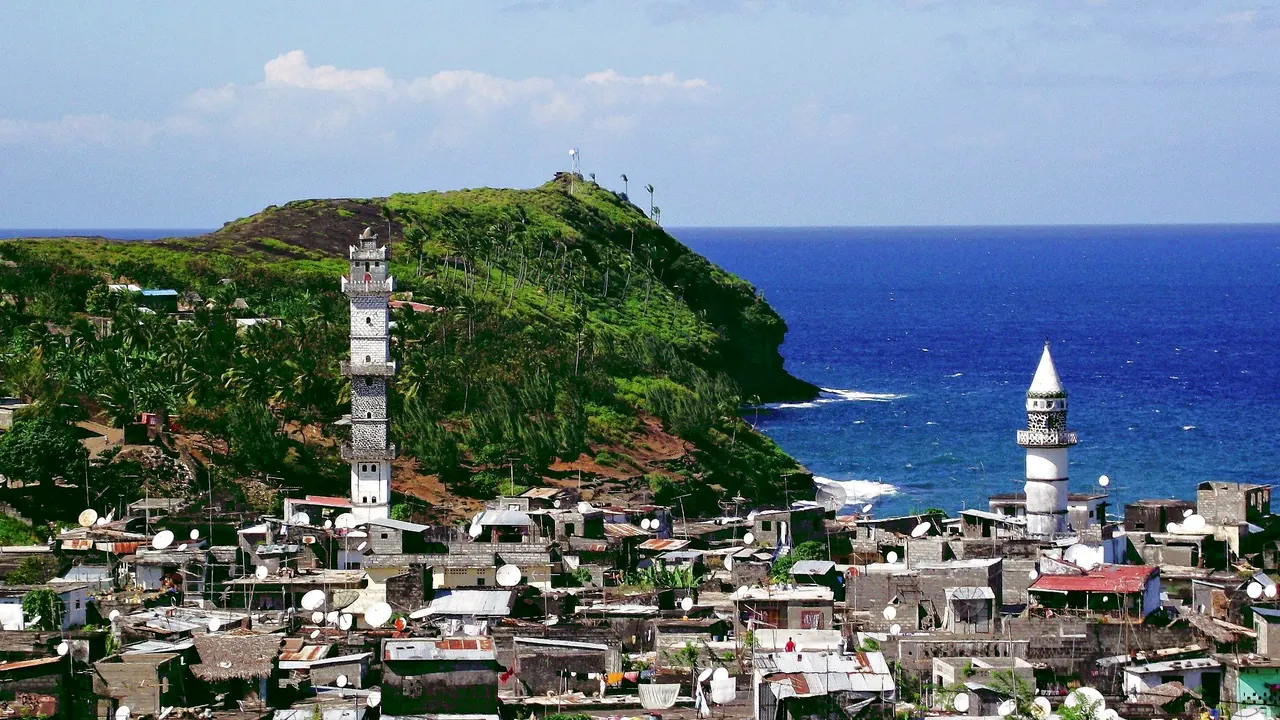
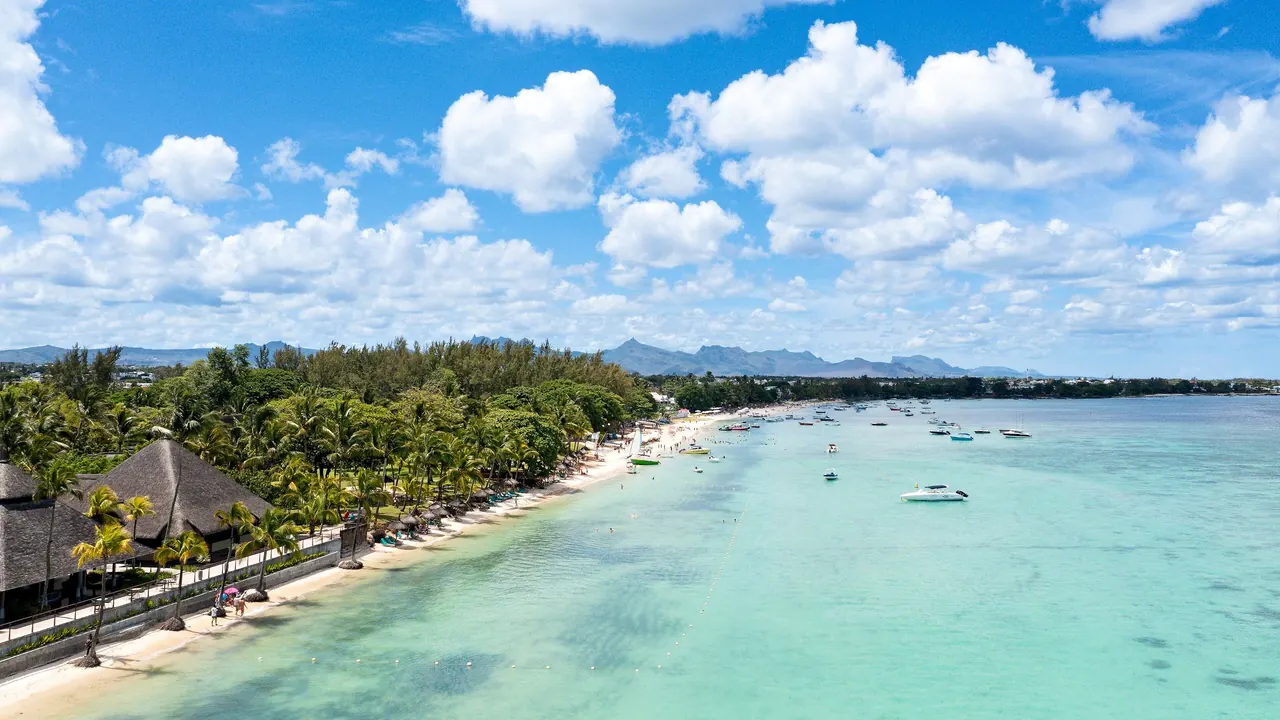
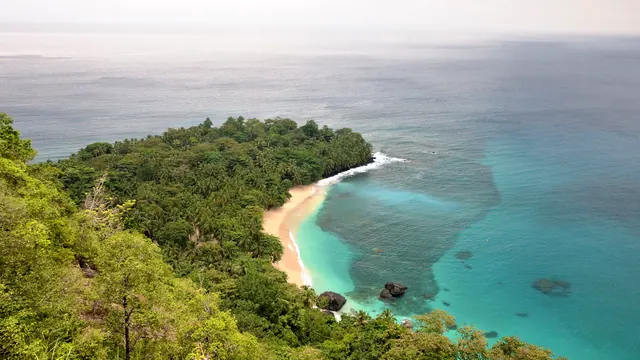
Photos: Comoros by Haryamouji, CC BY-SA 3.0, cropped; Mauritius by dronepicr, CC BY 2.0, cropped.
Comoros or Mauritius?
Our verdict in twelve categories, each scored against the same fixed benchmark cities, and the climate month by month, so you can choose for your trip.
Choose Comoros for
- prices
Comoros is for the traveller who wants islands that have barely been touched by tourism and is willing to work for it. The rewards are Mount Karthala's crater, turtles nesting on Moheli, Anjouan's cloud-forest valleys and the old Swahili lanes of Moroni and Mutsamudu, nearly always with few other visitors about. In return you get rough roads, unreliable inter-island links, very little to eat out and almost no evenings out. Go with patience and a loose plan.
Choose Mauritius for
- families
- wellness
- beaches
Mauritius is the easier and fuller choice for almost everyone else. Reef-sheltered lagoons make it a far better beach and family destination, resort spas make rest effortless, and Port Louis street food, the Black River Gorges and the kitesurfing at Le Morne give you plenty to do between swims. It suits couples, families and anyone who wants a polished beach vacation with some landscape behind it.
Scoreboard
Twelve categories on one fixed scale from 0 to 100. The shaded stretch is the gap between the two.
Your match
Pick a travel style or drag the sliders, and both match scores follow your weighting.
Wins on prices with your weighting.
Wins on families and wellness with your weighting.
What matters to you?
Category by category
What the scores mean for a trip.
Beaches & swimming
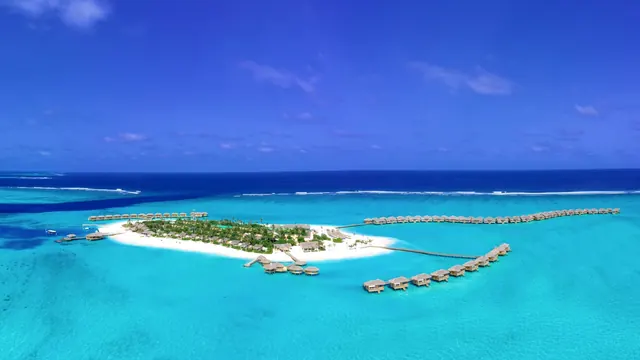
Mauritius is a beach destination first and foremost. Its reef-enclosed lagoon gives calm, clear water along most of the shore, and each coast has its own character: the sheltered sand at Trou aux Biches, Belle Mare's wide turquoise bay and the long peninsula beach at Le Morne. There are sunbeds, food and plenty of places to stay right on the sand.
Comoros has a few lovely beaches, with coral sand at Maloudja and Mitsamiouli and empty islets off Nioumachoua on Moheli, but much of its coast is black lava rock. There is almost nothing in the way of facilities, and away from hotel beaches you are expected to dress modestly.
Where in Comoros: Moheli, Mitsamiouli and Maloudja, Chomoni
Where in Mauritius: Le Morne, Belle Mare, Trou aux Biches, Flic en Flac
Food & drink
Both islands draw on African, Indian Ocean and French cooking, but Mauritius gives you far more to eat. Port Louis is the place for street food, with dholl puri, gateaux piments and Sino-Mauritian noodles around the Central Market and Chinatown, and Mahébourg and Grand Baie add small Creole restaurants.
Comorian food is good when you find it, with octopus in vanilla sauce, clove-scented pilau and mataba, but outside Moroni and Mutsamudu there are few restaurants. Alcohol is hard to find beyond the hotels, while Mauritius pours its own rum.
Where in Comoros: Moroni, Mutsamudu
Where in Mauritius: Port Louis, Grand Baie, Mahébourg, Chamarel
Culture & sights
Neither is a big heritage destination, and the two are fairly close here, but they offer different things. In Comoros the appeal is wandering old Swahili towns: the medina behind Moroni's Old Friday Mosque, Mutsamudu's lanes climbing to its citadel, and the sultanate tombs at Domoni. It is atmospheric but worn, with little to explain what you are looking at.
Mauritius has a little more to show and does more to explain it. You can visit the Aapravasi Ghat and the waterfront museums in Port Louis, the Hindu temples at Grand Bassin, plantation houses and the Pamplemousses garden, which add up to several well-presented half days.
Where in Comoros: Moroni, Mutsamudu, Domoni, Iconi
Where in Mauritius: Port Louis, Grand Bassin, Pamplemousses, Le Morne Brabant
Nightlife
Mauritius has some nightlife, Comoros has almost none. Grand Baie has a strip of bars and a couple of clubs that fill at weekends, and Flic en Flac has beach bars at sunset. In devout, early-to-bed Comoros, the liveliest nights you are likely to see are wedding celebrations, and those are family events rather than somewhere to go out.
Where in Mauritius: Grand Baie, Flic en Flac
Nature & outdoors
Both are volcanic islands, and both are good, but Mauritius makes its landscape easier to enjoy. The Black River Gorges have marked trails and rare birds, Le Morne and Le Pouce are half-day climbs, and there is kitesurfing, dolphin trips off Tamarin and reef diving, all within easy reach.
Comoros is rawer and in places more dramatic. You can climb to Karthala's huge active crater overnight, see turtles nesting at Itsamia and humpbacks passing Moheli, and hike to the crater lake at Dzialandze in Anjouan's cloud forest. The catch is rough trails, little gear and mandatory guides.
Where in Comoros: Mount Karthala, Moheli Marine Park, Anjouan, Lac Salé
Where in Mauritius: Black River Gorges, Le Morne, Chamarel, Ile aux Aigrettes
Day trips
Mauritius has a short but easy list of outings, all within about an hour and a half of any resort: the market and waterfront in Port Louis, the naval museum at Mahébourg, the model-ship workshops in Curepipe and a loop through the southwest. In Comoros, outings are drives around a single island, to Iconi or Mitsamiouli from Moroni, or across Anjouan to Domoni. The other islands are separate stays, not day trips.
Where in Comoros: Iconi, Domoni, Mitsamiouli
Where in Mauritius: Port Louis, Mahébourg, Curepipe, Grand Bassin
Good for families
Here the two are furthest apart. Mauritius has calm, shallow lagoons, resorts with kids' clubs, and outings like the Casela wildlife park and La Vanille's tortoises and crocodiles, so families can relax.
Comoros has warm people and Moheli's turtles, but nothing built for children. Add basic healthcare, malaria and unpredictable flights between islands, and it really only suits hardy families with older children.
Where in Comoros: Moheli
Where in Mauritius: Grand Baie, Belle Mare, Flic en Flac
Getting around
Neither is effortless, but Mauritius is much easier. It is one island with buses to nearly every village and plenty of hire cars and drivers, and Grand Baie and Flic en Flac let you get around on foot.
In Comoros, even Grande Comore, the simplest of the islands, depends on irregular minibuses and potholed roads. Moving between islands means small flights that are often delayed or cancelled, or boats of uneven quality, so leave spare days in your plan.
Where in Comoros: Grande Comore
Where in Mauritius: Grand Baie, Flic en Flac
Shopping & style
Mauritius offers more, though it is still a sideline. You can buy spices and vanilla at the Port Louis Central Market, duty-free goods at the Caudan Waterfront, knitwear at factory outlets and hand-built model ships in Curepipe. Comoros comes down to Moroni's Volo Volo market and a few local things to take home: vanilla, ylang-ylang oil, shiromani cloth and embroidered kofia caps.
Where in Comoros: Moroni
Where in Mauritius: Port Louis, Grand Baie, Curepipe
Affordability
Comoros works out a little cheaper on the ground, though neither is a bargain. Its local meals and shared taxis cost little and Moheli's eco-lodges are modest in price, but the few comfortable hotels near Moroni charge international rates, and drivers and island flights add up.
Mauritius is expensive if you stay in a resort, but guesthouses and apartments in Flic en Flac, Mahébourg or Grand Baie, plus street food and buses, bring a trip down to a reasonable level.
Where in Comoros: Moheli, Grande Comore
Where in Mauritius: Flic en Flac, Mahébourg, Grand Baie
Live music & performing arts
In both countries, music mostly lives at weddings and festivals. Comoros has twarab and the dances of the grand mariage, which you may hear if you visit Grande Comore in the summer wedding season. Mauritius is slightly easier to catch: the ravanne-drum sega is staged in hotel shows, and Port Louis and Rose Hill have a small theatre scene with the odd concert.
Where in Comoros: Grande Comore
Where in Mauritius: Port Louis
Wellness & relaxation
Mauritius makes resting easy. The big resorts at Belle Mare, Le Morne and Bel Ombre have full spas with Ayurvedic treatments, massage pavilions over the lagoon and yoga by the water.
Comoros has no spa culture, and only one or two hotels offer massage. What it does have is a very slow pace, especially on Moheli, where the quiet villages and the scent of ylang-ylang drying in the sun suit anyone who relaxes by having little to do.
Where in Comoros: Moheli
Where in Mauritius: Belle Mare, Le Morne, Bel Ombre
When should you go?
Pick your month, and for a country the place in it. The climate figures are measured averages, not a forecast.
Moroni (Comoros) in July
Port Louis (Mauritius) in July
Daytime high, °C
Rainfall in the month, mm
Where the figures come from
Moroni (Comoros) has no rain gauge within 25 km of the centre, so its rainfall comes from a gridded climate dataset read at the destination rather than from a gauge further away.
Port Louis (Mauritius)'s station stands 289 m above the city centre, so the centre is likely a little warmer than the figures say.
Temperature and rainfall are climate normals, averaged over the years shown. Moroni (Comoros): 2005-2025 (rainfall 1991-2020) normals, Hahaya International Airport (19 km from centre). Port Louis (Mauritius): 1991-2020 normals, Vacoas Mauritius (15.4 km from centre).
Comoros is hot all year. Moroni's daytime highs hardly change and the sea is warm enough to swim in every month, so the season comes down to rain. It is wettest from January to April, peaking at about 316mm in January, and the hot months carry a cyclone risk. The rain eases only slowly from May to July. August to October is the clear dry window, with September the driest month at about 59mm, and November is still fairly light. This is the time for Karthala, the Anjouan trails and Moheli's reefs. Midday walks around the old towns are sticky in any month.
Mauritius has a real cooler season. From June to September Port Louis tops out at around 22°C, which suits hiking and town visits, though the lagoon is at its coolest then and the east coast is windy. January to March is the hot, wet stretch, with roughly 320mm of rain a month and occasional cyclones. For the beach, April and May give the best balance: the sea is still at its warmest, the heavy rain has passed and there is plenty of sun. October is the driest and sunniest month, so it is good for walking but less so for long swims.
Which traveller are you?
For a beach and sun trip, Mauritius is the clear pick. A coral reef calms most of its coast, from Trou aux Biches to Belle Mare and Le Morne, and it has beach restaurants and sunbeds. In Comoros, by contrast, the good sand is in a few scattered spots with almost nothing around it.
On a family trip with young children, Mauritius wins easily. Shallow lagoons, resorts with kids' clubs and outings like Casela and the Ile aux Cerfs boat day make it easy. Comoros has basic medical care, malaria and rough travel, so it only works for adventurous families with older children.
On a trip on a tight budget, Comoros has a slight edge if you are happy with very basic comfort. Moheli's community-run guesthouses, market food and shared taxis cost little. Mauritius is cheap away from the resorts too, but its beach hotels push most stays up.
More comparisons
Each shares a side with Comoros or Mauritius.
Where else could you go?
Set Comoros or Mauritius against any other country.