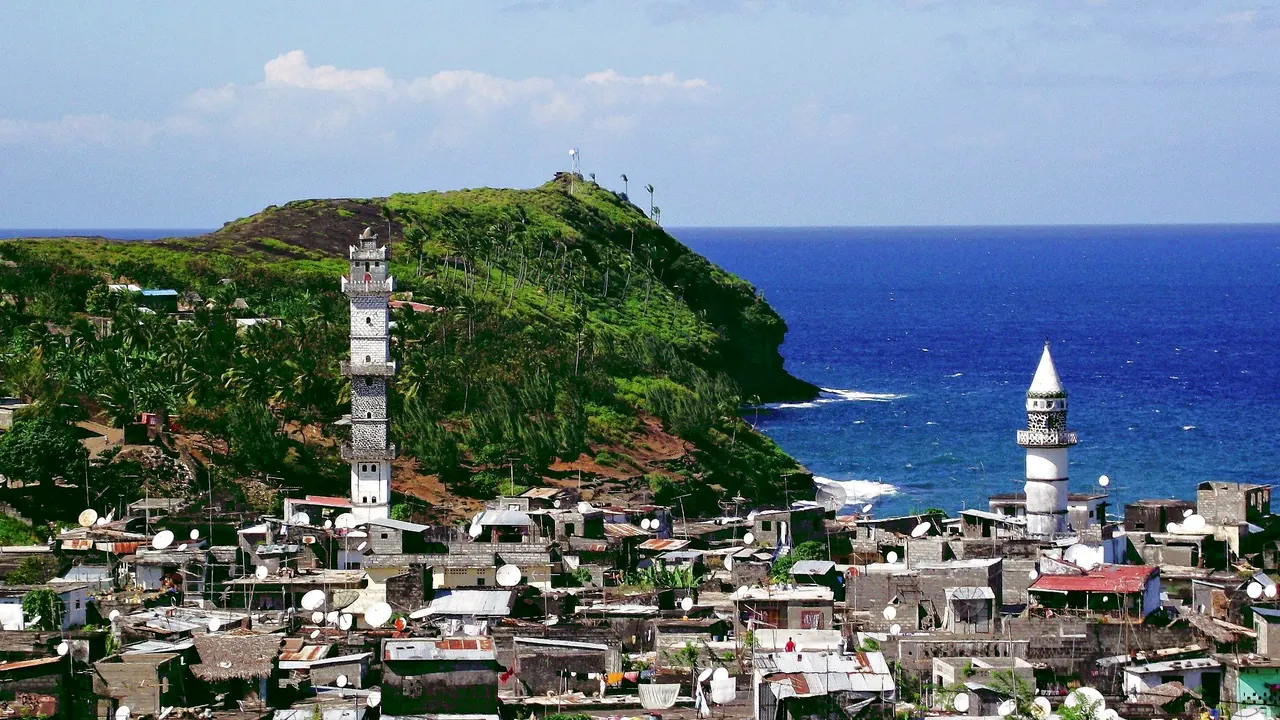
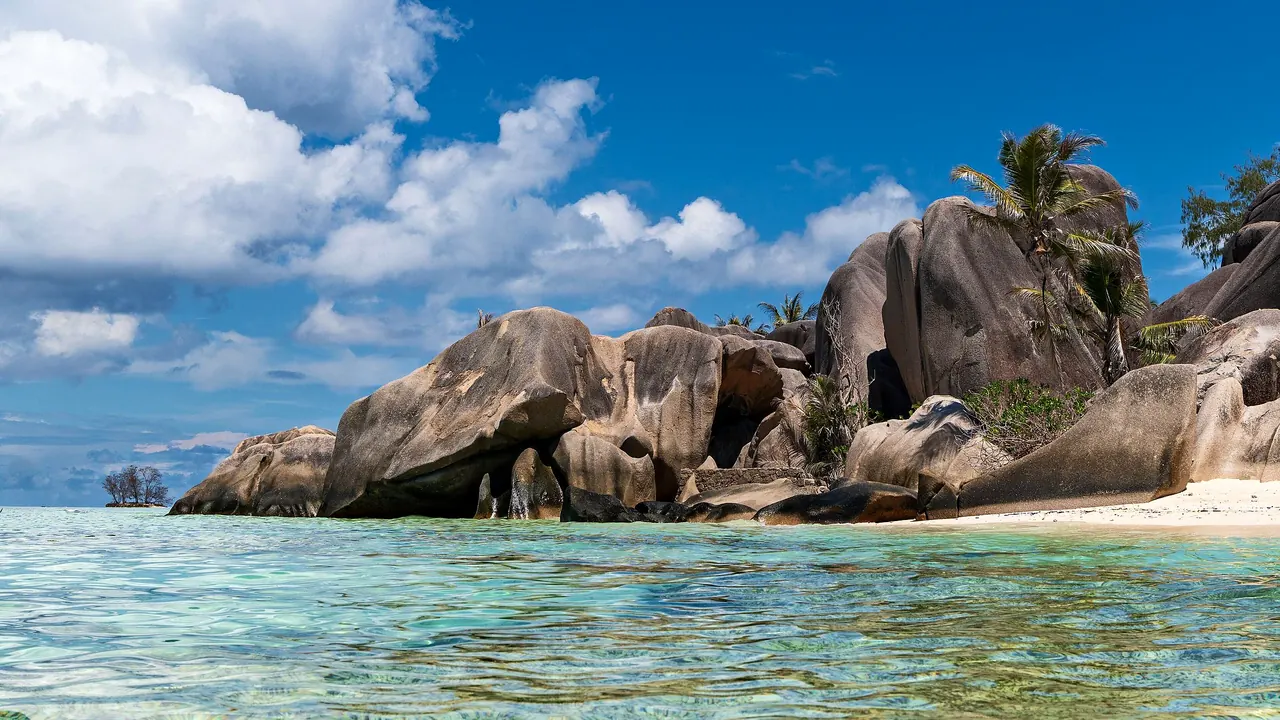
Photos: Comoros by Haryamouji, CC BY-SA 3.0, cropped; Seychelles by NorbertNagel, CC BY-SA 4.0, cropped.
Comoros or Seychelles?
Our verdict in twelve categories, each scored against the same fixed benchmark cities, and the climate month by month, so you can choose for your trip.
Choose Comoros for
- prices
- culture and sights
- live music and the arts
Comoros suits a traveller who wants rough edges and very few other visitors. The old Swahili towns of Moroni, Mutsamudu and Domoni have more history in their lanes than anything in Seychelles. A trek up Mount Karthala or a night watching turtles on Moheli feels like real exploration. Costs are lower too, as long as you accept basic rooms, unreliable transport and almost no tourist services.
Choose Seychelles for
- beaches
- wellness
- families
Seychelles is the easier and far more polished choice, and the obvious one if the beach is the point of the trip. The granite coves of La Digue and Praslin, the tortoises and coco de mer forest, the reliable ferries and the resort spas make it work for honeymooners, families with small children and anyone who wants comfort without effort. The cost is the catch: it is one of the most expensive island trips you can take.
Scoreboard
Twelve categories on one fixed scale from 0 to 100. The shaded stretch is the gap between the two.
Your match
Pick a travel style or drag the sliders, and both match scores follow your weighting.
Wins on prices and culture and sights with your weighting.
Wins on beaches and wellness with your weighting.
What matters to you?
Category by category
What the scores mean for a trip.
Beaches & swimming
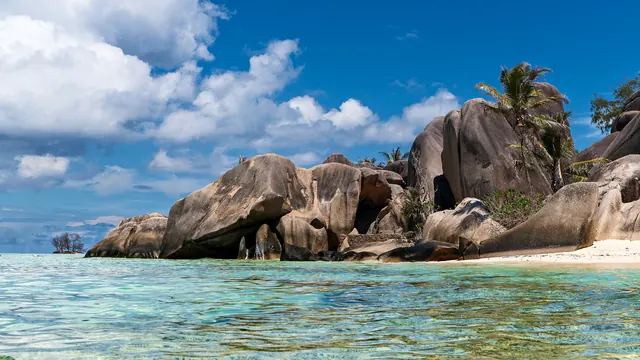
This is the clearest gap between the two. Seychelles gives you beach after beach of white sand and clear water among granite boulders: Anse Source d'Argent and Anse Cocos on La Digue, Anse Lazio and Anse Georgette on Praslin, Beau Vallon and the southern bays on Mahé. Because each island has coves facing different ways, you can find calm water whichever way the trade winds blow.
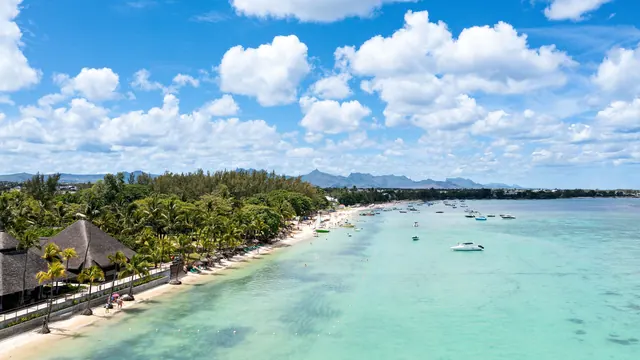
Comoros has a handful of beaches that are just as pretty, such as the coral sand of Maloudja and Mitsamiouli and the empty islets off Nioumachoua on Moheli. Between them, though, the coast is mostly black volcanic rock. Sunbeds and beach cafés are rare, and you should dress modestly away from hotel beaches.
Where in Comoros: Moheli, Mitsamiouli and Maloudja, Chomoni
Food & drink
Both cuisines are built on the sea, and in both countries food is a pleasure on the trip rather than a reason to go. Comorian cooking leans towards Arabia and East Africa, with lobster in vanilla sauce, clove-scented pilau and mataba of cassava leaves. Outside Moroni and Mutsamudu, though, there are very few places to eat, and alcohol is hard to find beyond the hotels.
Seychelles makes good eating easier to find. Octopus curry, ladob and boxed Creole curries come from roadside counters, the catch arrives each morning at Victoria's market, and there are grills along Beau Vallon and Côte d'Or. Local rum and beer are easy to get.
Where in Comoros: Moroni, Mutsamudu
Culture & sights
Comoros has the richer heritage. Moroni's Old Friday Mosque rises over a maze of medina lanes with carved doors. Mutsamudu's old town climbs to an 18th-century citadel, and Domoni and Iconi keep the stone houses, tombs and walls of the old sultanates. Sites are worn and come with little explanation, but anyone who enjoys wandering old Indian Ocean towns has days of it.
Seychelles is thinner. Victoria takes a morning, with its Clock Tower, cathedrals, Hindu temple and the National Museum of History. After that there are the plantation houses at L'Union and La Plaine St André and the craft village at Anse aux Pins.
Where in Comoros: Moroni, Mutsamudu, Domoni, Iconi
Nightlife
Neither country is a place to go out, but Seychelles has a little more. A few beach bars at Beau Vallon fill up at sunset, and Victoria has a club or two that locals use at weekends. In devout Comoros evenings end early and alcohol is mostly found in hotels. The liveliest nights you are likely to see are village wedding celebrations, which are family occasions.
Where in Seychelles: Beau Vallon, Victoria
Nature & outdoors
Seychelles has the more varied and more accessible wildlife. You can visit the coco de mer forest of the Vallée de Mai with its black parrots, the giant tortoises on Curieuse and the seabirds on Cousin and Aride. There are whale sharks off Mahé, calm snorkelling in Sainte Anne Marine National Park, and marked trails up the granite peaks of Morne Seychellois.
Comoros is wilder and harder going. You can climb the active volcano of Mount Karthala with a guide, look down on the crater lake at Lac Salé, and hike the cloud forest of Anjouan to Dzialandze. Moheli's marine park has nesting green turtles at Itsamia and humpback whales passing from July to October. Trails are rough and gear is scarce.
Where in Comoros: Mount Karthala, Moheli Marine Park, Anjouan, Lac Salé
Where in Seychelles: Praslin, Mahé, Curieuse and Cousin, Aldabra
Day trips
In Seychelles a day out means a boat. From Praslin, La Digue is a short ferry ride away, with bicycles, ox carts and the L'Union estate. Mahé connects to Praslin in about an hour and to the islets of the marine park. It is easy to do, though the options run out within a week.
Comoros has even fewer outings. You are limited to drives around one island: from Moroni along the coast to Iconi and Mitsamiouli, or across Anjouan from Mutsamudu to Domoni. The other islands are too unreliable to reach for a day.
Where in Comoros: Iconi, Domoni, Mitsamiouli
Where in Seychelles: La Digue, Praslin, Sainte Anne Marine National Park
Good for families
Seychelles is the far better choice with children. Anse Source d'Argent and Côte d'Or have shallow water behind reefs, La Digue's flat lanes are made for family bike rides, and glass-bottom boats show children the reef without anyone getting wet. Resorts with kids' clubs fill the gaps, though teenagers may get bored.
Comoros welcomes children warmly, and the Moheli turtles can thrill older ones. But basic medical care, malaria, rough roads and patchy inter-island travel make it a trip only for adventurous families.
Where in Comoros: Moheli
Getting around
Seychelles is much easier to combine into one trip. A fast ferry links Mahé and Praslin in about an hour, with a short hop on to La Digue and small planes as an alternative. On the islands, a small hire car handles the steep hairpin roads, and La Digue is explored by bicycle.
In Comoros only Grande Comore is straightforward. A coast road circles the island from the airport near Moroni, though most visitors hire a car with a driver. Between islands, domestic flights are often delayed or cancelled and boats vary, so build spare days into any trip.
Where in Comoros: Grande Comore
Shopping & style
Shopping in both comes down to spices and a few crafts, but the two capitals offer them in different ways. Moroni's Volo Volo market is a crush of fish, cloth and household goods, a place to watch island life rather than to browse. What you take home is what the islands grow and wear: ylang-ylang oil, vanilla and cloves, plus the patterned shiromani cloths and embroidered kofia caps, traditional clothing you won't find on Mahé.
Mahé is tidier and set up more for visitors. Victoria's market sells spices and chilli sauces upstairs from the fish, and the craft village at Anse aux Pins, a few painters' studios and local rum and tea add more to choose from. If you want to buy a coco de mer nut, you need an export permit.
Where in Comoros: Moroni
Where in Seychelles: Mahé
Affordability
Comoros costs noticeably less, though it is not a bargain. Market food and shared taxis are cheap, and Moheli's community guesthouses and eco-lodges keep spending down. However, the few comfortable hotels on Grande Comore charge international rates, and drivers, treks and flights all add up.
Seychelles is among the most expensive beach trips there is. Imported food and luxury resorts push up the price of meals, boats, car hire and transfers. You can soften this with a Creole guesthouse or self-catering flat on Mahé or Praslin, takeaway counters and the buses, but it will still cost far more.
Where in Comoros: Moheli, Grande Comore
Live music & performing arts
Neither country has theatres or a concert life, so music comes down to chance and timing. In Comoros it means twarab and the dances of the grand mariage, heard through a village during the summer wedding season, sometimes with an invitation to join. In Seychelles you will usually see sega and moutya in hotel shows, apart from the Festival Kreol on Mahé each autumn, when Creole music and dance are everywhere.
Where in Comoros: Grande Comore
Where in Seychelles: Mahé
Wellness & relaxation
Seychelles is the place for proper pampering. Resort spas along Mahé's west and south coasts, and a smaller group on Praslin, offer open-air treatment rooms above the sea using coconut and vanilla. The quiet evenings and car-free La Digue make it a natural honeymoon choice.
Comoros offers only stillness. There are one or two hotels with massage and nothing more. Moheli's sleepy villages and the scent of drying cloves suit someone who relaxes by doing almost nothing.
Where in Comoros: Moheli
When should you go?
Pick your month, and for a country the place in it. The climate figures are measured averages, not a forecast.
Moroni (Comoros) in July
Mahe (Seychelles) in July
Daytime high, °C
Rainfall in the month, mm
Where the figures come from
Moroni (Comoros) has no rain gauge within 25 km of the centre, so its rainfall comes from a gridded climate dataset read at the destination rather than from a gauge further away.
Mahe (Seychelles)'s station stands 237 m below the place it is measured for, so that place is likely a little cooler than the figures say.
Temperature and rainfall are climate normals, averaged over the years shown. Moroni (Comoros): 2005-2025 (rainfall 1991-2020) normals, Hahaya International Airport (19 km from centre). Mahe (Seychelles): 1991-2020 normals, Seychelles International Airport (10 km from centre).
Both countries are hot all year, with daytime highs between about 29°C and 32°C and a sea warm enough to swim in every month. Midday walking is sticky at any time, and July to September are a little cooler. So the real choice is about rain. In Comoros, Moroni is driest from August to November, with September the best month at 59mm. The rain is heaviest from January to April, and May to July are still fairly wet, so trails and sea crossings are easiest late in the year.
Mahé is wettest in December and January, when as much as 442mm can fall in January alone. It is driest from June to August, and May to August are also its sunniest months. Those months bring the southeast trade winds, so pick a beach on the northwest shore. April and October to November are calm on most coasts, though wetter. If you want one trip that suits both countries, August is the month when both are fairly dry. The sea is at its coolest then, but still about 26°C.
Which traveller are you?
For a beach and sun trip, Seychelles wins easily. Anse Source d'Argent, Anse Lazio and Beau Vallon offer white sand between granite boulders, with a calm coast for every season. Comoros has a few lovely beaches at Maloudja and Chomoni, but most of its coast is lava rock.
On a trip with a tight budget, Comoros is the better bet, though it is not cheap. Market meals, shared taxis and Moheli's community guesthouses keep costs down. In Seychelles almost everything is imported and priced for luxury resorts, and even careful self-catering costs a lot.
On a family trip with children, Seychelles is the simpler and safer call. Gentle swimming, dependable ferries and resorts that handle the details let parents actually relax, especially with younger children. Comoros asks a lot of a family. Only well-prepared parents whose children are happy to rough it should consider it.
More comparisons
Each shares a side with Comoros or Seychelles.
Where else could you go?
Set Comoros or Seychelles against any other country.