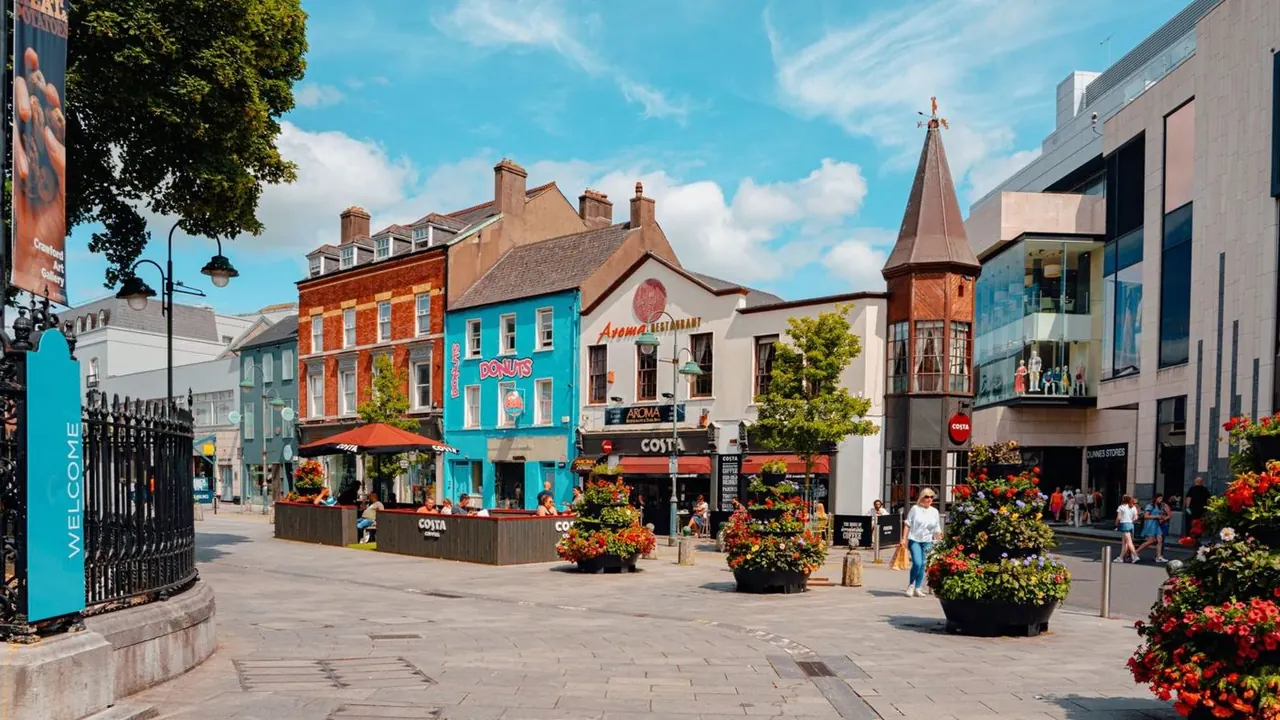
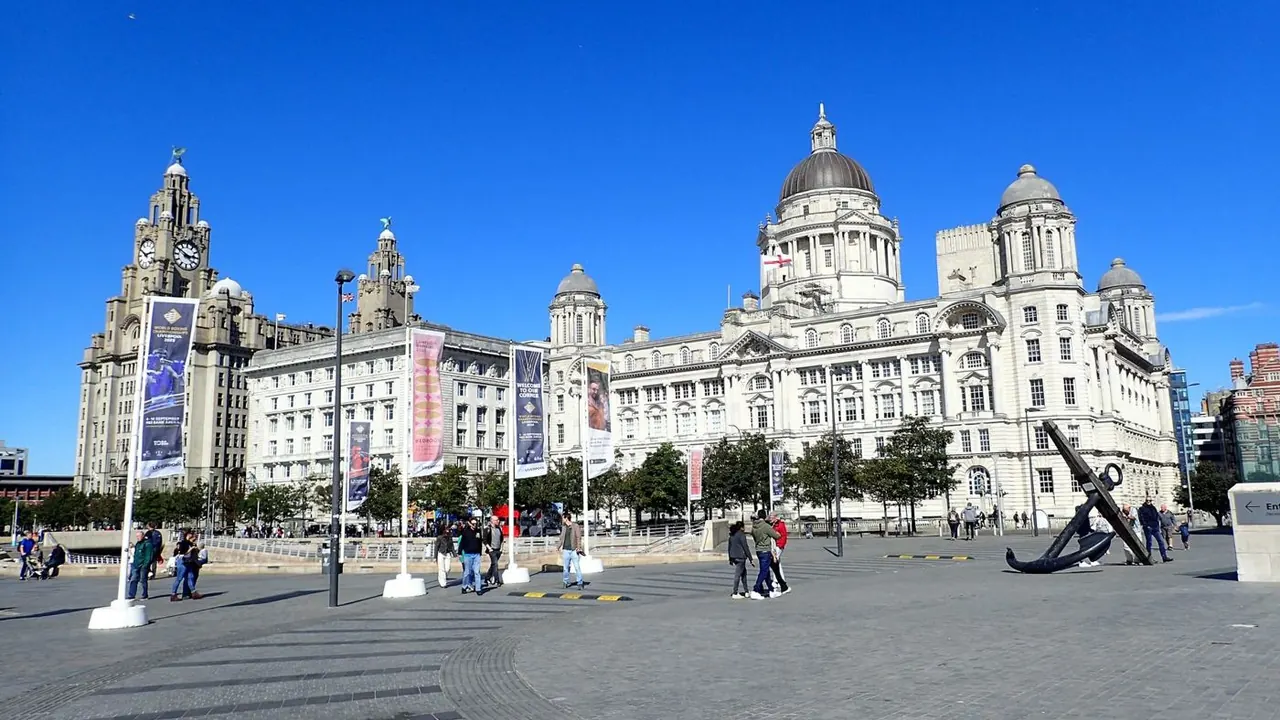
Photos: Cork by Selim Karadayı, Pexels License; Liverpool by Marathon, CC BY-SA 2.0, cropped.
Cork or Liverpool?
Our verdict in twelve categories, each scored against the same fixed benchmark cities, and the climate month by month, so you can choose for your trip.
Choose Cork for
- food and drink
- nature and the outdoors
- day trips
Cork suits a slower trip built around the south of Ireland. It has a compact island centre, a covered market full of West Cork cheese and smoked fish, and pubs with traditional music sessions, with a green harbour and Atlantic coast just beyond. It is the better choice for travellers who care more about landscape and good produce than about a long list of sights, and who don't mind Irish prices or carrying waterproofs.
Choose Liverpool for
- nightlife
- culture and sights
- live music and the arts
For a city break with more to fill the days and the nights, Liverpool is the stronger pick. The waterfront museums, two cathedrals and the Walker Art Gallery give two or three full days of sightseeing, many of them free. Evenings range from live bands and the Philharmonic to clubs that stay open well past midnight, and money goes further here.
Scoreboard
Twelve categories on one fixed scale from 0 to 100. The shaded stretch is the gap between the two.
Your match
Pick a travel style or drag the sliders, and both match scores follow your weighting.
Wins on food and drink and nature and the outdoors with your weighting.
Wins on nightlife and culture and sights with your weighting.
What matters to you?
Category by category
What the scores mean for a trip.
Beaches & swimming
Neither city is a beach destination, and in both the sea stays cool, around 16°C at best. Where they differ is the kind of beach. Cork has small sandy coves at the mouth of the harbour and long strands such as Inchydoney further west. A car makes these much easier to reach, and a hardy local crowd swims there all year.
Liverpool's sands at Crosby and Formby are a short train ride away and are for walking among the dunes and Gormley's iron figures, not for swimming. The tide goes out a very long way and parts of the shore are unsafe.
Food & drink
Cork eats better, mostly because of its produce. The English Market sells West Cork cheeses, smoked fish and spiced beef, and nearby kitchens cook with the same suppliers. Kinsale's seafood is close by, though the overall choice runs out quickly.
Liverpool's food is more casual. Expect scouse in a pub, the old Chinatown and small independent kitchens on Bold Street and in the Baltic Triangle. Its Victorian gin palaces are often more memorable than what comes on the plate.
Culture & sights
Liverpool has far more to see. The Pier Head and the Royal Albert Dock hold the maritime, slavery and city history museums, and William Brown Street adds the Walker and the World Museum. The two cathedrals at either end of Hope Street could each fill a morning.
Cork's sights are smaller in scale: the Shandon bells, St Fin Barre's, the Irish paintings in the Crawford and the old City Gaol. They are pleasant to walk between on the river island, but a day or two covers them.
Nightlife
A night out in Cork usually means a wood-panelled pub off Oliver Plunkett Street, plenty of talk and perhaps a music session in the back room. There are only a few late bars and small clubs.
Liverpool goes much bigger and later. At weekends Concert Square and Seel Street fill with clubs, the Baltic Triangle has warehouse club nights with an electronic leaning, and many nights finish after 2am. Stag and hen groups are part of that scene, so anyone wanting a quiet pint will find Cork easier.
Nature & outdoors
Cork has better outdoors close by. The harbour is made for sailing and kayaking, and Atlantic cliff walks are within an hour. Beyond them lie West Cork's inlets and the mountain lake at Gougane Barra, and Killarney works as a long day out.
Liverpool's nature is flatter and gentler: Sefton Park, the breezy riverside promenade, the dunes and red squirrels at Formby and the wading birds on the Dee estuary. The nearest real hills are about two hours away.
Day trips
Both are good bases, but the trips are different in kind. From Cork you visit small harbour and coastal towns: Cobh with its Titanic and emigrant story, Kinsale and Charles Fort, Blarney, and the distillery at Midleton. West Cork is best with a car.
From Liverpool the trips are to cities and historic towns: Roman Chester, Manchester's museums, the model village at Port Sunlight and, for a longer day, Conwy's castle in North Wales.
Good for families
For families the difference is animals outdoors against museums indoors. In Cork the best day out is Fota Wildlife Park, where animals roam with few barriers, and the observatory at Blackrock and the grounds at Blarney add a couple more. After that the list runs short, and a rainy day needs a plan.
Liverpool gives children more to do under a roof, with dinosaurs and a planetarium at the free World Museum and a play gallery at the Museum of Liverpool. For animals there are Chester Zoo and Knowsley Safari Park. The thing to plan around is the noisy centre on weekend nights.
Getting around
Both centres are easy to walk, but Liverpool is easier to leave without a car. Merseyrail trains run often to Crosby, Formby, Southport and the Wirral, and the ferry crosses the Mersey, though Sefton Park and Anfield mean taking a bus.
Cork's island centre is small, with a steep climb up to Shandon. The rail line to Cobh, Fota and Midleton is useful, but city buses are slow and the West Cork coast is far easier with a car.
Shopping & style
Liverpool offers a shopper more. The open-air Liverpool ONE district and Church Street have the big British chains, and Bold Street adds vintage clothes, records and independent boutiques. Beatles and football souvenirs are everywhere.
Cork's Patrick Street and the Huguenot Quarter take a couple of hours. Cork does better for things to take home, though: farmhouse cheese from the English Market, Irish knitwear and whiskey.
Affordability
Liverpool is the cheaper of the two. Rooms cost less than in Britain's most visited cities, except on match, Grand National and concert weekends. The big museums are free, so a day of sightseeing costs little.
In Cork, hotel rooms, meals and pub drinks all cost more than in much of Western Europe. Cheap lunches at the market and a walkable centre help, but only a little.
Live music & performing arts
Music runs deeper in Liverpool. Live bands play most nights around Mathew Street, Seel Street and the Baltic Triangle, and the Royal Liverpool Philharmonic plays a full season on Hope Street. The Everyman and the Playhouse produce their own theatre.
Cork's strength is narrower but its own: traditional music sessions in the pubs most nights. The Opera House takes touring shows, and the long-running jazz festival fills the city over the last weekend of October.
Wellness & relaxation
Neither city is a place to rest, and in both wellness comes down to hotel spas. In Cork the local ritual is cold-water swimming in the harbour coves all year, and there is a resort spa on Fota Island. In Liverpool the quiet hours come from walks in Sefton Park, a slow ferry crossing or an afternoon in the free galleries.
When should you go?
Pick your month. The climate figures are measured averages, not a forecast.
Cork in July
Liverpool in July
Daytime high, °C
Rainfall in the month, mm
Where the figures come from
Cork's station stands 153 m above the city centre, so the centre is likely a little warmer than the figures say.
Liverpool's temperatures are measured 47 km from the centre, at Manchester Airport.
Liverpool has no rain gauge within 25 km of the centre, so its rainfall comes from a gridded climate dataset read at the city rather than from a gauge further away.
Temperature and rainfall are climate normals, averaged over the years shown. Cork: 1991-2020 normals, Cork Airport (5.6 km from centre). Liverpool: 1991-2020 normals, Manchester Airport (47.4 km from centre).
Neither city has a real beach season, so the best months in both are for walking in comfort rather than swimming. Liverpool is a little warmer in high summer, reaching about 21°C in July against Cork's 19°C. Off both coasts the sea only gets into the mid-teens by August and September, which suits cold-water swimmers and few others.
The bigger difference is rain. Cork is much wetter, and from October to January it often gets around 130mm to 140mm a month, roughly half as much again as Liverpool in its wettest month. Cork is at its best in May and June, when the days are long and sunshine peaks, and its spring is slightly sunnier than Liverpool's. Liverpool's best stretch runs from May to August. Both turn grey and short-dayed in winter, but Liverpool's drier weather makes it the easier winter weekend.
Which traveller are you?
On a culture and arts trip, Cork is good for a gentle start: a morning among the Irish paintings, a climb to the Shandon bells, then the rest of the trip turns to pubs and countryside. Liverpool can keep you busy for days, with museums by day and a concert or play most evenings.
For an outdoors trip, Cork works as a base you leave each morning. Hire a car, pack waterproofs and spend whole days on the coast and in the hills of the south-west. In Liverpool the outdoors comes in smaller doses, such as a train to the dunes or a bike ride between museum days.
On a tight budget, Cork takes some planning: fewer nights, a room further out and lunch from the market stalls rather than a restaurant. In Liverpool a cheap day is easy to put together, with long walks along the river, a train to the coast and a pub dinner.
Before you go
| Measure | Cork | Liverpool |
|---|---|---|
| Official language | English, Irish | English |
| Currency | Euro (EUR) | Pound Sterling (GBP) |
| Sockets | G230 V, 50 Hz | G230 V, 50 Hz |
| Driving side | Left | Left |
| Time zone | UTC, UTC+1 in summer | UTC, UTC+1 in summer |
| Emergency number | 112 | 112 or 999 |
| Elevation | 0 m | 70 m |
| Main airport | Cork International Airport (ORK)7 km from centre47 non-stop destinations | Liverpool John Lennon Airport (LPL)12 km from centre75 non-stop destinations |
| Public holidays this year | 11 days | 8 days |
By the numbers
| Measure | Cork | Liverpool |
|---|---|---|
| City population | 222,333 | 513,441 |
| People per km² | 5,961 | 4,592 |
| Museums within 10 km | 5 | 31 |
| UNESCO World Heritage sites within 50 km | 0 | 2 |
| Swim season, months above 21 °C | None | None |
Where else could you go?
Every comparison below shares a destination with this one, so you can follow Cork or Liverpool somewhere new.