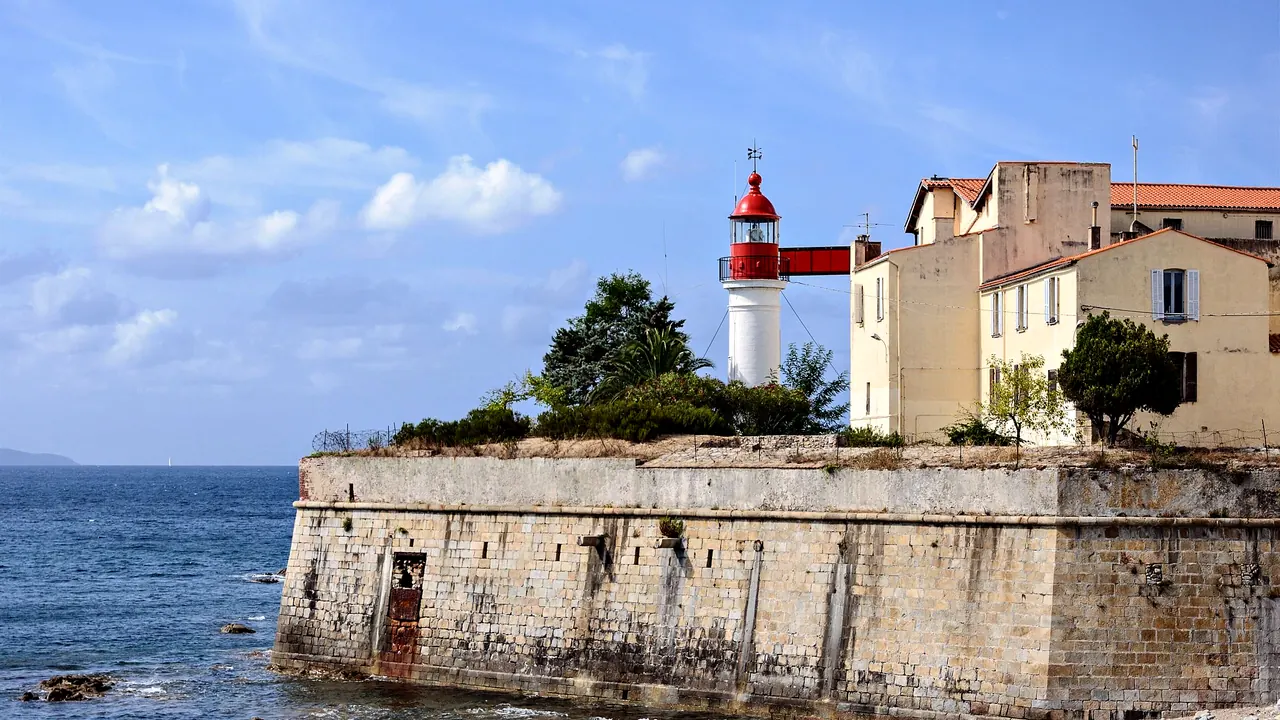
Photos: Corsica by Myrabella, CC BY-SA 3.0, cropped.
Corsica or Loire Valley?
Our verdict in twelve categories, each scored against the same fixed benchmark cities, and the climate month by month, so you can choose for your trip.
Choose Corsica for
- beaches
- nature and the outdoors
- wellness
Choose Corsica if the sea and the mountains are the point of the trip. Its southern beaches stand with the best in the Mediterranean, and granite peaks, gorges and protected coastline rise right behind them for hiking, canyoning and diving. You'll need a car, patience on slow roads and a bigger budget in high summer. It suits travellers who care more about sun, swimming and wild landscape than about sights.
Choose Loire Valley for
- day trips
- getting around
- culture and sights
The Loire Valley is the better pick for history, wine and an easy pace. Renaissance châteaux, medieval abbeys and tasting cellars all lie a short way from a base near Tours. The train and the riverside bike route make it workable without much driving, and costs are gentler. There is no beach, though, and the countryside is gentle farmland rather than dramatic scenery.
Scoreboard
Twelve categories on one fixed scale from 0 to 100. The shaded stretch is the gap between the two.
Your match
Pick a travel style or drag the sliders, and both match scores follow your weighting.
Too close to call, 1 point apart
Wins on beaches and nature and the outdoors with your weighting.
Wins on day trips and getting around with your weighting.
What matters to you?
Category by category
What the scores mean for a trip.
Beaches & swimming
Beaches are Corsica's greatest strength. The far south has Palombaggia, Santa Giulia and Rondinara, all pale sand on turquoise water. The Agriates coves are reached by boat or on foot, Calvi has a long bay, and the west coast has quieter granite coves. In high summer the famous southern beaches fill early, so the only real effort is arriving early or walking a little.
The Loire Valley has no beach at all. The river is dangerous to swim in, so locals use supervised lakes such as the Lac de Maine at Angers. Most visitors swim in the pool at their gîte, and the Atlantic is a long drive west of the château country.
Food & drink
Both eat well in a rural French way, but the Loire Valley has more depth. Its wines run the length of the river: Sancerre, Vouvray, Chinon and the sparkling Saumur aged in tufa caves. Tasting cellars are close enough to cycle between, and Tours and Angers add serious restaurants to the markets and bistros.
Corsica's cooking is more unusual: cured pork such as lonzu and figatellu, brocciu cheese, chestnut flour and wild boar, with Patrimonio wine and a cap corse aperitif. The catch is that the best of it is in inland village inns, and beach-resort menus in summer are often ordinary.
Culture & sights
For sightseeing, the Loire Valley is in another league. Chambord, Chenonceau, Blois, Amboise and Clos Lucé make up the densest group of Renaissance châteaux anywhere. Fontevraud Abbey, the Apocalypse Tapestry in Angers and the castles of Chinon and Loches carry the story back into the Middle Ages.
Corsica's heritage is spread more thinly and shaped by its history as a fought-over frontier. It has Genoese citadels and watchtowers, Bonifacio's old town on its limestone cliffs, the upper town of Corte, Napoleon's birthplace in Ajaccio and the standing stones of Filitosa. These make a rewarding road trip, but the setting usually matters more than the monument.
Nightlife
Neither region suits a big night out, and in both an evening usually means a long dinner with local wine. In Corsica, late nights mostly happen in July and August, at the open-air clubs in the hills behind Porto-Vecchio and the beach and harbour bars of Calvi.
In the Loire, the livelier evenings depend on students rather than summer visitors. They gather on the bar terraces around Place Plumereau in Tours and in the bar quarter of Angers, so going out depends less on the season. Stay in the countryside of either region and you will have almost nothing to go out to.
Nature & outdoors
Corsica is a mountain range in the sea, with peaks over 2,700m, the GR20 trek along its spine, the red granite of Piana, the Scandola reserve and the rock needles of Bavella. Canyoning in the interior and diving and sea kayaking around Lavezzi add a range of outdoor activities that the Loire cannot match.
The valley's outdoors is gentle by comparison: willow-lined sandbanks, vineyards, tufa cliffs and the heath and ponds of the Sologne. It is lovely for cycling the Loire à Vélo route or canoeing among the river islands, but there are no hills or wild country to explore.
Day trips
The Loire Valley is made for day trips. From Tours you can easily reach Amboise, Blois, Chinon, Loches, Saumur and Angers, and the troglodyte villages and wine cellars fill the afternoons. Chartres, Bourges and Paris by high-speed train take you further.
In Corsica each base has only a few outings of its own: Sartène and the ferry to Sardinia from Bonifacio, the Balagne villages from Calvi, Cap Corse and Patrimonio from Bastia. Slow mountain roads keep the rest of the island out of reach for a day.
Good for families
With children, the Loire Valley gives you more to plan a week around. There is the ZooParc de Beauval, Leonardo's machines at Clos Lucé, the Maison de la Magie facing the château in Blois and the flat cycle route, with quiet roads and gîtes with pools in between. The main thing to avoid is too many formal château interiors in a row.
Corsica suits families who mainly want sand and sea. It has calm, shallow bays such as Santa Giulia and campsites with pools along the south and east coasts. Beyond that, little is made for children, and the winding drives make it better to stay in one place.
Getting around
Both regions are easiest with a car, but the Loire is far easier without one. A rail line along the river links Orléans, Blois, Amboise, Tours, Saumur and Angers. The riverside cycle route, with bike hire and luggage sent ahead, makes the bicycle a real way to travel. The main sights are rarely more than an hour apart by car.
In Corsica a car is close to essential, and narrow, twisting roads make every journey longer than the map suggests. The narrow-gauge railway between Ajaccio, Corte, Bastia and Calvi is a pleasure, but it does not serve the south, and buses are infrequent.
Shopping & style
Neither is a shopping destination, and in both the best things to buy are mostly food and drink. In Corsica that means charcuterie, chestnut flour, honey and hand-forged knives from the markets of Ajaccio and Bastia and the craft villages of the Balagne. In the Loire it means wine bought at the cellar door, goat cheese, rillettes and Gien faience, and Tours has the widest choice of everyday shops.
Affordability
The Loire Valley is the cheaper of the two. Town hotels and guesthouses are moderately priced, and set lunches and cellar-door wine are good value. The main extra cost is the entrance fee at each château, which adds up if you visit several a day.
Corsica is expensive in July and August, when coastal rooms, resort restaurants, car hire and the ferry crossing all add up. Staying in inland villages or at campsites, or going in June or September, brings the costs down noticeably.
Live music & performing arts
The Loire Valley has more going on. In summer there are sound-and-light shows at Blois and Amboise and chamber music at the medieval Grange de Meslay, and in September Angers fills its streets with performers. For the rest of the year, Tours, Angers and Orléans keep opera, orchestral concerts and theatre going.
Corsica's own tradition is polyphonic singing, unaccompanied male voices you can hear in village churches. Summer adds jazz in Calvi and guitar evenings in the vineyards at Patrimonio, but outside summer there is little, and no opera.
Wellness & relaxation
In both regions, rest comes from the slow pace rather than from spas. Corsica has a slight edge, with hotel spas around Porto-Vecchio, Calvi and Ajaccio, simple thermal springs such as Pietrapola, and the deep quiet of its mountain villages after dark. The Loire's version is gentler: wine-based treatments in château hotels, unhurried riverside cycling and the gardens of Villandry and Chaumont.
When should you go?
Pick your month. The climate figures are measured averages, not a forecast.
Corsica in July
Loire Valley in July
Daytime high, °C
Rainfall in the month, mm
Temperature and rainfall are climate normals, averaged over the years shown. Corsica: 1991-2020 normals, Ajaccio (5.1 km from centre). Loire Valley: 1991-2020 normals, Tours (20.4 km from centre).
Corsica is the warmer, sunnier and drier summer choice. On the coast the sea is warm enough to swim from June to October and reaches about 25°C in August. July is almost rainless, but highs near 29°C make midsummer hot for walking at low altitude. May, June and September are best for hiking and sightseeing. From October the rain sets in, peaking at around 115mm in November.
The Loire Valley has a milder, steadier climate, with rain spread evenly through the year rather than a dry season. Summer highs of about 26°C make July and August comfortable for cycling and château visits, and late spring and early autumn are softer and greener. Winters are grey and cool, with highs around 8°C, and it gets far less sunshine than Corsica in every month.
Which traveller are you?
On a beach and sun trip, Corsica wins easily. Palombaggia, Rondinara and the Agriates coves have pale sand and clear water warm enough for swimming from June to October. The Loire has no river you can swim in, only supervised lakes and gîte pools.
For a culture and arts trip, choose the Loire Valley. Chambord, Chenonceau, Fontevraud and the Apocalypse Tapestry are all close together, and summer concerts and château sound-and-light shows fill the evenings. Corsica's scattered citadels and chapels cannot match that.
On an outdoors trip, Corsica offers far more. It has the GR20 and the gentler Mare e Monti paths, the lakes above the Restonica gorge, Scandola's sea caves and canyoning inland. The Loire's flat cycle route and river canoeing are pleasant but tame by comparison.
Before you go
| Measure | Corsica | Loire Valley |
|---|---|---|
| Official language | French | French |
| Currency | Euro (EUR) | Euro (EUR) |
| Sockets | CE230 V, 50 Hz | CE230 V, 50 Hz |
| Driving side | Right | Right |
| Time zone | UTC+1, UTC+2 in summer | UTC+1, UTC+2 in summer |
| Emergency number | 112 | 112 |
| Main airport | Ajaccio Napoléon Bonaparte airport (AJA)29 non-stop destinations | Tours Val de Loire Airport (TUF)5 non-stop destinations |
| Public holidays this year | 11 days | 11 days |
By the numbers
| Measure | Corsica | Loire Valley |
|---|---|---|
| Population | 355,486 | - |
| People per km² | 41 | - |
| Swim season, months above 21 °C | 4 months | - |
Where else could you go?
Every comparison below shares a destination with this one, so you can follow Corsica or Loire Valley somewhere new.
- Sardiniavs Corsica
- French Rivieravs Corsica
- Normandyvs Loire Valley
- Cinque Terrevs Corsica
- Dordognevs Loire Valley
- Brittanyvs Loire Valley