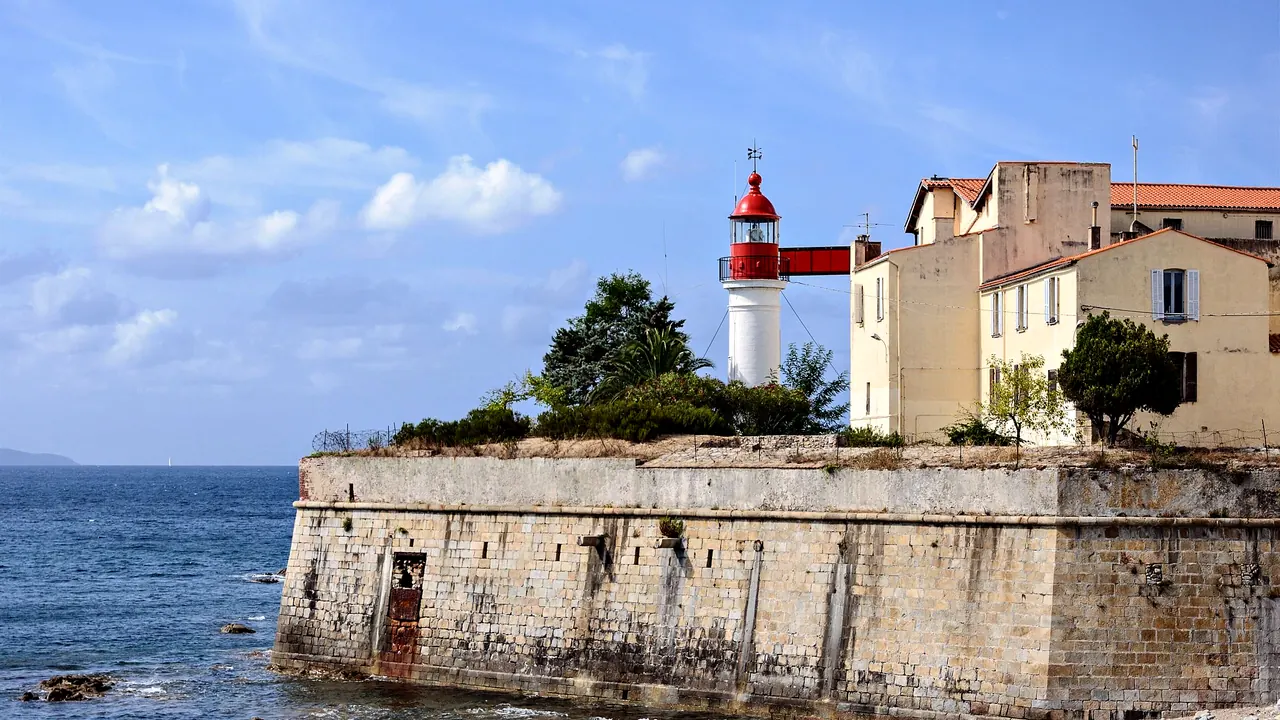
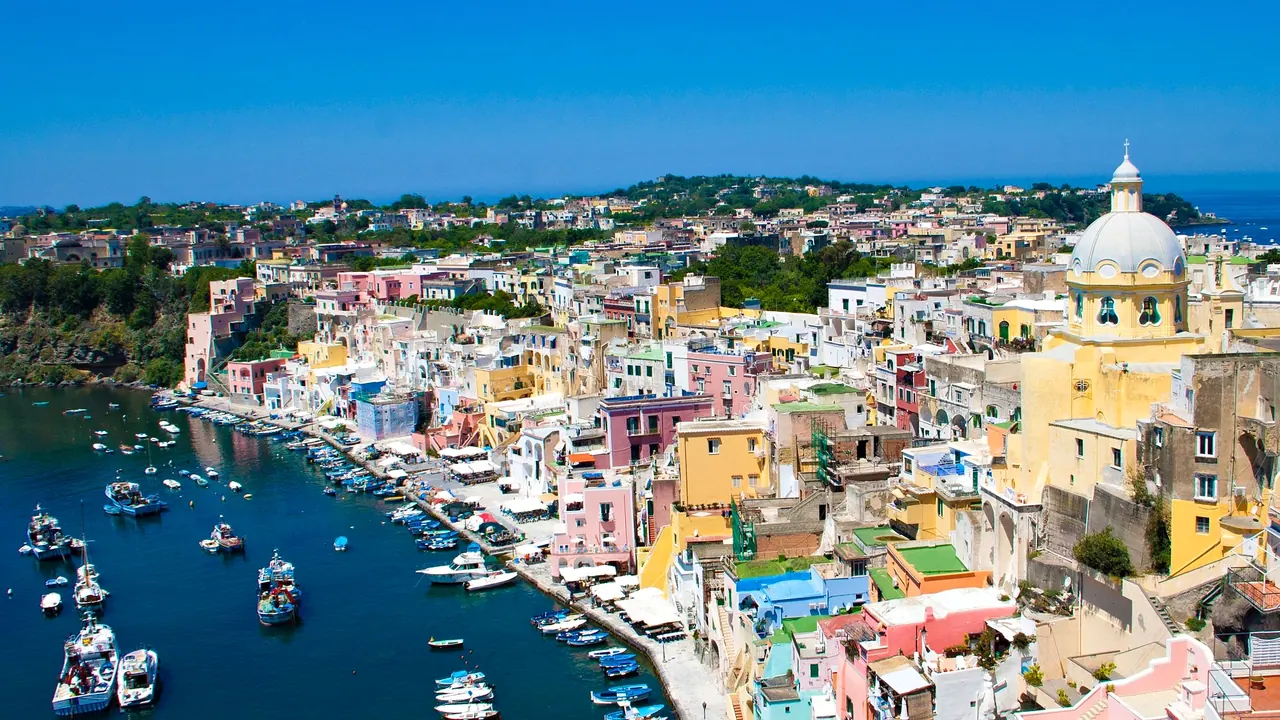
Photos: Corsica by Myrabella, CC BY-SA 3.0, cropped; Procida by DIANA.GRYGAROVA, CC BY-SA 4.0, cropped.
Corsica or Procida?
Our verdict in twelve categories, each scored against the same fixed benchmark cities, and the climate month by month, so you can choose for your trip.
Choose Corsica for
- nature and the outdoors
- culture and sights
- live music and the arts
Corsica is the trip for people who want space and scenery: some of the finest sand in the Mediterranean in the far south, granite mountains rising straight behind the coast, and Genoese citadels at Bonifacio and Calvi to tie a road trip together. It asks for a car, a fair budget and patience on slow roads. In return you get a whole island to move around in, with real hiking, diving and village food.
Choose Procida for
- getting around
- day trips
- prices
Procida is a much smaller proposition, a single walkable island of coloured harbours and volcanic coves that you can learn in a couple of days. You come here for what lies around it more than for what is on it: Ischia's hot springs, the Roman sites of the Phlegraean Fields and Naples are all a short boat ride away. It suits a slow, car-free stay with day trips by ferry, and it costs less to stay here than in Corsica's resorts.
Scoreboard
Twelve categories on one fixed scale from 0 to 100. The shaded stretch is the gap between the two.
Your match
Pick a travel style or drag the sliders, and both match scores follow your weighting.
Wins on nature and the outdoors and culture and sights with your weighting.
Wins on getting around and day trips with your weighting.
What matters to you?
Category by category
What the scores mean for a trip.
Beaches & swimming
Corsica's beaches are the reason many people choose it, and they outclass Procida's. In the south you have Palombaggia, Santa Giulia and Rondinara, all white sand and shallow turquoise water, the Agriates bays of Saleccia and Lotu in the north, and quieter granite coves on the west coast. There is enough coastline to escape the crowds if you have a car and don't mind a short walk.
Procida offers a handful of small coves of dark volcanic sand. Chiaiolella and Ciraccio are the easy, open ones, and Chiaia and Pozzo Vecchio are more sheltered. The water is clear and as warm as Corsica's, but there is no long stretch of sand to spread out on, and boat trips to coves you can only reach from the sea do most of the work of adding variety.
Food & drink
Corsica has more to eat, and it comes mostly from the mountains: cured lonzu and coppa, brocciu in everything from omelettes to fiadone, wild boar and chestnut flour, with serious wines from Patrimonio and Sartène to go with it. The best meals tend to be in inland village inns rather than on the beach.
Procida's cooking is narrower and comes from the sea. It means the morning's catch at the harbour trattorias of Corricella, the island's own lemon salad and a lingua pastry at Marina Grande. It is good for a few days, but the repertoire is short, and many kitchens close out of season.
Culture & sights
Corsica gives a sightseer far more ground to cover. There is Bonifacio's old town on its white cliffs, the citadel at Calvi, Corte's upper town from the days of the independent republic, Napoleon's birthplace and the Italian paintings of the Palais Fesch in Ajaccio, and the carved menhirs of Filitosa. It is spread out, so it works best as a road trip.
Procida's heritage fits into one hilltop and one harbour. Terra Murata has the abbey and the former prison of Palazzo d'Avalos, and Corricella's pastel houses below are the island's postcard view. You have seen it all in a day or two of slow walking, and the bigger sights are across the water.
Nightlife
Neither island is built for nights out, but Corsica at least has some options in high summer. There are open-air clubs in the hills behind Porto-Vecchio, late beach bars in Calvi, and bars in Ajaccio and Bastia that keep going through the year.
Procida stops at a drink on the waterfront at Marina Grande or Chiaiolella, which lasts until around midnight in August. For anything more you need the ferry to Ischia or Naples and a plan for getting back.
Nature & outdoors
Here the two islands are hardly comparable. Corsica is a mountain range rising out of the sea, with peaks above 2,700m, the GR20 along its spine, the red granite of the Calanques de Piana, the protected cliffs of Scandola and chestnut forest cut by canyoning rivers. Diving and kayaking around the Lavezzi islands add a whole sea-based side to it.
Procida is low and gentle, a ring of old craters turned into bays, with lemon gardens and short cliffs. The walks go to viewpoints rather than along trails, and Vivara's reserve opens only for limited guided visits. Snorkelling and a boat trip round the island fill the rest of it, and you will run out of new ground within a few days.
Day trips
Procida is the better base for day trips, and that is much of the reason to stay there. Ischia is a quarter of an hour away by boat, Pozzuoli's amphitheatre and the sunken villas of Baia about half an hour, and Naples under an hour, with Herculaneum beyond it. The only limit is the time of the last ferry home.
On Corsica, outings mean other towns and villages around the island: Sartène, the Balagne craft villages, Cap Corse, or the ferry from Bonifacio to Sardinia. Because the mountain roads are slow, each base has only a few of these within easy reach.
Good for families
Corsica works better for families who want a proper beach vacation. Bays such as Santa Giulia are shallow and calm, campsites and resort villages with pools are common in the south and east, and river pools and sea-cave boat trips give children something different to do. The catch is the long, twisting drives, so pick one base and stay put.
Procida is calm and compact, and Chiaiolella and Ciraccio shelve gently, but there is less to fill the days. The narrow lanes without pavements are also hard going with a pushchair, and the steps down to Corricella and Chiaia add to it.
Getting around
Procida is far simpler. The island is only a few kilometres across, small buses and three-wheeled taxis cover it, a car is unnecessary, and frequent ferries make the port at Marina Grande the hub for everything beyond. The one drawback is that the busy, walled lanes make walking less pleasant than the short distances suggest.
On Corsica a car is close to essential. The roads are winding, journeys take much longer than the map suggests, summer traffic builds near the resorts, and the scenic narrow-gauge railway does not reach the south at all.
Shopping & style
Neither island is a shopping destination, but Corsica gives you more to bring home. There are the food markets of Ajaccio and Bastia, charcuterie and island wines, hand-forged knives, pottery from the Balagne villages and a few summer boutiques in Porto-Vecchio and Calvi. Procida has a short stretch of Via Roma with ceramics, limoncello and linen, and for real shopping it sends you across the water to Naples.
Affordability
Procida is easier on the wallet. It costs less to stay than its better-known neighbours in the gulf, and you need no hire car, while cheap buses, pizzas and pastries keep daily costs down. Its rooms are few, though, and still dear in August.
Corsica is expensive in the season people actually go. Resort rooms in Porto-Vecchio, Bonifacio and Calvi, coastal restaurants, car hire and ferry crossings all add up. Campsites, inland villages and June or September make it more manageable.
Live music & performing arts
Corsica has a living musical tradition to seek out: polyphonic male singing in village churches, plus summer jazz in Calvi and guitar evenings among the Patrimonio vineyards. It is modest, but it is there.
Procida has no stage of its own. Its one great spectacle is the Good Friday procession of the Misteri down from Terra Murata. Naples has opera, but the return crossing after a performance is awkward.
Wellness & relaxation
Both islands slow you down more than they pamper you, and they are close here, with Procida slightly ahead. Its advantage is Ischia, a quarter of an hour away, where hot springs and thermal gardens make an easy day of soaking before you sail back to quiet evenings over Corricella.
On Corsica the rest comes from long lunches and silent mountain villages. Formal treatment is limited to spas in upmarket hotels and a few simple, old-fashioned springs inland such as Pietrapola.
When should you go?
Pick your month. The climate figures are measured averages, not a forecast.
Corsica in July
Procida in July
Daytime high, °C
Rainfall in the month, mm
Where the figures come from
Procida's temperatures are measured 32 km from the centre, at Grazzanise.
Temperature and rainfall are climate normals, averaged over the years shown. Corsica: 1991-2020 normals, Ajaccio (5.1 km from centre). Procida: 1991-2020 (rainfall 1971-2000) normals, Grazzanise (32.2 km from centre).
Both islands have a dry, sunny summer, and on both the sea is warm enough to swim in from June to October. Corsica is a little milder, with July and August afternoons around 29°C, and it gets more sunshine than Procida in every month from spring to autumn. Procida runs hotter, at about 31°C, which makes the climb to Terra Murata hard work in the middle of the day. The sea is warmest in August, at about 25°C off Corsica and 26°C off Procida.
The rain comes back in September on both islands and builds through October and November. Corsica gets off more lightly. Its spring is drier too, so May and early June are good for hiking before the heat settles on the lower ground. Procida turns much wetter, with about 153mm in October and a damp winter after it. For walking its lanes and viewpoints, choose late May or June.
Which traveller are you?
On an outdoors trip, Corsica is the clear choice. The GR20 and the gentler Mare e Monti paths, the needles of Bavella, the Restonica lakes and the Scandola cliffs make a week of serious walking, canyoning and kayaking. Procida's viewpoints are done in a few days.
For a beach and sun trip, Corsica again. Palombaggia, Santa Giulia and Rondinara give you pale sand on turquoise water, the Agriates add remote bays reached by boat, and there is room to spread out. Procida's dark-sand coves are pretty but small and fill early in August.
On a trip on a tight budget, Procida goes further. Guesthouses cost less than rooms in Porto-Vecchio or Bonifacio, you need no hire car, and the buses, pizzas and pastries are cheap. Corsica's summer bill for rooms, car hire and ferries mounts quickly.
Before you go
| Measure | Corsica | Procida |
|---|---|---|
| Official language | French | Italian |
| Currency | Euro (EUR) | Euro (EUR) |
| Sockets | CE230 V, 50 Hz | CFL230 V, 50 Hz |
| Driving side | Right | Right |
| Time zone | UTC+1, UTC+2 in summer | UTC+1, UTC+2 in summer |
| Emergency number | 112 | 112 |
| Main airport | Ajaccio Napoléon Bonaparte airport (AJA)29 non-stop destinations | Naples International Airport (NAP)131 non-stop destinations |
| Public holidays this year | 11 days | 13 days |
By the numbers
| Measure | Corsica | Procida |
|---|---|---|
| Population | 355,486 | 10,092 |
| People per km² | 41 | 2,347 |
| Swim season, months above 21 °C | 4 months | 5 months |
Where else could you go?
Every comparison below shares a destination with this one, so you can follow Corsica or Procida somewhere new.
- Ischiavs Procida
- Caprivs Procida
- Amalfi Coastvs Procida
- Sardiniavs Corsica
- Elbavs Corsica
- French Rivieravs Corsica