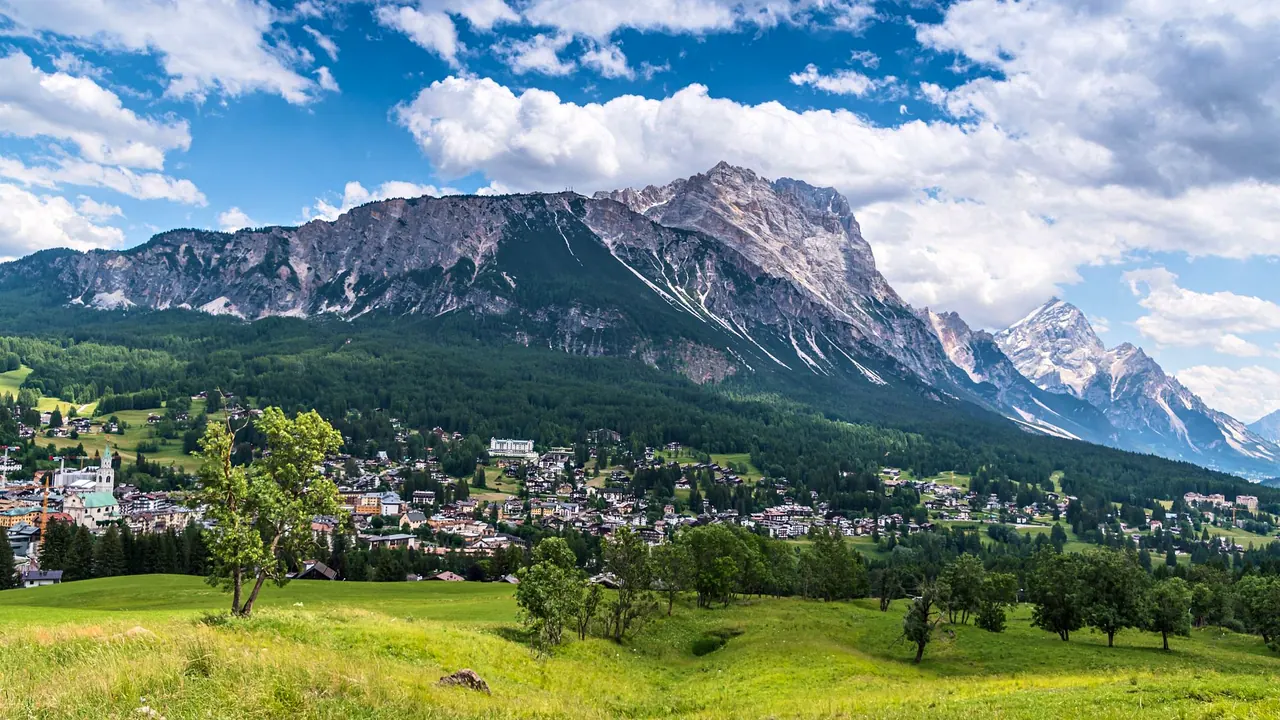
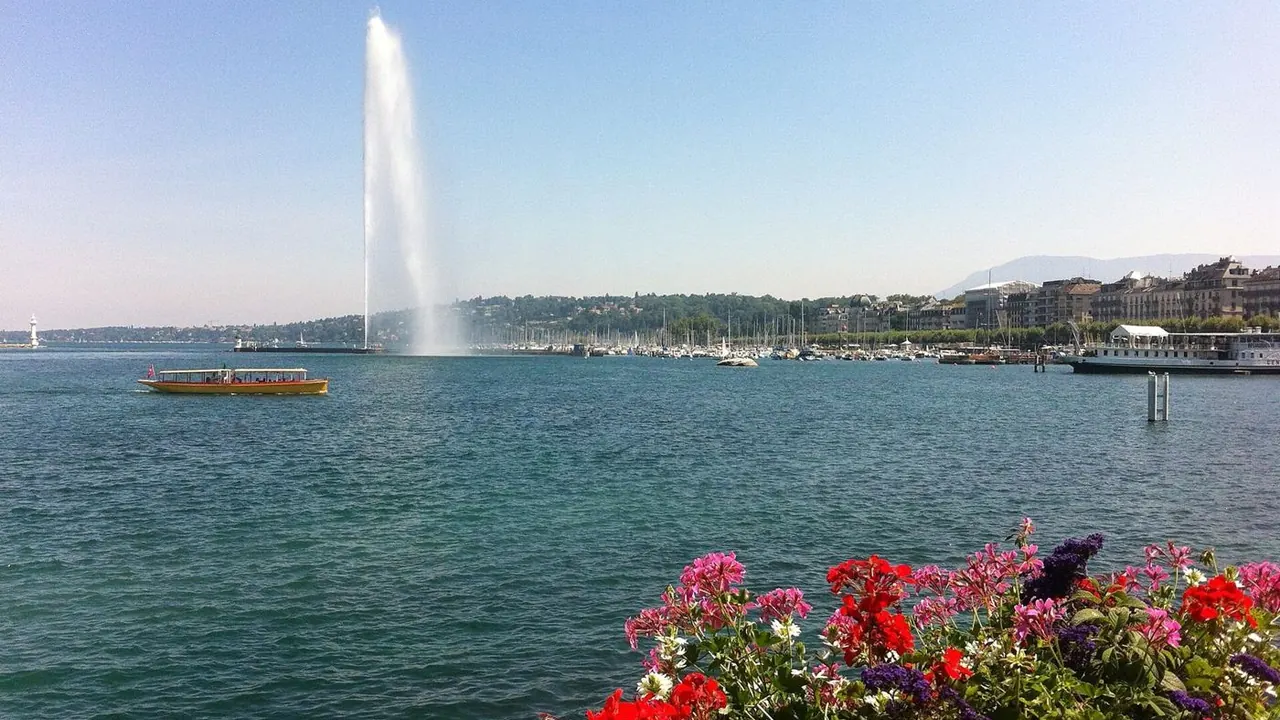
Photos: Cortina d'Ampezzo by Andreas Neubauer, Pexels License; Geneva by Diviosen, CC BY-SA 3.0, cropped.
Cortina d'Ampezzo or Geneva?
Our verdict in twelve categories, each scored against the same fixed benchmark cities, and the climate month by month, so you can choose for your trip.
Choose Cortina d'Ampezzo for
- nature and the outdoors
- prices
Cortina d'Ampezzo is for travellers who want to spend nearly every waking hour in the mountains. The Dolomites rise straight from the town, the lifts start in the centre, and the ski runs, via ferrata routes and hut-to-hut trails are on the doorstep. Choose it for a ski week or a summer of hiking and climbing, and accept that evenings are quiet, sights are few and you will probably want a car.
Choose Geneva for
- live music and the arts
- getting around
- beaches
For a broader trip that mixes city and scenery, Geneva is the better choice. It has a proper opera house and orchestra, the museums of the Reformation and of world diplomacy, a lake to swim in and excellent transport. It also holds up in any season and in poor weather, where Cortina only really makes sense when there is snow on the slopes or sun on the trails. The mountains are on the horizon rather than outside the hotel door, but nearly everything else is easier to reach.
Scoreboard
Twelve categories on one fixed scale from 0 to 100. The shaded stretch is the gap between the two.
Your match
Pick a travel style or drag the sliders, and both match scores follow your weighting.
Wins on nature and the outdoors and prices with your weighting.
Wins on live music and the arts and getting around with your weighting.
What matters to you?
Category by category
What the scores mean for a trip.
Beaches & swimming
Neither has a coast, but only Geneva has real summer swimming. In Cortina the water means snowmelt lakes such as Ghedina and Pianozes, which are lovely for a walk and icy for a swim, so most visitors swim in a hotel pool.
Geneva's lake warms to a comfortable temperature by August, and people dive off the jetty at the Bains des Pâquis or spread out on the lawns at Genève-Plage. It is a lido rather than a beach, but it adds a lot to a summer stay.
Food & drink
Geneva has the wider and more polished table, with French cooking at its heart, lake perch, fondue in old brasseries, its own Chasselas and Gamay, and a spread of international kitchens supported by the diplomatic crowd. Carouge and the Old Town are where the best restaurants gather.
Cortina's range is narrower but more tied to its setting: casunziei with poppy seeds, polenta with game, and lunch on a rifugio terrace among the peaks. Neither town does cheap street food, and in Cortina there is almost nothing international to vary the mountain menu.
Culture & sights
Geneva is the clear choice for sightseeing. St Pierre Cathedral and the Reformation Wall tell the story of Calvin's city, the Palais des Nations and the Red Cross museum explain its place in the world, and CERN adds the science, which fills two or three full days.
Cortina's centre is pretty, with its basilica bell tower, painted houses and the 1956 Olympic ice stadium, and the Rimoldi art collection is good for a wet afternoon. Its most moving heritage is the First World War front on Lagazuoi and the Cinque Torri, which you reach by spending a day in the mountains.
Nightlife
Neither is a place to come to for nights out, but Geneva gives you more choice after dinner. The Pâquis keeps its bars busy late, Carouge has wine-bar terraces, and the alternative centres around Plainpalais and Jonction run club nights at weekends.
Cortina's evenings are après-ski drinks, a stroll along the Corso Italia and long dinners. A few smart bars and clubs stay open late only in the peak winter weeks, and the rest of the year the town goes quiet early.
Nature & outdoors
Cortina is one of the great mountain settings anywhere, and the town sits right inside it. The Tofane, Cristallo and Cinque Torri ring the valley, lifts go straight up from the streets, and the Alta Via 1, historic via ferrata routes and the Dolomiti Superski slopes all start nearby.
Geneva looks out at its mountains. The Salève cable car, Jura ridge walks and sailing on the lake give it a strong outdoor side, with Mont Blanc on the skyline and Chamonix within an hour or so by road, but the high peaks take a drive.
Day trips
Geneva has the far richer list of outings. Lake steamers and trains run to Lausanne, Montreux's Château de Chillon and the Lavaux vineyard terraces, Annecy and Yvoire are just across the French border, and Gruyères and Bern make longer days.
From Cortina, the outings that work best are mostly into the mountains. South Tyrolean towns such as Brunico and Bolzano, with its Iceman, are worth the drive, but Venice is a long day by coach, and most excursions need a car.
Good for families
Geneva is slightly easier with children. Its flat, safe centre, trams that take pushchairs, the Natural History Museum's big dioramas and the little yellow harbour boats fill a few days well.
Cortina suits families who ski or hike, with ski schools at Socrepes, public skating at the Olympic stadium and gentle walks to huts with meadows. Neither has a zoo, aquarium or theme park, and in Cortina a run of rainy days with young children is harder to fill.
Getting around
Geneva is far easier to get around. Frequent trams, buses and lake boats run on one network, the airport is a few minutes by train, and regional rail reaches the rest of Switzerland and the French suburbs, so a car is rarely needed.
Cortina's small, flat centre is easy on foot, and ski buses work well in winter. The town has had no railway since 1964, though, so arriving means a coach or a long drive, and the buses up to the passes are limited enough that many visitors hire a car.
Shopping & style
Geneva is the stronger place to shop, above all for watches and jewellery. The Rue du Rhône is lined with flagship boutiques of the great Swiss watch houses, and there are Old Town chocolatiers, Carouge craft workshops and the Plainpalais flea market for something less formal.
Cortina's shopping is mainly one street, the Corso Italia, with furriers, jewellers and smart mountain wear, plus the old Cooperativa department store and local wood carving and filigree. It is polished, and you can see all of it in an afternoon.
Affordability
Both are among the most expensive places in Europe to visit. Geneva is a little harder on the wallet, with costly hotels all year and steep restaurant bills, although free museums, free transport for hotel guests and cheap lake lidos help.
Cortina is expensive in a seasonal way: the winter peak and August are very dear, and lift passes add more. Early summer, late September and the rifugi lunches give some relief. In both places, budget travellers often stay just outside, in nearby valleys or across the French border.
Live music & performing arts
Geneva has a full formal stage. There is opera and ballet at the Grand Théâtre, the Orchestre de la Suisse Romande in Victoria Hall, French-language theatre at the Comédie, and concerts in a former pumping station in the Rhône.
Cortina has no theatre season or regular venue. Its music comes from summer chamber and classical festivals in churches and occasionally on the mountainside, plus a few concerts at Christmas, so outside those times there is little to go and see.
Wellness & relaxation
Geneva has a slight edge because its bathing is public and part of daily life. In winter the Bains des Pâquis runs a sauna and hammam where regulars plunge into the cold lake, and Évian and Divonne are close for a spa day.
In Cortina, wellness happens inside the hotels, with Alpine spas, hay baths and massages after skiing. Its other restful side is the mountain calm of June and September, which disappears in the busy peak weeks.
When should you go?
Pick your month. The climate figures are measured averages, not a forecast.
Cortina d'Ampezzo in July
Geneva in July
Daytime high, °C
Rainfall in the month, mm
Temperature and rainfall are climate normals, averaged over the years shown. Cortina d'Ampezzo: 1991-2020 normals, Dobbiaco (22.5 km from centre). Geneva: 1991-2020 normals, Geneve-Cointrin (5.7 km from centre).
Cortina d'Ampezzo has two separate seasons. December to February are properly cold, with highs of about 0°C in January, and these are also the driest months, which suits skiing. March is noticeably milder, and April, May and November fall between the two seasons. Summer days reach about 22°C, which is ideal for hiking, but June, July and August are the wettest stretch of the year, with July at around 130mm. September is the best balance, still mild and clearly drier than high summer.
Geneva is milder all year and warmer in summer, at around 27°C in July, when the lake is warm enough for swimming and long sunny days draw everyone to the waterfront. Rain is spread evenly through the year, so no month stands out as the wet one. Winters are cool and grey, with only about 50 hours of sunshine in December, so city walks are more comfortable from May to September.
Which traveller are you?
On an outdoors trip, Cortina d'Ampezzo wins outright. Lifts from the town reach the peaks, the Tre Cime and the Fanes-Sennes-Braies park are close, and winter brings the whole Dolomiti Superski area. Geneva's Salève and Jura are pleasant, but they are foothills by comparison.
For a culture and arts trip, Geneva is far stronger. It has Calvin's cathedral, the Palais des Nations, the Red Cross museum and CERN by day, then opera at the Grand Théâtre or the Orchestre de la Suisse Romande in Victoria Hall at night. Cortina has three small museums and summer concerts.
For a short city break, Geneva makes more sense. The airport is minutes from the centre by train, trams and harbour boats link everything, and two or three days cover the main sights. Cortina has no railway, takes a long coach ride or drive to reach, and has a resort rather than a city to explore.
Before you go
| Measure | Cortina d'Ampezzo | Geneva |
|---|---|---|
| Official language | Italian | French, German, Italian, Romansh |
| Currency | Euro (EUR) | Swiss Franc (CHF) |
| Sockets | CFL230 V, 50 Hz | CJ230 V, 50 Hz |
| Driving side | Right | Right |
| Time zone | UTC+1, UTC+2 in summer | UTC+1, UTC+2 in summer |
| Emergency number | 112 | 112 |
| Elevation | 1,224 m | 403 m |
| Main airport | Venice Marco Polo Airport (VCE)116 km from centre103 non-stop destinations | Geneva International Airport (GVA)5 km from centre150 non-stop destinations |
| Public holidays this year | 13 days | 9 days |
By the numbers
| Measure | Cortina d'Ampezzo | Geneva |
|---|---|---|
| City population | 5,546 | 211,152 |
| People per km² | 22 | 13,280 |
| Museums within 10 km | 3 | 34 |
| UNESCO World Heritage sites within 50 km | 1 | 2 |
Where else could you go?
Every comparison below shares a destination with this one, so you can follow Cortina d'Ampezzo or Geneva somewhere new.
- Annecyvs Geneva
- Lausannevs Geneva
- Chamonixvs Geneva
- Innsbruckvs Cortina d'Ampezzo
- Lyonvs Geneva
- Venicevs Cortina d'Ampezzo