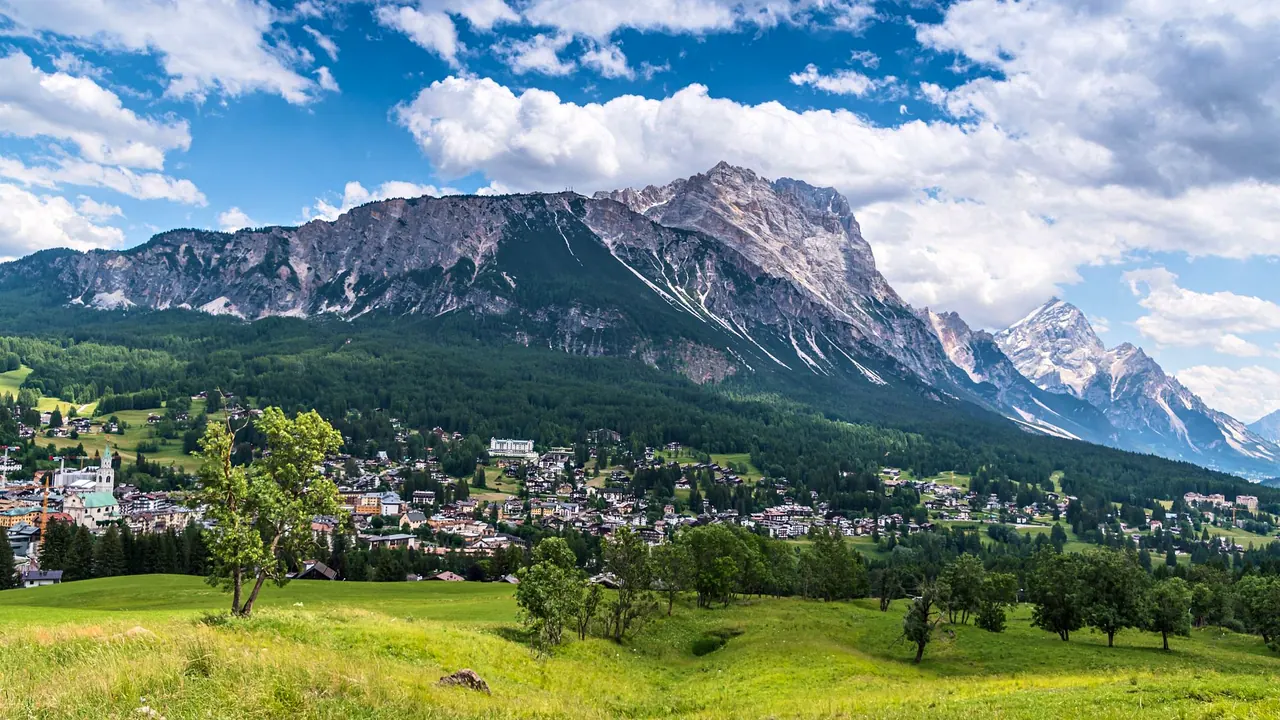
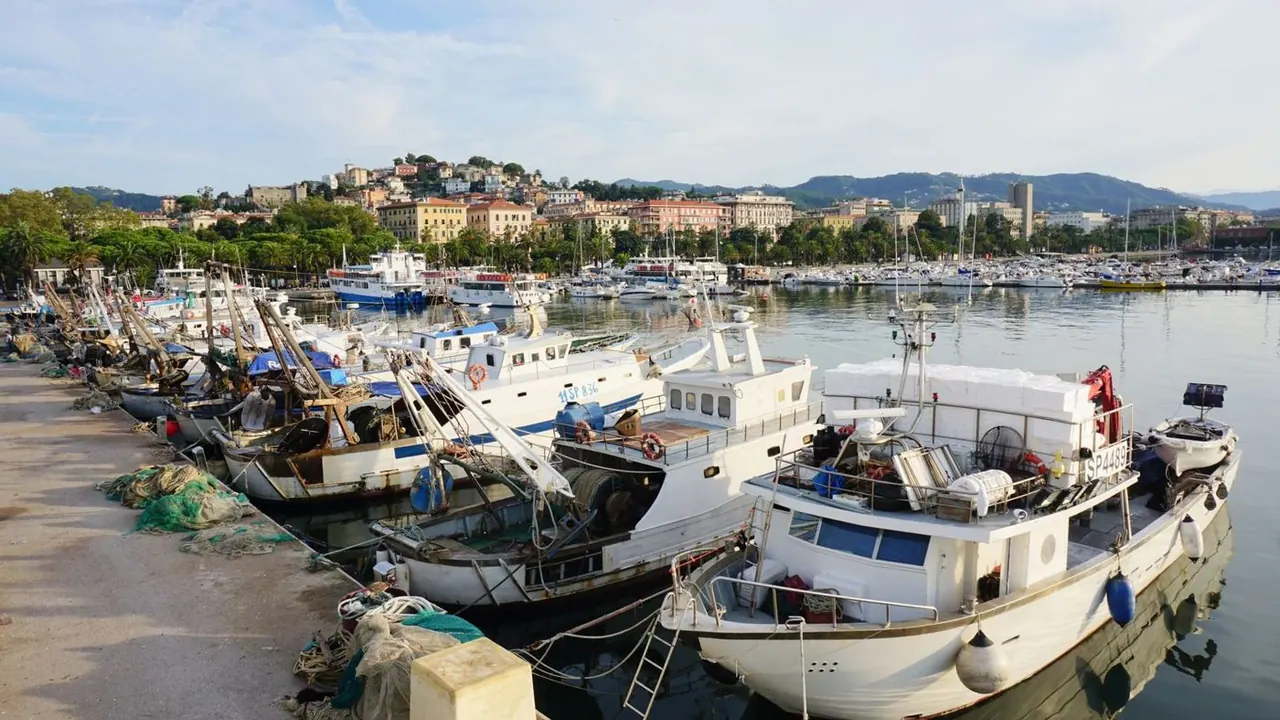
Photos: Cortina d'Ampezzo by Andreas Neubauer, Pexels License; La Spezia by Irina Balashova, Pexels License.
Cortina d'Ampezzo or La Spezia?
Our verdict in twelve categories, each scored against the same fixed benchmark cities, and the climate month by month, so you can choose for your trip.
Choose Cortina d'Ampezzo for
- nature and the outdoors
- wellness
- shopping
Cortina d'Ampezzo is for travellers whose vacation happens above the tree line. The Dolomites rise straight out of town. You get skiing on the Dolomiti Superski in winter, and hut-to-hut hiking and via ferrata on the old war front in summer, and La Spezia has nothing at that height to match it. The trade-off is a small town with few sights and some of the highest prices in Italy, so it suits a trip built around the mountains and a budget that can stretch.
Choose La Spezia for
- beaches
- day trips
- prices
Choose La Spezia if you want the sea, a train timetable and a lot to see in one stay. It is a practical, mid-priced base for the Cinque Terre, Portovenere and Lerici, with Pisa and Lucca within reach, everyday Ligurian cooking at fair prices and swimming from June into early October. The city itself is modest, so it rewards people who are happy to head out each morning and come back for dinner.
Scoreboard
Twelve categories on one fixed scale from 0 to 100. The shaded stretch is the gap between the two.
Your match
Pick a travel style or drag the sliders, and both match scores follow your weighting.
Wins on nature and the outdoors and wellness with your weighting.
Wins on beaches and day trips with your weighting.
What matters to you?
Category by category
What the scores mean for a trip.
Beaches & swimming
Cortina has no swimming to speak of. There are hotel pools and a bracing dip in Ghedina or Pianozes, but those lakes are fed by snowmelt and stay cold.
La Spezia's own waterfront is a port, but the gulf has real choices a bus or train ride away. There is sand and pebble at San Terenzo and Lerici, very clear rocky water at Portovenere and Palmaria, and the long sandy beach at Monterosso. Expect small, often pebbly beaches and plenty of paid bathing establishments rather than wide open sand.
Food & drink
Both serve regional cooking rather than a wide range, but La Spezia's is easier to enjoy every day. It has farinata from wood ovens, stuffed mussels from the gulf, pesto on trofie and the fish stalls of the Piazza Cavour market, at prices that stay steady.
Cortina eats well for a small town, with casunziei, polenta with game and long lunches on rifugio terraces. It has almost no street food and little that is cheap, though, so the hut meals are the highlight rather than any variety.
Culture & sights
Neither is a heritage destination, but La Spezia has more to see in town. There are the early Italian paintings of the Museo Amedeo Lia, the naval museum by the arsenal and the Lunigiana stele statues in the Castello San Giorgio, all within an arcaded nineteenth-century grid.
Cortina's centre offers a basilica, painted houses and three small Regole museums, enough for a rainy afternoon. Its most moving history is the First World War tunnels on Lagazuoi and the Cinque Torri, and reaching them takes a day in the mountains.
Nightlife
Expect quiet nights in both, though La Spezia has the steadier evenings. Aperitivo fills Via del Prione and the streets around Piazza Verdi through most of the year, and in summer the waterfront bars at Lerici and San Terenzo take over.
Cortina's evenings mean après-ski and a walk along the Corso Italia. Late bars and the odd club are mostly for the peak winter weeks. In summer the town is asleep early.
Nature & outdoors
Both settings are superb, but Cortina is in another league for mountains. The Dolomites ring the valley, lifts climb straight onto the peaks, and the Tre Cime and the Fanes-Sennes-Braies park are close by. Skiing in winter and the Alta Via 1 and via ferrata in summer make it an outdoor base all year round.
La Spezia's landscape is the coast: the terraced cliffs and footpaths of the Cinque Terre, the loop walk on Palmaria, and kayaking and diving in the gulf, with the Apuan Alps an hour inland. It is at its best in spring and autumn, when the paths are cooler and less crowded.
Day trips
This is where La Spezia pulls clearly ahead. The five Cinque Terre villages, Portovenere and Lerici are minutes away by train, bus or boat. Pisa, Lucca, Carrara and Portofino all make easy days out.
From Cortina, the best outings are into the mountains themselves. San Candido, Brunico and the Iceman in Bolzano are pleasant but take longer by road, and Venice means a long day on the coach.
Good for families
For families the two are much the same. Both are safe and calm, and neither has a zoo, aquarium or theme park. What differs is the kind of day: Cortina suits children who ski, skate or walk up to a hut meadow, while La Spezia's best days are boat trips and the shallow beaches at San Terenzo and Lerici, with steep villages and crowded trains that suit older children better.
Getting around
La Spezia is easy to manage without a car. It has a flat, walkable centre, a station with trains along the coast and inland, buses around the gulf and ferries from spring to autumn. Summer trains get packed, but you won't need to drive.
Cortina's centre takes only minutes to cross on foot. Beyond it, there is no railway, buses to the passes and the Tre Cime are limited, and most visitors hire a car to explore the wider Dolomites.
Shopping & style
Neither town is a shopping destination, but Cortina gives a keen shopper more to look at. One short pedestrian street, the Corso Italia, packs in jewellers, furriers, designer labels and well-made ski and mountain clothing. The Cooperativa di Cortina, trading since 1893, fills several floors with local foods, homeware and outdoor gear, and carved wood and filigree make more personal souvenirs. It suits someone with money for a good jacket or a piece of jewellery, and an afternoon is enough to see it all.
La Spezia's Via del Prione and Corso Cavour are an ordinary Italian high street of chains and shoe shops, with little you couldn't buy at home. Its strength is food to take back: pesto, olive oil, Cinque Terre wine, Sciacchetrà and Monterosso anchovies, plus marble pieces from Carrara in the towns nearby. Come here to fill a suitcase with things to eat and drink, not with clothes.
Affordability
La Spezia keeps costs reasonable. Rooms are cheaper than in the Cinque Terre villages, everyday food is fair and local trains cost little, even if summer stays are priced at an ordinary Western European level.
Cortina is among the most expensive places in Italy, with luxury prices for hotels and restaurants in the winter peak and in August, and lift passes and equipment hire on top. Rifugio meals, early summer and late September help, but many budget travellers stay in cheaper valleys and drive in.
Live music & performing arts
La Spezia has a modest stage life: a season of theatre and concerts at the Teatro Civico, the historic Teatro degli Impavidi in nearby Sarzana, and a long-established summer jazz festival held in piazzas and castle courtyards. Cortina has no theatre season, and its music comes from summer chamber and classical festivals in churches, halls and sometimes mountain settings.
Wellness & relaxation
For a restful stay, Cortina has the edge, mainly because of its hotels. Alpine spas with saunas, hay baths and indoor pools are ideal after skiing or a long hike, and June and September bring calm, clear air.
La Spezia relies on its slower pace rather than on facilities. A long lunch in Tellaro or a quiet day on Palmaria is restful, and the nearest thermal baths are the small ones at Equi Terme, about an hour inland.
When should you go?
Pick your month. The climate figures are measured averages, not a forecast.
Cortina d'Ampezzo in July
La Spezia in July
Daytime high, °C
Rainfall in the month, mm
Where the figures come from
La Spezia's temperatures are measured 65 km from the centre, at Pisa / S. Giusto.
La Spezia has no rain gauge within 25 km of the centre, so its rainfall comes from a gridded climate dataset read at the city rather than from a gauge further away.
Temperature and rainfall are climate normals, averaged over the years shown. Cortina d'Ampezzo: 1991-2020 normals, Dobbiaco (22.5 km from centre). La Spezia: 1991-2020 normals, Pisa / S. Giusto (64.8 km from centre).
Cortina has two seasons, winter and high summer. From December to March, daytime highs hover around freezing or a little above, which is good for skiing but cold for walking the streets. Summer is mild for hiking, with highs of about 22°C in July and August, but these are also the wettest months, with rain peaking near 130mm in July. June and September are cool, quieter walking months with less rain than midsummer.
La Spezia peaks at different times. July and August reach about 30°C with long sunny days and little rain. That is ideal for swimming, with the sea near 25°C, but hot on the coastal paths. June and September give the best mix of walking and swimming weather, and the sea stays comfortable into early October. May is pleasant for walking, though the water is still cool. October and November bring the heaviest rain, up to 151mm, and winter is mild but grey.
Which traveller are you?
On a beach and sun trip, La Spezia is the only real choice. From June into early October the gulf is warm enough for swimming, with coves at Lerici, Tellaro and Palmaria. Cortina's lakes, fed by snowmelt, stay cold all summer.
For a skiing vacation, Cortina wins outright. It is part of the Dolomiti Superski area, with ski schools, beginner slopes at Socrepes and long descents within reach. Its hotel spas make the evenings after a day on the slopes easy.
On a trip on a tight budget, La Spezia makes your money go much further. Rooms, simple trattorias, farinata and regional trains are all fair value. Cortina charges luxury-resort prices, and even its careful spenders often sleep in cheaper valleys nearby.
Before you go
| Measure | Cortina d'Ampezzo | La Spezia |
|---|---|---|
| Official language | Italian | Italian |
| Currency | Euro (EUR) | Euro (EUR) |
| Sockets | CFL230 V, 50 Hz | CFL230 V, 50 Hz |
| Driving side | Right | Right |
| Time zone | UTC+1, UTC+2 in summer | UTC+1, UTC+2 in summer |
| Emergency number | 112 | 112 |
| Elevation | 1,224 m | 3 m |
| Main airport | Venice Marco Polo Airport (VCE)116 km from centre103 non-stop destinations | Pisa International Airport (PSA)65 km from centre82 non-stop destinations |
| Public holidays this year | 13 days | 13 days |
By the numbers
| Measure | Cortina d'Ampezzo | La Spezia |
|---|---|---|
| City population | 5,546 | 92,119 |
| People per km² | 22 | 1,792 |
| Museums within 10 km | 3 | 12 |
| UNESCO World Heritage sites within 50 km | 1 | 2 |
| Swim season, months above 21 °C | - | 4 months |
Where else could you go?
Every comparison below shares a destination with this one, so you can follow Cortina d'Ampezzo or La Spezia somewhere new.
- Portofinovs La Spezia
- Luccavs La Spezia
- Pisavs La Spezia
- Genoavs La Spezia
- Innsbruckvs Cortina d'Ampezzo
- Florencevs La Spezia