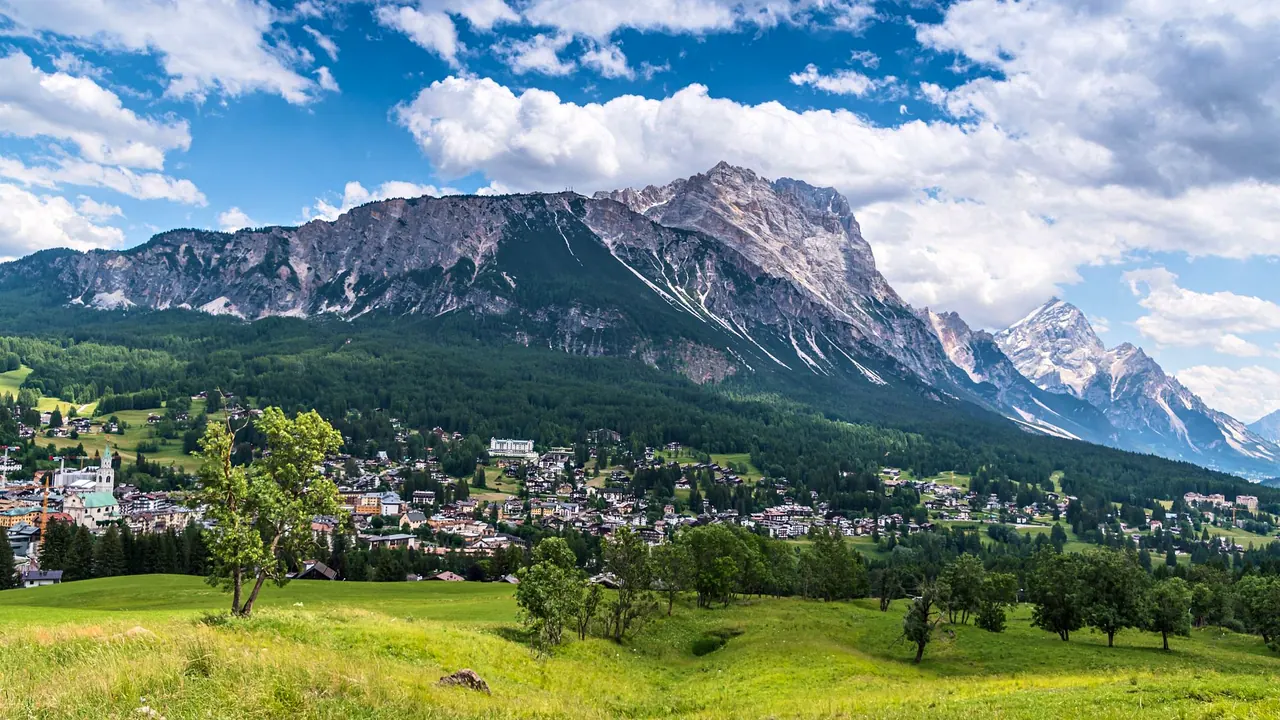
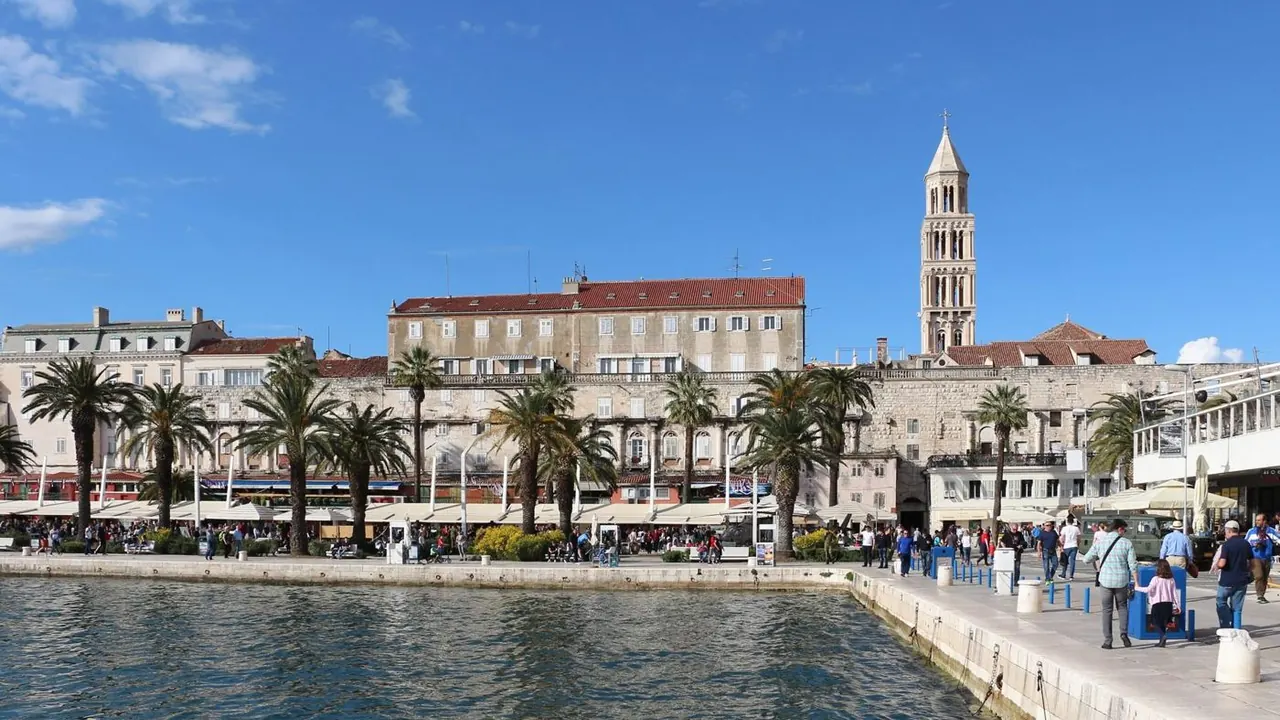
Photos: Cortina d'Ampezzo by Andreas Neubauer, Pexels License; Split by Bernard Gagnon, CC BY-SA 4.0, cropped.
Cortina d'Ampezzo or Split?
Our verdict in twelve categories, each scored against the same fixed benchmark cities, and the climate month by month, so you can choose for your trip.
Choose Cortina d'Ampezzo for
- nature and the outdoors
- shopping
- wellness
Cortina d'Ampezzo is for travellers who come for the mountains themselves: skiing the Dolomiti Superski area in winter, or hut-to-hut hiking, via ferrata and lake walks in summer. You get a small, polished resort with fine lunches at the rifugi and the Corso Italia for shopping. Evenings rarely go beyond dinner, though, and the bill is among the steepest in Italy.
Choose Split for
- beaches
- culture and sights
- day trips
Pick Split for a summer trip that mixes sea and history. You can swim within walking distance of the old town, stay inside a Roman palace and take ferries to Hvar, Brač or Trogir by day. Nights out last longer, and costs drop noticeably outside July and August. There are ridges to walk behind the city, but they are modest hills next to the Dolomites, and there is no skiing.
Scoreboard
Twelve categories on one fixed scale from 0 to 100. The shaded stretch is the gap between the two.
Your match
Pick a travel style or drag the sliders, and both match scores follow your weighting.
Wins on nature and the outdoors and shopping with your weighting.
Wins on beaches and culture and sights with your weighting.
What matters to you?
Category by category
What the scores mean for a trip.
Beaches & swimming
There is no real contest here. In Cortina, swimming means a hotel pool or a brave plunge into snowmelt lakes such as Ghedina, and the Adriatic is more than two hours' drive away.
Split sits on that sea. Bačvice's shallow sandy bay is a short walk from the palace, and there are quieter pine-shaded coves around Marjan. Most of the shore is pebble or concrete and the beaches are full in high summer, but Brač and Hvar are a ferry ride away for longer beaches.
Food & drink
Split eats better and more widely. It has Dalmatian grilled fish, black risotto and peka from family konobas in Varoš, fish and green markets, and Plavac Mali or Pošip in the glass. Cortina's Ampezzan cooking, such as casunziei with poppy seeds or polenta with game, is satisfying mountain food, and lunch on a rifugio terrace is memorable in its own right.
The real difference is range and price. Cortina has a few costly restaurants in the valley and almost no street food. In Split, burek bakeries and the markets make cheap eating easy, even if the menus inside the palace walls lean towards visitors.
Culture & sights
Split's centre is its main sight. Diocletian's Palace is a Roman complex that people still live in, with a cathedral inside the emperor's mausoleum and vaulted halls underneath, and the Meštrović Gallery is a short walk away on Marjan. Two days covers it, but those days are full.
Cortina's sights fill an afternoon: the basilica and its bell tower, the painted houses, the 1956 Olympic ice stadium and the Rimoldi art collection. Its most moving history is up on the mountains, in the First World War tunnels on Lagazuoi and the Cinque Torri.
Nightlife
Cortina's evenings usually end with dinner, while Split's summer nights carry on into the early hours. In Cortina the evening means après-ski when the lifts close, a stroll along the Corso Italia and a long meal. A few smart bars stay open late only in the peak winter weeks, and in most of summer the town is quiet by late evening.
In Split you can start with a drink on the Riva, move on to bars spilling into the palace alleys and finish at the clubs around Bačvice. From October to May that shrinks to a handful of bars and a glass of wine with locals.
Nature & outdoors
Both have serious landscapes, but Cortina's is among the finest anywhere. Lifts rise from the town into the Dolomites, and the Tre Cime and Lago di Misurina are under an hour away. The same valley serves skiers in winter and climbers and long-distance hikers in summer.
Split's outdoors is gentler and more mixed. You can walk into Marjan's pine woods from the old town, hike the ridges of Mosor, raft the Cetina canyon at Omiš, see the waterfalls at Krka or kayak and sail among the islands. Its summer heat pushes the hiking into spring and autumn.
Day trips
Split is much the better base. Trogir is half an hour away and Šibenik about an hour, Salona and Klis Fortress are closer still, and ferries put Hvar and Brač within easy reach.
From Cortina the best outings are into the mountains. The towns within range, such as San Candido, Brunico or Bolzano with its Iceman, are pleasant rather than essential. Venice is a long day by coach.
Good for families
Both work for families in a similar outdoor way, and neither has a zoo or theme park. What differs is the activity. In Cortina that means ski schools at Socrepes, skating at the ice stadium and easy summer walks to huts with meadows. In Split it means paddling at Bačvice, shade on Marjan and a ferry ride to the islands.
Each has its weak spot. In Cortina, rainy days drag and costs add up fast. In Split, July and August bring heat and crowds.
Getting around
Split is much easier both to reach and to travel out from. Cortina has no station, so getting there takes a long coach journey from Venice or a drive up into the mountains. Once you arrive, you can cross the small centre on foot in minutes, and in winter ski buses and lifts take you to the slopes. Roaming further is harder: buses to the passes, Misurina and the Tre Cime run on a thin timetable, so most people who want to see the wider Dolomites hire a car.
In Split, trains, intercity buses and island ferries all stop at the same harbour beside the old town. The palace, Varoš, the markets and Bačvice are all within a short walk of each other, so a car is only worth having for inland trips and trailheads. In summer, driving means slow traffic on the coast road and very little parking, and the steep, polished stone steps inside the palace are hard work with a pushchair.
Shopping & style
Cortina is the better place to spend money, though the choice is narrow. The Corso Italia has luxury fashion, jewellers and upmarket ski wear, and the Cooperativa, founded in 1893, sells everything from local foods to outdoor gear.
Split's palace shops lean towards souvenirs, lavender and ties, with the mainstream chains on Marmontova. Its best browsing is at the Pazar market, where you can buy figs, honey, olive oil and local brandy to take home.
Affordability
Cortina costs far more than Split at almost any time of year. Its hotels and restaurants charge luxury-resort prices in winter and August, lift passes and equipment hire add more, and budget visitors often sleep in cheaper valleys and drive in. Rifugio lunches and early-summer rates help only a little.
Split is expensive only in July and August, when rooms near the old town cost about what a large Western European city does. Bakeries, the market, buses and konobas away from the Riva stay fairly priced, and in spring, autumn and winter it is a modestly priced city.
Live music & performing arts
Split has a real stage. The Croatian National Theatre puts on opera and ballet through its season, the Summer Festival stages open-air opera in the Peristyle, and klapa singers fill the domed vestibule of the palace with their harmonies.
Cortina has no theatre and no regular venue. It has only summer chamber and classical festivals in churches, halls and sometimes on the mountains, plus the odd concert around New Year. Outside summer both calendars thin out, and Cortina's has almost nothing left.
Wellness & relaxation
Neither has thermal baths, so pampering means a hotel spa in both. Cortina's are Alpine in style, with saunas, hay baths and indoor pools after a day on the slopes. Its other comfort is clear mountain air and an unhurried afternoon on a hut terrace in June or September.
Split offers fjaka instead, the local habit of long coffees on the Riva and empty streets in the afternoon heat. The calmest places are Marjan's pine woods or the islands. Both lose their calm in the peak weeks, Cortina to traffic and Split to loud summer nights.
When should you go?
Pick your month. The climate figures are measured averages, not a forecast.
Cortina d'Ampezzo in July
Split in July
Daytime high, °C
Rainfall in the month, mm
Temperature and rainfall are climate normals, averaged over the years shown. Cortina d'Ampezzo: 1991-2020 normals, Dobbiaco (22.5 km from centre). Split: 1991-2020 (sunshine 1971-2000, rainfall 1981-2010) normals, Split / Marjan (0.9 km from centre).
Cortina has two clear seasons. From December to March it is cold and snowy, with January highs around freezing. That is skiing weather and not much else, though these are also the valley's driest months. In summer the highs reach a comfortable 22°C, which is ideal for hiking, but July is also the wettest month at around 100mm. June and September are often the better months for walking. April, May, October and November fall in between and suit neither skiing nor high trails very well.
Split has a Mediterranean year. From June to September the sea is warm enough for long swims, reaching about 25°C in August, and the summers are very sunny and dry. July and August highs of 31°C make walking the streets at midday hard work, so May, June and late September are kinder for sightseeing. Rain comes in late autumn and peaks at 100mm in November, but the winters stay mild. The two complement each other: Cortina offers cool mountain air when the coast is hottest, and Split stays mild for walking while Cortina is under snow.
Which traveller are you?
On a beach and sun trip, Split wins outright. You can swim at Bačvice, a short walk from the palace, or take a ferry to Brač or Hvar for quieter coves, and summers are reliably dry and sunny. Cortina's lakes are cold snowmelt, and the sea is hours away.
For an outdoors trip, Cortina is the stronger choice. Lifts climb straight from town into a ring of Dolomite peaks for skiing in winter. In summer the same lifts serve hut-to-hut walkers on the Alta Via 1 and some of the oldest via ferrata routes in the Alps.
On a culture and arts trip, choose Split. Diocletian's Palace, the cathedral and the Meštrović Gallery fill two good days, and the Croatian National Theatre and the Summer Festival add opera and ballet. Cortina's museums fill a rainy afternoon, and its stages are mostly dark.
Before you go
| Measure | Cortina d'Ampezzo | Split |
|---|---|---|
| Official language | Italian | Croatian |
| Currency | Euro (EUR) | Euro (EUR) |
| Sockets | CFL230 V, 50 Hz | CF230 V, 50 Hz |
| Driving side | Right | Right |
| Time zone | UTC+1, UTC+2 in summer | UTC+1, UTC+2 in summer |
| Emergency number | 112 | 112 |
| Elevation | 1,224 m | 0 m |
| Main airport | Venice Marco Polo Airport (VCE)116 km from centre103 non-stop destinations | Split Saint Jerome Airport (SPU)12 km from centre69 non-stop destinations |
| Public holidays this year | 13 days | 14 days |
By the numbers
| Measure | Cortina d'Ampezzo | Split |
|---|---|---|
| City population | 5,546 | 160,577 |
| People per km² | 22 | - |
| Museums within 10 km | 3 | 11 |
| UNESCO World Heritage sites within 50 km | 1 | 4 |
| Swim season, months above 21 °C | - | 4 months |
Where else could you go?
Every comparison below shares a destination with this one, so you can follow Cortina d'Ampezzo or Split somewhere new.
- Innsbruckvs Cortina d'Ampezzo
- Mostarvs Split
- Zadarvs Split
- Venicevs Cortina d'Ampezzo
- Veronavs Cortina d'Ampezzo
- Bledvs Cortina d'Ampezzo