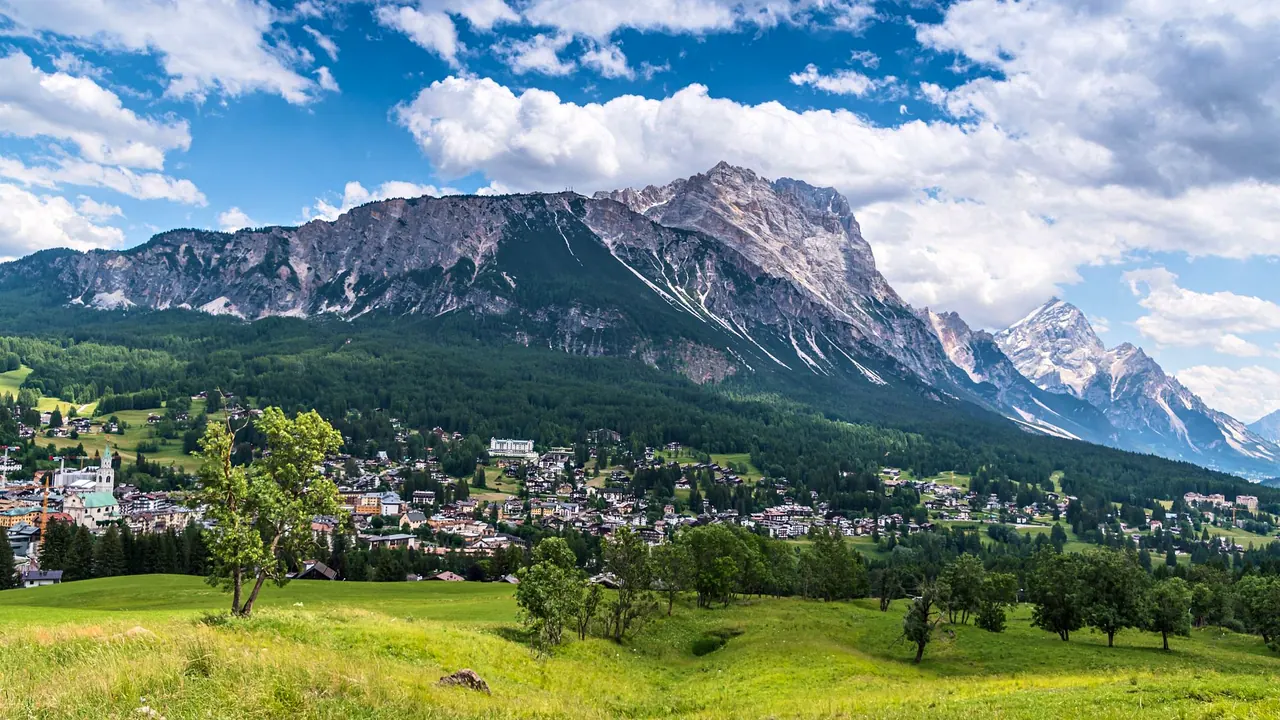
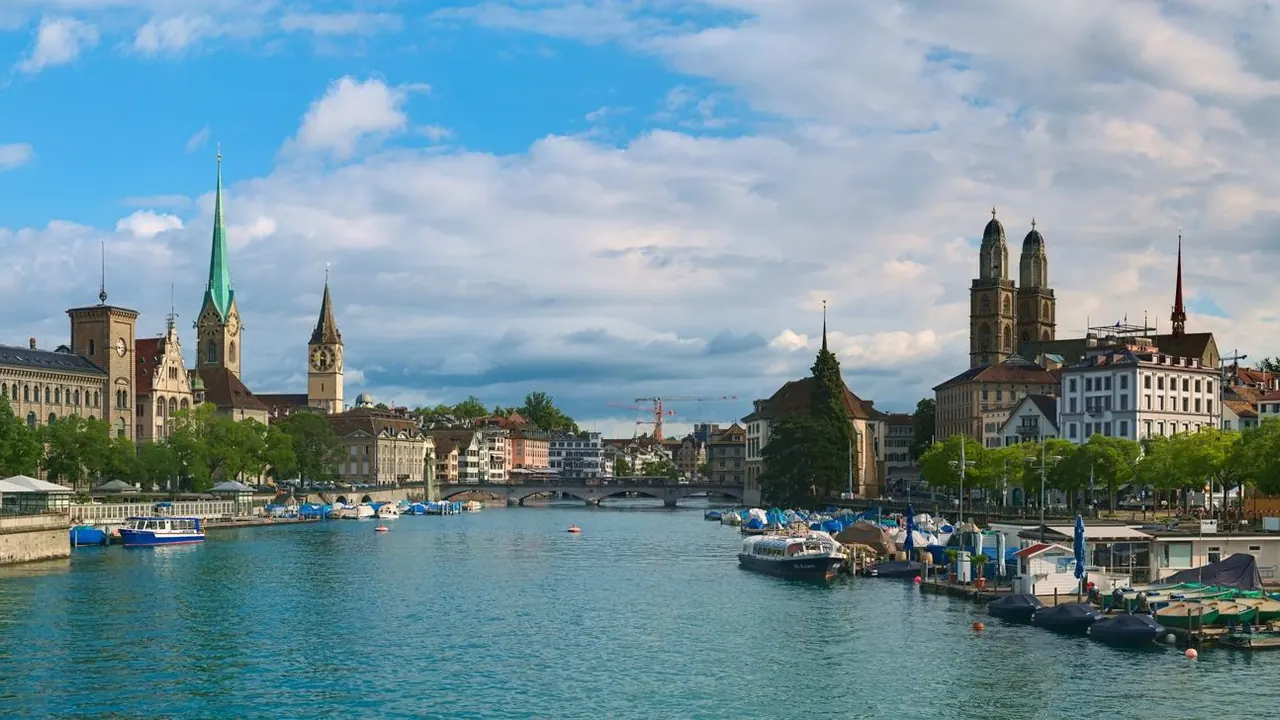
Photos: Cortina d'Ampezzo by Andreas Neubauer, Pexels License; Zurich by Daniel Kraft, CC BY-SA 3.0, cropped.
Cortina d'Ampezzo or Zurich?
Our verdict in twelve categories, each scored against the same fixed benchmark cities, and the climate month by month, so you can choose for your trip.
Choose Cortina d'Ampezzo for
- nature and the outdoors
- prices
Pick Cortina d'Ampezzo when the mountains are the whole point. The Dolomites rise from the edge of town and lifts carry you onto the Tofane and Cristallo. The Dolomiti Superski circuits, hut-to-hut trails and some of the oldest via ferrata routes in the Alps all start in the valley, and lunch on a rifugio terrace may be the best meal of the trip. In return you accept quiet evenings and a handful of small museums, and the wider valley is far easier to explore with a car.
Choose Zurich for
- live music and the arts
- getting around
- nightlife
Travellers who want a city first, with the mountains on the horizon rather than at the door, will be happier in Zurich. It has the Kunsthaus, the opera house and the Tonhalle, clubs in the old industrial districts that run until morning, and summer swimming in the lake. Trams and trains make Lucerne, Bern or the Rhine Falls easy days out, and families will find far more to do. The catch is that it costs even more than Cortina, and you reach its alpine scenery on day trips rather than seeing it from the hotel window.
Scoreboard
Twelve categories on one fixed scale from 0 to 100. The shaded stretch is the gap between the two.
Your match
Pick a travel style or drag the sliders, and both match scores follow your weighting.
Wins on nature and the outdoors and prices with your weighting.
Wins on live music and the arts and getting around with your weighting.
What matters to you?
Category by category
What the scores mean for a trip.
Beaches & swimming
Neither city has a beach, but Zurich gives you far more swimming. From June to early September its lake reaches warm enough temperatures for long swims from the bathing houses at Utoquai, Mythenquai and Tiefenbrunnen. On the Limmat at Letten you can let the current carry you downstream, all within walking distance of the old town.
Cortina's water is snowmelt. The little lakes of Ghedina and Pianozes are lovely to walk round but bracing to enter, so in practice swimming means the hotel pool. The Adriatic is too far away for a casual swim.
Food & drink
Zurich has the broader table. Alongside veal Geschnetzeltes with rösti and winter fondue in guild-house dining rooms, Kreis 4 and 5 add casual and international cooking that Cortina simply does not have. The Paradeplatz tea rooms and the city's chocolate are a reason to visit in their own right.
Cortina's strength is setting and character more than range. Expect beetroot casunziei with poppy seeds, polenta with game, and barley soup eaten on a rifugio terrace among the peaks. Neither town is a place for street food or a cheap bite.
Culture & sights
Here the gap is wide. Zurich has a real museum circuit, with the Kunsthaus running from Swiss painters to Munch and Giacometti, the Swiss National Museum and the Rietberg's world art. It also has an Altstadt shaped by the Reformation at the Grossmünster, which is worth two or three unhurried days.
Cortina's sights fill an afternoon: the basilica's bell tower, the painted houses, the 1956 Olympic ice stadium and the Rimoldi art collection. Its most moving heritage is the First World War tunnels on Lagazuoi and the Cinque Torri. Getting to them, though, means a mountain outing, not a museum visit.
Nightlife
Zurich is the place to go out. Its electronic music scene keeps clubs in Kreis 4, Kreis 5 and Zurich West open until morning at weekends, Langstrasse stays busy late, and in summer the drinking moves to the lake bathing houses and the Limmat.
In Cortina, the evening means après-ski, a stroll along the Corso Italia and a long dinner. A few smart bars stay open late only in the peak winter weeks.
Nature & outdoors
Cortina is the more spectacular base by some distance. It sits inside a ring of Dolomite walls, with lifts from town to the summits, the Tre Cime and Lago di Misurina under an hour away, and ski runs, via ferrata and the Alta Via 1 starting from the valley itself.
Zurich's landscape is gentler and further off: the lake with the Glarus Alps at its end, forest walks on the Uetliberg and the Albis ridge, and Rigi, Pilatus or Flumserberg about an hour away by train. It is very good for a city, but the high mountains are a day out rather than the view from your balcony.
Day trips
Zurich is one of Europe's best hubs for day trips. Lucerne's wooden bridges, Bern's arcaded old town, Basel's museums, St Gallen's abbey library and the Rhine Falls are all an hour or less by train, and Rapperswil is a pleasant boat ride up the lake.
From Cortina, most outings lead back into the mountains. The towns within reach, such as San Candido, Brunico, Bolzano with its Iceman and Lienz across the border, are pleasant rather than essential, and Venice means a long coach ride each way.
Good for families
For a family learning to ski, Cortina has real strengths. There are ski schools for every age, beginner slopes at Socrepes and above the town, and public skating in the Olympic stadium. In summer there are easy walks round the lakes and a forest rope park. The trouble is the bill, which climbs quickly once lessons, lift passes and resort meals are added together.
Zurich gives families more range through the year. The zoo's elephant park and the forest playgrounds on its hill can fill a day, lake boat trips suit all ages, and Lucerne's Swiss Museum of Transport is an easy outing by train. Neither place has a big theme park. Even so, Zurich's safe streets and quiet evenings make it the less tiring base with younger children.
Getting around
Zurich is about as easy as cities get. One ticket covers trams, S-Bahn, funiculars and lake boats, and the airport and the national rail network are a short ride from the main station, so you never need a car.
Cortina's centre is quickly walked, and in winter the ski buses work well. But with no railway since 1964, getting there means a coach or a long drive, the buses up to the passes are limited, and most visitors end up hiring a car for the wider Dolomites.
Shopping & style
Both towns cater to wealthy shoppers, but Zurich does it on a different scale. Bahnhofstrasse runs from the station to the lake past watchmakers and old department stores, and around it are the Niederdorf's boutiques and antique shops, the design shops in the railway viaduct arches and summer flea markets.
Cortina's offer is one short street. The Corso Italia has furriers, jewellers and smart ski wear, anchored by the multi-storey Cooperativa, with local wood carving and filigree as the distinctive buys.
Affordability
Neither is a place to save money, but Zurich is harder on the wallet. Even simple hotel rooms and casual lunches cost far more than in most capitals. Picnics by the lake, the free lidos and the visitor card only ease the strain.
Cortina is expensive at its winter peak and in August, and lift passes add up. Still, rifugio meals are fair for the setting, June and late September bring gentler rates, and staying in a cheaper neighbouring valley and driving in is a well-worn way to cut costs.
Live music & performing arts
Zurich offers a full evening programme, which Cortina does not. The Opernhaus stages opera and ballet all season, the Tonhalle Orchestra plays in its restored hall, and the Rote Fabrik and the Kreis 4 and 5 venues book jazz, indie and touring bands. In summer the Theater Spektakel brings performances to the lake shore.
Cortina's music is seasonal: summer chamber festivals in churches and occasionally out in the mountains, and a few concerts around New Year.
Wellness & relaxation
Zurich has more to offer here. It has a thermal bath in the stone vaults of the old Hürlimann brewery with a rooftop pool, wooden lake and river bathing houses that turn into saunas in winter, and Baden's Roman-era hot springs twenty minutes away by train.
Cortina has no springs. Its wellness is the Alpine hotel spa, with hay baths, saunas and a massage after skiing, plus the stillness of the valley in June and September. Come in the peak weeks, though, and the traffic takes much of that calm away.
When should you go?
Pick your month. The climate figures are measured averages, not a forecast.
Cortina d'Ampezzo in July
Zurich in July
Daytime high, °C
Rainfall in the month, mm
Temperature and rainfall are climate normals, averaged over the years shown. Cortina d'Ampezzo: 1991-2020 normals, Dobbiaco (22.5 km from centre). Zurich: 1991-2020 normals, Zurich Town / Ville. (2.2 km from centre).
Cortina has two clear seasons. From December to March, daytime highs run from around freezing to about 8°C. The valley is at its driest then, and that is the skiing season. Summer, from late June to early September, brings highs of about 22°C, which is good walking weather in the mountains. It is also the wettest stretch, with July the rainiest month of all, so make early starts on the trails. June and September are mild and a little steadier. April, May, October and November fall between the two seasons, with neither reliable snow nor settled trail weather.
Zurich is a couple of degrees warmer all year and peaks at about 24°C in July and August, which is warm enough for the lake lidos from June to early September. Rain falls in every month and is heaviest from May to August, so the city has no dry season. The bigger difference is the light. Summer days are long and often sunny, while December gets only about 43 hours of sunshine. Late spring and early autumn are the most comfortable months for walking the city. Midwinter is grey and chilly, though rarely as cold as Cortina.
Which traveller are you?
For an outdoors trip, Cortina is the clear pick. Lifts climb from town onto the Dolomite peaks, the Tre Cime and Fanes-Sennes-Braies park are close, and both hut-to-hut hiking and big ski circuits start from the valley.
On a culture and arts trip, Zurich wins easily. It has the Kunsthaus, the Swiss National Museum, the Rietberg, the Chagall windows in the Fraumünster and a full season at the Opernhaus and Tonhalle. Cortina offers a few small museums and summer concerts.
On a family trip with children, Zurich is the easier base. It has the zoo with its Madagascar hall, shallow lake lidos, Technorama and buggy-friendly trams. Cortina works for families who ski or hike, but it has little for rainy days.
Before you go
| Measure | Cortina d'Ampezzo | Zurich |
|---|---|---|
| Official language | Italian | French, German, Italian, Romansh |
| Currency | Euro (EUR) | Swiss Franc (CHF) |
| Sockets | CFL230 V, 50 Hz | CJ230 V, 50 Hz |
| Driving side | Right | Right |
| Time zone | UTC+1, UTC+2 in summer | UTC+1, UTC+2 in summer |
| Emergency number | 112 | 112 |
| Elevation | 1,224 m | 408 m |
| Main airport | Venice Marco Polo Airport (VCE)116 km from centre103 non-stop destinations | Zürich Airport (ZRH)9 km from centre226 non-stop destinations |
| Public holidays this year | 13 days | 10 days |
By the numbers
| Measure | Cortina d'Ampezzo | Zurich |
|---|---|---|
| City population | 5,546 | 440,935 |
| People per km² | 22 | 5,016 |
| Museums within 10 km | 3 | 63 |
| UNESCO World Heritage sites within 50 km | 1 | 1 |
Where else could you go?
Every comparison below shares a destination with this one, so you can follow Cortina d'Ampezzo or Zurich somewhere new.
- Lucernevs Zurich
- Baselvs Zurich
- Interlakenvs Zurich
- Bernvs Zurich
- Innsbruckvs Cortina d'Ampezzo
- Colmarvs Zurich