Costa Rica
San Jose, Costa Rica
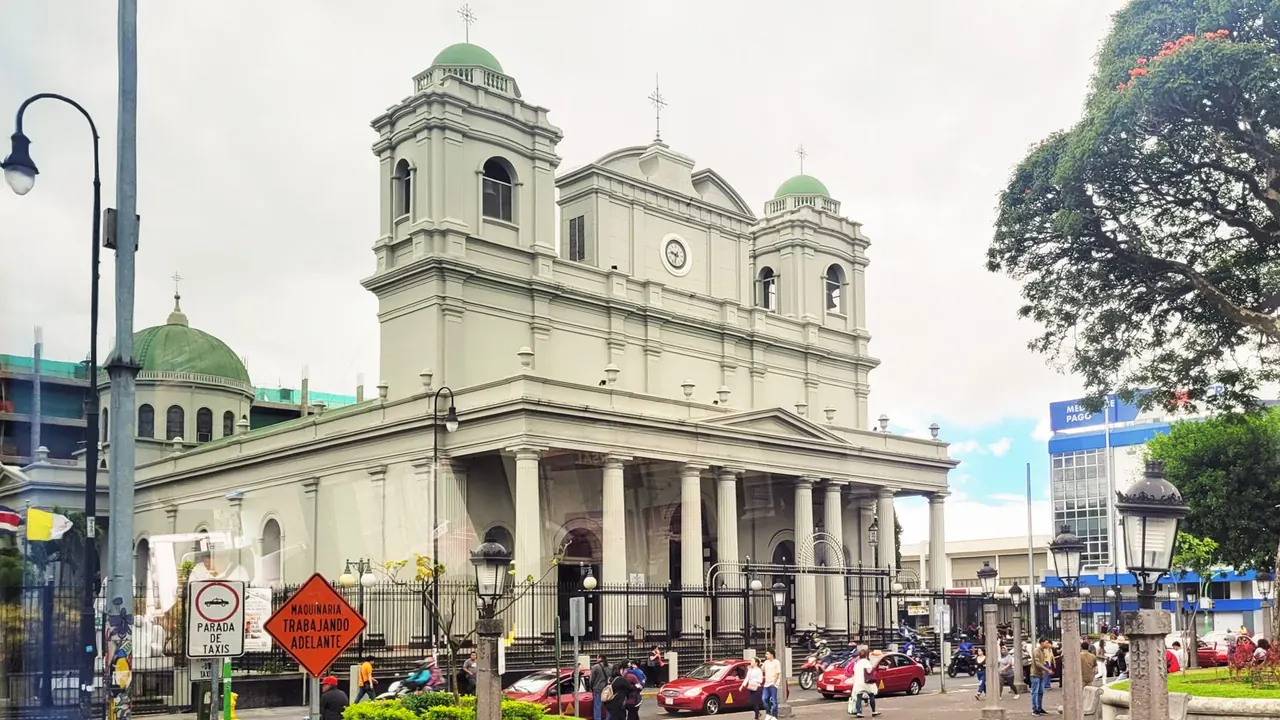
The Metropolitan Cathedral of San Jose
- Nature & outdoors78
- Affordable cities54
- Day trips52
Photo: Bernard Gagnon, CC0
Match
41
Every category weighted equally
- Beach & sun39
- Culture & arts40
- Food & nightlife39
- Family trip42
- Outdoors47
- Relax & unwind40
- Shopping & style39
- On a budget42
San Jose, Costa Rica in twelve categories
Our verdict on each, scored 0 to 100 against the same fixed benchmark cities, so a score means the same thing on every page.
Beaches & swimming. Scores 12 out of 100.
Food & drink. Scores 42 out of 100.
Culture & sights. Scores 38 out of 100.
Nightlife. Scores 40 out of 100.
Nature & outdoors. Scores 78 out of 100.
Day trips. Scores 52 out of 100.
Good for families. Scores 44 out of 100.
Getting around. Scores 30 out of 100.
Shopping & style. Scores 36 out of 100.
Affordability. Scores 54 out of 100.
Live music & performing arts. Scores 38 out of 100.
Wellness & relaxation. Scores 28 out of 100.
San Jose, Costa Rica category by category
Beaches & swimming
12San Jose sits in the Central Valley at around 1,150m, with no coast anywhere near. The nearest Pacific beaches, at Jaco and Puntarenas, are about two hours away by road, longer in traffic. The water there is warm all year, often 28°C or more, but the drive makes it a long day or a night away rather than an afternoon swim. Visitors who want beach time usually treat San Jose as an arrival point and head on to the coast. In the city, swimming means a hotel pool.
Food & drink
42Costa Rican cooking is plain, filling and home-style: gallo pinto at breakfast, the casado plate of rice, beans, plantain, salad and meat at lunch, and empanadas and tamales along the way. The best place to meet it is a soda, the small family-run diners found on every block, and the counters inside the Mercado Central, where workers eat side by side. Coffee is the real strength, grown on the slopes around the valley and served well in specialty cafés.
For something more ambitious, Barrio Escalante has a dense strip of modern restaurants and craft beer bars, and the western suburbs of Escazu and Santa Ana add international dining. Range and depth stay limited, though: a food lover will eat pleasantly rather than memorably.
Culture & sights
38Earthquakes and fast growth have left San Jose with little old architecture, and the centre is mostly a grid of mid-century concrete. The handful of real sights is worth a day. The Teatro Nacional, finished in 1897 with coffee money, is a gilded, marble-lined jewel and the city's one landmark of note. Beneath the Plaza de la Cultura, the Pre-Columbian Gold Museum displays indigenous goldwork, and the Jade Museum holds a large collection of carved jade.
The National Museum occupies the old Bellavista fortress, its walls still marked by bullets from the 1948 civil war. Barrio Amon has some wooden and tropical Victorian houses. Most visitors see it all in one or two days.
Nightlife
40Going out in San Jose is a local, weekend affair. Barrio Escalante and Barrio California have the craft beer bars and cocktail spots, San Pedro near the university is the student zone of cheap bars, and the El Pueblo complex packs small clubs and salsa bars into one walled courtyard that runs late. Latin dance is at the heart of it, and Ticos take salsa and merengue seriously.
The downtown core empties after dark and is not a place to wander at night, so most visitors take a taxi from bar to door. It is enough for a few good evenings, but nobody plans a trip around it.
Nature & outdoors
78The city is ringed by volcanoes, and the landscape beyond the suburbs is the reason most people pass through. Poas and Irazu both let you stand at the rim of an active crater, Irazu at well over 3,000m with views of both oceans on clear mornings. Braulio Carrillo National Park drops from cloud forest to lowland rainforest within an hour of the centre, and the Orosi valley and Tapanti offer green hiking among coffee and waterfalls.
Toward Turrialba, the Pacuare and Reventazon rivers give some of the best white-water rafting in the Americas, and Carara on the way to the Pacific has scarlet macaws and crocodiles. Mornings are clearest; afternoons in the rainy season from May to November bring cloud and heavy showers.
Day trips
52The Central Valley around San Jose is a chain of small towns tied to coffee. Cartago, the old colonial capital, has the Basilica of Our Lady of the Angels, centre of a huge annual pilgrimage, and the roofless ruins of an earthquake-struck church. Beyond it, the Orosi valley holds the country's oldest working colonial church, and the Lankester Botanical Garden is known for its orchids.
To the west, Heredia and Alajuela are pleasant provincial towns, Sarchi is famous for its painted oxcarts, and Grecia has an unusual red metal church. Coffee farm tours on the slopes of Barva and Poas are the most popular outing. It is a pleasant list, though none of these places would draw a traveller on its own.
Good for families
44Costa Ricans are warm towards children, and families are welcome in restaurants and parks. In the city, the Museo de los Ninos, set in a former penitentiary, is the main attraction made for kids, and La Sabana park in the west has open lawns, a lake and space to run. The real appeal lies just outside: volcano craters reached by road, waterfall gardens with hummingbirds and sloths, butterfly farms and coffee tours.
The city itself is less easy. Pavements are broken and narrow, traffic is heavy and downtown needs watching, so families tend to stay in the quieter western suburbs and travel by car or taxi.
Getting around
30There is no metro, and the buses, run by many private companies from scattered terminals, are cheap but hard for a visitor to work out. A small commuter train links some suburbs and nearby towns. The downtown core is compact, with a pedestrian stretch of Avenida Central linking the main sights, but pavements are uneven and the city does not invite long walks after dark.
Traffic is heavy at most hours and the valley roads clog easily, so trips out take longer than the map suggests. Most visitors use taxis or ride-hailing in the city and a hire car, shuttle or tour for everything beyond it.
Shopping & style
36Shopping is practical rather than stylish. The Mercado Central is the place to browse, a warren of stalls selling coffee, spices, leather and herbal remedies alongside the lunch counters. The national craft market and souvenir stalls sell wood carvings, painted oxcart miniatures and Boruca masks, and bags of local coffee make the best thing to take home.
For clothes and brands, Ticos head to the big air-conditioned malls in Escazu and the western suburbs. There is no fashion or luxury street to speak of, and only a few independent design shops in Barrio Escalante and Amon.
Affordability
54Costa Rica is one of the pricier countries in Latin America, and San Jose sits in the middle of the range for a visitor. A plate at a soda, a bus fare and a city taxi are all cheap, and hotels cost noticeably less than on the coast. Sit-down restaurants in Escalante or Escazu, imported goods in supermarkets and alcohol cost close to North American levels, and national parks and tours charge foreigners substantially more than locals. Budget travellers who eat at sodas do well; anyone on a mid-range plan will find it no bargain.
Live music & performing arts
38The Teatro Nacional is the heart of the city's formal culture, home to the National Symphony Orchestra, whose season runs through much of the year, and a stage for ballet and visiting performers. The Teatro Melico Salazar nearby hosts dance, folk and popular shows, and a cluster of small independent theatres stages Spanish-language drama.
Live music beyond that means salsa bands in dance halls, some jazz and rock in small venues around San Pedro and Escalante, and the large touring concerts that pass through. It gives a visitor an evening or two, but not a scene to travel for.
Wellness & relaxation
28San Jose itself is a working capital, noisy and traffic-bound, and has no bathing tradition beyond hotel spas. Its mild, spring-like climate is the gentlest thing about it. Those who want to slow down stay in the hills above Escazu or at lodges among the coffee farms on the slopes of the volcanoes, where nights are cool and quiet.
The Orosi valley has simple thermal pools within a couple of hours, but the country's famous hot springs are around the Arenal volcano, too far for a day. Rest is something visitors find on the way out of the city rather than in it.
When should you go?
Pick a month to see what it is like. The climate figures are measured averages, not a forecast.
San Jose, Costa Rica in July
Daytime high, °C
Rainfall in the month, mm
The whole year
Shaded against this city’s own year: the deepest cell is its best month for that figure and the palest its weakest.
Where the figures come from
San Jose, Costa Rica's station stands 241 m below the city centre, so the centre is likely a little cooler than the figures say.
Temperature and rainfall are climate normals, averaged over the years shown. San Jose, Costa Rica: 1991-2020 normals, Juan Santamaria (16.8 km from centre).
Before you go
| Measure | San Jose, Costa Rica |
|---|---|
| Official language | Spanish |
| Currency | Costa Rican Colon (CRC) |
| Sockets | AB120 V, 60 Hz |
| Driving side | Right |
| Time zone | UTC-6 |
| Emergency number | 911 |
| Elevation | 1,161 m |
| Main airport | Juan Santamaría International Airport (SJO)16 km from centre49 non-stop destinations |
| Public holidays this year | 11 days |
By the numbers
| Measure | San Jose, Costa Rica |
|---|---|
| City population | 335,007 |
| People per km² | 7,511 |
| Museums within 10 km | 9 |
| UNESCO World Heritage sites within 50 km | 0 |
Compare San Jose, Costa Rica with
Every comparison with a written verdict behind it.