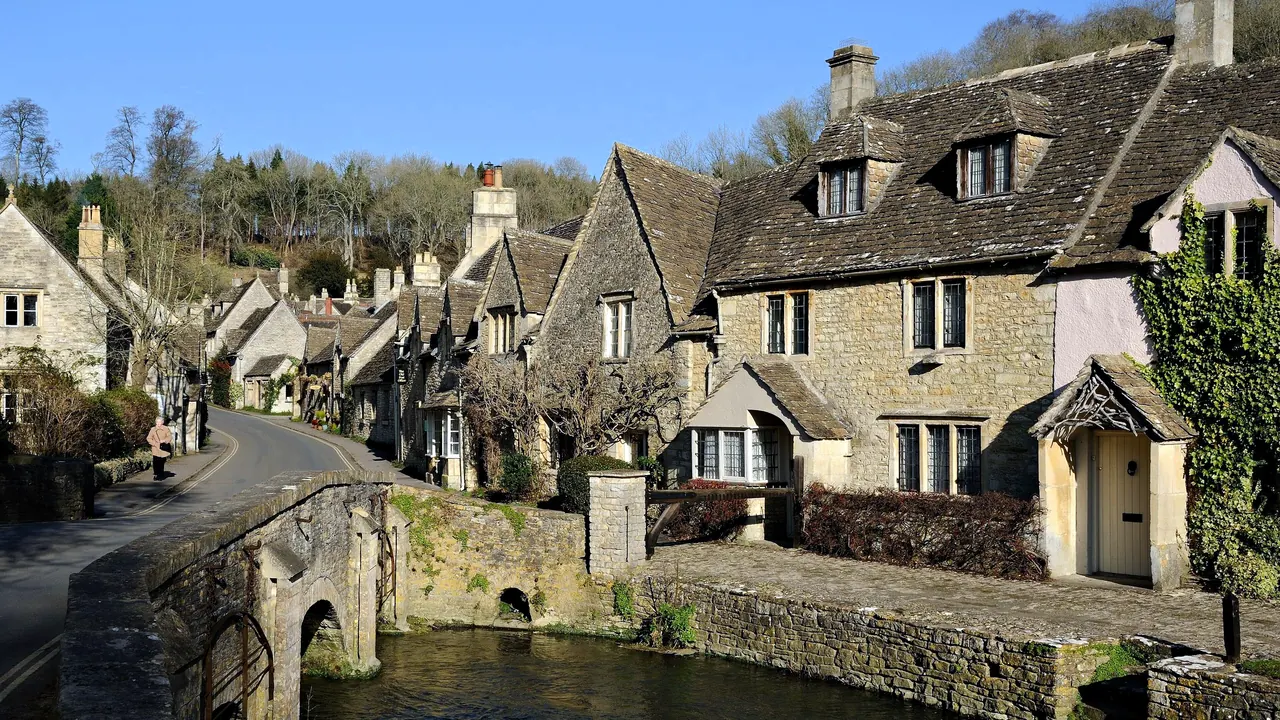
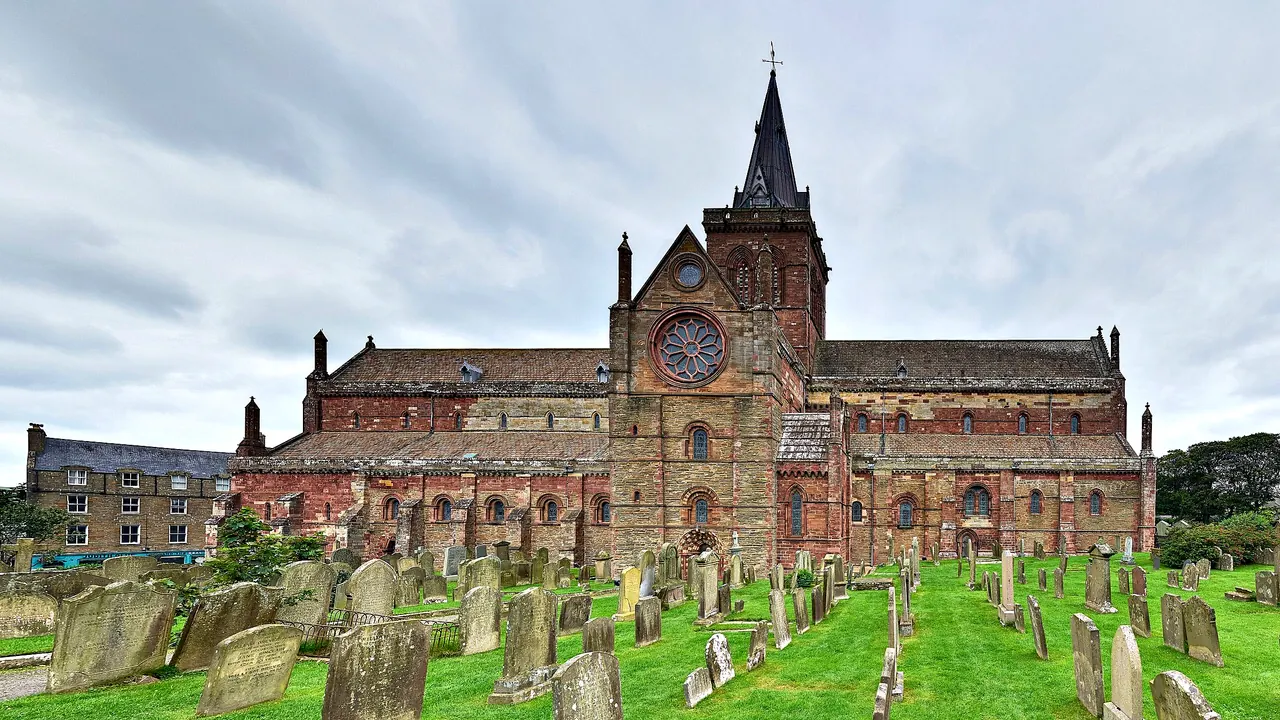
Photos: Cotswolds by Saffron Blaze, CC BY-SA 3.0, cropped; Orkney by Virtual-Pano, CC BY-SA 4.0, cropped.
Cotswolds or Orkney?
Our verdict in twelve categories, each scored against the same fixed benchmark cities, and the climate month by month, so you can choose for your trip.
Choose Cotswolds for
- day trips
- wellness
- families
The Cotswolds suit a comfortable, easy-going trip: honey-stone villages linked by footpaths, good pub dinners, country-house spas and some of England's best day trips on the doorstep, with Oxford, Bath and Stratford all close. It is the better choice for families, couples who want to be looked after, and anyone who wants plenty to do with little planning.
Choose Orkney for
- beaches
- prices
- getting around
Orkney is for travellers who want somewhere further off and wilder, and who don't mind fewer comforts. Neolithic villages and stone circles, seabird cliffs, seals and island-hopping by small ferry make the trip, and the weather and ferry times decide each day. Choose it for the archaeology and the sea, not for spas, shops or entertainment laid on.
Scoreboard
Twelve categories on one fixed scale from 0 to 100. The shaded stretch is the gap between the two.
Your match
Pick a travel style or drag the sliders, and both match scores follow your weighting.
Wins on day trips and wellness with your weighting.
Wins on beaches and prices with your weighting.
What matters to you?
Category by category
What the scores mean for a trip.
Beaches & swimming
Neither is a beach destination, but Orkney at least has real beaches: pale shell sand and clear shallows at Waulkmill Bay, Birsay and on Sanday and Westray, often empty. They are for walking, beachcombing and watching seals, since the cold, windy sea allows only a brief dip.
The Cotswolds have no coast to speak of. The Severn Estuary below the escarpment is mudflat and strong tide, so summer swimming means the lake beach at the Cotswold Water Park or a cold river pool.
Food & drink
The Cotswolds make eating out easier, with far more good places to choose from. Stone village pubs around Stow, Chipping Campden and the Coln valley cook local lamb and game well, and Cheltenham adds fine dining and international cooking.
Orkney's raw materials are arguably better, with hand-dived scallops, crab, grass-fed beef and two old Kirkwall distilleries. But restaurants are few outside Kirkwall and Stromness, so many visitors end up cooking island produce in a self-catering cottage.
Culture & sights
Both are rewarding, but in very different ways. The Cotswolds offer a living, medieval and later England: wool-trade villages such as Chipping Campden and Burford, great parish churches, and grand houses headed by Blenheim Palace, best enjoyed by moving slowly from village to village.
Orkney's draw is far older. Skara Brae, Maeshowe and the Ring of Brodgar make the West Mainland one of Europe's great prehistoric landscapes, and Kirkwall's St Magnus Cathedral, the Italian Chapel and the wartime remains around Scapa Flow add later chapters.
Nightlife
Both are places for an early night. The Cotswolds have one escape hatch in Cheltenham, where cocktail bars around the Promenade and Montpellier fill on weekends. Orkney has no equivalent, but a pub in Stromness or Kirkwall may break into a fiddle session, and on midsummer nights the light makes a late walk the best outing.
Nature & outdoors
The outdoors is a strength in both, but of different kinds. The Cotswolds are soft farmland: dry-stone walls, beech woods, bluebells in spring and escarpment views from Broadway Tower or Cleeve Hill, with the Cotswold Way and short village-to-village walks.
Orkney is treeless, exposed and dramatic at its edges, with the Old Man of Hoy, seabird cliffs at Marwick Head and Noup Head, puffins, seals and the occasional orca. Scapa Flow's sunken German fleet also draws wreck divers from across Europe.
Day trips
This is where the Cotswolds pull furthest ahead. Oxford, Bath, Stratford-upon-Avon, Warwick Castle and the cathedrals of Gloucester and Worcester are all within about an hour, several of them by train, so a week can mix villages with some of England's finest cities.
From Orkney, a day out means a small ferry or a tiny plane to Rousay, Westray, Hoy or Papa Westray. These are lovely, quiet days, but each island holds only a handful of sights and the timetable sets the plan.
Good for families
The Cotswolds are the easier choice with children. Rhinos and giraffes at the Cotswold Wildlife Park, Bourton's model village and paddling river, farm parks with spring lambs and the Winchcombe steam railway fill several days, though they mean car journeys and summer crowds.
Orkney works for families who like the outdoors, with rock pools, seals, puffins and the replica house at Skara Brae. Beyond Kirkwall's pool, almost nothing is aimed at children, and bad weather leaves few indoor options.
Getting around
Both really need a car, but Orkney's Mainland is the smoother drive: empty roads, no parking queues, and Kirkwall, Stromness and the Neolithic sites all within half an hour, with the Churchill Barriers carrying the road south. The outer islands take booked ferries and small planes that bad weather can disrupt.
The Cotswolds have trains from London to Moreton-in-Marsh, Kingham and Kemble, but buses are thin. The narrow lanes, tractors and summer parking at Bibury or Bourton make driving slower than the distances suggest.
Shopping & style
The Cotswolds offer more to browse. The antique dealers of Tetbury and Stow, galleries and homeware in Burford and Broadway, and Cheltenham's Regency arcades and Montpellier boutiques make a proper shopping day.
Orkney is narrower and more particular. Silver jewellery inspired by Norse and Neolithic designs, knitwear and the straw-backed Orkney chair are found on Kirkwall's Albert Street and along a Mainland craft trail, but there is no fashion at all.
Affordability
Neither is cheap, but Orkney is easier on the daily budget once you are there. Its stone circles, cliffs and beaches are free, and local produce cooked in a cottage keeps costs down, although the crossing, hire car and inter-island ferries add up.
The Cotswolds charge a premium for their inns, manor-house hotels and better pubs, and Blenheim, Sudeley and the wildlife park each have an admission charge. A shared cottage or a chain hotel in Cheltenham is the way to save.
Live music & performing arts
The Cotswolds have more on through the year. Cheltenham's Victorian Everyman Theatre and its jazz, classical and literature festivals, summer opera at Longborough and the Royal Shakespeare Company half an hour away at Stratford give real choice.
Orkney's arts come in short bursts: the St Magnus International Festival around midsummer and the folk festival in Stromness in late spring, along with fiddle and accordion sessions. Outside those weeks there is little, so time your visit if music matters.
Wellness & relaxation
For pampering, the Cotswolds are the clear choice. Country-house hotels with spas set in old barns and gardens are a staple of the region, and Bath's natural hot springs feed a rooftop thermal pool within easy reach of the southern wolds.
Orkney has no spas or baths beyond a few hotel treatments and Kirkwall's public pool. Its restfulness is of a plainer kind: empty roads, long summer evenings and a walk along the shore.
When should you go?
Pick your month. The climate figures are measured averages, not a forecast.
Cotswolds in July
Orkney in July
Daytime high, °C
Rainfall in the month, mm
Where the figures come from
Cotswolds has no rain gauge within 25 km of the centre, so its rainfall comes from a gridded climate dataset read at the destination rather than from a gauge further away.
Cotswolds's sunshine is measured 46 km from the centre, at Lyneham.
Temperature and rainfall are climate normals, averaged over the years shown. Cotswolds: 1961-1990 (sunshine 1991-2020, rainfall 1991-2020) normals, Fairford Royal Air Force Base (22.5 km from centre). Orkney: 1991-2020 normals, Kirkwall Airport (4.9 km from centre).
The Cotswolds are the warmer of the two in summer, reaching about 22°C in July, and May to August bring the most sunshine. That makes late spring to early autumn the time for walking between villages and eating outside at pubs. Rain is spread fairly evenly through the year and is heaviest in late autumn. Winter is cold and grey, with highs around 5°C, though a short winter stay by a pub fire still works. Neither destination has a real beach season.
Orkney stays cool all year, peaking near 16°C in July and August, and the sea only reaches about 13°C by late summer, so any swim is a quick dip. April to July are the driest months and May the sunniest, so late spring and early summer, with long light evenings and nesting seabirds, are the best time to go. From October to January rainfall passes 110mm a month and the days are short and dark, a much harder time to visit than a Cotswold winter.
Which traveller are you?
On a relaxing and wellness trip, the Cotswolds win clearly. Country-house hotels with proper spas, outdoor pools and saunas sit among quiet villages, and Bath's thermal rooftop pool is close by. Orkney offers calm and empty roads, but no spa culture at all.
On a family trip with children, the Cotswolds have far more laid on: the Cotswold Wildlife Park, Bourton's model village, a steam railway and farm parks, with Warwick Castle nearby. Orkney's seals and rock pools charm outdoor families, but rain can keep everyone indoors.
On a trip on a tight budget, Orkney goes a little further once you have arrived. Stone circles, cliffs and beaches cost nothing, and cooking local produce in a cottage keeps days cheap. Cotswold inns and stately homes, each with a full admission charge, add up quickly.
Before you go
| Measure | Cotswolds | Orkney |
|---|---|---|
| Official language | English | English |
| Currency | Pound Sterling (GBP) | Pound Sterling (GBP) |
| Sockets | G230 V, 50 Hz | G230 V, 50 Hz |
| Driving side | Left | Left |
| Time zone | UTC, UTC+1 in summer | UTC, UTC+1 in summer |
| Emergency number | 112 or 999 | 112 or 999 |
| Main airport | Bristol Airport (BRS)117 non-stop destinations | Kirkwall Airport (KOI)9 non-stop destinations |
| Public holidays this year | 8 days | 10 days |
By the numbers
| Measure | Cotswolds | Orkney |
|---|---|---|
| Population | - | 22,270 |
| People per km² | - | 22 |
| Swim season, months above 21 °C | - | None |
Where else could you go?
Every comparison below shares a destination with this one, so you can follow Cotswolds or Orkney somewhere new.
- Isle of Wightvs Cotswolds
- Peak Districtvs Cotswolds
- Jurassic Coastvs Cotswolds
- Scottish Highlandsvs Orkney
- Snowdoniavs Cotswolds
- Devonvs Cotswolds