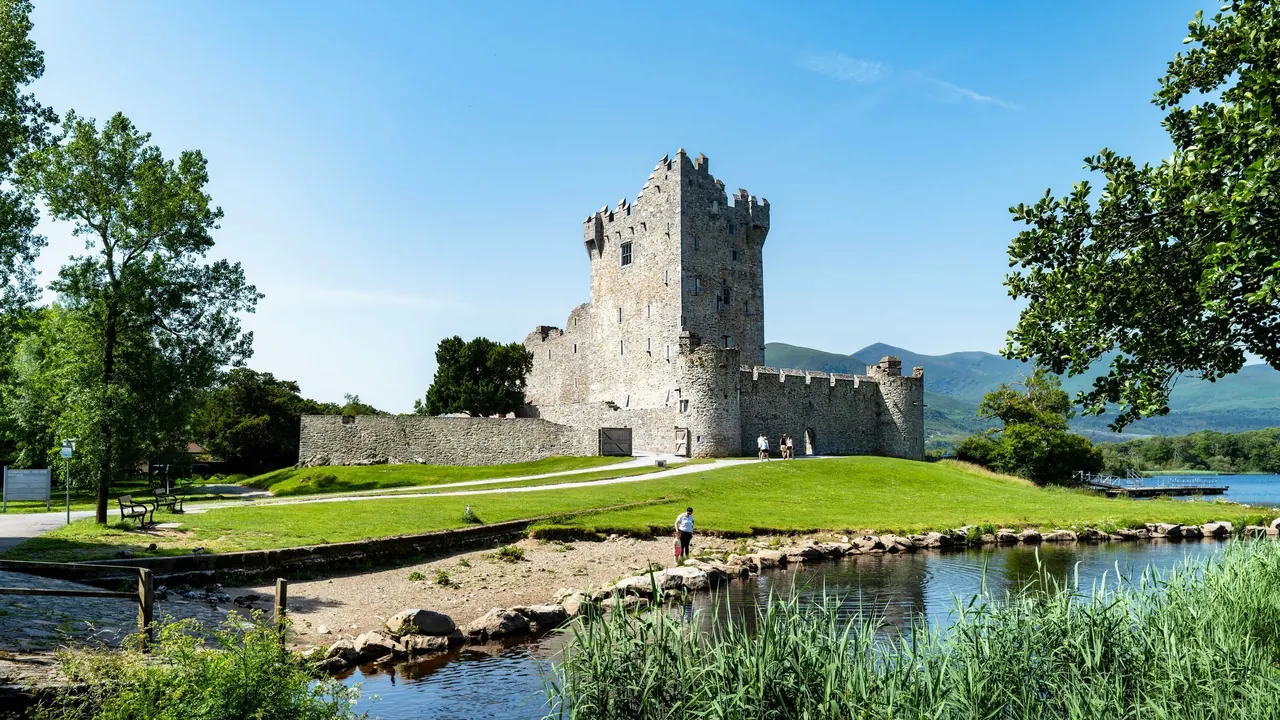
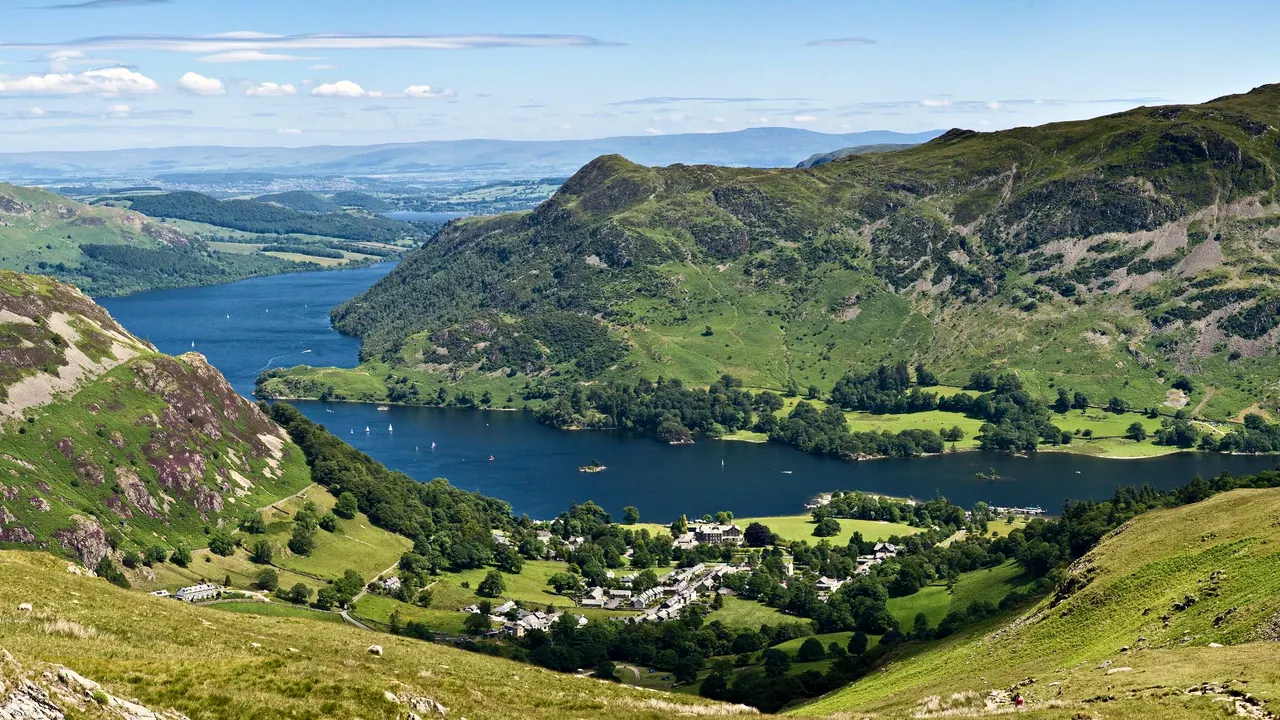
Photos: County Kerry by Bob Jenkin, Pexels License; Lake District by Diliff, CC BY-SA 3.0, cropped.
County Kerry or Lake District?
Our verdict in twelve categories, each scored against the same fixed benchmark cities, and the climate month by month, so you can choose for your trip.
Choose County Kerry for
- nightlife
- live music and the arts
- beaches
Pick County Kerry if you want the Atlantic as well as the mountains. It has sandy strands on the Dingle Peninsula and the Ring of Kerry, a boat out to Skellig Michael and evenings of traditional music in Dingle's pubs. It suits couples and friends who are happy to drive between small towns and still want a proper night out, which the Lakes rarely offer.
Choose Lake District for
- families
- food and drink
- day trips
The Lake District is the stronger choice for a walking vacation from one base, and for families. Fell routes start from village doors, lake steamers and a miniature railway keep children busy, and the central valleys can be explored by bus and boat. For a special dinner, its country-house cooking around Cartmel and Windermere also beats what Kerry offers.
Scoreboard
Twelve categories on one fixed scale from 0 to 100. The shaded stretch is the gap between the two.
Your match
Pick a travel style or drag the sliders, and both match scores follow your weighting.
Too close to call, 2 points apart
Wins on nightlife and live music and the arts with your weighting.
Wins on families and food and drink with your weighting.
What matters to you?
Category by category
What the scores mean for a trip.
Beaches & swimming
Kerry has the real beaches of the two. Inch's dune spit, Banna Strand, sheltered Derrynane and Rossbeigh are wide sandy strands for paddling and bodyboarding in summer, and Derrynane gives the calmest water. The small cove at Coumeenoole below Slea Head is better as a scenic stop on the coast road than as a beach to spend the day on. The Atlantic stays cold all the same.
The Lake District has shingle lake shores and jetties instead of sand, and a swim in Buttermere or Ullswater is a quick, chilly break from walking. The Cumbrian coast does have empty beaches, but they lie well west of the fells and are better for walking than for swimming.
Food & drink
Both rely on the pub and on good local produce, but the Lake District has the stronger top end. Around Cartmel and Windermere there is country-house and farm-to-table cooking that people travel from across Britain to eat, alongside local sweets such as Grasmere gingerbread and sticky toffee pudding.
Kerry's best eating is seafood landed at Dingle and Portmagee, and Kenmare's short run of serious restaurants comes closest to Cartmel. Outside Dingle, Kenmare and Killarney the choice drops off quickly, often to whatever the one village pub is serving.
Culture & sights
Neither is a museum trip. In both, the sights are scattered across valleys and coast rather than gathered in a town, and they reward a curious driver. The real difference is in kind. Kerry's heritage is early Christian and Iron Age: the monks' beehive cells on Skellig Michael, which you can only land on in calm summer seas, the Gallarus Oratory and Staigue Fort, with Muckross House and Ross Castle beside Killarney's lakes.
The Lake District's heritage is literary, centred on Wordsworth's Dove Cottage, Beatrix Potter's Hill Top and Ruskin's Brantwood above Coniston Water. Castlerigg stone circle and the Roman fort on Hardknott Pass add older layers.
Nightlife
In both places going out means the pub, but Kerry's evenings last much longer. Dingle has a remarkable number of old shopfront bars that fill up on summer nights, and Killarney has large bars and late venues that draw weekend groups.
In the Lakes most people want an early start on the fells, so a pint by the fire in Ambleside or Keswick is usually the whole night. Neither has clubs.
Nature & outdoors
Both are among the finest walking country in Britain and Ireland, and the big difference is the sea. Kerry combines mountains and lakes, from Carrauntoohil and the Reeks to Killarney National Park with its red deer, with an Atlantic coast of cliffs, surf at Inch and Brandon Bay, and seabirds on the Skelligs.
The Lake District packs its walking more tightly, with classic ridge routes such as Striding Edge and the Fairfield Horseshoe. Its crags are where British rock climbing began, and there is sailing and paddleboarding on the lakes themselves.
Day trips
Both are good bases for a road trip, with plenty of modest outings. From Kerry the trips go to fishing villages, Valentia Island and, in summer, by boat to the Great Blasket, with Cork and Kinsale further afield.
From the Lakes, the bigger draw beyond the market towns is history on a larger scale. Carlisle's castle and cathedral and the central stretches of Hadrian's Wall are within reach, and the Yorkshire Dales lie to the south-east.
Good for families
Both are safe and relaxed with children, and both struggle on wet days, but the Lake District has more outings ready-made for families. Lake steamers, the Eskdale railway, Beatrix Potter and the easy circuit of Tarn Hows suit young children, and older ones can try climbing and ghyll scrambling.
Kerry has beaches for rockpooling, jaunting cars in Killarney National Park and boat trips to see seals, with Tralee's indoor water park for rainy days. Its long drives between sights are harder on small children.
Getting around
Away from the main towns, neither is easy without a car, and both have narrow single-track passes. The difference is that the central Lake District can be done without a car: a railway runs to Windermere, buses link Ambleside, Grasmere and Keswick, and steamers cross the lakes.
In Kerry the trains stop at Killarney and Tralee. Beyond them most visitors drive, sharing the Ring of Kerry with tour coaches and facing the Conor Pass above Dingle.
Shopping & style
Neither is a place to go shopping. Kerry's strength is craft, with pottery and knitwear studios in Dingle and Kenmare's needlepoint lace. The Lakes' strength is practical: the outdoor gear shops of Ambleside and Keswick, plus Herdwick wool and slate crafts.
Affordability
Both are expensive in high summer, and in both the best of the landscape costs nothing. The cheap ways to stay differ: Kerry has family-run village B&Bs and hearty pub lunches, while the Lakes have youth hostels, bunkhouses and campsites that suit walkers on a budget. A hire car is a bigger cost in Kerry, because the central Lakes can be managed by bus.
Live music & performing arts
Kerry has much more live performance, because traditional music is part of pub life there. Local players gather for sessions in Dingle's pubs most evenings in season, Siamsa Tíre in Tralee is the National Folk Theatre, and Listowel's Writers' Week and the Rose of Tralee add summer events.
The Lake District has more theatre than music. Its main offerings are Theatre by the Lake's repertory season in Keswick and Kendal's arts centre and mountain festival, with folk sessions in some pubs.
Wellness & relaxation
Both restore you through their slow pace more than through treatments, and both rely on the spas of lakeside and country-house hotels, around Killarney and Kenmare or Windermere and Ullswater. Each also has one local custom: in Kerry it is the hot seaweed bath at Ballybunion, and in the Lakes it is a cold swim in a tarn, which locals take all year.
When should you go?
Pick your month. The climate figures are measured averages, not a forecast.
County Kerry in July
Lake District in July
Daytime high, °C
Rainfall in the month, mm
Where the figures come from
County Kerry's temperatures are measured 53 km from the centre, at Valentia Observatory.
County Kerry has no rain gauge within 25 km of the centre, so its rainfall comes from a gridded climate dataset read at the destination rather than from a gauge further away.
Lake District's temperatures are measured 37 km from the centre, at Walney Island.
Lake District has no rain gauge within 25 km of the centre, so its rainfall comes from a gridded climate dataset read at the destination rather than from a gauge further away.
Lake District's sunshine is measured 90 km from the centre, at Leeming.
Temperature and rainfall are climate normals, averaged over the years shown. County Kerry: 1991-2020 normals, Valentia Observatory (52.8 km from centre). Lake District: 1991-2020 normals, Walney Island (36.8 km from centre).
Both are mild, green and wet, with summer highs of about 18°C. Neither ever gets hot enough to make walking uncomfortable. They differ in rain and in winter. Kerry is milder in the cold months and drier for most of the year, and its summer is noticeably less wet than the Lakes'. May and June are Kerry's best months, the sunniest of the year and fairly dry. Even in August the sea off its beaches only reaches about 16°C, which is fine for paddling and bodyboarding but not for long swims.
In the Lake District, late spring is the driest and clearest time, and April to June is the best window for the high fells. July is sunnier than in Kerry but wetter, and rain builds through August. From October to February the Lakes are cold and very wet, with highs of about 7°C in midwinter. Kerry's winter is gentler, though at nearly 190mm its December is almost as wet.
Which traveller are you?
On a beach and sun trip, neither place offers warm water, but Kerry is the better bet. It has proper sandy strands for a summer afternoon of paddling and bodyboarding. In the Lakes, a swim is a cold dip between walks rather than a day on the sand.
For a culture and arts trip, the heritage on the two sides is closely matched, so the evenings decide it. In Kerry, traditional music is part of ordinary pub life all through the season. The Lakes, with their theatre and the odd folk night, cannot match that.
On a family trip with young children, the Lake District is the easier choice. Its outings are short, gentle and ready-made, many can be reached without a car, and one base keeps the days simple. In Kerry, children spend more of the day on long drives.
Before you go
| Measure | County Kerry | Lake District |
|---|---|---|
| Official language | English, Irish | English |
| Currency | Euro (EUR) | Pound Sterling (GBP) |
| Sockets | G230 V, 50 Hz | G230 V, 50 Hz |
| Driving side | Left | Left |
| Time zone | UTC, UTC+1 in summer | UTC, UTC+1 in summer |
| Emergency number | 112 | 112 or 999 |
| Main airport | Kerry Airport (KIR)10 non-stop destinations | Manchester Airport (MAN)211 non-stop destinations |
| Public holidays this year | 11 days | 8 days |
By the numbers
| Measure | County Kerry | Lake District |
|---|---|---|
| Population | 147,707 | - |
| People per km² | 31 | - |
| Swim season, months above 21 °C | None | None |
Where else could you go?
Every comparison below shares a destination with this one, so you can follow County Kerry or Lake District somewhere new.
- Yorkshire Dalesvs Lake District
- Northumberlandvs Lake District
- Peak Districtvs Lake District
- Snowdoniavs Lake District
- Connemaravs County Kerry
- Cotswoldsvs Lake District