Ireland
Killarney
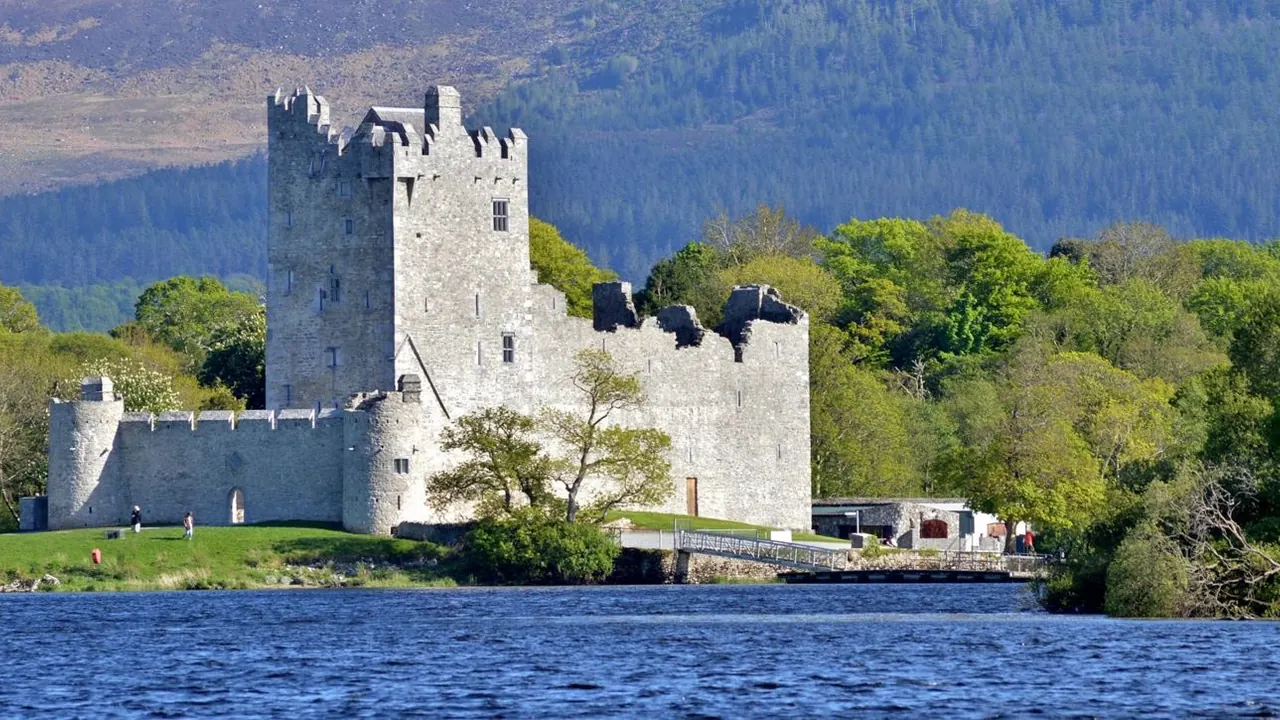
Ross Castle on Lough Leane
- Nature & outdoors82
- Day trips58
- Getting around47
Photo: NicholasH, CC BY-SA 4.0, cropped
Match
40
Every category weighted equally
- Beach & sun39
- Culture & arts39
- Food & nightlife36
- Family trip42
- Outdoors47
- Relax & unwind41
- Shopping & style36
- On a budget39
Killarney in twelve categories
Our verdict on each, scored 0 to 100 against the same fixed benchmark cities, so a score means the same thing on every page.
Beaches & swimming. Scores 22 out of 100.
Food & drink. Scores 33 out of 100.
Culture & sights. Scores 28 out of 100.
Nightlife. Scores 32 out of 100.
Nature & outdoors. Scores 82 out of 100.
Day trips. Scores 58 out of 100.
Good for families. Scores 42 out of 100.
Getting around. Scores 47 out of 100.
Shopping & style. Scores 22 out of 100.
Affordability. Scores 35 out of 100.
Live music & performing arts. Scores 35 out of 100.
Wellness & relaxation. Scores 42 out of 100.
Killarney category by category
Beaches & swimming
22Killarney is an inland lake town, and the sea is a drive away. The nearest good beaches are on Dingle Bay: Inch, a long sandspit reaching into the bay, and Rossbeigh on the Ring of Kerry are both about 40 minutes by car. Both are wide and wild, good for walks, kite-flyers and beginner surf lessons.
Swimming is for the hardy. The Atlantic here reaches about 15°C in late summer, the weather changes by the hour, and a warm beach day is a lucky exception. Most visitors treat the coast as scenery seen from the car. Few of them come to Killarney for the beach.
Food & drink
33As a long-standing tourist town, Killarney has more places to eat than its size would suggest, most of them along High Street, Main Street and the lanes off them. The best cooking leans on the county's produce: Kerry lamb, beef from local farms, Atlantic seafood brought in from Dingle and Kenmare, farmhouse cheeses and a proper cooked breakfast. Pub food is reliable, with chowder, brown bread and stew on nearly every menu.
It is still a small place, though. The range runs out quickly, plenty of menus are built for coach parties, and there is no street food or market culture worth mentioning. Diners who care about food often drive to Kenmare or Dingle for a better meal.
Culture & sights
28The town's main sights sit at the edge of the national park and not in the streets. Muckross House is a Victorian mansion furnished as it was when Queen Victoria visited in 1861, with formal gardens running down to the lake. Ross Castle, a fifteenth-century tower house, stands on the shore of Lough Leane, and the roofless Franciscan ruins of Muckross Abbey, with a yew tree growing in its cloister, are a short walk from the house.
In town, St Mary's Cathedral by Augustus Pugin is a fine Gothic Revival church. Otherwise the centre is a pleasant grid of painted shopfronts with little to visit. A day or two covers it.
Nightlife
32Killarney goes out more than most Irish towns of its size. In summer the pubs along High Street and Plunkett Street are packed most nights with visitors, locals and weekend groups, and a few late bars and hotel venues keep going after the pubs close. The mood is friendly, loud and centred on pints and conversation.
The variety is limited. There is no cocktail scene to speak of, no real club culture, and winter weeknights are quiet. It suits a visitor who wants a good pub crawl in a lively small town, not a big night out in a city.
Nature & outdoors
82This is the reason to come. Killarney National Park begins at the edge of town: three lakes, ancient oak and yew woods, Torc Waterfall and Ireland's only native herd of red deer, all on flat paths that are easy on foot or by hired bike. Beyond the lakes rise MacGillycuddy's Reeks, with Carrauntoohil at 1,039m the country's highest summit, and the Gap of Dunloe, a narrow glacial pass best walked or cycled from end to end before a boat back across the lakes.
The Kerry Way starts in town, and the Ring of Kerry, Dingle and Beara coasts offer cliff walks, sea kayaking, angling and seabird colonies within an hour or so. The weather is wet and changes quickly, which also keeps everything intensely green. Spring and autumn are quieter and often clearer than high summer.
Day trips
58Most of what lies around Killarney is a drive through landscape, but there are towns and sites worth the trip. Kenmare, a planned eighteenth-century town of coloured shopfronts, is about 40 minutes over Moll's Gap. Dingle, a fishing port full of pubs and craft shops, is about an hour away, and the Ring of Kerry loop links small villages such as Sneem, Waterville and Cahersiveen with old stone forts.
Skellig Michael, the UNESCO-listed monastic rock off the Iveragh coast, is the great prize, though landing depends on summer boats and calm seas. Heading east, Cork city is about an hour and a half by car or train, with Blarney Castle on the way and Kinsale beyond it. The tidy village of Adare and Tralee are also easy outings.
Good for families
42Killarney is a safe, relaxed and easy town to manage with children, and Irish hospitality is warm towards families. The national park gives the best days out: flat lakeside paths for bikes and buggies, deer to spot, jaunting-car rides and boat trips on the lakes. Muckross Traditional Farms, a working reconstruction of rural life with animals and old cottages, goes down well with younger children, and many hotels have pools and family rooms.
There is little else built for children, though. There are no major zoos, aquariums or theme parks within easy reach, and a rainy day can leave a family short of indoor options.
Getting around
47The town itself is compact and easy to walk, and the railway station is right by the centre, with direct and connecting trains to Cork and Dublin. The national park's main sights are within cycling distance on flat, traffic-free paths. Muckross House is about 6km away, and jaunting cars and bike hire wait at the edge of town.
Beyond that, the region is car country. Local buses are sparse, and the Ring of Kerry, Dingle and the far end of the Gap of Dunloe are reached by hire car, coach tour or minibus. Driving means narrow, winding roads shared with tour coaches in summer.
Shopping & style
22Shopping in Killarney means a few streets of Irish knitwear, tweed, Celtic jewellery and souvenir shops, aimed at visitors passing through, with a handful of independent boutiques and craft galleries among them. It is pleasant for an hour's browsing and for picking up an Aran sweater. Anyone wanting more needs Cork.
Affordability
35Killarney is expensive by European standards, as most of Ireland is, though it has some ways to make it cheaper. A large supply of family-run B&Bs and guesthouses keeps rooms reasonable outside the peak months, and the national park costs nothing to walk or cycle. Against that, eating out and drinking come at full Irish prices, hotels fill and charge heavily in July and August, and getting beyond the town usually means hiring a car or paying for tours. Spring and autumn give the best value.
Live music & performing arts
35Live music in Killarney means Irish traditional music. In season, sessions of fiddle, tin whistle, bodhrán and ballad singing run in the town's pubs most nights, some casual and some set up for visitors, and dinner shows add set dancing. Larger touring concerts and comedy nights come to a hotel arena on the edge of town.
There is no opera, orchestra or real theatre scene. For staged folk performance, Siamsa Tíre, the National Folk Theatre, is in Tralee, about 30 minutes away.
Wellness & relaxation
42Killarney has no bathing tradition of its own, but it has a remarkable number of large country and lakeside hotels, many with full spas, pools and treatment rooms, often with views over the lakes and mountains. A slow stay of long walks, a spa afternoon and an early dinner is easy to arrange here, and it is a popular choice for exactly that.
The town centre itself is busy with coaches and visitors in summer. The calm is found in the hotels on the outskirts and in the park, especially out of season.
When should you go?
Pick a month to see what it is like. The climate figures are measured averages, not a forecast.
Killarney in July
Daytime high, °C
Rainfall in the month, mm
The whole year
Shaded against this city’s own year: the deepest cell is its best month for that figure and the palest its weakest.
Where the figures come from
Killarney's temperatures are measured 53 km from the centre, at Valentia Observatory.
Killarney has no rain gauge within 25 km of the centre, so its rainfall comes from a gridded climate dataset read at the city rather than from a gauge further away.
Temperature and rainfall are climate normals, averaged over the years shown. Killarney: 1991-2020 normals, Valentia Observatory (52.7 km from centre).
Before you go
| Measure | Killarney |
|---|---|
| Official language | English, Irish |
| Currency | Euro (EUR) |
| Sockets | G230 V, 50 Hz |
| Driving side | Left |
| Time zone | UTC, UTC+1 in summer |
| Emergency number | 112 |
| Elevation | 50 m |
| Main airport | Kerry Airport (KIR)14 km from centre10 non-stop destinations |
| Public holidays this year | 11 days |
By the numbers
| Measure | Killarney |
|---|---|
| City population | 14,412 |
| Museums within 10 km | 1 |
| UNESCO World Heritage sites within 50 km | 0 |
| Swim season, months above 21 °C | None |
Compare Killarney with
Every comparison with a written verdict behind it.