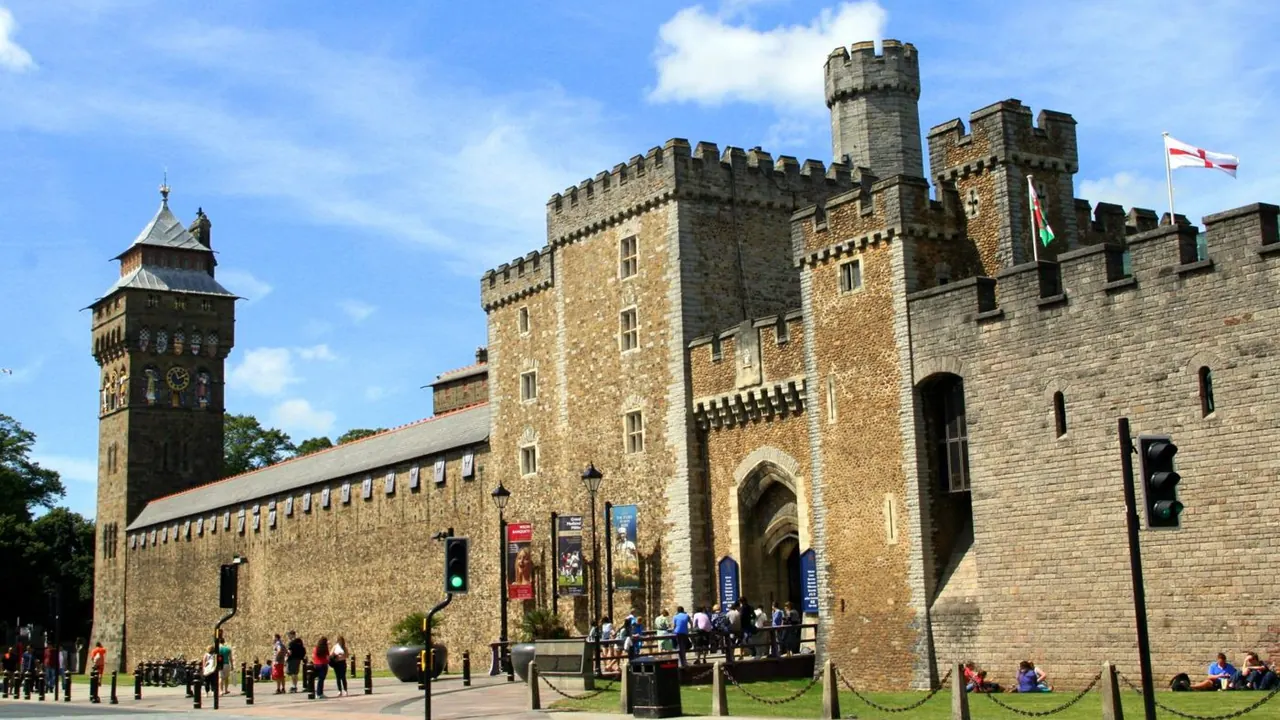
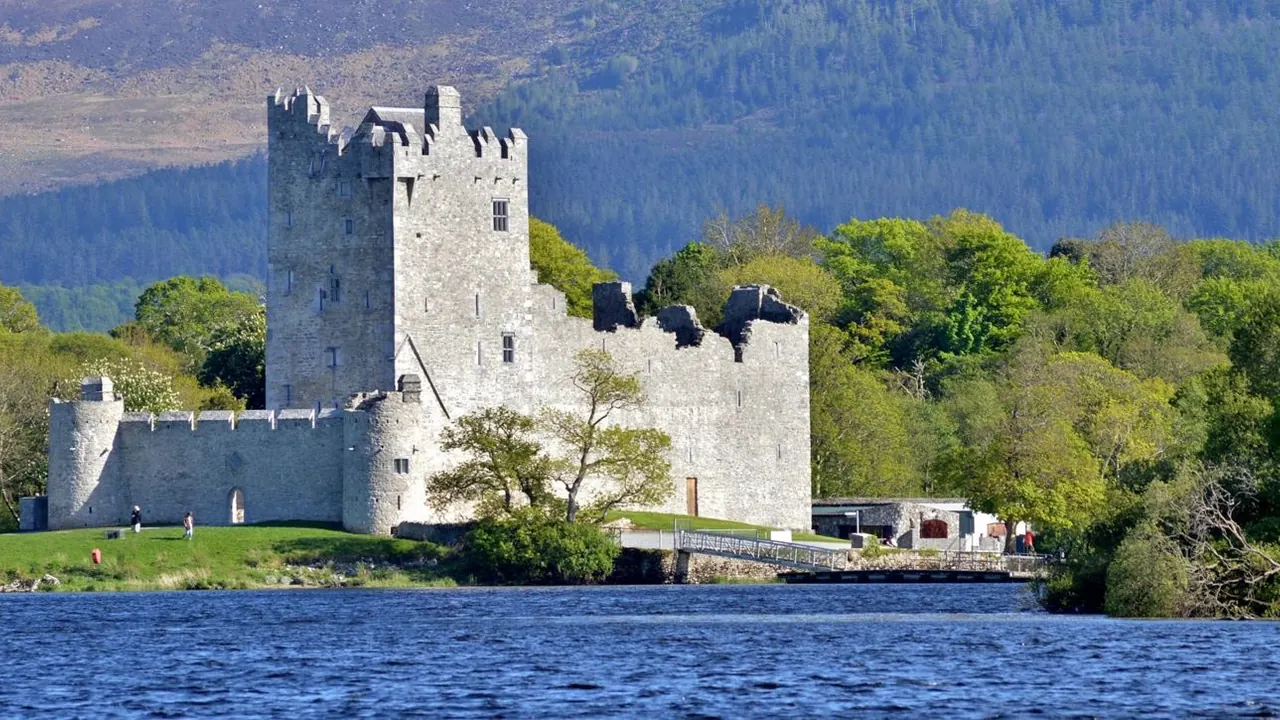
Photos: Cardiff by Tevfik Teker, CC BY 3.0, cropped; Killarney by NicholasH, CC BY-SA 4.0, cropped.
Cardiff or Killarney?
Our verdict in twelve categories, each scored against the same fixed benchmark cities, and the climate month by month, so you can choose for your trip.
Choose Cardiff for
- culture and sights
- shopping
- live music and the arts
Cardiff suits a city trip with variety. The castle stands in the middle of town, the national museums are free, and the Wales Millennium Centre and the small music venues on Womanby Street fill the evenings. Trains run easily to Caerphilly, Bristol and Bath. It works for travellers who would rather not drive, for families who need things to do when it rains, and for anyone who wants a proper night out at the weekend.
Choose Killarney for
- wellness
- nature and the outdoors
Pick Killarney if the landscape is the point. The national park starts where the town ends, with lakes, oak woods and red deer, and MacGillycuddy's Reeks rise behind. The Gap of Dunloe and the Kerry coasts are close by. Evenings mean traditional music in the pubs or a slow dinner at a lakeside hotel with a spa, so it rewards walkers, cyclists and couples who want to unwind more than people looking for sights or shops.
Scoreboard
Twelve categories on one fixed scale from 0 to 100. The shaded stretch is the gap between the two.
Your match
Pick a travel style or drag the sliders, and both match scores follow your weighting.
Wins on culture and sights and shopping with your weighting.
Wins on wellness and nature and the outdoors with your weighting.
What matters to you?
Category by category
What the scores mean for a trip.
Beaches & swimming
Neither is a beach destination, but Cardiff gets you to the sand more easily. Barry Island's bay and seaside funfair are half an hour away by train, and Penarth's pebble shore and Victorian pier are just along the coast. Porthcawl's surf beaches and the Gower are better again, though you need a car for them.
Killarney is inland, and Inch and Rossbeigh are about 40 minutes away by car. They are wide, wild Atlantic strands for walks, kites and beginner surf lessons rather than lying in the sun, and the water is colder than in the Bristol Channel.
Food & drink
Eating out is better in Cardiff, mostly because there is more choice. Start at the Victorian market for Welsh cakes off the griddle and laverbread with cockles. Then try the neighbourhood bistros of Pontcanna and Canton, or the long run of Middle Eastern and South Asian kitchens on City Road, and finish with good local ales in the pubs.
Killarney cooks well with Kerry produce: lamb, seafood landed at Dingle and Kenmare, farmhouse cheeses, and chowder with brown bread in nearly every pub on High Street and Main Street. It is a small town, though, and the choice runs out quickly, so people who care about food often drive to Kenmare or Dingle for dinner.
Culture & sights
Cardiff has several days of sights. There is the castle with its lavish Victorian Gothic rooms, the National Museum and its Impressionists in Cathays Park, the farmhouses and miners' institute brought to St Fagans, Llandaff Cathedral, and the Senedd by the Bay. Little of it is older than Victorian, but there is plenty to see.
Killarney has fewer sights, and they sit at the edge of the park rather than in town: Muckross House and its gardens, Ross Castle on Lough Leane, and the abbey ruins with a yew growing in the cloister. Add Pugin's cathedral and a day or two covers it.
Nightlife
Cardiff is the bigger night out. St Mary Street fills with large groups on Saturdays, Womanby Street has alternative bars and late venues, and rugby international days turn the whole centre red. For a quieter evening there are the pubs and wine bars of Pontcanna.
Killarney's nights revolve around the pub. In summer the bars on High Street and Plunkett Street are packed and friendly, and a few hotel venues stay open late. There are no clubs or cocktail bars, though, and winter weeknights are quiet.
Nature & outdoors
This is where Killarney comes out ahead, and it is the main reason to go. Lakes, ancient oak woods, Torc Waterfall and Ireland's only native red deer begin at the edge of town on flat paths. Carrauntoohil and the Gap of Dunloe lie beyond, and the Kerry Way starts in the centre.
Cardiff has good options of its own: Bute Park and the Taff Trail in the city, the coast path past the Penarth cliffs, and Pen y Fan in the Brecon Beacons. But its big walks are a day out by car, not something on the doorstep.
Day trips
For outings without a car, Cardiff is far easier. Caerphilly's huge fortress is twenty minutes away by train, and Castell Coch stands in the woods just north of the city. Across the Severn, Bristol is under an hour away and Bath about an hour. Tintern and Chepstow in the Wye Valley, along with the Blaenavon ironworks and Big Pit, make the list longer still.
Most of Killarney's day trips are drives through scenery: the villages of the Ring of Kerry, Kenmare over Moll's Gap, and the fishing port of Dingle. Skellig Michael is the great prize, but only if the summer boats are running and the sea is calm enough to land. Cork is about an hour and a half away.
Good for families
Cardiff has more for children to do, especially in the rain. There is Techniquest at the Bay, farm animals and craft demonstrations at St Fagans, rowing boats on Roath Park lake, and Barry Island's sands in summer. Killarney is safe and gentle, with buggy-friendly lake paths, jaunting cars, deer to spot and Muckross Traditional Farms, but a wet day there leaves few indoor options.
Getting around
Both centres are small and easy to walk, but Cardiff copes far better beyond them. Local trains reach Penarth, Barry Island, Caerphilly and the valleys, and a shuttle train or water taxi runs to the Bay. You only need a car for the national park and the more remote castles.
Killarney's station is central, and bikes take you round the lakes on traffic-free paths. Beyond that, the Ring of Kerry, Dingle and the far end of the Gap of Dunloe mean a hire car or a tour, on narrow roads busy with coaches in summer.
Shopping & style
Cardiff is the better place to shop, though there is no luxury shopping. Queen Street covers the chains, and the glass-roofed Royal, Morgan and Castle arcades hold the independent record, book and vintage shops that make an afternoon worthwhile. Killarney has a few streets of knitwear, tweed and Celtic jewellery for passing visitors: good for an Aran sweater and an hour's browsing, and not much more.
Affordability
Neither is cheap, but your money goes further in Cardiff. The national museums, St Fagans included, are free, and the train trips to castles and the coast cost little. Hotel rates jump on rugby and stadium concert dates, though.
In Killarney the park is free to walk or cycle, and family-run B&Bs keep rooms reasonable out of season. Meals and drinks come at full Irish prices, July and August are expensive, and seeing the region usually means paying for a car or tours.
Live music & performing arts
Cardiff has a full arts calendar. Welsh National Opera is based at the Wales Millennium Centre, the BBC National Orchestra of Wales is in the city, the Sherman and the New Theatre stage drama, and the Royal Welsh College puts on student shows. The small venues around Womanby Street book bands most nights.
Killarney does one thing and does it well: sessions of fiddle, tin whistle and bodhrán in the pubs most nights in season. For staged folk performance, Siamsa Tíre is in Tralee, about half an hour away.
Wellness & relaxation
Killarney is the easier place to slow down. Its many lakeside and country hotels have full spas and pools looking out over the water and mountains, and plenty of people come just for long walks, treatments and early dinners, best enjoyed out of season. Cardiff has hotel spas and the leisure pools at the Bay. Its calm is mostly found in Pontcanna's cafés and walks along the Taff rather than in any retreat.
When should you go?
Pick your month. The climate figures are measured averages, not a forecast.
Cardiff in July
Killarney in July
Daytime high, °C
Rainfall in the month, mm
Where the figures come from
Cardiff has no rain gauge within 25 km of the centre, so its rainfall comes from a gridded climate dataset read at the city rather than from a gauge further away.
Cardiff's sunshine is measured 83 km from the centre, at Lyneham.
Killarney's temperatures are measured 53 km from the centre, at Valentia Observatory.
Killarney has no rain gauge within 25 km of the centre, so its rainfall comes from a gridded climate dataset read at the city rather than from a gauge further away.
Temperature and rainfall are climate normals, averaged over the years shown. Cardiff: 1991-2020 normals, Cardiff-Wales Airport (14.9 km from centre). Killarney: 1991-2020 normals, Valentia Observatory (52.7 km from centre).
Neither place gets truly warm. Cardiff is a little warmer in summer and much drier all year. Highs reach about 20°C in July and August, and May to July are the sunniest months, so that is the best time for walking the streets or taking the train to Barry Island. The sea peaks at around 18°C, cool enough that most people only paddle. The rain picks up from October, and winter is cold and grey, though rarely wet enough to stop you sightseeing.
Killarney is milder in winter but far wetter, with about 177mm in November and the wettest stretch running from October to January. May is its driest month and one of its sunniest, and late spring to early autumn is the time for the park and the mountains. Summer highs stay around 18°C, so pack a jacket even in July.
Which traveller are you?
On a culture and arts trip, Cardiff is the clear choice. The castle, the Impressionists in the National Museum and St Fagans fill several days, and evenings bring Welsh National Opera, the national orchestra or a band on Womanby Street. Killarney's sights take a day.
For an outdoors trip, Killarney wins. The lakes, woods and red deer of the national park begin at the edge of town, Carrauntoohil and the Gap of Dunloe rise behind them, and the Kerry Way starts in the centre. Cardiff's best hiking is an hour's drive away.
On a relaxing and wellness trip, Killarney suits better. Its lakeside hotels have full spas, so slow days of walks, treatments and early dinners are easy to arrange, especially out of season. Cardiff has a few hotel spas but little tradition of going there to unwind.
Before you go
| Measure | Cardiff | Killarney |
|---|---|---|
| Official language | English | English, Irish |
| Currency | Pound Sterling (GBP) | Euro (EUR) |
| Sockets | G230 V, 50 Hz | G230 V, 50 Hz |
| Driving side | Left | Left |
| Time zone | UTC, UTC+1 in summer | UTC, UTC+1 in summer |
| Emergency number | 112 or 999 | 112 |
| Elevation | 41 m | 50 m |
| Main airport | Cardiff International Airport (CWL)15 km from centre30 non-stop destinations | Kerry Airport (KIR)14 km from centre10 non-stop destinations |
| Public holidays this year | 8 days | 11 days |
By the numbers
| Measure | Cardiff | Killarney |
|---|---|---|
| City population | 383,536 | 14,412 |
| People per km² | 2,734 | - |
| Museums within 10 km | 9 | 1 |
| UNESCO World Heritage sites within 50 km | 1 | 0 |
| Swim season, months above 21 °C | None | None |
Where else could you go?
Every comparison below shares a destination with this one, so you can follow Cardiff or Killarney somewhere new.