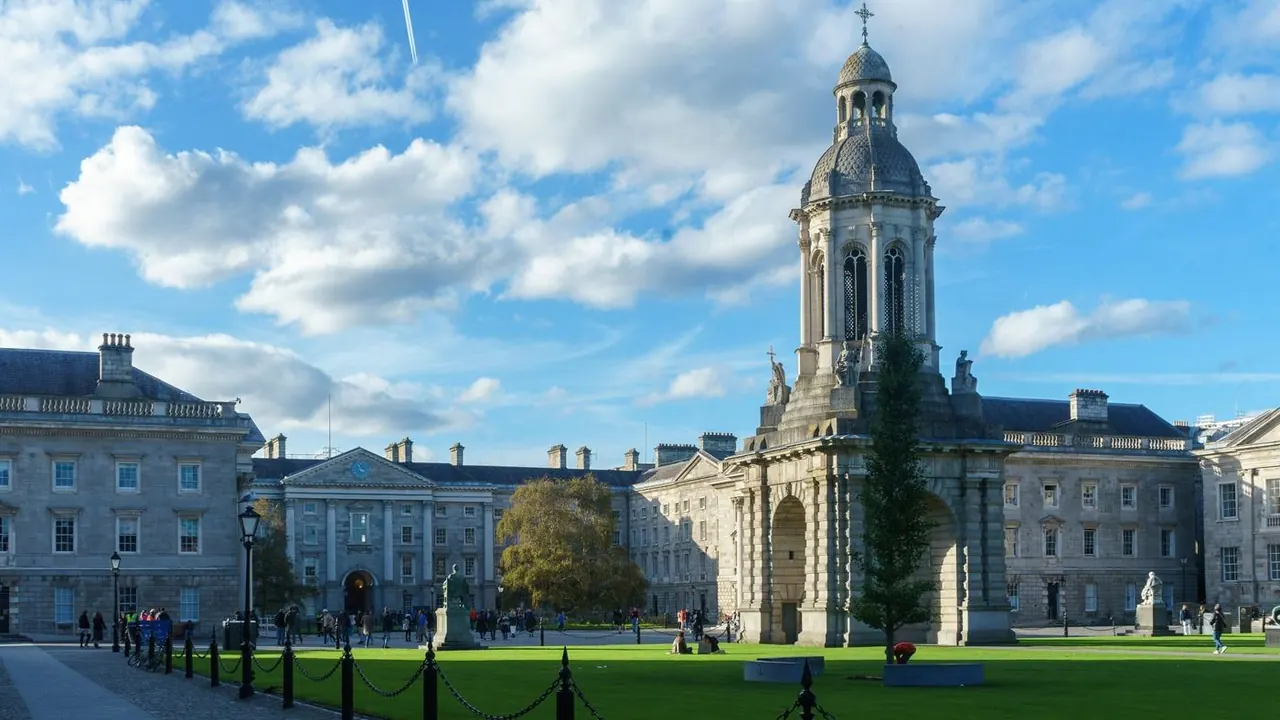
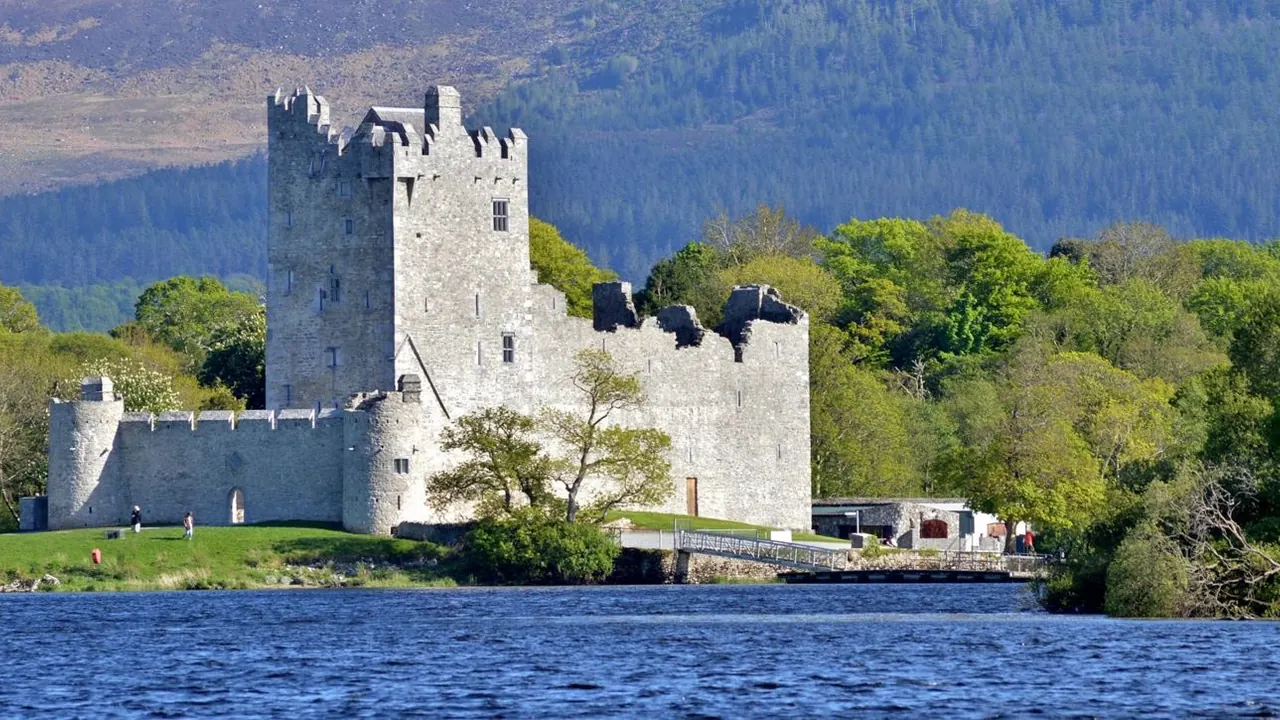
Photos: Dublin by David Kernan, CC BY 4.0, cropped; Killarney by NicholasH, CC BY-SA 4.0, cropped.
Dublin or Killarney?
Our verdict in twelve categories, each scored against the same fixed benchmark cities, and the climate month by month, so you can choose for your trip.
Choose Dublin for
- culture and sights
- shopping
- nightlife
Dublin is the better choice if you want a city with plenty to do. You can walk between Trinity's Long Room, the free national museums and Kilmainham Gaol in an afternoon. In the evening there's a play at the Abbey or a session in an old pub, and Grafton Street is close by for shopping. It also makes a good base for the Boyne Valley and Glendalough by day, and it gives families and rainy days far more to fall back on. The cost is high room prices and very little calm.
Choose Killarney for
- wellness
- prices
- nature and the outdoors
Killarney suits travellers who come for the landscape. The national park starts at the edge of town, with lakes, oak woods, red deer and the Gap of Dunloe, and the Reeks and the Kerry coast are close behind. Evenings are simple, with pub sessions and a decent dinner, and lakeside hotel spas make a slow stay easy. Rooms in B&Bs cost less than in Dublin, but you'll want a car to see the wider region.
Scoreboard
Twelve categories on one fixed scale from 0 to 100. The shaded stretch is the gap between the two.
Your match
Pick a travel style or drag the sliders, and both match scores follow your weighting.
Wins on culture and sights and shopping with your weighting.
Wins on wellness and prices with your weighting.
What matters to you?
Category by category
What the scores mean for a trip.
Beaches & swimming
Neither is a beach destination, and there is little to choose between them here. The Irish Sea off Dublin and the Atlantic off Kerry both reach only about 15°C in late summer. The difference is in how you get to the sand and what you do once you're there. Dublin's strands at Dollymount, Sandymount and Killiney are a short DART ride from the centre, and the city has a year-round habit of cold swims off the rocks at Sandycove and under Dalkey.
Killarney is an inland lake town, so reaching the sea means a drive of about 40 minutes to the coast. Inch, a long sandspit on Dingle Bay, and Rossbeigh on the Ring of Kerry are wide and wild beaches. They suit walks, kites and a beginner surf lesson better than a swim.
Food & drink
Dublin eats better and with more variety. Bistros in Dublin 2 and Dublin 8 cook Irish fish, beef, lamb and cheese well, and the whiskey distilleries and Saturday market stalls give you more to do around food and drink. Even so, most visitors remember the pubs there more than the meals.
Killarney uses the same kind of produce, Kerry lamb and seafood from Dingle and Kenmare, but in a small town aimed at coach parties. Pub chowder and stew are reliable, the range runs out after a few nights, and keen diners drive to Kenmare or Dingle for something better.
Culture & sights
Culture is where Dublin pulls furthest ahead. Trinity's Long Room, the free national museums and gallery, the Chester Beatty collection, Christ Church, St Patrick's and Kilmainham Gaol all sit within walking distance. Georgian terraces and a literary history from Joyce to Wilde run through the streets between them.
Killarney's sights are a handful, and they lie at the edge of the park rather than in town. Muckross House, its abbey ruins and Ross Castle on Lough Leane go well with a lakeside walk, and Pugin's cathedral is worth a look. Two days covers the lot.
Nightlife
Both towns go out to the pub, but Dublin offers much more range. Snugs and coal fires near Baggot Street, younger crowds and cocktail bars along Camden and Wexford Streets, and the noise of Temple Bar give you a different evening each night. Clubbing is thin even there, because nights end soon after the pubs close.
Killarney packs its High Street and Plunkett Street pubs in summer and does a good, loud pub crawl, with a few late bars after closing. There are no cocktail bars to speak of, and winter weeknights are quiet.
Nature & outdoors
Killarney is the stronger place for the outdoors, and it's why most people go. The national park begins at the end of the street, with three lakes, ancient oak and yew woods, Torc Waterfall and Ireland's only native red deer. Above them rise MacGillycuddy's Reeks and Carrauntoohil, the country's highest summit at 1,039m. The Kerry Way and the Ring of Kerry coast add cliffs, kayaking and seabirds.
Dublin is very good for a city, though. You have deer in Phoenix Park, waders on North Bull Island, the cliff path at Howth and the Wicklow hills about an hour away. It is gentler, lower country, reached as a day out rather than straight from your door.
Day trips
Dublin has the wider choice of outings. Newgrange and Knowth, older than the pyramids, lie in the Boyne Valley alongside Tara and Trim Castle. Glendalough and Powerscourt are to the south, Kilkenny is easy by train, and Belfast is a different country two hours up the line.
From Killarney, most trips are drives through scenery: the Ring of Kerry, Dingle and Kenmare over Moll's Gap. Skellig Michael is the standout, but it depends on summer boats and calm seas. Cork, Blarney and Kinsale are the main pull to the east.
Good for families
Dublin gives families more to do. Dublin Zoo sits inside Phoenix Park, and the free natural history museum, the Viking displays at Dublinia and the hands-on children's museums cover wet afternoons. A theme park is half an hour's drive away.
Killarney's good days are outdoor ones: flat lakeside paths for bikes and buggies, jaunting cars, boat trips and the animals at Muckross Traditional Farms. Hotel pools help, but when it rains there is little indoors to turn to.
Getting around
Inside Dublin you can do without a car. The flat centre is walkable, the Luas trams cross town, and the DART follows the bay to Howth, Dalkey and Bray on one tap-on card. The weak points are slow buses to the airport and the suburbs, and the rural sites beyond the city.
Killarney's town is small, and the station is beside the centre. A hired bike takes you along traffic-free paths to Muckross House and the lakes. Past the park it's car country, with sparse buses and narrow Ring of Kerry roads shared with summer coaches.
Shopping & style
Both sell Aran knitwear and tweed, but Dublin has proper shops as well. Grafton Street, the Powerscourt Townhouse arcade, Brown Thomas and the design and craft shops around Drury Street make for a real afternoon of shopping.
Killarney manages an hour's browsing among knitwear, Celtic jewellery and souvenir shops, with a few craft galleries in between. For anything more, you'd go to Cork.
Affordability
Neither place is cheap, but Killarney is easier on the wallet. Dublin's centre has some of the priciest hotel rooms in Europe and few budget options. Free national museums and a walkable centre help, and so does staying out along a DART or Luas line.
Killarney's many family-run B&Bs keep rooms reasonable outside July and August, and the national park costs nothing to walk or cycle. Meals and drinks cost the full Irish price in both places, and in Kerry a hire car or tours adds to the bill.
Live music & performing arts
Dublin has a real stage scene. The Abbey and the Gate have long theatrical histories, the Gaiety and the Grand Canal Dock theatre bring musicals and tours, and the National Concert Hall is home to the national orchestra. Traditional sessions in pubs fill most nights, and touring bands play its arenas.
Killarney's live music is almost entirely traditional sessions and dinner shows with set dancing in season, plus the occasional touring act at a hotel arena. For staged folk performance, you'd drive half an hour to Siamsa Tíre in Tralee.
Wellness & relaxation
Killarney is the better place to slow down. Its many lakeside and country hotels have full spas and pools with mountain views, and a stay built around walks, treatments and an early dinner is exactly what many visitors come for.
Dublin has hotel spas but no real culture of rest. Its own ritual is bracing rather than soothing: a cold dip at the Forty Foot or Seapoint and then a seafront sauna. Otherwise, calm comes from an afternoon in St Stephen's Green or a Georgian square.
When should you go?
Pick your month. The climate figures are measured averages, not a forecast.
Dublin in July
Killarney in July
Daytime high, °C
Rainfall in the month, mm
Where the figures come from
Killarney's temperatures are measured 53 km from the centre, at Valentia Observatory.
Killarney has no rain gauge within 25 km of the centre, so its rainfall comes from a gridded climate dataset read at the city rather than from a gauge further away.
Temperature and rainfall are climate normals, averaged over the years shown. Dublin: 1991-2020 normals, Dublin Airport (9.3 km from centre). Killarney: 1991-2020 normals, Valentia Observatory (52.7 km from centre).
Neither place ever gets warm enough for a beach vacation. Both peak at around 18-20°C in July and August, and the sea stays cool all year. They are both mild enough for walking in any season. The real difference is rain. Dublin gets a moderate, fairly even amount all year, with spring the driest stretch. Killarney is far wetter, close to 150mm a month from October to January, so short winter days there are often grey and soaked.
Late spring is the best time for both, and May is the sunniest month in each place. For Killarney, May is also the driest month, which suits hill walks and cycling the lakes. Dublin is a good bet from April to September, and as a city of museums and pubs it copes with a damp winter far better than a town built around a national park. Killarney is a touch milder in midwinter, but it pays for that in rain.
Which traveller are you?
On a culture and arts trip, Dublin is the clear choice. You get the Book of Kells, the Chester Beatty Library, two medieval cathedrals, Georgian squares and the Abbey and Gate theatres. Killarney offers Muckross House, Ross Castle and pub sessions, which fill a day or two at most.
For an outdoors trip, Killarney wins. You can walk or cycle into the national park from town, climb Carrauntoohil in the Reeks, walk the Gap of Dunloe and reach the Kerry coast for cliff walks and kayaking. Dublin's Howth cliffs and Wicklow hills are gentler outings.
On a relaxing and wellness trip, Killarney fits better. Many of its country and lakeside hotels have full spas and pools looking over the water, and the days settle into long walks and early dinners. Dublin's only real ritual is a cold dip at the Forty Foot.
Before you go
| Measure | Dublin | Killarney |
|---|---|---|
| Official language | English, Irish | English, Irish |
| Currency | Euro (EUR) | Euro (EUR) |
| Sockets | G230 V, 50 Hz | G230 V, 50 Hz |
| Driving side | Left | Left |
| Time zone | UTC, UTC+1 in summer | UTC, UTC+1 in summer |
| Emergency number | 112 | 112 |
| Elevation | 20 m | 50 m |
| Main airport | Dublin Airport (DUB)9 km from centre200 non-stop destinations | Kerry Airport (KIR)14 km from centre10 non-stop destinations |
| Public holidays this year | 11 days | 11 days |
By the numbers
| Measure | Dublin | Killarney |
|---|---|---|
| City population | 592,713 | 14,412 |
| People per km² | 5,154 | - |
| Museums within 10 km | 40 | 1 |
| UNESCO World Heritage sites within 50 km | 1 | 0 |
| Swim season, months above 21 °C | None | None |
Where else could you go?
Every comparison below shares a destination with this one, so you can follow Dublin or Killarney somewhere new.