Ireland
- Nature & outdoors80
- Culture & sights72
- Day trips70
Match
53
Every category weighted equally
- Beach & sun48
- Culture & arts56
- Food & nightlife52
- Family trip51
- Outdoors56
- Relax & unwind50
- Shopping & style52
- On a budget49
Ireland in twelve categories
Our verdict on the country as a whole, scored 0 to 100 against the same fixed benchmark cities as every destination, so a score means the same thing on every page.
Beaches & swimming. Scores 28 out of 100.
Food & drink. Scores 52 out of 100.
Culture & sights. Scores 72 out of 100.
Nightlife. Scores 58 out of 100.
Nature & outdoors. Scores 80 out of 100.
Day trips. Scores 70 out of 100.
Good for families. Scores 55 out of 100.
Getting around. Scores 45 out of 100.
Shopping & style. Scores 46 out of 100.
Affordability. Scores 23 out of 100.
Live music & performing arts. Scores 62 out of 100.
Wellness & relaxation. Scores 40 out of 100.
Ireland category by category
Under each: where in Ireland it is best, and our destinations in Ireland that score highest on it.
Beaches & swimming
28Ireland has a lot of beautiful beaches and cold water. The Atlantic and Irish Sea reach about 15-17°C in August, so swimming is brisk and short, and summer weather can turn grey and windy within the hour. The best sand is in the west and northwest. Keem Bay on Achill Island sits in a green bowl of cliffs, Inch Strand on the Dingle Peninsula runs for kilometres, and Donegal has long empty strands that see few visitors. In the southeast, Curracloe in County Wexford is milder and more sheltered.
Ireland does have a hardy sea-swimming habit, with year-round dippers at harbours, piers and bathing spots like the Forty Foot near Dublin. Even so, a beach here is a walk or a quick plunge on a sightseeing trip, not a vacation spent on the sand.
Where: Achill Island, Dingle Peninsula, Donegal, County Wexford
Our top destinations in Ireland
Food & drink
52Irish food is built on very good raw ingredients more than on a deep cuisine: grass-fed beef and lamb, farmhouse cheeses, smoked salmon, brown soda bread, and oysters, mussels and crab from the west coast. The best eating follows that produce. West Cork and the harbour town of Kinsale are the food heartland, Cork's English Market is a covered market hall stocked with local producers, and Galway is the place for seafood, with Galway Bay oysters a fixture of its autumn calendar. Dublin has the widest range of modern restaurants.
Drink is the stronger half. A well-poured stout in an old pub and Irish whiskey from distilleries around the country are reasons in themselves. Outside the cities and food towns, many menus come down to pub dishes like chowder, fish and chips and stew, and eating out is expensive throughout.
Where: West Cork, Cork, Galway, Dublin
Our top destinations in Ireland
Culture & sights
72Ireland's heritage is old, scattered and mostly in stone. In the Boyne Valley, an hour north of Dublin, the passage tombs of Brú na Bóinne are older than the pyramids. Newgrange stands at their centre, with Knowth beside it and the Hill of Tara and the monastery of Monasterboice close by. The monastic age left round towers and high crosses at Clonmacnoise and Glendalough, and beehive huts on Skellig Michael, a rock far out in the Atlantic. The Rock of Cashel, a hilltop group of chapel, cathedral and tower, rises over the Tipperary plain.
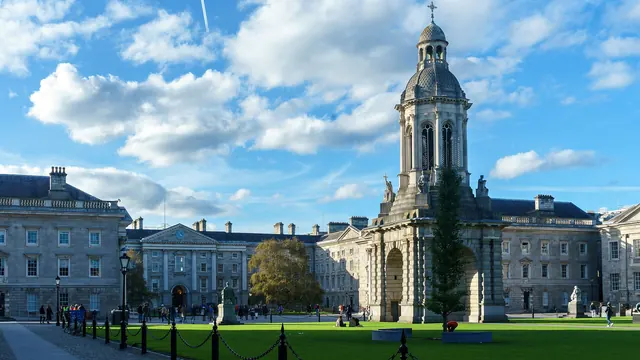
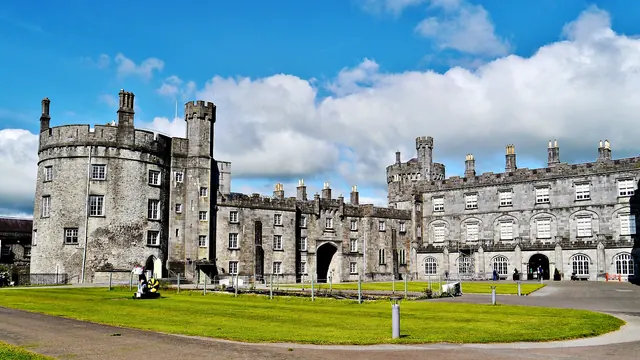
Dublin holds the national collections: the Book of Kells at Trinity College, Celtic gold in the National Museum, the National Gallery, Georgian squares and Kilmainham Gaol, which tells the story of independence. Kilkenny keeps a medieval core of lanes, abbeys and a cathedral around its castle. Each sight is worth the stop, but they are spread thinly, so seeing them means a road trip rather than a stay in one city.
Where: Dublin, Boyne Valley, Kilkenny, Rock of Cashel
Our top destinations in Ireland
Nightlife
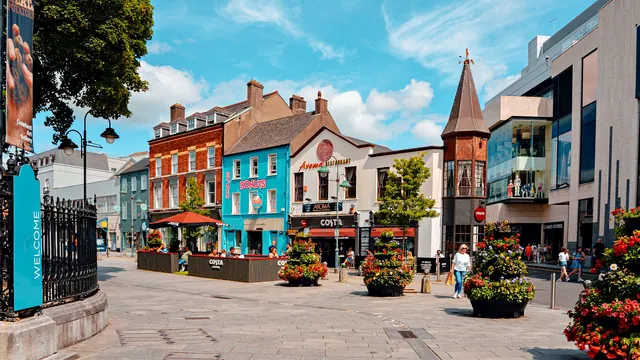
58Going out in Ireland means the pub, and that holds in every town and village, not only the cities. The best nights are talk, stout and a crowd packed into a small bar until closing. Dublin has the most choice, from Victorian pubs with snugs and polished wood to the crowded, touristy streets of Temple Bar and the later bars around Camden Street. Galway is the liveliest smaller city, with a student crowd filling the pubs of its Latin Quarter. Cork has a loyal local pub scene of its own, centred on the streets between the river channels.
Dingle is the small-town version at its best: a harbour town with a remarkable number of pubs for its size, some still doubling as hardware or drapery shops, busy well into the night in summer. The weak point everywhere is late night. Pubs close fairly early, clubs are few and modest, and outside Dublin a night rarely runs far past midnight.
Where: Dublin, Galway, Cork, Dingle
Our top destinations in Ireland
Nature & outdoors
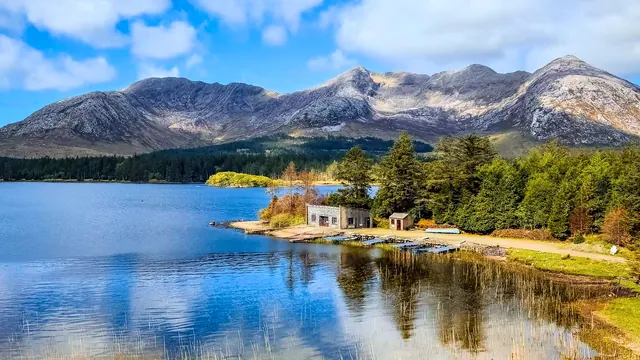
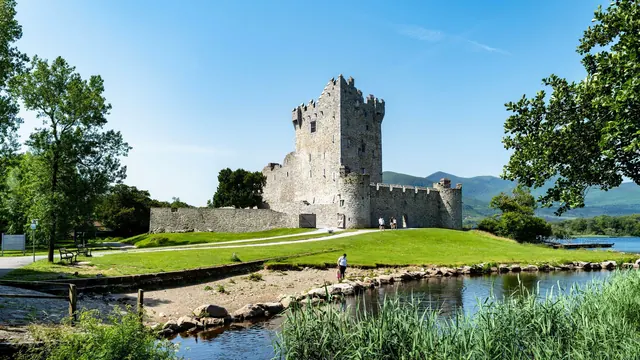
80The west coast is the reason to come, and it runs for hundreds of kilometres. In Kerry, the Iveragh and Dingle peninsulas pair sea cliffs with the MacGillycuddy's Reeks, the country's highest mountains, and Killarney National Park adds lakes, oak woods and red deer. Further north, the Cliffs of Moher drop sheer into the ocean, the Burren is a strange limestone pavement full of spring flowers, and Connemara is bog, lakes and quartzite peaks under huge skies. Donegal is the wildest of all, with Slieve League's sea cliffs and empty glens.
There is plenty to do here: long-distance walking routes, mountain hikes, cycling greenways on old railway lines, sea kayaking, and surfing at Lahinch, Bundoran and Strandhill. Boat trips go out to the Skelligs, puffin colonies and dolphins. In the east, the Wicklow Mountains are within an hour of Dublin. The hills are low and the weather is changeable all year, so pack waterproofs even in July.
Where: Kerry, Connemara, The Burren, Donegal
Our top destinations in Ireland
Day trips
70Ireland works well as a set of bases with outings from each. From Dublin, Kilkenny's medieval streets are under two hours away, the monastic valley of Glendalough is about an hour into the Wicklow hills, and the seaside villages of Howth and Dalkey are short train rides away. Belfast, across the border, is about two hours by train for its shipyard heritage and Victorian centre.
In the west, Galway is the jumping-off point for the Aran Islands, where Inis Mór has stone-walled fields and the cliff-edge fort of Dún Aonghasa. In the south, Cork has the harbour town of Cobh, last port of call for emigrant ships, the gourmet town of Kinsale and Blarney Castle all close by. Killarney reaches Dingle town and Kenmare. Distances are short, but many outings are easier by car or organised coach than by train.
Where: Dublin, Galway, Cork, Killarney
Our top destinations in Ireland
Good for families
55Ireland is easy to travel with children. It is safe and friendly, everything happens in English, and pubs and restaurants welcome families during the day. Dublin has the most made for children, with Dublin Zoo in Phoenix Park, a children's science museum and an amusement park in County Meath to the north. Near Cork, Fota Wildlife Park lets giraffes and cheetahs roam open grounds on an island in the harbour.
Kerry is the best of the countryside for a family trip. Killarney has pony-and-trap rides through the national park and boats on the lakes, Dingle has a small aquarium and boat trips to look for dolphins, and the long, gentle sands of Inch Strand are made for rock pools and kites. What the country lacks is a big theme-park resort and dependable warm weather, so rainy-day plans matter, and long drives on narrow rural roads can tire small children.
Our top destinations in Ireland
Getting around
45Ireland is small, and reaching the main cities is simple. Intercity trains and frequent express coaches run from Dublin to Cork, Galway, Limerick, Killarney and Belfast in a few hours. Dublin, Galway, Kilkenny and Cork are compact enough to walk, and Dublin adds the Luas trams and the coastal DART line.
The trouble starts where the scenery does. The peninsulas of Kerry, Connemara, the Burren and Donegal have little rail and only thin bus service. Most visitors hire a car, and that means driving on the left along narrow, winding roads with stone walls on both sides and tour coaches coming the other way. Organised day tours from Dublin, Galway and Killarney are the usual alternative for those who do not want to drive.
Our top destinations in Ireland
Shopping & style
46Shopping in Ireland is mostly about crafts. Aran knitwear from the west, Donegal tweed, Waterford crystal, hand-thrown pottery, linen and silver jewellery in Celtic designs are the things visitors take home, sold by makers' studios and craft shops in towns like Kilkenny, Dingle and Galway. Kilkenny in particular is a centre for Irish design.
Dublin is the only real shopping city. Grafton Street and the streets around it have the main fashion stores, a historic department store and a converted Georgian townhouse full of small shops. Elsewhere, high streets are modest and sell much the same souvenir wool and shamrocks, and fashion and luxury shopping are thin.
Where: Dublin, Kilkenny, Galway, Donegal
Our top destinations in Ireland
Affordability
23Ireland is an expensive country to visit. Dublin is the hardest on the budget. Its hotel rooms are among the dearest in Europe, especially at weekends and in summer, and a pint or a restaurant dinner costs well above most of Western Europe. Eating out, fuel and car hire stay pricey everywhere, and a car is hard to avoid in the countryside.
The gentler end is the rural west and northwest. Donegal is the most remote corner and has the most reasonable rooms, with plenty of family-run guesthouses. In Connemara and County Mayo, farmhouse bed-and-breakfasts and small-town guesthouses cost far less than city hotels and usually include a large cooked breakfast that carries you to the evening. Walking routes, beaches, viewpoints and the national museums in Dublin are free to visit, and a pub session of traditional music costs only what you drink.
Where: Donegal, Connemara, County Mayo
Our top destinations in Ireland
Live music & performing arts
62Ireland's great live art is traditional music, and it is everywhere. Most evenings, in pubs from Dublin to the smallest village, fiddles, tin whistles, uilleann pipes and bodhráns gather for informal sessions that anyone can sit in on. The west is the heartland. Doolin and Ennis in County Clare, Galway, Dingle and the pubs of west Kerry and Donegal have sessions through the year, and Irish-language song survives in the Gaeltacht areas.
The formal scene is centred on Dublin. The Abbey is the national theatre, founded by Yeats and Lady Gregory, and the Gate also stages Irish drama; the National Concert Hall hosts the national orchestra. Galway has a strong theatre tradition and a big summer arts festival, and Wexford's autumn opera festival is known for staging rarely heard works. Opera and classical music otherwise have a modest presence.
Where: County Clare, Galway, Dublin, Dingle
Our top destinations in Ireland
Wellness & relaxation
40Ireland has no thermal springs. Its own bathing tradition is the seaweed bath, a hot seawater soak with fresh-cut wrack from the shore. Old bathhouses in County Sligo still serve it, at Enniscrone and Strandhill, and so does Kilkee in County Clare. Clare adds the quiet spa town of Lisdoonvarna on the edge of the Burren. Year-round sea swimming is a social ritual along these coasts, often followed by a session in a seaside sauna. Elsewhere, spa means a hotel or a country-house estate.
The restorative side of Ireland is the pace of the west. Connemara is the clearest example: lakeside country houses, small villages that wind down early, and long, quiet days followed by an evening by a turf fire. That makes for a calm trip, though not a bathing culture, and Dublin itself offers little rest.
Where: County Sligo, County Clare, Connemara
Our top destinations in Ireland
When should you go?
Ireland has no single climate. Its months are measured at Dublin and County Kerry; pick one to see it. The figures are measured averages, not a forecast.
Where in Ireland
Dublin in July
Daytime high, °C
Rainfall in the month, mm
Temperature and rainfall are climate normals, averaged over the years shown. Dublin: 1991-2020 normals, Dublin Airport (9.3 km from centre).
Compare Ireland with
Every comparison with a written verdict behind it.
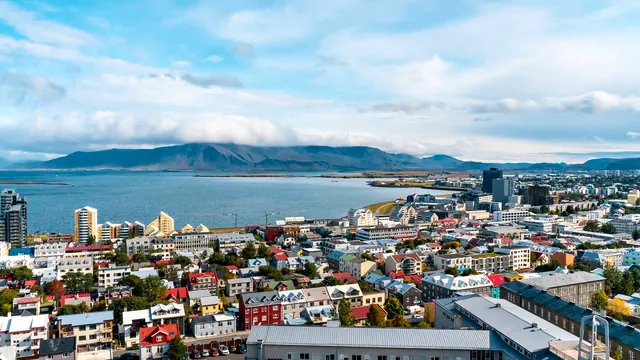
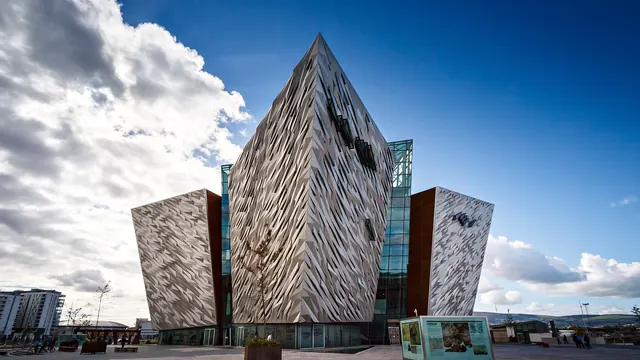
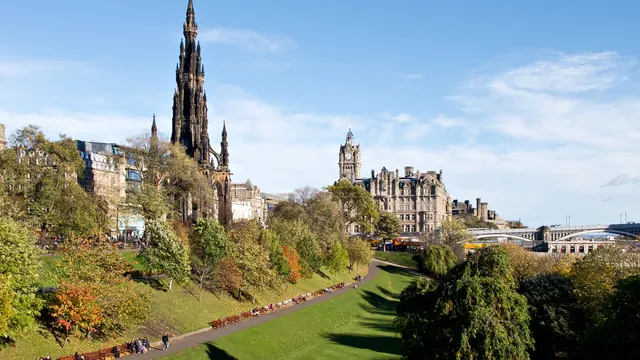
Our destinations in Ireland
Every place in Ireland with its own page: its twelve scores, its texts and its months.