Ireland
Kilkenny
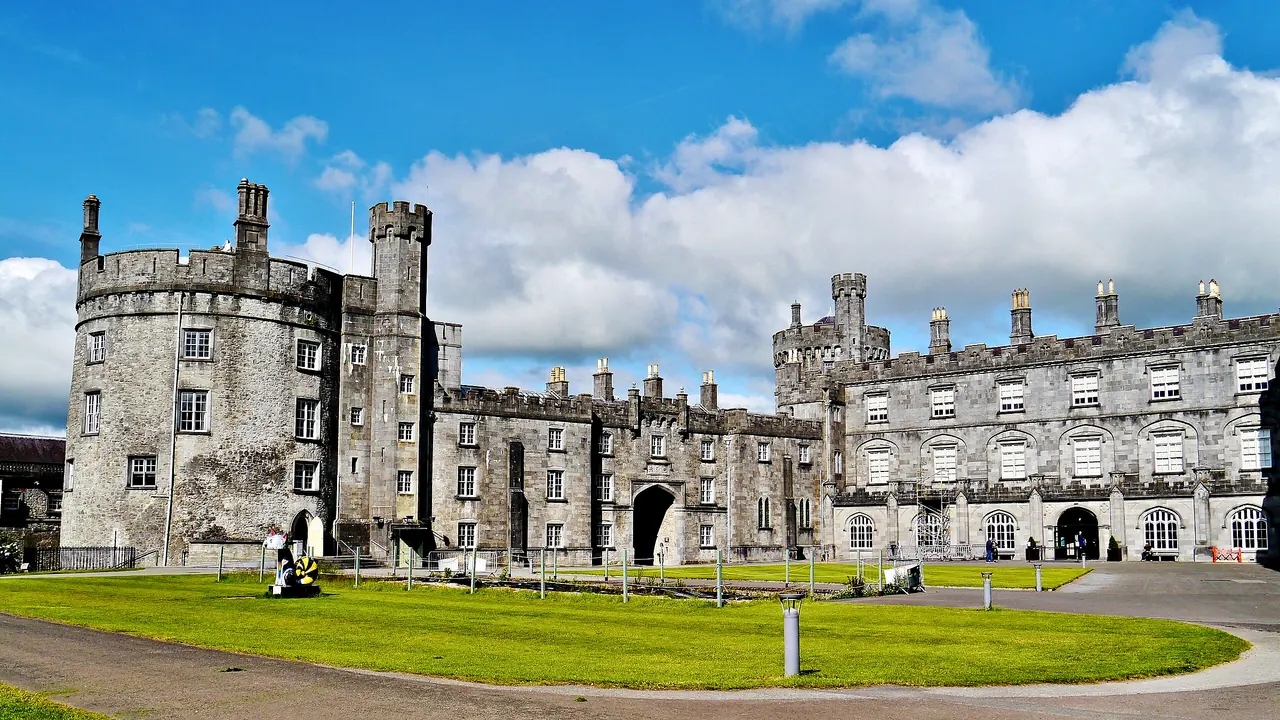
Kilkenny Castle seen across its great lawn
- Day trips60
- Getting around55
- Culture & sights45
Match
38
Every category weighted equally
- Beach & sun34
- Culture & arts42
- Food & nightlife38
- Family trip38
- Outdoors40
- Relax & unwind36
- Shopping & style39
- On a budget37
Kilkenny in twelve categories
Our verdict on each, scored 0 to 100 against the same fixed benchmark cities, so a score means the same thing on every page.
Beaches & swimming. Scores 10 out of 100.
Food & drink. Scores 38 out of 100.
Culture & sights. Scores 45 out of 100.
Nightlife. Scores 33 out of 100.
Nature & outdoors. Scores 45 out of 100.
Day trips. Scores 60 out of 100.
Good for families. Scores 40 out of 100.
Getting around. Scores 55 out of 100.
Shopping & style. Scores 32 out of 100.
Affordability. Scores 32 out of 100.
Live music & performing arts. Scores 40 out of 100.
Wellness & relaxation. Scores 28 out of 100.
Kilkenny category by category
Beaches & swimming
10Kilkenny is an inland town in the farmland of the southeast, and beach life plays no part in a stay. The nearest sand is on the Waterford and Wexford coasts, around an hour away by car, where Tramore and the coves of the Copper Coast are good for a walk. The water there rarely gets above about 16°C even in August. Hardy swimmers go in, but most visitors treat the coast as a scenic drive rather than a reason to come. Some locals swim in the River Nore in summer, though this is a local habit and not something set up for visitors.
Food & drink
38For a town of about 27,000 people, Kilkenny eats better than you might expect. The county's dairy farms, lamb and cheesemakers supply a small group of serious restaurants. Some of the more ambitious cooking happens in country-house kitchens just outside town. Dinner in the centre usually means a gastropub or bistro serving steak, seafood brought up from the southeast coast, and stews and chowders that are better than tourist fare.
Drinking runs deep here. For some three centuries ale was brewed beside the ruins of St Francis Abbey, and the old brewery site tells that story to visitors. The old pubs along High Street and Parliament Street pour stout and red ale by the fire. Choice is narrow, though. There are few cuisines from abroad, almost no street food, and on busy weekends the menus around the Parade can feel standardised.
Culture & sights
45Kilkenny keeps more of its medieval street plan than almost any Irish town. Most of what is worth seeing lies on the Medieval Mile, which runs from the castle to the cathedral. Kilkenny Castle, a Norman stronghold remodelled as a Victorian country seat, overlooks the Nore and its parkland. At the other end, St Canice's Cathedral is one of the finest medieval churches in Ireland, and you can climb its ninth-century round tower for a view over the slate roofs.
Along the way are Rothe House, a Tudor-era merchant's house with a restored garden, the Dominican Black Abbey with its stained glass, the Tholsel and narrow 'slips' that drop between the streets. A museum in a former medieval church tells the town's story. It is a lovely, coherent place, but it takes a day or two to see, not a week.
Nightlife
33Going out in Kilkenny means pubs, and plenty of them for the size of the place. The old bars on High Street, Parliament Street and John Street have low ceilings, open fires and dark wooden snugs. On Friday and Saturday nights the centre fills up, partly with groups celebrating weddings and birthdays. A few late bars and a small nightclub keep things going after the pubs close. Midweek and out of season the town winds down early. Anyone after cocktail bars or real clubbing will find little.
Nature & outdoors
45The landscape around Kilkenny is quiet, green farmland cut by river valleys. You can walk from the castle park along the River Nore. Further downstream, the Nore Valley Way follows the wooded valley through Thomastown and Inistioge, an easy, pretty walk. Brandon Hill and the Blackstairs Mountains to the southeast give modest upland hikes with wide views. The Castlecomer plateau has forest trails, and Dunmore Cave lies just north of town.
For wilder country you have to drive. The Comeragh Mountains and their corrie lakes are about an hour away, and the Wicklow Mountains a little more. Cycling on the quiet back roads is pleasant. The climate is mild and damp, so good boots matter in every season.
Day trips
60Kilkenny is a good base for the monastic and Norman heritage of the southeast. The Rock of Cashel, a group of medieval church buildings on a limestone outcrop, is under an hour's drive. Cahir Castle is close to it. Nearer still are Jerpoint Abbey, with its carved Cistercian cloister, the walled ruins of Kells Priory standing in fields, and Inistioge and Thomastown, villages on the Nore.
Waterford, Ireland's oldest city, with a compact Viking quarter and a long glassmaking tradition, is under an hour south. The monastic site at Glendalough in Wicklow, the Hook Head lighthouse and the emigrant-ship history at New Ross are all a reasonable drive. Dublin is under two hours by train. Apart from Dublin and Waterford, most of these places really need a car.
Good for families
40Kilkenny is an easy, relaxed town to visit with children. It is small, safe and walkable, and the lawns and playground at the castle give them room to run. The best outings are a short drive away. A forest discovery park near Castlecomer has tree-top courses, zip lines and lakes, Dunmore Cave goes deep into the limestone, and there are open farms in the countryside. The medieval sights work for children who like knights and castles, but there is no zoo, aquarium or big attraction. Busy weekend nights in the centre are better avoided with young children.
Getting around
55Within Kilkenny itself you walk. The Medieval Mile runs about 1km from the castle to St Canice's Cathedral, and the pubs, restaurants and riverside paths lie on or just off it. The station, on the Dublin to Waterford line, is a short walk from the centre. Outside town things get harder. Rural buses are sparse, so the abbeys, villages and walking country around the county really need a hire car, a taxi or an organised tour. Driving on the narrow country roads is easy enough once you are used to driving on the left.
Shopping & style
32Kilkenny has a real reputation for craft. The castle's former stables across from the gate became the base of a national design movement in the 1960s. They still hold pottery, glass, jewellery and woollen goods made in the region, and potters, weavers and silversmiths work in studios around the county. In the centre, a small shopping centre and a run of independent boutiques, bookshops and delis line High Street. It is a pleasant afternoon's browsing rather than a reason to come, and serious fashion shopping means going to Dublin.
Affordability
32Kilkenny sits below the prices of Ireland's big cities, but it is still in one of the dearer countries in Europe. Guesthouses and B&Bs on the edge of town are reasonable midweek. On weekends and during festivals, rooms in the centre fill up and cost much more. Pub meals, pints and restaurant dinners all cost at the Irish level. Most of the town can be seen on foot for free, and the castle and the other heritage sites charge modest entry fees. The real extra cost is a hire car for exploring the county.
Live music & performing arts
40Live music in Kilkenny is mostly traditional Irish music in the pubs. On most nights of the week a few bars along the main streets have fiddles, flutes and bodhráns going in a corner, some of it informal and some put on for visitors. A small theatre runs drama, music and touring shows through the year.
The calendar is what sets the town apart. The Kilkenny Arts Festival in August brings classical concerts to St Canice's Cathedral, plus theatre, literature and visual art. A long-running comedy festival in early summer and a roots and Americana music festival over a long weekend in early May also fill the town's venues. Outside these weeks there is little opera, orchestral music or big theatre.
Wellness & relaxation
28Kilkenny has no bathing tradition of its own, and pampering means the spas at the country-house hotels and estates on the edge of town. Some of these sit in big parkland with pools and treatment rooms. The pace is slower than in the capital. Weekday mornings by the Nore or in the castle park are quiet, and the villages along the river are calmer still. On weekend nights the centre is lively and noisy, so anyone coming to rest is better off staying outside town in the countryside.
When should you go?
Pick a month to see what it is like. The climate figures are measured averages, not a forecast.
Kilkenny in July
Daytime high, °C
Rainfall in the month, mm
The whole year
Shaded against this city’s own year: the deepest cell is its best month for that figure and the palest its weakest.
Where the figures come from
Kilkenny has no rain gauge within 25 km of the centre, so its rainfall comes from a gridded climate dataset read at the city rather than from a gauge further away.
Kilkenny's sunshine is measured 77 km from the centre, at Rosslare.
Temperature and rainfall are climate normals, averaged over the years shown. Kilkenny: 1991-2020 normals, Kilkenny (2.1 km from centre).
Before you go
| Measure | Kilkenny |
|---|---|
| Official language | English, Irish |
| Currency | Euro (EUR) |
| Sockets | G230 V, 50 Hz |
| Driving side | Left |
| Time zone | UTC, UTC+1 in summer |
| Emergency number | 112 |
| Elevation | 60 m |
| Main airport | Dublin Airport (DUB)109 km from centre200 non-stop destinations |
| Public holidays this year | 11 days |
By the numbers
| Measure | Kilkenny |
|---|---|
| City population | 22,179 |
| People per km² | 828 |
| Museums within 10 km | 4 |
| UNESCO World Heritage sites within 50 km | 0 |
| Swim season, months above 21 °C | None |
Compare Kilkenny with
Every comparison with a written verdict behind it.