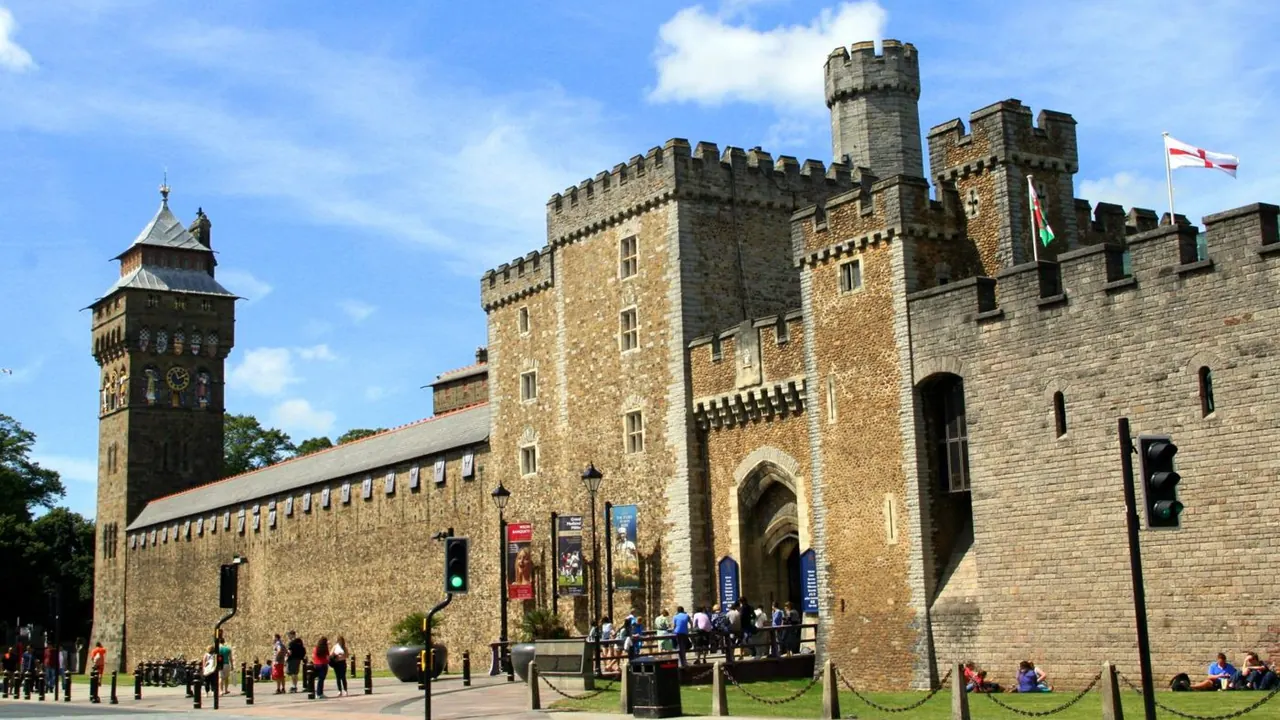
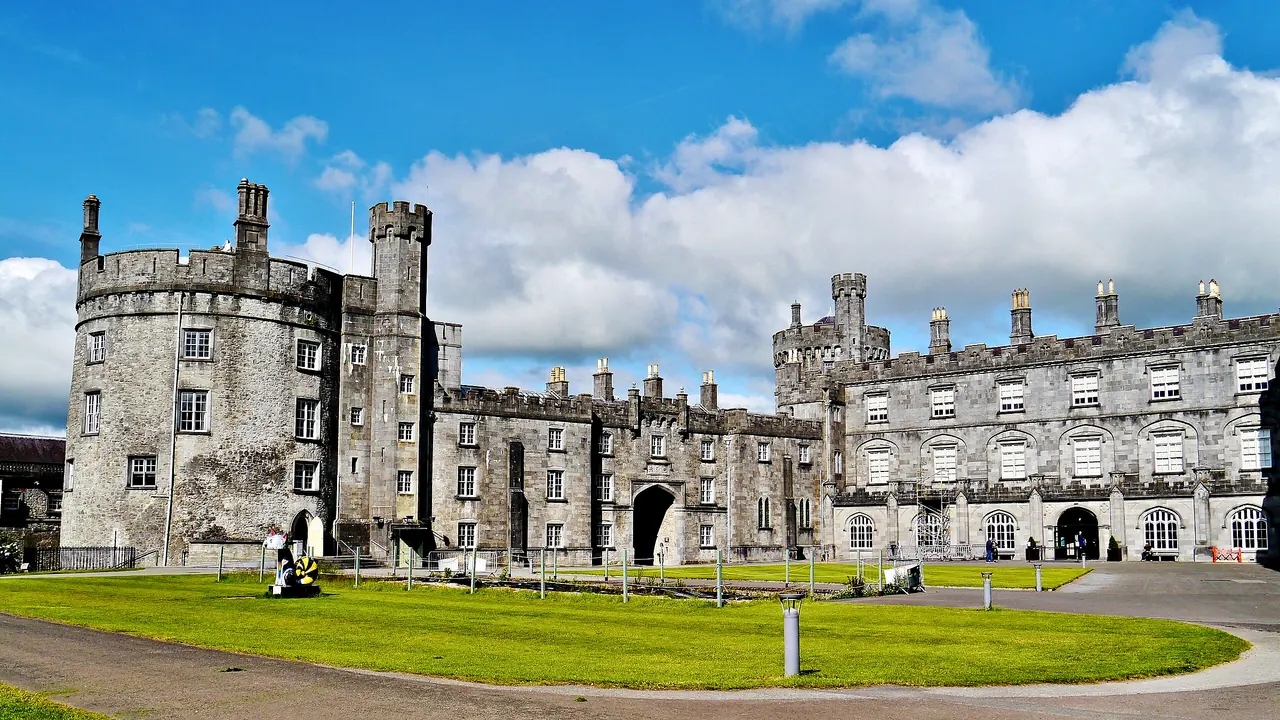
Photos: Cardiff by Tevfik Teker, CC BY 3.0, cropped; Kilkenny by Zairon, CC BY 4.0, cropped.
Cardiff or Kilkenny?
Our verdict in twelve categories, each scored against the same fixed benchmark cities, and the climate month by month, so you can choose for your trip.
Choose Cardiff for
- nature and the outdoors
- beaches
- families
Cardiff is the stronger choice for most trips. It packs a capital's range into a small, flat centre: a castle and national museum a few minutes apart, a proper concert hall and opera company at the Bay, livelier weekends and more varied places to eat. It also has the better reach beyond the city, with the Brecon Beacons, the coast and a string of castles, and Bath and Bristol by train. Families, walkers and anyone who wants plenty to fill four or five days will be better served here.
Choose Kilkenny for
- wellness
Kilkenny is a gentler, smaller proposition. It suits travellers who want an intact medieval town to stroll in a day, evenings in firelit pubs with a fiddle in the corner, and slow drives out to the abbeys and ruins of the southeast. Come with a hire car and modest expectations of nightlife and shopping, and stay out in the countryside if rest is the point.
Scoreboard
Twelve categories on one fixed scale from 0 to 100. The shaded stretch is the gap between the two.
Your match
Pick a travel style or drag the sliders, and both match scores follow your weighting.
Wins on nature and the outdoors and beaches with your weighting.
Wins on wellness with your weighting.
What matters to you?
Category by category
What the scores mean for a trip.
Beaches & swimming
Neither is a beach destination, but Cardiff at least has the seaside within easy reach. Barry Island's sandy bay and promenade are about half an hour by train, Penarth's pebbles and pier are just along the coast, and the Gower's wide sands can be reached by car.
Kilkenny is inland among farmland, so the sand at Tramore or along the Copper Coast means an hour's drive. That makes it a scenic outing rather than an easy afternoon by the sea.
Food & drink
Cardiff has more variety. Welsh cakes come straight off the griddle in the Victorian market, Pontcanna and Canton have neighbourhood bistros and brunch spots, and City Road has a long run of Middle Eastern and South Asian cooking, which a small town cannot match.
Kilkenny eats well for its size, with dairy, lamb and cheese from the county and some ambitious country-house kitchens just outside town. In the centre, though, it is mostly gastropubs and bistros, with little from abroad. Its real strength is the pub, where stout and red ale are poured by the fire in a town with three centuries of brewing behind it.
Culture & sights
Cardiff offers more to see. The castle mixes Roman walls with extravagant Victorian Gothic interiors, the National Museum has a surprisingly strong set of French Impressionists, and St Fagans brings rebuilt farmhouses and a miners' institute from across Wales. Most of the city is Victorian, though.
Kilkenny is older and more of a piece. The Medieval Mile links the castle on the Nore to St Canice's Cathedral, whose round tower you can climb, with Rothe House, the Black Abbey and narrow slips in between. It is a lovely walk through the Middle Ages, but it fills a day or two where Cardiff fills several.
Nightlife
Cardiff goes out on a far bigger scale. St Mary Street is packed with crowds on Saturday nights, Womanby Street has small alternative bars and late venues, and two universities keep term time busy. On rugby international days the whole centre turns red.
A night out in Kilkenny is a pub night, with low ceilings, snugs and open fires along High Street and Parliament Street. Weekends are lively with wedding and birthday groups, but there is one small nightclub, and the town goes quiet early midweek.
Nature & outdoors
Cardiff has far more dramatic country close by. Bute Park leads straight onto the Taff Trail, and in about an hour you can be on the moorland ridges of the Brecon Beacons climbing Pen y Fan, the highest peak in southern Britain. The Wales Coast Path and the limestone headlands of the Gower add sea cliffs as well.
Kilkenny's surroundings are softer: the wooded Nore Valley Way through Thomastown and Inistioge, modest climbs on Brandon Hill, and forest trails near Castlecomer. For real mountain scenery you have to drive an hour to the Comeraghs.
Day trips
Both make good bases, but Cardiff's outings are easier to reach and more varied. Caerphilly's huge fortress is twenty minutes by train, Castell Coch sits in the woods just north of the city, and Bath's Roman Baths and Bristol are both around an hour away by rail. Tintern Abbey and the Big Pit mine add history beyond the castles.
Kilkenny's region is rich in monastic and Norman sites, including the Rock of Cashel, the Jerpoint cloister and Kells Priory standing in open fields. Apart from Waterford and Dublin, though, almost all of them need a car.
Good for families
Cardiff is the better bet with children. Techniquest's hands-on science sits on a waterfront with boat trips, St Fagans has animals and craft demonstrations, Roath Park has rowing boats on its lake, and in summer Barry Island's sands and funfair are a short train ride away.
Kilkenny is small, safe and easy to walk with children, and the castle lawns and playground are right in town. The treetop courses near Castlecomer and the depths of Dunmore Cave need a drive, though, and the centre on weekend nights is no place for young children.
Getting around
Both centres are best on foot. Cardiff's castle, market, arcades and station are minutes apart, much as Kilkenny's sights lie along a 1km street.
The difference is beyond the centre. Cardiff's local trains reach Penarth, Barry Island, Caerphilly and the valleys, with a water taxi to the Bay. Around Kilkenny the buses are sparse, so the abbeys and villages mean a hire car, a taxi or a tour.
Shopping & style
Cardiff offers more range. Queen Street and the central mall cover the chains, and the glass-roofed Royal, Morgan and Castle arcades hide record shops, bookshops and vintage clothing, an afternoon you would not get in a small town.
Kilkenny's draw is craft. The old castle stables, birthplace of a national design movement, sell regional pottery, glass, jewellery and woollens, and the boutiques and delis on High Street make for easy browsing. Anything more means going to Dublin.
Affordability
Cardiff is the cheaper stay. Its prices are ordinary for Britain, the national museums including St Fagans are free, and short train rides cover the castles and the coast. Just avoid big match and concert dates, when rooms get expensive.
Kilkenny is cheaper than Dublin but still charges Irish prices for pints, pub meals and dinners, and rooms in the centre cost a lot more at weekends and during festivals. The biggest extra is the hire car you need to see the county.
Live music & performing arts
Cardiff has a full year-round arts scene. The Wales Millennium Centre is home to Welsh National Opera and hosts dance and musicals, the BBC National Orchestra of Wales is based in the city, and the small venues around Womanby Street book bands most nights.
Kilkenny's everyday offer is traditional music, with fiddles and bodhráns in pub corners most nights. Its high point is the calendar. In August the Arts Festival brings classical concerts to St Canice's Cathedral, and there are comedy and roots festivals earlier in the year, but outside those weeks there is little formal performance.
Wellness & relaxation
Neither is a place people pick to unwind, and neither has a bathing tradition. They differ in setting. In Cardiff, relaxing means a hotel spa or a leisure pool at the Bay, slow mornings in Pontcanna's cafés and walks along the Taff.
Kilkenny's spas are in country-house estates set in parkland just outside town, and the villages along the Nore are very quiet. Because the centre gets noisy on weekend nights, it pays to stay out in the countryside if rest is the aim.
When should you go?
Pick your month. The climate figures are measured averages, not a forecast.
Cardiff in July
Kilkenny in July
Daytime high, °C
Rainfall in the month, mm
Where the figures come from
Cardiff has no rain gauge within 25 km of the centre, so its rainfall comes from a gridded climate dataset read at the city rather than from a gauge further away.
Cardiff's sunshine is measured 83 km from the centre, at Lyneham.
Kilkenny has no rain gauge within 25 km of the centre, so its rainfall comes from a gridded climate dataset read at the city rather than from a gauge further away.
Kilkenny's sunshine is measured 77 km from the centre, at Rosslare.
Temperature and rainfall are climate normals, averaged over the years shown. Cardiff: 1991-2020 normals, Cardiff-Wales Airport (14.9 km from centre). Kilkenny: 1991-2020 normals, Kilkenny (2.1 km from centre).
The two have almost the same temperatures all year. Summer highs reach about 20°C in July and August, which is comfortable for walking and never too hot. Winter days stay in single figures, chilly and damp but rarely bitter. Neither gets warm enough for a beach vacation. The sea off Cardiff peaks at around 18°C in August, and the coast within reach of Kilkenny stays a little cooler, so you are more likely to paddle than to swim.
Rain is where they differ. Cardiff is wetter in every month, most of all from October to December, with around 132mm in November against about 100mm in Kilkenny. Both are at their driest from April to June. Those months also bring long, bright days, so May and June are the best time in either place for walking and day trips. July and August are a little warmer, but August brings more rain, especially in Cardiff. From October the days turn short, grey and wet in both.
Which traveller are you?
For an outdoors trip, Cardiff is the better base. You can walk or cycle out of the city on a free morning and still have whole days for proper hill and coast country, then be back in town for dinner. Kilkenny's walking is gentler, and wilder ground means long drives.
On a family trip with children, Cardiff makes the days easier to plan. Most outings are a short train or bus ride away, so less of the vacation is spent in the car, and there are indoor options when it rains. Kilkenny is relaxed and safe, but children tire of it sooner.
For a food and nightlife trip, Cardiff gives you more choice from one night to the next. You can eat a different cuisine each evening, then pick between big Saturday crowds and a small late bar. Kilkenny's firelit pub nights are charming, but after two evenings they start to feel the same.
Before you go
| Measure | Cardiff | Kilkenny |
|---|---|---|
| Official language | English | English, Irish |
| Currency | Pound Sterling (GBP) | Euro (EUR) |
| Sockets | G230 V, 50 Hz | G230 V, 50 Hz |
| Driving side | Left | Left |
| Time zone | UTC, UTC+1 in summer | UTC, UTC+1 in summer |
| Emergency number | 112 or 999 | 112 |
| Elevation | 41 m | 60 m |
| Main airport | Cardiff International Airport (CWL)15 km from centre30 non-stop destinations | Dublin Airport (DUB)109 km from centre200 non-stop destinations |
| Public holidays this year | 8 days | 11 days |
By the numbers
| Measure | Cardiff | Kilkenny |
|---|---|---|
| City population | 383,536 | 22,179 |
| People per km² | 2,734 | 828 |
| Museums within 10 km | 9 | 4 |
| UNESCO World Heritage sites within 50 km | 1 | 0 |
| Swim season, months above 21 °C | None | None |
Where else could you go?
Every comparison below shares a destination with this one, so you can follow Cardiff or Kilkenny somewhere new.