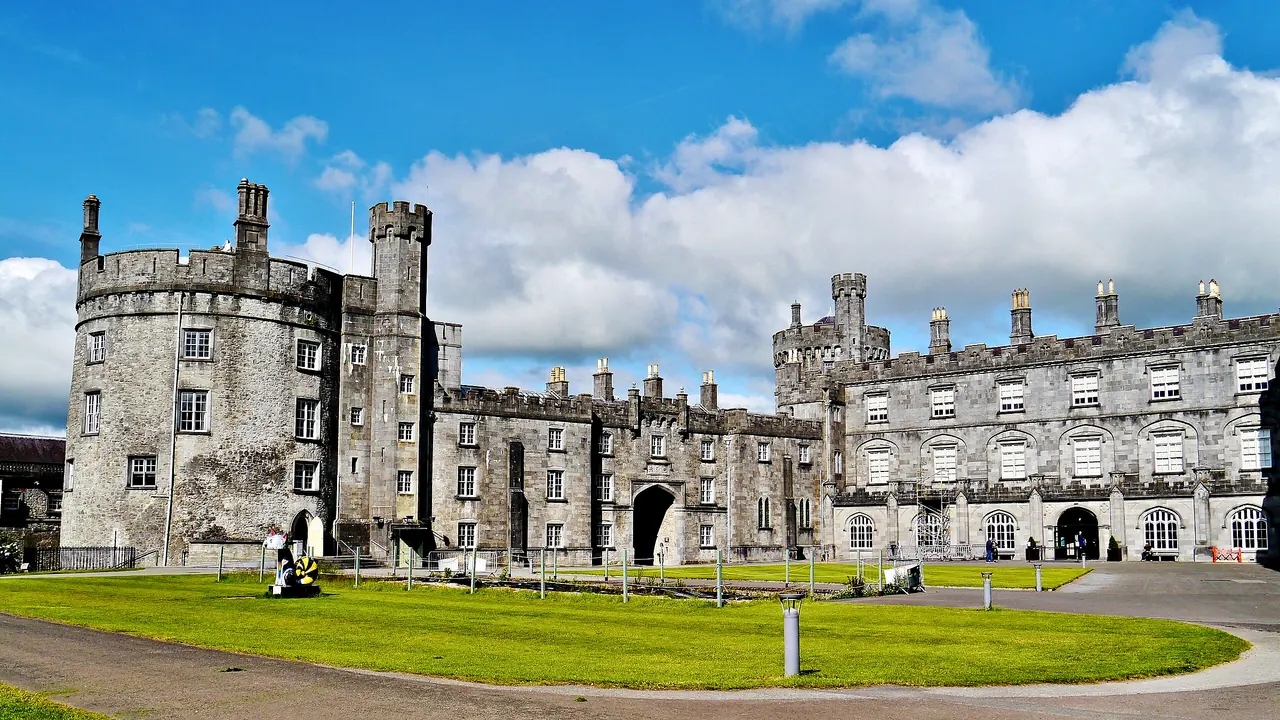
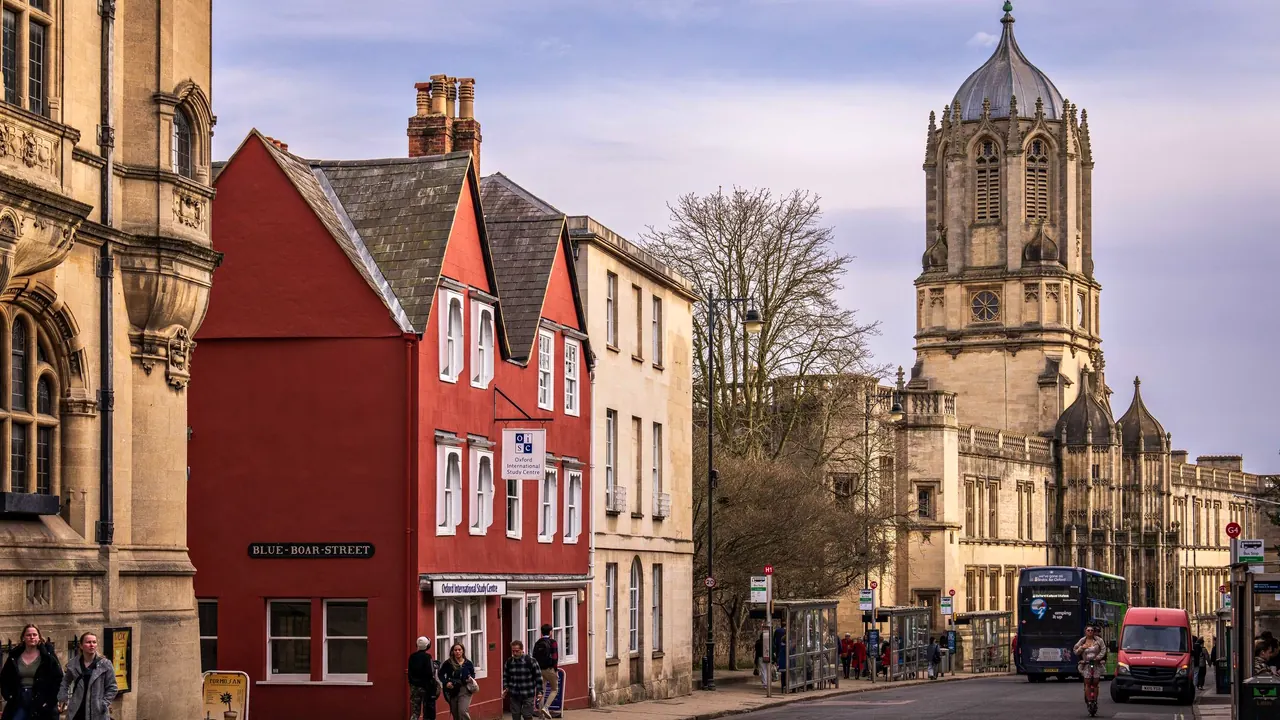
Photos: Kilkenny by Zairon, CC BY 4.0, cropped; Oxford by Mark Stebnicki, Pexels License.
Kilkenny or Oxford?
Our verdict in twelve categories, each scored against the same fixed benchmark cities, and the climate month by month, so you can choose for your trip.
Choose Kilkenny for
- prices
Kilkenny suits a slower, smaller trip built around Irish pubs and the countryside. Its medieval core rewards a day or two of unhurried wandering, traditional music plays in the bars on most nights, and with a hire car it makes a comfortable base for the abbeys, castles and river villages of the southeast. It is most appealing if you time your visit for one of its festivals, or if you want a few quiet days in rural Ireland rather than a long sightseeing list.
Choose Oxford for
- culture and sights
- day trips
- shopping
Oxford is the stronger choice for most other travellers. The colleges, libraries and free museums give it far more to see. Evensong in the college chapels adds a kind of live music Kilkenny cannot match, and the centre is easier to manage without a car. It also works much better as a base, with Blenheim, the Cotswolds and London all within easy reach. Families, culture lovers and anyone who wants to do a lot in a few days will get more from it.
Scoreboard
Twelve categories on one fixed scale from 0 to 100. The shaded stretch is the gap between the two.
Your match
Pick a travel style or drag the sliders, and both match scores follow your weighting.
Wins on prices with your weighting.
Wins on culture and sights and day trips with your weighting.
What matters to you?
Category by category
What the scores mean for a trip.
Beaches & swimming
Neither place has a beach, but they make up for it differently. From Kilkenny the Waterford and Wexford coasts are about an hour's drive away, with Tramore and the coves of the Copper Coast, though the sea there stays cold even in August.
Oxford is too far from the sea for an easy day at the coast. Instead it has river swimming on the Thames at Port Meadow and on the Cherwell, plus the large open-air pool at Hinksey, all within the city.
Food & drink
The two are broadly level at the table, but they are good at different things. Kilkenny's strength is its local produce. Dairy, lamb and cheese from the county end up on country-house menus and in good pub stews and chowders, but there is little food from other countries.
Oxford has more range rather than more depth. The Covered Market is a good place for lunch, Cowley Road has Middle Eastern, South Asian and Caribbean cooking, and Jericho has neighbourhood bistros. On the other hand, chains take up much of the centre.
Culture & sights
Oxford has much more to see. Its working colleges, the Radcliffe Camera, the Bodleian and Christ Church make up a whole historic city. On top of that come the Ashmolean, the Pitt Rivers and the Natural History Museum, which are museums of national standing.
Kilkenny's heritage is smaller in scale but hangs together well. It runs along the Medieval Mile from the castle to St Canice's Cathedral, where you can climb the round tower, and takes in Rothe House and the Black Abbey on the way. You can do it justice in a day or two.
Nightlife
Both places are mostly about pubs, and neither suits real clubbing. Kilkenny's old bars with low ceilings and open fires fill up at weekends, often with wedding and birthday groups, then go quiet midweek. Oxford follows the university calendar instead. It has riverside pubs for summer evenings, late bars and small clubs on Cowley Road, and cocktail and wine bars in Jericho, so there are more kinds of bar on offer.
Nature & outdoors
These two are close, but Oxford's green space starts nearer the centre. You can walk from the colleges to Christ Church Meadow or onto Port Meadow among the grazing horses, and the Cotswolds, Chilterns and Ridgeway are all within an hour.
Kilkenny has a riverside walk from the castle park and the wooded Nore Valley Way downstream. It also has more upland country close by, with Brandon Hill and the Blackstairs, and the Comeragh Mountains are about an hour away. It is wetter underfoot, though, and most of it needs a car.
Day trips
This is one of the widest gaps between the two. From Oxford you can reach Blenheim Palace in about twenty minutes, the Cotswold villages within an hour, and London in about an hour by train. Bath, Stratford-upon-Avon and Windsor are all within an hour and a half.
Kilkenny is a good base for the monastic and Norman southeast. The Rock of Cashel, Jerpoint Abbey, Kells Priory and Viking Waterford are all close, and Glendalough is a reasonable drive. Apart from Waterford and Dublin, though, you will need a car to reach almost all of them.
Good for families
Oxford has more for children right in the city. The free Natural History Museum and the Pitt Rivers, an afternoon punting, and the Harry Potter connections at Christ Church can fill a couple of days without a car.
Kilkenny is relaxed and safe for children, with the castle lawns and playground, but most of its best outings are out of town. These include the tree-top courses and zip lines near Castlecomer, Dunmore Cave and open farms.
Getting around
Both centres are easy on foot, and both have a station a short walk from the middle of town. Oxford is the more complete package. Frequent buses run out to the suburbs, bicycles are everywhere, and direct trains go to London and the Midlands.
Kilkenny is easy as long as you stay in town, since the Medieval Mile is only about 1km long. To reach the abbeys, villages and walking country, though, you need a hire car or a tour, because rural buses are sparse.
Shopping & style
Kilkenny's shopping is all about craft. Pottery, glass, jewellery and woollens are sold in the former castle stables and in studios around the county, with a modest run of boutiques along High Street.
Oxford has more to offer. It has the Covered Market's small traders, the historic Blackwell's bookshop, antique maps and prints, and independent shops in Jericho. The Bicester designer outlet is about twenty minutes away.
Affordability
In Kilkenny the extra cost is the car, and in Oxford it is the bed. B&Bs on the edge of Kilkenny are reasonable midweek but get pricier at weekends and during festivals. Seeing the abbeys and villages of the county usually means paying for a hire car on top.
In Oxford, central rooms are few and in demand, so many visitors stay out by the ring road. Once you are there, the free museums and the walkable centre keep spending down, although college entry and library tours add up over a few days.
Live music & performing arts
Oxford has more going on year-round. Choirs with world reputations sing Evensong on most evenings in term, and there are concerts at the Sheldonian and in the old Holywell Music Room. The Playhouse and the New Theatre stage touring drama and musicals.
Kilkenny's everyday offering is traditional music in the pubs. Its real strength is the calendar: the August Arts Festival puts classical concerts in St Canice's Cathedral, and comedy and roots music festivals take place in early summer.
Wellness & relaxation
The two are about level for a restful break, but you rest in different ways. Kilkenny's pampering happens out of town, at country-house hotels and estates set in parkland, where you get pools and treatment rooms. Staying out there also keeps you away from the centre, which gets loud on weekend nights, and the villages along the Nore are quieter still.
Oxford has far fewer spas, so its calm comes from places rather than treatments. The Botanic Garden, the walled college gardens and Addison's Walk by Magdalen's deer park are right in the city and best early in the morning. Where Kilkenny would send you to a pool, Oxford's equivalent of a lazy afternoon is drifting along the Cherwell in a punt.
When should you go?
Pick your month. The climate figures are measured averages, not a forecast.
Kilkenny in July
Oxford in July
Daytime high, °C
Rainfall in the month, mm
Where the figures come from
Oxford's temperatures are measured 37 km from the centre, at Fairford Royal Air Force Base.
Oxford has no rain gauge within 25 km of the centre, so its rainfall comes from a gridded climate dataset read at the city rather than from a gauge further away.
Oxford's sunshine is measured 57 km from the centre, at Lyneham.
Temperature and rainfall are climate normals, averaged over the years shown. Kilkenny: 1991-2020 (sunshine 1981-2010, rainfall 1981-2010) normals, Kilkenny (2.1 km from centre). Oxford: 1961-1990 (sunshine 1991-2020, rainfall 1991-2020) normals, Fairford Royal Air Force Base (37 km from centre).
Neither place is a beach destination in any month, so the best time to go comes down to mild weather for walking. Both are at their best from May to September, when there is the most sunshine and the days are pleasant for walking. Oxford gets a little warmer in high summer, with highs around 22°C in July against Kilkenny's 20°C. Kilkenny's nearby coast only reaches about 16°C in the sea, so swimming there is for hardy swimmers only.
The bigger difference is the rain. Kilkenny is clearly wetter all year, and from October to December it gets close to 83mm a month, which makes late autumn soggy for walks in the countryside. Oxford is drier throughout but has colder winters, with January highs of about 5°C, so a winter visit there is crisp rather than damp. For a visit outside summer, Oxford is the safer bet.
Which traveller are you?
For a culture and arts trip, Oxford is the clear pick. Its college quadrangles, the Bodleian and the Ashmolean fill two or three days, and Evensong in a college chapel gives your evenings something special. Kilkenny's Medieval Mile is lovely but takes far less time to see.
On a family trip with children, Oxford makes things easier. It has free museums full of dinosaur skeletons and curiosities, punting on the Cherwell, and Harry Potter settings, all on foot. In Kilkenny, most of the good outings for children, such as the forest park and Dunmore Cave, need a drive.
For a food and nightlife trip, the two are fairly close, but Kilkenny has more of a sense of place. Its fire-lit pubs with snugs have traditional music on most nights, and the town has a long history of brewing red ale. Choose Oxford instead if you want a wider range of cuisines and cocktail bars.
Before you go
| Measure | Kilkenny | Oxford |
|---|---|---|
| Official language | English, Irish | English |
| Currency | Euro (EUR) | Pound Sterling (GBP) |
| Sockets | G230 V, 50 Hz | G230 V, 50 Hz |
| Driving side | Left | Left |
| Time zone | UTC, UTC+1 in summer | UTC, UTC+1 in summer |
| Emergency number | 112 | 112 or 999 |
| Elevation | 60 m | 73 m |
| Main airport | Dublin Airport (DUB)109 km from centre200 non-stop destinations | London Heathrow Airport (LHR)63 km from centre224 non-stop destinations |
| Public holidays this year | 11 days | 8 days |
By the numbers
| Measure | Kilkenny | Oxford |
|---|---|---|
| City population | 22,179 | 147,500 |
| People per km² | 828 | 3,235 |
| Museums within 10 km | 4 | 11 |
| UNESCO World Heritage sites within 50 km | 0 | 1 |
| Swim season, months above 21 °C | None | - |
Where else could you go?
Every comparison below shares a destination with this one, so you can follow Kilkenny or Oxford somewhere new.