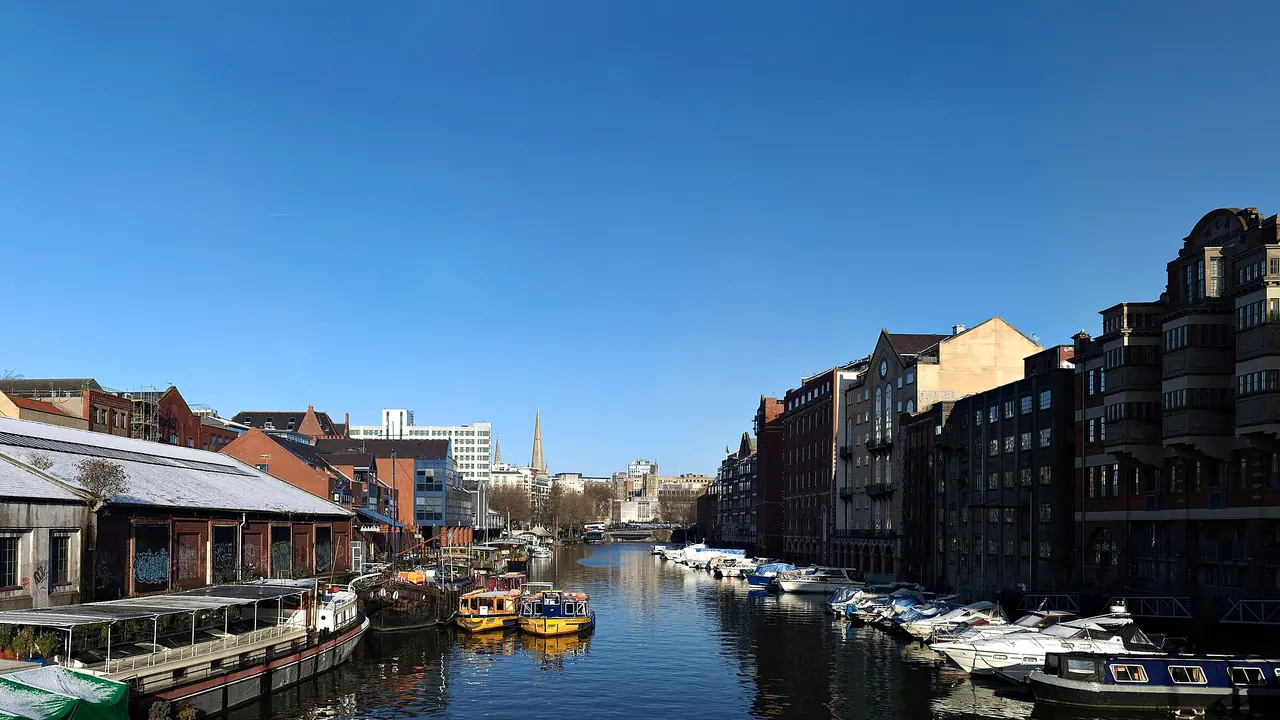
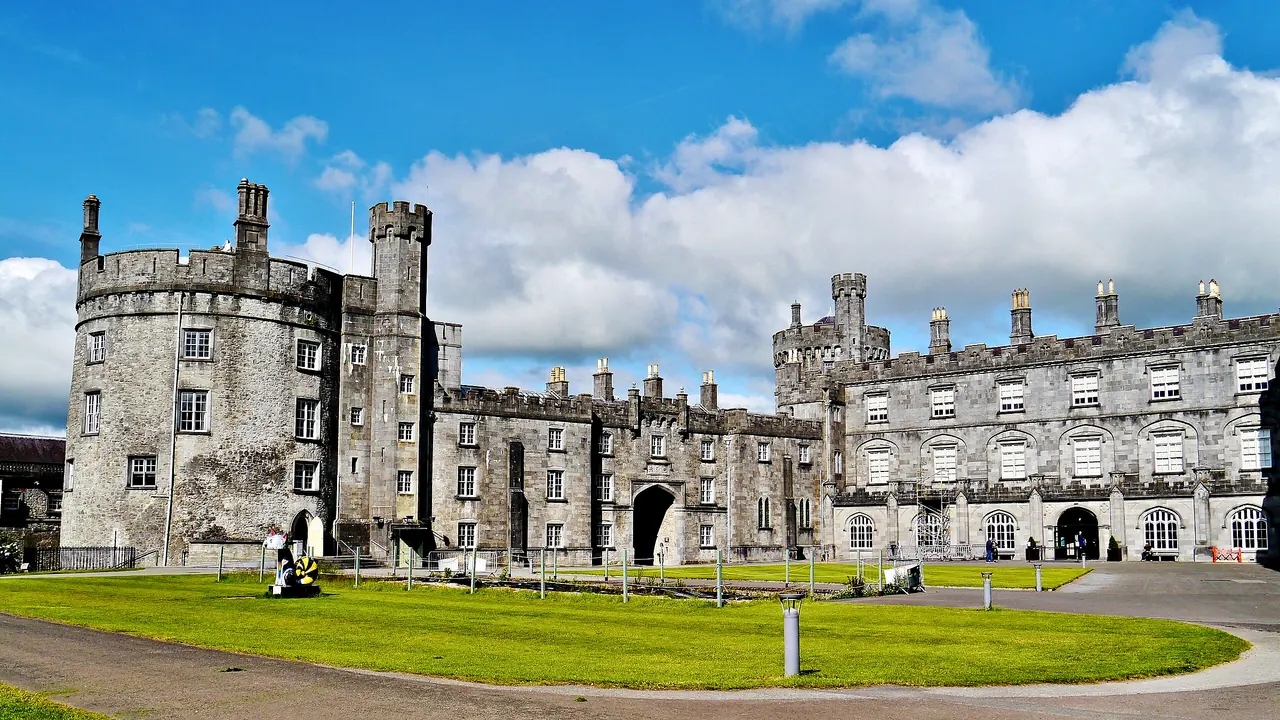
Photos: Bristol by NotFromUtrecht, CC BY-SA 3.0, cropped; Kilkenny by Zairon, CC BY 4.0, cropped.
Bristol or Kilkenny?
Our verdict in twelve categories, each scored against the same fixed benchmark cities, and the climate month by month, so you can choose for your trip.
Choose Bristol for
- nightlife
- families
- food and drink
Bristol is the better choice if you want a real city with plenty going on. It has a club scene with its own sound, food markets and taprooms, Brunel's engineering and Georgian Clifton, and some of the best day trips in England, with Bath a short train ride away. It also suits families and active travellers better, because the science centre, aquarium and wildlife park, the Avon Gorge and the Mendips are all close by.
Choose Kilkenny for
Kilkenny does not lead in any category we score.
Kilkenny is for a slower, smaller trip built around one medieval town and the countryside around it. You walk the Medieval Mile from the castle to St Canice's, spend the evenings in firelit pubs where traditional music is often playing, and drive out to the Rock of Cashel and the abbeys along the Nore. It has less to do overall and costs a little more, but it is a single, close-knit place that fits easily into a long weekend, especially if you have a car.
Scoreboard
Twelve categories on one fixed scale from 0 to 100. The shaded stretch is the gap between the two.
Your match
Pick a travel style or drag the sliders, and both match scores follow your weighting.
Wins on nightlife and families with your weighting.
Has no clear advantage with the weighting you have chosen.
What matters to you?
Category by category
What the scores mean for a trip.
Beaches & swimming
Neither place is a beach destination, and that is not a reason to choose one over the other. They differ only in what the nearby coast offers. Bristol's is a silty estuary with a huge tide: you go for a cold dip in the Victorian marine lake at Clevedon or a stroll on the long sands at Weston-super-Mare.
From Kilkenny, the Waterford and Wexford coast is about an hour's drive. Tramore and the Copper Coast coves are better for a clifftop walk than a swim, and some locals take a summer dip in the River Nore.
Food & drink
Bristol gives you much more choice. St Nicholas Market sells pies and Caribbean and Middle Eastern dishes, there are kitchens in shipping containers along the harbour, and Gloucester Road and North Street are full of bakeries and neighbourhood restaurants. To drink, there is West Country cider and a large craft brewing scene in old warehouses.
Kilkenny's strength is narrower. Its gastropubs and bistros cook well with county lamb, dairy and cheese, and its most ambitious cooking happens in country-house kitchens outside town. There is little food from abroad and almost no street food, so you eat steak and chowder followed by a pint of red ale, and not much else.
Culture & sights
Bristol has more to see, and more variety. There is Brunel's iron steamship in its dry dock and his bridge over the Avon Gorge, St Mary Redcliffe's Gothic interior, M Shed's frank story of the port and the slave trade, and Banksy's early street art.
Kilkenny's appeal is that it all hangs together. The Medieval Mile links the castle, Rothe House, the Black Abbey and St Canice's Cathedral, where you can climb the round tower. It is one well-preserved town that you can cover on foot in a day or two. Bristol's sights are spread across several districts and eras.
Nightlife
This is where the two differ most. Bristol is a proper night-out city. Its long sound-system culture lies behind trip hop, drum and bass and dubstep, and it shapes a club scene in railway arches near Temple Meads and on a boat moored in the harbour. A large student population keeps weekends busy all year.
Kilkenny's nights happen in low-ceilinged pubs with snugs and open fires on High Street and Parliament Street. At weekends they fill with wedding and birthday groups. There is just a small nightclub and a few late bars, and midweek the town goes to bed early.
Nature & outdoors
Bristol has more right on its doorstep. You can climb the limestone cliffs of the Avon Gorge, walk in Leigh Woods, ride the trails at Ashton Court or cycle the 25km railway path towards Bath. The Mendips and Cheddar Gorge are under an hour away, and the Brecon Beacons and Exmoor are close enough for a day of real upland walking.
Around Kilkenny the countryside is quieter farmland. The best of it is the wooded Nore Valley Way through Inistioge, along with modest climbs on Brandon Hill and the Blackstairs. For wilder ground, the Comeraghs are about an hour's drive away.
Day trips
Bristol is the better base for day trips, mainly because so much is reachable by train. Bath is a quarter of an hour away and Cardiff under an hour. Add Wells, Glastonbury, the Cotswold villages and Stonehenge with Avebury, and you could fill a week.
Kilkenny's outings centre on monastic and Norman ruins: the Rock of Cashel, Jerpoint's carved cloister, Kells Priory, and Waterford's Viking quarter. They are rewarding, but apart from Waterford and Dublin you will need a car to reach most of them.
Good for families
Bristol makes days with children much easier to fill. The SS Great Britain, the We The Curious science centre with its planetarium and the aquarium sit close together on the harbour, the yellow ferries between them are part of the fun, and the wildlife park on the northern edge makes another full day. The steep hills are hard work with a pushchair, though.
Kilkenny is small and relaxed, and the castle lawns and playground are good for running around. Beyond that, you drive out to the tree-top courses at Castlecomer or down into Dunmore Cave. It has no zoo or aquarium.
Getting around
In both places you walk, and the difference is in scale. Bristol's old city, harbourside and Queen Square are close together, with harbour ferries along the water. But the climb to Clifton is steep, and beyond the centre the only option is buses that get stuck in traffic.
Kilkenny is flat and tiny. The whole Medieval Mile is about 1km, and the station is a short walk away. The catch is the countryside: rural buses are so sparse that a hire car or a tour is close to essential.
Shopping & style
Bristol has the wider range. Chain and department stores fill Cabot Circus and Broadmead, Gloucester Road has a long run of record shops, delis and vintage clothes, and Park Street and Clifton Village have boutiques and galleries.
Kilkenny has less variety but one thing Bristol lacks: a real craft tradition. The castle's old stables, where a national design movement began in the 1960s, sell regional pottery, glass and woollens, and makers work in studios around the county. For fashion, you would go to Dublin.
Affordability
Neither is cheap, but Bristol is slightly easier on the budget. Most of its big museums and churches are free, and market stalls make for low-cost meals. Both get pricier at weekends, when central rooms fill up.
Kilkenny's pubs and restaurants charge Irish prices, its heritage sites have entry fees, and the hire car you need to explore the county is a real extra cost.
Live music & performing arts
Bristol has a year-round programme. The Georgian Bristol Old Vic produces its own work, the Hippodrome takes touring musicals and ballet, the Bristol Beacon and St George's put on concerts, and small venues in Stokes Croft and Old Market have bands and electronic acts most nights.
Kilkenny's everyday offer is fiddles and bodhráns in the corner of a pub. Its big moments come at festival time, above all the August Arts Festival, which brings classical music to St Canice's Cathedral. Outside those weeks there is far less on.
Wellness & relaxation
Bristol has the better options, largely because Bath is so close. The rooftop thermal pool fed by Britain's only natural hot springs is a quarter of an hour away by train, and in the city itself the heated Victorian lido in Clifton makes a restful half day.
In Kilkenny, pampering means the spas at country-house hotels on the edge of town. The town centre is noisy on weekend nights, so if rest is the point of your trip, stay out by the Nore or in the countryside.
When should you go?
Pick your month. The climate figures are measured averages, not a forecast.
Bristol in July
Kilkenny in July
Daytime high, °C
Rainfall in the month, mm
Where the figures come from
Bristol's station stands 178 m above the city centre, so the centre is likely a little warmer than the figures say.
Bristol has no rain gauge within 25 km of the centre, so its rainfall comes from a gridded climate dataset read at the city rather than from a gauge further away.
Bristol's sunshine is measured 43 km from the centre, at Lyneham.
Temperature and rainfall are climate normals, averaged over the years shown. Bristol: 1991-2020 normals, Lulsgate Bottom (11.8 km from centre). Kilkenny: 1991-2020 (sunshine 1981-2010, rainfall 1981-2010) normals, Kilkenny (2.1 km from centre).
Both have mild, damp climates and follow almost the same pattern through the year. June to September is the best time for walking and day trips. Daytime highs reach about 20°C in July and August in both, and from May to August each gets about the same long run of sunshine. Neither is warm enough for a real beach trip. Late summer is when the sea is least cold: about 18°C off Bristol's coast and nearer 16°C on the Irish coast south of Kilkenny, so only hardy swimmers go in.
Rain falls in every month in both places, but October to December is clearly the wettest stretch, with Kilkenny's November close to 80mm. Winter days are short and grey. Bristol is a degree or so colder, dropping to about 7°C in January. Neither ever gets too hot for sightseeing, so spring and early autumn work well too, if you bring a waterproof.
Which traveller are you?
For a food and nightlife trip, Bristol wins easily. It offers far more choice at the table and at the bar, and its clubs keep weekends going until late. Kilkenny serves good pub dinners in firelit rooms, but little happens after closing time.
For a short city break, Kilkenny is the neater fit. Almost everything worth seeing lies along one flat walk between castle and cathedral, so two unhurried days cover it. Bristol's sights are spread across districts and steep hills, and reward a longer stay.
On a family trip with children, Bristol makes planning easier. Its attractions for young visitors are inside the city and close together, so a wet afternoon is covered without a car. In Kilkenny, most of the fun beyond the castle park means driving out.
Before you go
| Measure | Bristol | Kilkenny |
|---|---|---|
| Official language | English | English, Irish |
| Currency | Pound Sterling (GBP) | Euro (EUR) |
| Sockets | G230 V, 50 Hz | G230 V, 50 Hz |
| Driving side | Left | Left |
| Time zone | UTC, UTC+1 in summer | UTC, UTC+1 in summer |
| Emergency number | 112 or 999 | 112 |
| Elevation | 11 m | 60 m |
| Main airport | Bristol Airport (BRS)11 km from centre117 non-stop destinations | Dublin Airport (DUB)109 km from centre200 non-stop destinations |
| Public holidays this year | 8 days | 11 days |
By the numbers
| Measure | Bristol | Kilkenny |
|---|---|---|
| City population | 472,465 | 22,179 |
| People per km² | 4,311 | 828 |
| Museums within 10 km | 23 | 4 |
| UNESCO World Heritage sites within 50 km | 3 | 0 |
| Swim season, months above 21 °C | None | None |
Where else could you go?
Every comparison below shares a destination with this one, so you can follow Bristol or Kilkenny somewhere new.