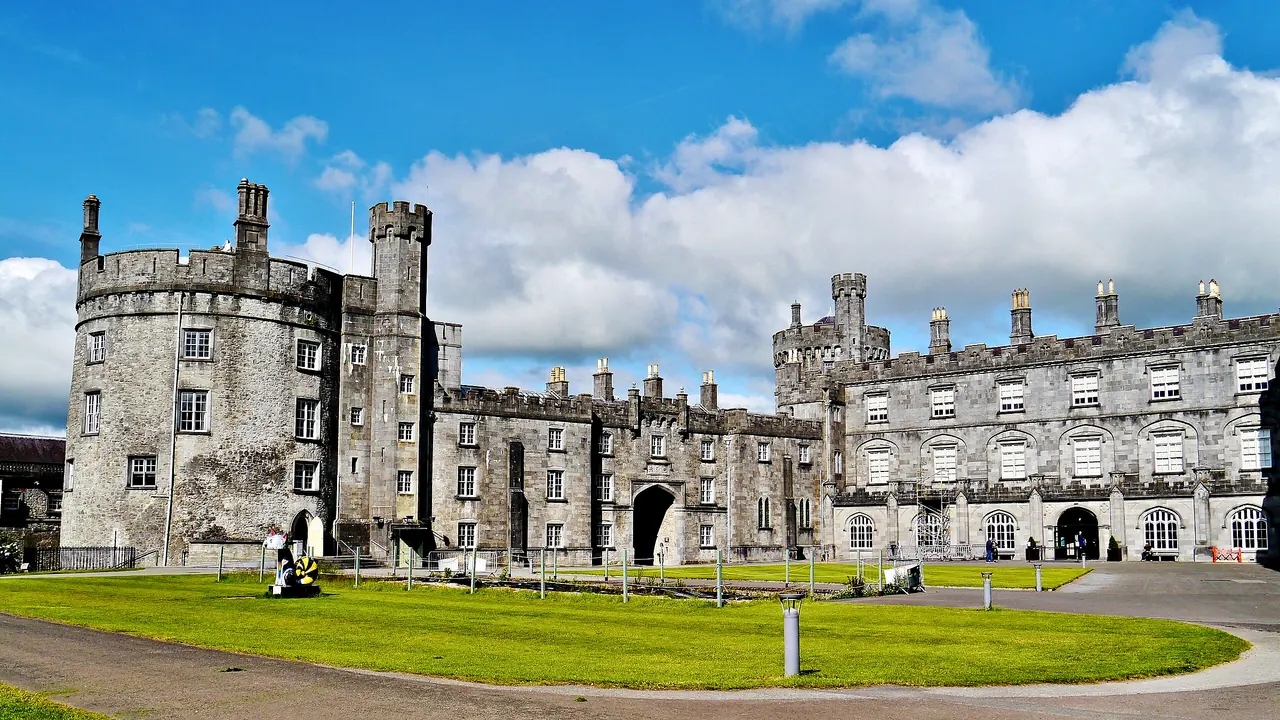
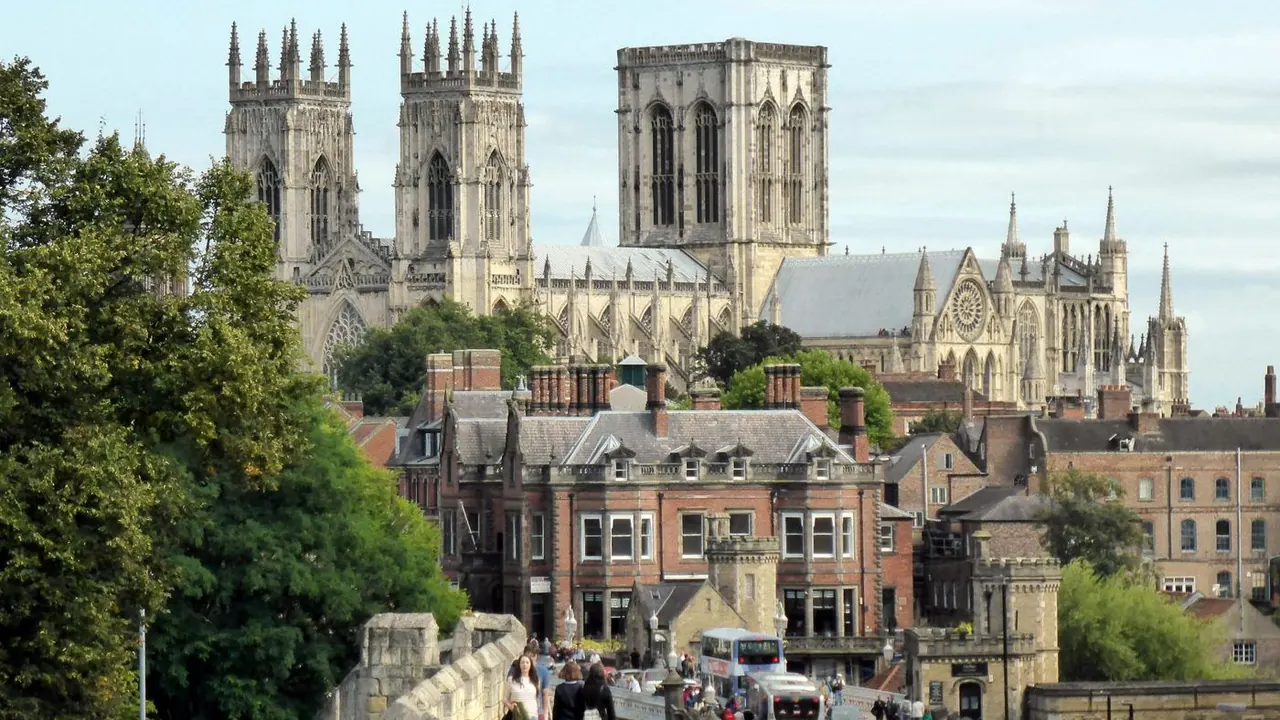
Photos: Kilkenny by Zairon, CC BY 4.0, cropped; York by PAUL FARMER, CC BY-SA 2.0, cropped.
Kilkenny or York?
Our verdict in twelve categories, each scored against the same fixed benchmark cities, and the climate month by month, so you can choose for your trip.
Choose Kilkenny for
- live music and the arts
Kilkenny suits a slower, smaller trip built around Irish pubs and the countryside. A day or two covers the Medieval Mile between the castle and St Canice's Cathedral. After that the appeal is evenings of traditional music by the fire and drives out to the Rock of Cashel, Jerpoint Abbey and the villages of the Nore valley. Come for the August arts festival, and bring or hire a car.
Choose York for
- culture and sights
- day trips
- families
York gives more to most travellers. Its Roman, Viking and medieval past is richer and better presented, from the Minster and the walls to Jorvik and the National Railway Museum, and children get more from it too. It is also the easier base without a car, because fast trains reach Durham, Harrogate, Leeds and the coast. Moors and dales close by make it the stronger choice for walkers as well.
Scoreboard
Twelve categories on one fixed scale from 0 to 100. The shaded stretch is the gap between the two.
Your match
Pick a travel style or drag the sliders, and both match scores follow your weighting.
Wins on live music and the arts with your weighting.
Wins on culture and sights and day trips with your weighting.
What matters to you?
Category by category
What the scores mean for a trip.
Beaches & swimming
Neither place is for the beach, and in both the sea is a day out rather than a reason to come. The difference is the kind of coast and how you get there. From Kilkenny it is about an hour's drive to Tramore and the rocky coves of the Copper Coast, which are better for a scenic walk than for swimming. From York the train takes you to Scarborough's two sandy bays and the traditional seaside towns of Filey and Whitby, with no car needed.
Food & drink
The two are about level, and both cook solid regional food, but in different ways. Kilkenny draws on county dairy, lamb and cheese, with its most ambitious cooking in country-house kitchens. It also has a long brewing history beside St Francis Abbey, and red ale is still poured by the fire.
York's strengths are the tearoom and the Sunday roast: afternoon tea, fat rascals and Yorkshire pudding. Unlike Kilkenny, it also has street food and local pies at the Shambles Market. In both, cuisines from abroad are thin, and the most visited streets lean towards tourist menus.
Culture & sights
York has far more to see. A walkable centre holds two thousand years of history: the great Gothic Minster, nearly three miles of walls you can walk on, Jorvik built over a dug-up Viking street, and the abbey ruins in the Museum Gardens. The National Railway Museum and the guildhalls add a full extra day.
Kilkenny is a coherent medieval town in one line rather than in layers. Its sights run along the Medieval Mile, from the Norman castle to St Canice's and its climbable round tower, with Rothe House and the Black Abbey in between. It is charming, but you will have seen it in a day or two.
Nightlife
In both, a night out means old pubs, and neither is a clubbing town. Kilkenny's version is low ceilings, open fires and wooden snugs on High Street and Parliament Street, with one small nightclub for later.
York's students keep a few cocktail bars and small clubs going. For proper clubbing, Leeds is half an hour away by train. Weekend crowds differ too: wedding and birthday groups in Kilkenny, stag and hen parties and race-day crowds on Micklegate in York.
Nature & outdoors
York has the better country within reach. The North York Moors begin about 40km away and turn purple with heather in late summer, then end in high sea cliffs along the Cleveland Way. The Yorkshire Dales, with their limestone scars and waterfalls, are about an hour west.
Kilkenny's surroundings are gentler. There is the wooded Nore Valley Way through Thomastown and Inistioge, short climbs on Brandon Hill and the Blackstairs, and Dunmore Cave. For corrie lakes and real mountains you drive an hour to the Comeraghs.
Day trips
York is the stronger base, mostly because so much of it is reachable by train. Durham's cathedral and castle, spa-town Harrogate, Leeds, Beverley and Scarborough are all easy rail outings. Castle Howard and Fountains Abbey are a short drive.
Kilkenny's outings are fine on their own terms: the Rock of Cashel, Jerpoint's carved cloister, Kells Priory standing in fields, and Waterford's Viking quarter. Apart from Waterford and Dublin, though, nearly all of them need a car.
Good for families
York keeps children busier. They can walk around full-size locomotives at the National Railway Museum and visit the Victorian street in the Castle Museum. Ghost walks and a stroll on the city walls feel like adventures, and a zoo, a theme park and Scarborough's beach are about an hour away.
Kilkenny is relaxed and safe, with room to run on the castle lawns. Its best outings, the tree-top courses near Castlecomer, Dunmore Cave and open farms, mean getting in the car. There is no large attraction for a wet day.
Getting around
Both centres are easy to walk. York is easier beyond that: it is flat, mostly pedestrianised, good for cycling, and its station is a major rail hub. You can see much of the region without driving. Kilkenny's Medieval Mile is only about 1km, and its station is close by. Out in the county, though, buses are sparse, so a hire car, driving on the left, is close to essential.
Shopping & style
York is the better place to browse. Stonegate, Petergate and Swinegate are lined with independent bookshops, jewellers and antiques dealers in medieval buildings, the familiar chains are on Coney Street, and the Christmas markets are a draw on their own.
Kilkenny's strength is craft rather than variety. In the old castle stables you will find pottery, glass, silver and woollens made in the region, and there are studios around the county. Beyond that, High Street fills about an afternoon.
Affordability
Neither is cheap, and York is only a little easier on the budget. Its main money-savers are free ones: the National Railway Museum, the walls and the Museum Gardens. Without a car you can see more of the region by train. Kilkenny's heritage sites charge only modest fees, but you are paying Irish prices for meals and pints, and a hire car is a real extra cost. In both, weekend rooms in the centre get expensive, and staying midweek helps.
Live music & performing arts
The two are well matched but strong in different ways. Kilkenny's everyday offer is traditional music, with fiddles and bodhráns in a pub corner on most nights. Its high point is August, when the Arts Festival brings classical concerts into St Canice's Cathedral, and it also has comedy and roots music festivals.
York leans towards theatre and choirs. It has the historic Theatre Royal with its pantomime, early music concerts in a medieval church, free evensong at the Minster, and the Mystery Plays performed on wagons in the streets in the years they are revived.
Wellness & relaxation
Neither has its own bathing tradition, but York has one close by. Harrogate is half an hour away by train, and its Royal Baths still have a Victorian Turkish bath with tiled hot rooms and plunge pools. In York itself, quiet early mornings on the walls and long afternoon teas set an easy pace. Kilkenny's pampering is limited to country-house hotel spas outside town, and staying out there is wise, because the centre gets noisy at weekends.
When should you go?
Pick your month. The climate figures are measured averages, not a forecast.
Kilkenny in July
York in July
Daytime high, °C
Rainfall in the month, mm
Where the figures come from
Kilkenny has no rain gauge within 25 km of the centre, so its rainfall comes from a gridded climate dataset read at the city rather than from a gauge further away.
Kilkenny's sunshine is measured 77 km from the centre, at Rosslare.
York has no rain gauge within 25 km of the centre, so its rainfall comes from a gridded climate dataset read at the city rather than from a gauge further away.
York's sunshine is measured 48 km from the centre, at Leeming.
Temperature and rainfall are climate normals, averaged over the years shown. Kilkenny: 1991-2020 normals, Kilkenny (2.1 km from centre). York: 1991-2020 normals, Linton-On-Ouse (14.9 km from centre).
Temperatures in the two are almost the same all year: mild, never hot, and comfortable for walking the streets in every season. Summer days peak around 20°C, and winter days sit at about 8°C, with York a degree or two colder in December and January. Neither is warm enough for a beach trip, and the sea off the coast near Kilkenny only reaches about 16°C in late summer. The real difference is rain. Kilkenny is wetter for most of the year, especially from autumn to spring, and October to December is properly wet, with about 103mm in November. York stays fairly dry through those months. In early summer the two are close, and York is in fact slightly wetter in June.
Kilkenny is at its best from April to September, and May stands out, when it gets noticeably more sun than York. York's best stretch runs from May to September. Its drier winters also make a cold December visit more comfortable than one to Kilkenny.
Which traveller are you?
For a short city break of two or three nights, York is far easier. You step off the train a short walk from the Minster, everything is inside the walls, and nothing needs a car. Kilkenny pays off better on a slower stay with wheels.
Shoppers who like to browse for whole afternoons will be happier in York's medieval lanes, and the December markets give them a reason to go in winter. If you mainly want one well-made piece of Irish pottery, glass or woollens, Kilkenny's craft studios are the better hunting ground.
On a food and nightlife trip the two are close, so it depends when you like to eat and drink. Kilkenny is best in the evening, with dinner followed by a fiddle session in a firelit bar. York is best by day: tearooms, a market lunch, then an ale crawl.
Before you go
| Measure | Kilkenny | York |
|---|---|---|
| Official language | English, Irish | English |
| Currency | Euro (EUR) | Pound Sterling (GBP) |
| Sockets | G230 V, 50 Hz | G230 V, 50 Hz |
| Driving side | Left | Left |
| Time zone | UTC, UTC+1 in summer | UTC, UTC+1 in summer |
| Emergency number | 112 | 112 or 999 |
| Elevation | 60 m | 25 m |
| Main airport | Dublin Airport (DUB)109 km from centre200 non-stop destinations | Leeds Bradford Airport (LBA)39 km from centre69 non-stop destinations |
| Public holidays this year | 11 days | 8 days |
By the numbers
| Measure | Kilkenny | York |
|---|---|---|
| City population | 22,179 | 208,400 |
| People per km² | 828 | 766 |
| Museums within 10 km | 4 | 24 |
| UNESCO World Heritage sites within 50 km | 0 | 2 |
| Swim season, months above 21 °C | None | - |
Where else could you go?
Every comparison below shares a destination with this one, so you can follow Kilkenny or York somewhere new.