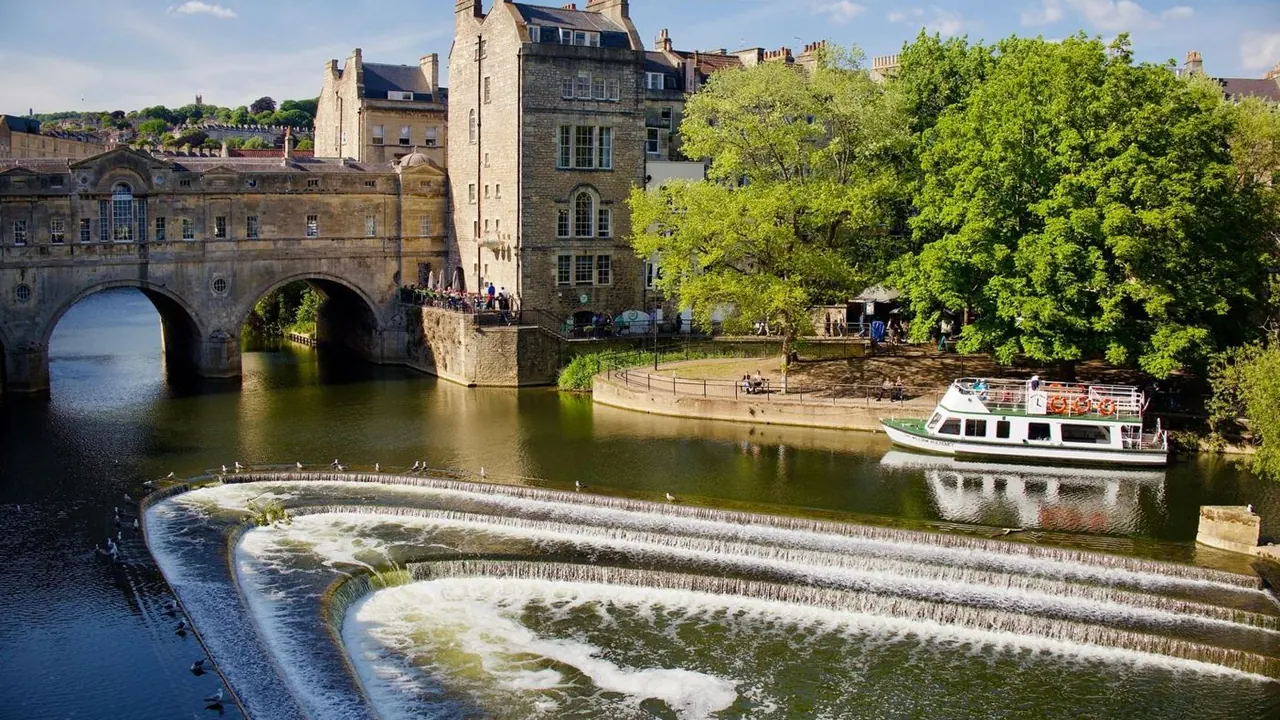
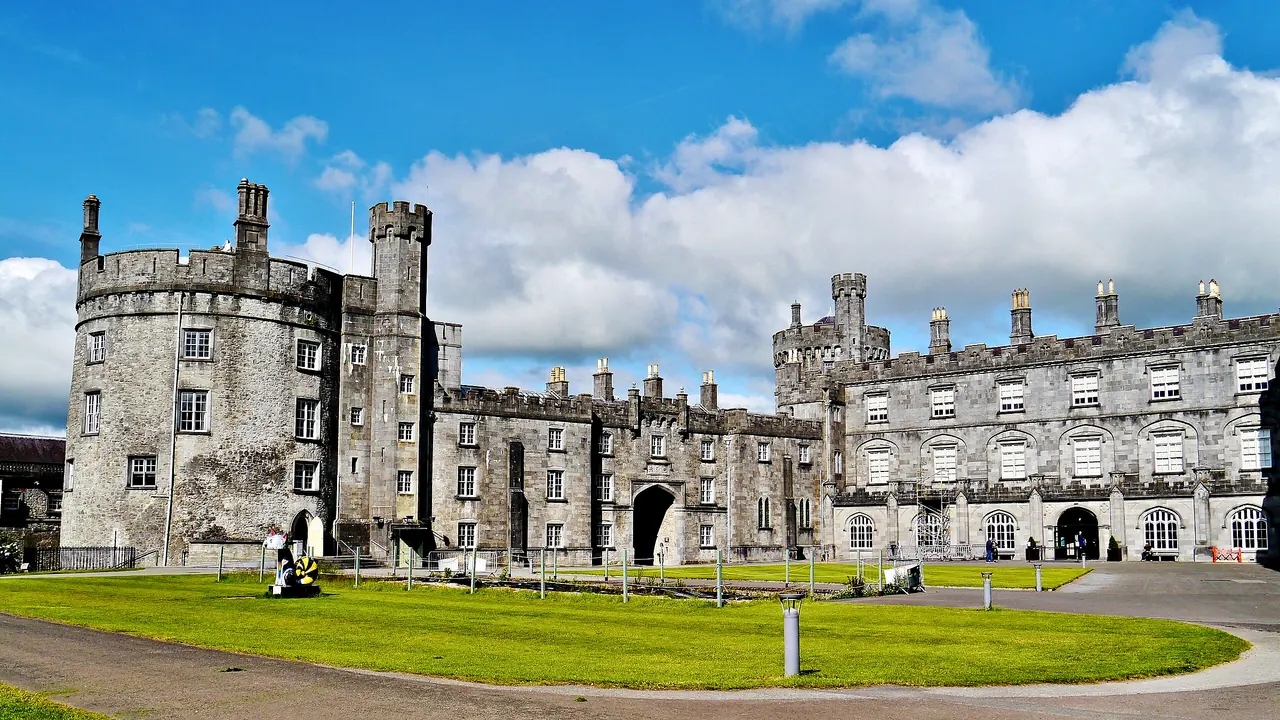
Photos: Bath by Lucas Carlini, Pexels License; Kilkenny by Zairon, CC BY 4.0, cropped.
Bath or Kilkenny?
Our verdict in twelve categories, each scored against the same fixed benchmark cities, and the climate month by month, so you can choose for your trip.
Choose Bath for
- wellness
- culture and sights
- shopping
Bath suits the traveller who wants a lot from a few days in one compact place. It has the grander sights, from the Roman Baths to the Georgian crescents, along with Britain's only natural thermal bathing, better shopping, and an unusually rich choice of outings by train or car. Couples on a spa weekend, architecture lovers and anyone who wants Stonehenge, Wells and Bristol within easy reach will get more from it.
Choose Kilkenny for
- prices
- nightlife
Kilkenny is the gentler, more intimate choice. It works best for an unhurried stay built around a walk down the Medieval Mile, evenings in firelit pubs with a fiddle playing in the corner, and drives out to the abbeys and castles of the Irish southeast. Come for the craft tradition, the August arts festival or a slower Irish trip where the pub matters more than the museum.
Scoreboard
Twelve categories on one fixed scale from 0 to 100. The shaded stretch is the gap between the two.
Your match
Pick a travel style or drag the sliders, and both match scores follow your weighting.
Wins on wellness and culture and sights with your weighting.
Wins on prices and nightlife with your weighting.
What matters to you?
Category by category
What the scores mean for a trip.
Beaches & swimming
Neither is a beach destination, and both are a drive from the sea. The coasts within reach are quite different, though. From Bath, the nearest shore is Weston-super-Mare's brown, shallow water with a very long tide, and good sand means two hours or more to Dorset or Devon.
Kilkenny's coast is an hour away and more rewarding to look at, with Tramore and the coves of the Copper Coast making a good scenic outing. In summer, locals in both towns take a dip in the river, the Avon or the Nore.
Food & drink
Bath eats a little better and with more variety. There are more independent restaurants in the lanes around the Abbey, local baking traditions like the Sally Lunn bun, the Green Park farmers' market and afternoon tea in Georgian tearooms.
Kilkenny's table is more about drink: centuries of brewing beside St Francis Abbey, and stout and red ale in old pubs, alongside hearty chowders and some ambitious cooking in country-house kitchens. Neither offers much from other cuisines or any street food.
Culture & sights
Bath is in a different league for sightseeing. The entire city is a World Heritage Site, with the Royal Crescent, the Circus and Pulteney Bridge a short walk from the Roman Baths and the fan-vaulted Abbey. Smaller museums such as the Holburne and No. 1 Royal Crescent fill a second or third day.
Kilkenny's appeal is a well-kept medieval town rather than a series of landmarks. The Medieval Mile links the castle to St Canice's Cathedral, where you can climb the round tower, passing Rothe House and the Black Abbey on the way. It is charming and complete, but a day or two covers it.
Nightlife
Evenings in both towns revolve around the pub, and both go quiet early midweek. Kilkenny has more pubs for its size, with snugs and open fires on High Street and Parliament Street, and on weekends it fills up with wedding and birthday groups.
Bath adds a few wine and cocktail bars and some student clubs during term. Its real trump card is Bristol, about fifteen minutes away by train, for anyone who wants a bigger night out.
Nature & outdoors
In Bath you can walk straight from the streets onto the Skyline loop across the hills, or follow the canal towpath through the Limpley Stoke valley. Cyclists can take the Two Tunnels Greenway, and both the Cotswolds and Cheddar Gorge are within an hour.
The country around Kilkenny is quieter farmland. The best walking is the wooded Nore Valley Way through Inistioge and modest hikes on Brandon Hill, and anything wilder, such as the Comeragh Mountains, means an hour's drive.
Day trips
Bath has the richer choice of outings. Bristol and Cardiff are easy by train, Stonehenge and Avebury are about an hour by road, and Wells, Glastonbury, Lacock and the southern Cotswolds are all close.
Kilkenny makes a good base for Ireland's monastic and Norman past: the Rock of Cashel, Jerpoint's carved cloister, Kells Priory and Viking Waterford. Glendalough and Dublin are further out. Apart from the cities, nearly all of it needs a car.
Good for families
Bath does a little more for children. They tend to love the steaming Roman Baths and the big playground in Royal Victoria Park. Bristol's science centre and aquarium are a short train ride away, and the safari park at Longleat is about forty minutes by car. The steep streets are hard work with a pushchair.
Kilkenny is small and relaxed, and has castle lawns to run on. Its best family outings are the zip lines and tree-top courses near Castlecomer and the depths of Dunmore Cave, both reached by car.
Getting around
You can walk the centre of either town in minutes. Bath is better connected, though, with a largely pedestrianised core, buses up to the hilltop viewpoints and direct trains to Bristol and London. Driving in the city itself is best avoided, which is what the park-and-ride sites are for.
In Kilkenny, the 1km Medieval Mile holds almost everything, and the station has trains on the Dublin to Waterford line. Once you leave town, rural buses are sparse, so a hire car is close to essential.
Shopping & style
Bath is the better place to spend a day shopping. It has British brands on Milsom Street, chains at SouthGate, antiques on Bartlett Street, and salvage dealers and furniture makers along Walcot Street. The Guildhall Market and the shops on Pulteney Bridge add character.
Kilkenny's distinction is craft. The old castle stables, where a national design movement began, sell regional pottery, glass, jewellery and woollens. Beyond those, a row of boutiques on High Street makes for an afternoon rather than a whole day.
Affordability
Neither town is cheap, and Kilkenny is only slightly easier on the wallet. In Bath, the bill is driven by central hotels and expensive tickets for the Roman Baths and the spa. Sleeping in Bristol or coming midweek helps, and the walkable centre keeps transport costs low.
Kilkenny's B&Bs on the edge of town are fair midweek and its heritage sites charge modest fees. The extra cost there is a hire car for the county. In both towns, weekend rooms are the expensive ones.
Live music & performing arts
The two towns are broadly level, but the evenings feel different. Bath's stage life is formal and centres on the gilded Theatre Royal, with touring drama, opera, dance and a Christmas pantomime. There are also concerts in the Abbey and the Assembly Rooms and festivals of literature and Mozart.
Kilkenny's music happens in the pubs. On most nights a few bars have a traditional session going. The big draw is the August Arts Festival, which brings classical concerts to St Canice's Cathedral.
Wellness & relaxation
Here Bath stands alone. Spring water rises at about 46°C, and you can bathe in it in the rooftop pool above the Abbey or the intimate Cross Bath. Unhurried hours in the Pump Room and the riverside gardens complete the slow pace.
Kilkenny has no bathing tradition of its own, so relaxing there means a country-house hotel spa outside town or a quiet morning by the Nore. Its centre is too noisy at weekends for a restful stay.
When should you go?
Pick your month. The climate figures are measured averages, not a forecast.
Bath in July
Kilkenny in July
Daytime high, °C
Rainfall in the month, mm
Where the figures come from
Bath's temperatures are measured 29 km from the centre, at Lyneham.
Bath has no rain gauge within 25 km of the centre, so its rainfall comes from a gridded climate dataset read at the city rather than from a gauge further away.
Kilkenny has no rain gauge within 25 km of the centre, so its rainfall comes from a gridded climate dataset read at the city rather than from a gauge further away.
Kilkenny's sunshine is measured 77 km from the centre, at Rosslare.
Temperature and rainfall are climate normals, averaged over the years shown. Bath: 1991-2020 normals, Lyneham (29.2 km from centre). Kilkenny: 1991-2020 normals, Kilkenny (2.1 km from centre).
The two climates are close to identical: mild, damp and never hot. Both are at their best from late May to early September, when daytime highs reach about 21°C in Bath and 20°C in Kilkenny. These are good conditions for walking the streets all day, though never for lying on a beach. The sunniest stretch runs from May to August in both places. Kilkenny's brightest month is May, while Bath stays sunny a little longer into July. Neither town's nearby sea gets beyond about 18°C, so swimming is for the hardy.
Autumn and winter is where they differ a little. Kilkenny turns wetter from October, with around 103mm in November, while Bath stays somewhat drier but is slightly colder in midwinter. A grey December suits Bath better, because the open-air thermal pool is at its most appealing on a cold evening. Kilkenny in winter is mostly about the pub fire.
Which traveller are you?
On a relaxing and wellness trip, choose Bath. The thermal springs are right in the centre, so the whole stay can be slow and on foot, and a midweek visit is the calmest. In Kilkenny, real rest means sleeping out in the countryside rather than in town.
For a food and nightlife trip, Bath's restaurants are slightly better, but once dinner is over there is little to keep you out. Kilkenny gives you the better evening, with stout, red ale and a traditional music session easy to find most nights.
On a trip on a tight budget, Bath is hard going, because rooms are dear and the Roman Baths and the spa take a big share of the money. Kilkenny goes a little further. Its medieval centre costs nothing to walk, and trains reach Waterford and Dublin without a hire car.
Before you go
| Measure | Bath | Kilkenny |
|---|---|---|
| Official language | English | English, Irish |
| Currency | Pound Sterling (GBP) | Euro (EUR) |
| Sockets | G230 V, 50 Hz | G230 V, 50 Hz |
| Driving side | Left | Left |
| Time zone | UTC, UTC+1 in summer | UTC, UTC+1 in summer |
| Emergency number | 112 or 999 | 112 |
| Elevation | 132 m | 60 m |
| Main airport | Bristol Airport (BRS)25 km from centre117 non-stop destinations | Dublin Airport (DUB)109 km from centre200 non-stop destinations |
| Public holidays this year | 8 days | 11 days |
By the numbers
| Measure | Bath | Kilkenny |
|---|---|---|
| City population | 94,092 | 22,179 |
| People per km² | 3,245 | 828 |
| Museums within 10 km | 17 | 4 |
| UNESCO World Heritage sites within 50 km | 2 | 0 |
| Swim season, months above 21 °C | None | None |
Where else could you go?
Every comparison below shares a destination with this one, so you can follow Bath or Kilkenny somewhere new.