Ireland
Cork
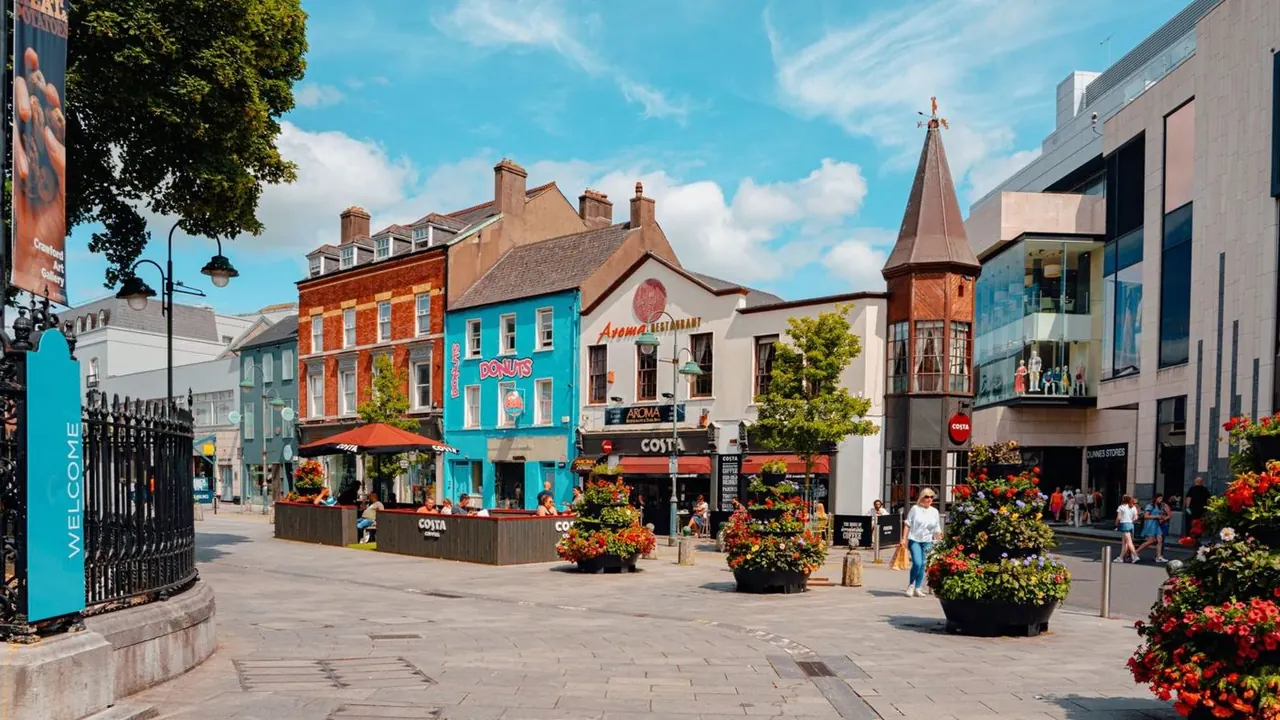
Colourful shopfronts in the city centre
- Day trips68
- Nature & outdoors62
- Food & drink58
Photo: Selim Karadayı, Pexels License
Match
45
Every category weighted equally
- Beach & sun42
- Culture & arts47
- Food & nightlife46
- Family trip46
- Outdoors49
- Relax & unwind43
- Shopping & style46
- On a budget44
Cork in twelve categories
Our verdict on each, scored 0 to 100 against the same fixed benchmark cities, so a score means the same thing on every page.
Beaches & swimming. Scores 25 out of 100.
Food & drink. Scores 58 out of 100.
Culture & sights. Scores 40 out of 100.
Nightlife. Scores 40 out of 100.
Nature & outdoors. Scores 62 out of 100.
Day trips. Scores 68 out of 100.
Good for families. Scores 50 out of 100.
Getting around. Scores 58 out of 100.
Shopping & style. Scores 40 out of 100.
Affordability. Scores 33 out of 100.
Live music & performing arts. Scores 45 out of 100.
Wellness & relaxation. Scores 22 out of 100.
Cork category by category
Beaches & swimming
25Cork sits at the head of one of the world's largest natural harbours, and small sandy beaches such as Myrtleville and Fountainstown lie on its outer edge, about half an hour's drive away. Further west, Garrettstown and the long strand at Inchydoney are within roughly an hour. The water is the cool Atlantic, peaking around 15°C to 16°C in late summer, so swimming is for the hardy, and there is a loyal local year-round sea-swimming crowd. Beach days are an occasional outing on a sunny weekend rather than any part of why people come, and a car makes them far easier.
Food & drink
58Cork calls itself Ireland's food capital, and the claim rests on produce more than on a cuisine. The English Market, a covered Victorian market hall in the centre, is the heart of it: butchers, fishmongers, cheesemongers and bakers selling West Cork farmhouse cheeses, smoked fish, spiced beef and local oddities such as tripe and drisheen. Restaurants lean on the same suppliers, with a cluster of good modern Irish kitchens and casual spots around the market and the streets off Oliver Plunkett Street.
The city has its own stout tradition, drunk in old pubs alongside craft beer, and Kinsale's seafood restaurants are close by. The range is limited, though, and a visitor after variety or late-night eating will find it runs out quickly.
Culture & sights
40Cork's sights are modest and pleasant rather than grand. The centre sits on an island between two channels of the River Lee, with Georgian quays and narrow lanes. St Fin Barre's Cathedral is a striking Gothic Revival building, and the Shandon bell tower on the north side, with its pepper-pot steeple and bells visitors can ring, is the city's emblem. The Crawford Art Gallery holds a fine collection of Irish painting, Cork City Gaol tells the story of nineteenth-century prison life, and Elizabeth Fort and Blackrock Castle add some older history. A day or two covers it comfortably.
Nightlife
40Going out in Cork means pubs first: old wood-panelled bars along the side streets off Patrick Street and around Oliver Plunkett Street, many with traditional music in a back room. A large student population keeps the centre busy from Thursday to Saturday, with a handful of late bars and small clubs. Weeknights are quiet, closing times follow Irish rules, and anyone looking for big clubs or a scene that runs to dawn will find it limited. It suits a friendly, talkative night in the pub more than a long night out.
Nature & outdoors
62The landscape around Cork is green, coastal and gentle rather than dramatic. Cork Harbour invites sailing, kayaking and walks round its islands and headlands, and the cliff walk at Ballycotton and the Old Head of Kinsale give big Atlantic views within about an hour. West Cork, with its rugged inlets, islands and quiet lanes, opens up beyond that, and Gougane Barra's lake in the mountains is around an hour and a half away. Killarney National Park and the Kerry mountains are reachable for a long day. Within the city, the riverside Marina and Fitzgerald's Park are the green spaces. Rain is frequent, so waterproofs are a given in any season.
Day trips
68Cork is a good base for the south of Ireland. Cobh, the harbour town that was the last port of call for the Titanic and the departure point for generations of emigrants, is about 25 minutes by train. Kinsale, a colourful fishing town with star-shaped Charles Fort, is half an hour by road, and Blarney Castle is closer still. The whiskey distillery at Midleton and the Georgian Fota House lie on the eastern rail line, and Youghal's walled old town is about forty minutes away.
Further out, Killarney is about an hour and a half by train, the Rock of Cashel a little over an hour by car, and Kilkenny under two hours. The smaller West Cork towns such as Clonakilty are easiest with a car.
Good for families
50Cork is an easy, unhurried city to manage with children: the centre is small, people are friendly and nothing is far. The main draw is Fota Wildlife Park on an island in the harbour, an open-plan park where animals roam with few barriers, reached by a short train ride. Blackrock Castle has an observatory with hands-on exhibits, Blarney Castle's grounds are good for running around, and Cobh's heritage centre makes the emigrant story vivid for older children. Beyond those, attractions aimed at families are few, and wet weather means planning indoor alternatives.
Getting around
58Central Cork is compact and walkable, and most of what a visitor wants in the city lies within twenty minutes on foot across the island between the two river channels, though the north side climbs steeply to Shandon. City buses fill the gaps but can be slow in traffic. The suburban rail line to Cobh and Midleton is the most useful public transport, reaching Fota on the way, and intercity trains go to Dublin and Killarney. Buses serve Kinsale and Blarney, but West Cork's coast and villages are far easier with a car.
Shopping & style
40Shopping in Cork centres on Patrick Street, the curving main thoroughfare with department stores and high-street chains, and the lanes around it. The more interesting finds are in the small independent shops off Princes Street and in the Huguenot Quarter, and the English Market doubles as the place to buy farmhouse cheese and food to take home. Irish knitwear, crafts and whiskey are easy to find. There is no luxury street or real fashion depth, and a couple of hours covers most of it.
Affordability
33Ireland is an expensive country to travel in, and Cork shares much of that. Hotel rooms are costly for a city of its size, especially at summer weekends and during festivals, and eating out and drinking in pubs are priced above most of Western Europe. It is a little gentler than the capital, the walkable centre saves on transport, and the market makes for affordable lunches, but it is not a budget destination.
Live music & performing arts
45Cork has a lively arts life for a small city. The Cork Opera House stages touring opera, musicals, comedy and concerts, the Victorian Everyman theatre puts on drama, and smaller venues host experimental work and film. What a visitor meets most often is traditional Irish music: pub sessions most nights of the week, where musicians sit round a table and play for each other as much as for anyone listening.
The jazz festival has run for decades over the long weekend at the end of October, filling pubs and halls with music. A choral festival and a film festival add to the calendar. Outside those weeks the classical and theatre programme is limited, and the pub session is the city's real stage.
Wellness & relaxation
22Cork has no bathing tradition, and wellness here means a hotel spa or a resort spa out of town, such as on Fota Island. The nearest thing to a local ritual is cold-water sea swimming, done year round in the harbour coves by a dedicated local crowd. The pace is easier than in a big city, but nobody comes to Cork to rest.
When should you go?
Pick a month to see what it is like. The climate figures are measured averages, not a forecast.
Cork in July
Daytime high, °C
Rainfall in the month, mm
The whole year
Shaded against this city’s own year: the deepest cell is its best month for that figure and the palest its weakest.
Where the figures come from
Cork's station stands 153 m above the city centre, so the centre is likely a little warmer than the figures say.
Temperature and rainfall are climate normals, averaged over the years shown. Cork: 1991-2020 normals, Cork Airport (5.6 km from centre).
Before you go
| Measure | Cork |
|---|---|
| Official language | English, Irish |
| Currency | Euro (EUR) |
| Sockets | G230 V, 50 Hz |
| Driving side | Left |
| Time zone | UTC, UTC+1 in summer |
| Emergency number | 112 |
| Elevation | 0 m |
| Main airport | Cork International Airport (ORK)7 km from centre47 non-stop destinations |
| Public holidays this year | 11 days |
By the numbers
| Measure | Cork |
|---|---|
| City population | 222,333 |
| People per km² | 5,961 |
| Museums within 10 km | 5 |
| UNESCO World Heritage sites within 50 km | 0 |
| Swim season, months above 21 °C | None |
Compare Cork with
Every comparison with a written verdict behind it.