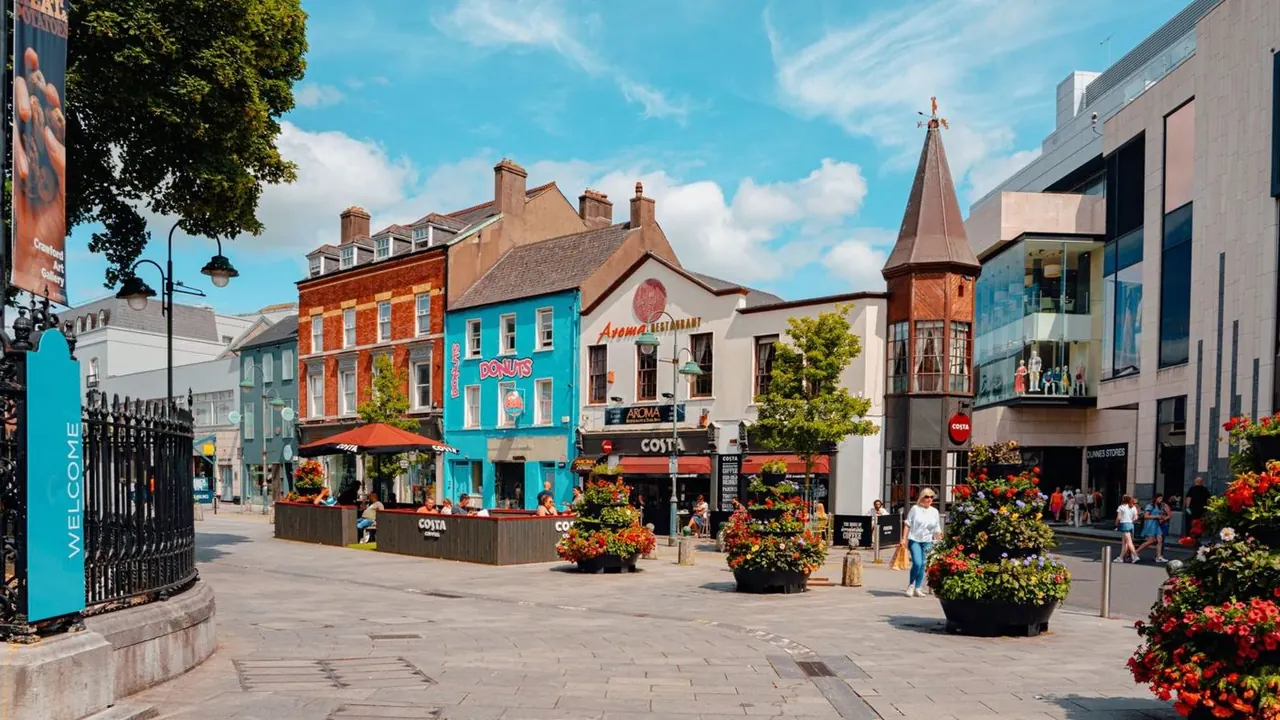
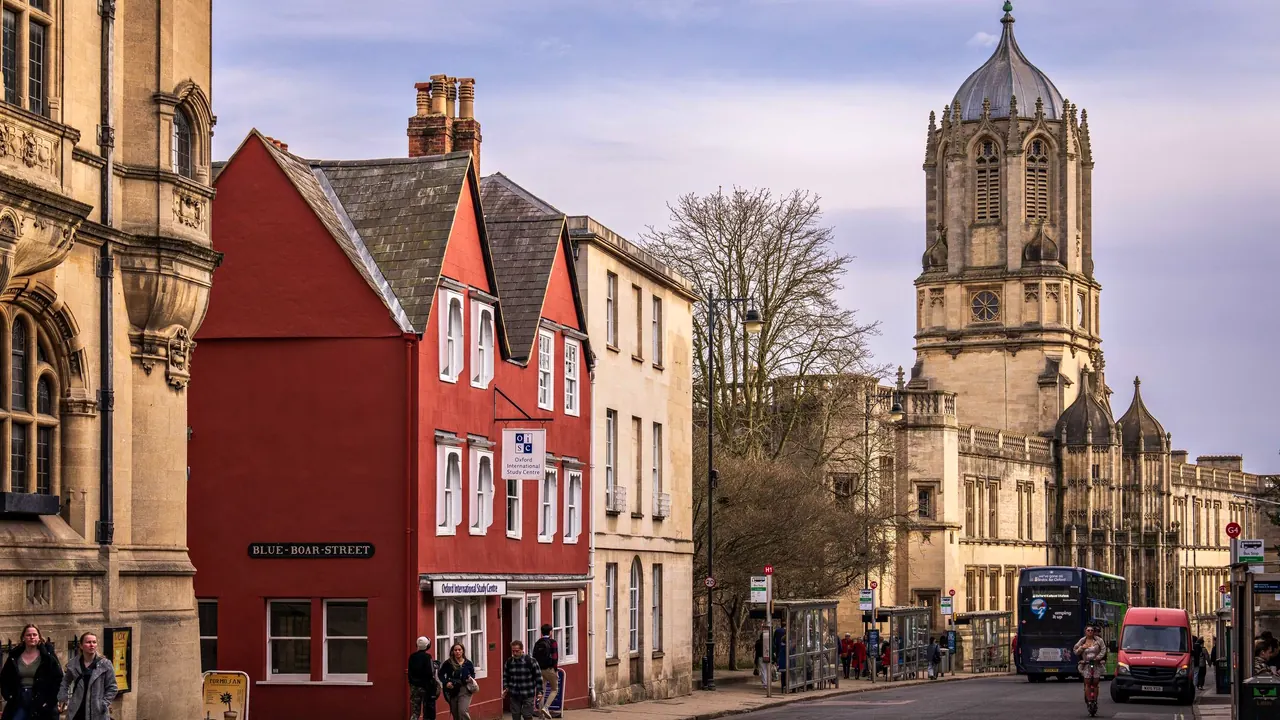
Photos: Cork by Selim Karadayı, Pexels License; Oxford by Mark Stebnicki, Pexels License.
Cork or Oxford?
Our verdict in twelve categories, each scored against the same fixed benchmark cities, and the climate month by month, so you can choose for your trip.
Choose Cork for
- food and drink
- beaches
- nature and the outdoors
Cork suits travellers who come for the coast and the produce. The English Market and the West Cork larder make eating here a reason to visit, and the harbour, the cliff walks at Ballycotton and the Old Head of Kinsale, and the inlets further west give more room outdoors. It is a pub-and-session city with a softer pace, and it rewards anyone happy to hire a car and wander the south of Ireland.
Choose Oxford for
- culture and sights
- day trips
- getting around
For a trip built on history, architecture and museums, Oxford is the better pick. The college quadrangles, the Bodleian and the Ashmolean fill several days, Evensong in a college chapel is a rare evening out, and the compact, pedestrian-friendly centre, with several streets closed to through traffic, makes it all easy on foot. It also makes a stronger base, with Blenheim, the Cotswolds, Bath and London all within reach for a day.
Scoreboard
Twelve categories on one fixed scale from 0 to 100. The shaded stretch is the gap between the two.
Your match
Pick a travel style or drag the sliders, and both match scores follow your weighting.
Wins on food and drink and beaches with your weighting.
Wins on culture and sights and day trips with your weighting.
What matters to you?
Category by category
What the scores mean for a trip.
Beaches & swimming
Neither city is a beach destination, but Cork at least has the sea. Sandy coves such as Myrtleville and Fountainstown are about half an hour away on the edge of the harbour, and Inchydoney's long strand is within an hour, although the Atlantic stays cold and a car helps.
Oxford is landlocked, and the south coast is too far for a casual outing. Swimming there means a summer dip in the Thames at Port Meadow, the Cherwell or the open-air pool at Hinksey, with grassy banks instead of sand.
Food & drink
Cork is the better city for food lovers, mainly because of its produce. The English Market is a real working larder of farmhouse cheeses, spiced beef and fish, the modern Irish kitchens around it buy from the same suppliers, and Kinsale's seafood is close by.
Oxford eats well without standing out. Its strengths are the old pub, the Sunday roast by the river and the Covered Market, and Cowley Road brings Middle Eastern, South Asian and Caribbean cooking that Cork's narrower range lacks. In both cities, late-night eating is limited.
Culture & sights
Oxford is far richer here. The honey-stone colleges, the Bodleian, the Sheldonian and Christ Church form a working medieval townscape, and the Ashmolean, Pitt Rivers and Natural History Museum are better collections than the city's size suggests. Expect two or three full days.
Cork's sights are pleasant but modest: St Fin Barre's Cathedral, the Shandon bells you can ring yourself, Irish painting at the Crawford and the old City Gaol. Its Georgian quays are charming, but a day or two covers everything.
Nightlife
Both cities are pub towns that quieten well before dawn, and the difference lies in the character of the night. In Cork, the draw is the traditional music session in a wood-panelled back room, with students keeping the centre busy from Thursday to Saturday.
Oxford follows the university calendar. In summer, the riverside pubs along the Thames are the place to be, Cowley Road has the late bars, and Jericho is the spot for a quieter cocktail. It is noticeably calmer outside term.
Nature & outdoors
Cork has the bigger landscapes. The harbour suits sailing and kayaking, the cliff paths at Ballycotton and the Old Head of Kinsale open onto the Atlantic, and the islands and inlets of West Cork, Gougane Barra and the Kerry mountains lie further out.
Oxford's countryside begins at the edge of the centre, with Port Meadow, Christ Church Meadow and flat river paths for walking or cycling. Within an hour lie the Cotswolds, the Chilterns and the Ridgeway. It is gentler walking than Cork offers, but drier underfoot.
Day trips
Both make good bases, but Oxford has more famous places within reach. Blenheim Palace is twenty minutes away, the Cotswold villages are within an hour, and London, Stratford, Warwick, Windsor and Bath all work as day outings, many of them by fast train.
Cork's excursions are smaller in scale but full of character. Cobh's Titanic and emigrant history is a short train ride away, and Kinsale, Blarney, the Midleton distillery and Youghal are all close. Killarney and the Rock of Cashel make longer days, and West Cork really needs a car.
Good for families
Both are small, friendly cities that are easy with children, with a few strong draws rather than a full programme. In Cork, the highlight is Fota Wildlife Park, where animals roam with few barriers, plus the observatory at Blackrock Castle. Rain means you need indoor fallbacks.
Oxford's appeal is free museums full of dinosaurs and curiosities, punting on the Cherwell, and Harry Potter settings at Christ Church. Its bigger family outings, such as the wildlife park, Blenheim's maze and the studio tour, all need a trip out of town.
Getting around
Oxford is easier to get around. Its centre is flat, partly closed to traffic and crossed on foot in twenty minutes, and the station is a short walk away with direct trains to London. A car is more trouble than help there.
Cork's island centre is also walkable, though the climb to Shandon is steep and the city buses crawl in traffic. The rail line to Fota, Cobh and Midleton is handy, but the West Cork coast more or less requires a car, which is the opposite of Oxford.
Shopping & style
Oxford gives shoppers more to do. Beyond the chains on Cornmarket, it has the Covered Market traders, Jericho's independents, antique map dealers and Blackwell's on Broad Street, and the designer outlet village near Bicester is twenty minutes away.
Cork is a couple of hours' browsing at most. Patrick Street has the department stores, and the Huguenot Quarter and Princes Street have the independents. Its best souvenirs are edible, cheese from the English Market, alongside Irish knitwear and whiskey.
Affordability
Neither is cheap, and the costs fall in different places. Cork's hotels are pricey for a small city, and eating and drinking cost more than in most of Western Europe, though market lunches help.
Oxford's main expense is accommodation, since there are few central rooms and university events keep demand high. Once you are there, free museums and Cowley Road cafés soften the bill, while college entry fees add up.
Live music & performing arts
Oxford has the more memorable stage, thanks to its choirs. Evensong at Christ Church, Magdalen or New College is a world-class experience open to anyone, and the Sheldonian and the historic Holywell Music Room add concerts and chamber music.
Cork's real stage is the pub session, where traditional musicians play most nights. The Opera House and the Everyman cover touring shows and drama, and the long-running October jazz festival fills the whole city with music for a weekend.
Wellness & relaxation
Oxford's way to unwind is quiet green space. Britain's oldest botanic garden, the walled college gardens, Magdalen's deer park and Addison's Walk are best early in the morning, and a slow afternoon on a punt does the same job. Spas are few, but the calm is easy to find.
Cork offers little beyond a hotel spa or the resort on Fota Island. Its one local ritual is bracing year-round sea swimming in the harbour coves, which wakes you up more than it calms you down.
When should you go?
Pick your month. The climate figures are measured averages, not a forecast.
Cork in July
Oxford in July
Daytime high, °C
Rainfall in the month, mm
Where the figures come from
Cork's station stands 153 m above the city centre, so the centre is likely a little warmer than the figures say.
Oxford's temperatures are measured 37 km from the centre, at Fairford Royal Air Force Base.
Oxford has no rain gauge within 25 km of the centre, so its rainfall comes from a gridded climate dataset read at the city rather than from a gauge further away.
Oxford's sunshine is measured 57 km from the centre, at Lyneham.
Temperature and rainfall are climate normals, averaged over the years shown. Cork: 1991-2020 normals, Cork Airport (5.6 km from centre). Oxford: 1961-1990 (sunshine 1991-2020, rainfall 1991-2020) normals, Fairford Royal Air Force Base (37 km from centre).
Cork has a mild, damp climate with no real extremes. Summer highs reach only about 19°C, and the sea peaks around 16°C in August and September, so swimming is for the hardy even at its warmest. Late spring and early summer are the brightest and driest stretch, and May and June are the best months for walking the coast. From October the rain sets in hard, with around 140mm in October and similar totals through the winter, though it rarely gets truly cold.
Oxford has warmer summers and colder winters. July highs reach about 22°C, and the long, sunny days from May to August are ideal for punting, riverside pubs and walks in the meadows. Winter days sit around 5°C, which is chilly for sightseeing between colleges. Oxford is far drier all year than Cork, with rain spread lightly across the months, so a showery day matters much less there.
Which traveller are you?
On a culture and arts trip, Oxford is the clear choice. The colleges, the Radcliffe Camera, the Ashmolean and the Pitt Rivers take days to see properly, and choral Evensong in a college chapel adds live music that Cork cannot match.
For an outdoors trip, Cork has more to offer. Harbour sailing and kayaking, the Atlantic cliff walks at Ballycotton and Kinsale, and the wilder West Cork coast beat Oxford's gentle meadows and towpaths, though you should pack waterproofs.
On a food and nightlife trip, Cork comes out ahead. The English Market, West Cork cheeses, smoked fish and Kinsale's seafood give it a stronger table, and its pubs offer traditional music sessions most nights to round off the evening.
Before you go
| Measure | Cork | Oxford |
|---|---|---|
| Official language | English, Irish | English |
| Currency | Euro (EUR) | Pound Sterling (GBP) |
| Sockets | G230 V, 50 Hz | G230 V, 50 Hz |
| Driving side | Left | Left |
| Time zone | UTC, UTC+1 in summer | UTC, UTC+1 in summer |
| Emergency number | 112 | 112 or 999 |
| Elevation | 0 m | 73 m |
| Main airport | Cork International Airport (ORK)7 km from centre47 non-stop destinations | London Heathrow Airport (LHR)63 km from centre224 non-stop destinations |
| Public holidays this year | 11 days | 8 days |
By the numbers
| Measure | Cork | Oxford |
|---|---|---|
| City population | 222,333 | 147,500 |
| People per km² | 5,961 | 3,235 |
| Museums within 10 km | 5 | 11 |
| UNESCO World Heritage sites within 50 km | 0 | 1 |
| Swim season, months above 21 °C | None | - |
Where else could you go?
Every comparison below shares a destination with this one, so you can follow Cork or Oxford somewhere new.