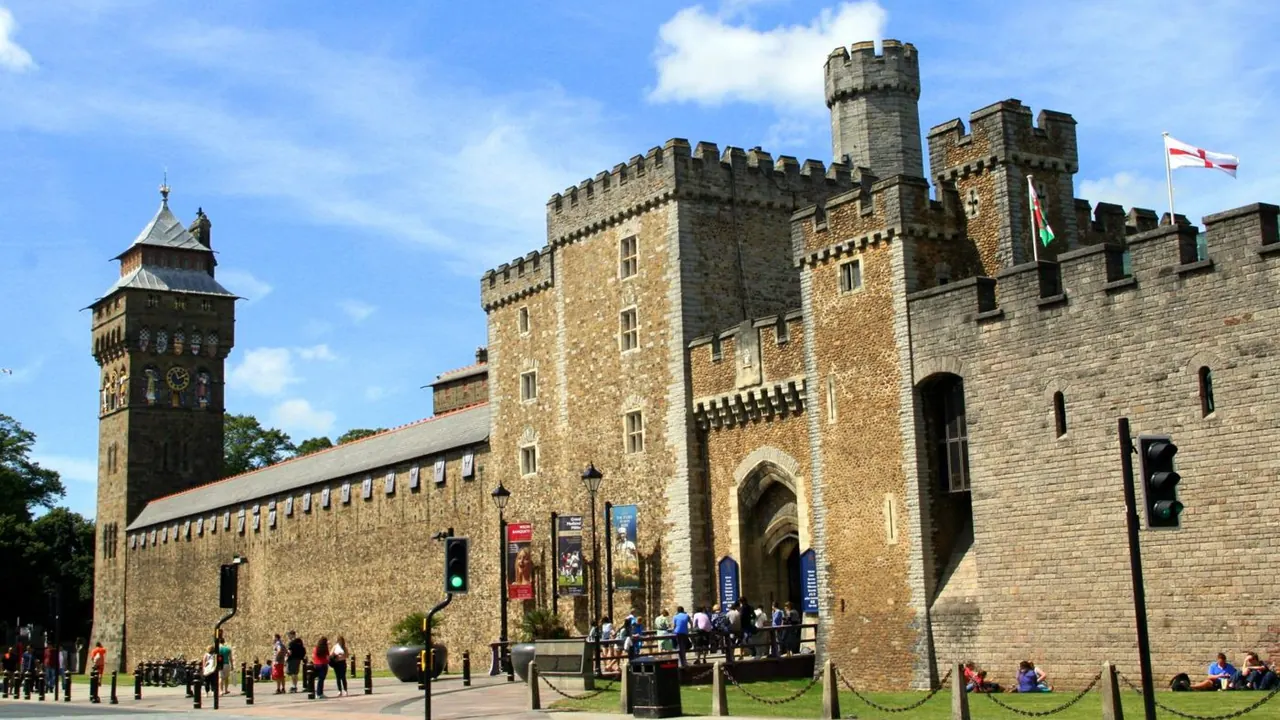
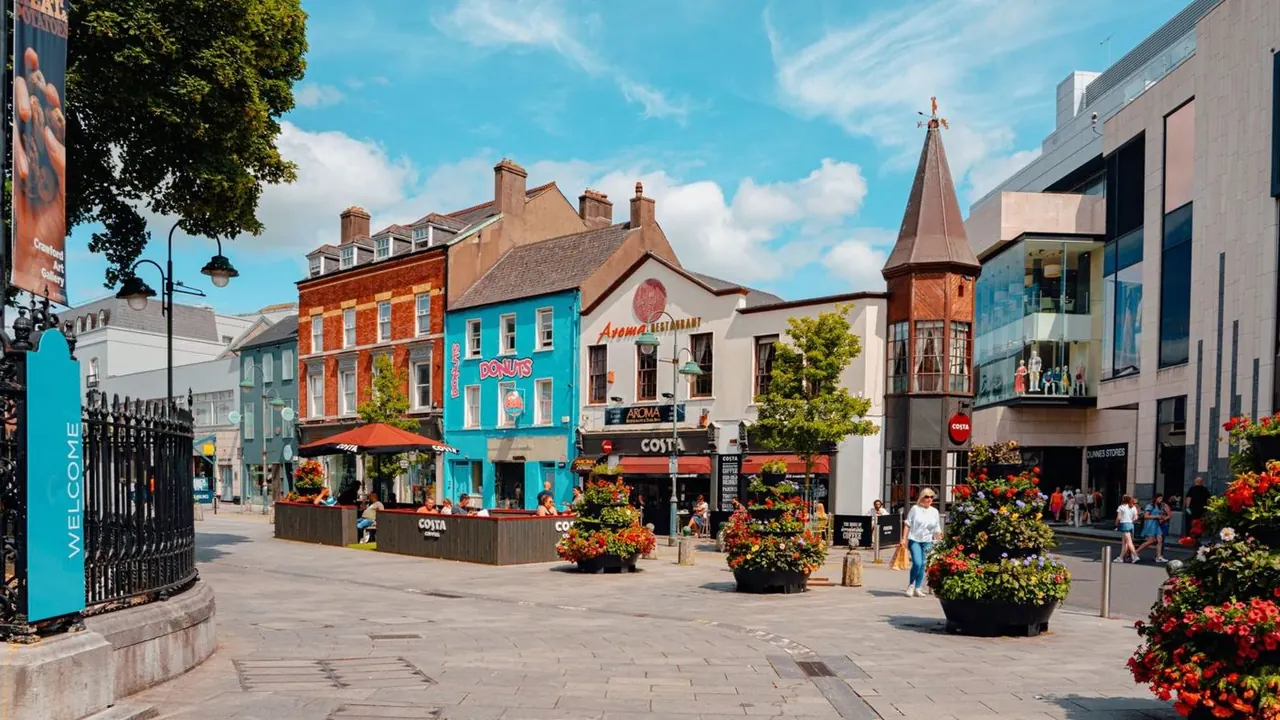
Photos: Cardiff by Tevfik Teker, CC BY 3.0, cropped; Cork by Selim Karadayı, Pexels License.
Cardiff or Cork?
Our verdict in twelve categories, each scored against the same fixed benchmark cities, and the climate month by month, so you can choose for your trip.
Choose Cardiff for
- culture and sights
- prices
- live music and the arts
Cardiff suits a traveller who wants plenty to do on foot: a castle in the middle of town, free national museums, an opera house on the waterfront and a Saturday night that runs late. It is also the cheaper and easier of the two to get around. Short train rides reach Caerphilly, the seaside and Bath, and the Brecon Beacons are close enough for a day's hike.
Choose Cork for
- food and drink
Choose Cork for a slower trip built around eating and the pub. The English Market and the West Cork produce behind it give better meals than Cardiff manages, and an evening of traditional music in a wood-panelled bar is the city's real draw. It needs a bigger budget, and a car if you want the coast at its best. In return you get Kinsale, Cobh and the cliff walks of the south coast.
Scoreboard
Twelve categories on one fixed scale from 0 to 100. The shaded stretch is the gap between the two.
Your match
Pick a travel style or drag the sliders, and both match scores follow your weighting.
Wins on culture and sights and prices with your weighting.
Wins on food and drink with your weighting.
What matters to you?
Category by category
What the scores mean for a trip.
Beaches & swimming
Neither city is a beach destination, and the sea at both stays cool enough that most people only paddle. Cardiff's advantage is that its beaches are easy to reach. Barry Island's sandy bay, promenade and funfair are a short train ride away, and Penarth's pebble shore and pier are closer still.
Cork's beaches are quieter and more natural, from the harbour coves at Myrtleville and Fountainstown to the long strand at Inchydoney, but you will want a car for them. The local habit of swimming in the sea all year round is the more interesting thing to see there.
Food & drink
Cork is the better place to eat. The English Market is a real working food hall selling West Cork farmhouse cheeses, smoked fish and spiced beef. The modern Irish kitchens around Oliver Plunkett Street buy from the same suppliers, and Kinsale's seafood is half an hour away.
Cardiff's food is pleasant but not a reason to go. You can get Welsh cakes from the griddle in Cardiff Market, cawl and laverbread, and eat at neighbourhood bistros in Pontcanna and Canton. City Road's long run of Middle Eastern and South Asian cooking gives Cardiff more variety than Cork's narrower range.
Culture & sights
Cardiff has more to see, and more of it has real weight. Cardiff Castle, the French Impressionists at the National Museum in the white stone civic centre, the open-air museum at St Fagans and Llandaff Cathedral fill a solid two or three days.
Cork's sights are smaller: St Fin Barre's Cathedral, the Shandon bells you can ring yourself, the Irish paintings at the Crawford and the City Gaol. Much of the pleasure lies in the Georgian quays and lanes of the river island, and a day or two is enough.
Nightlife
Cardiff has the bigger night out. St Mary Street fills with large groups at weekends, Womanby Street has small alternative bars and late venues, and rugby international days turn the whole centre red.
Cork's nights are built around the pub: wood-panelled bars off Patrick Street, trad music in back rooms, and a few late bars and small clubs from Thursday to Saturday. Pick Cork for a long chat over a pint, and Cardiff for something louder and later.
Nature & outdoors
Upland walking around Cardiff, sea and harbour around Cork: that is the real difference, and for most walkers Cardiff's is the stronger offer. The Taff Trail leaves Bute Park and follows the river into the valleys. An hour's drive brings you to the open moorland ridges of the Brecon Beacons and a half-day hike up Pen y Fan, the highest peak in southern Britain. The coast path past the cliffs at Penarth is a gentler option closer in.
Cork's outdoors is softer and centred on the water. You can sail or kayak in the harbour, walk the cliffs at Ballycotton or stand on the Old Head of Kinsale. The inlets and islands of West Cork lie further out, and the mountain lake at Gougane Barra and the Kerry hills are both a long day away.
Day trips
Both cities make good bases, and the difference lies in what you go out to see. From Cardiff the theme is castles and heritage: Caerphilly by train, Castell Coch in the woods, Tintern Abbey and the Big Pit mine at Blaenavon, with Bath and Bristol just across the Severn.
From Cork the trips lean towards harbour towns and Irish landmarks. There is Cobh with its Titanic and emigrant story, Kinsale and Charles Fort, Blarney and the Midleton distillery, and Killarney or the Rock of Cashel for a longer day.
Good for families
Cardiff is the easier city with children, mainly because it has more aimed at them. There is Techniquest at the Bay, the farm animals and craft demonstrations at St Fagans, rowing boats on the lake at Roath Park, and Barry Island's funfair in summer.
Cork has one strong draw that Cardiff lacks: Fota Wildlife Park, where animals roam open parkland a short train ride out. The observatory at Blackrock Castle is another. Beyond those you run out of family attractions sooner, and the heavier rain makes indoor plans more important.
Getting around
Both centres are walkable, but Cardiff's is flatter and more compact. The castle, market, arcades and Central station are minutes apart, and a shuttle train, bus or water taxi runs to the Bay. Local trains reach most day trips without a car.
Cork's island centre is compact too, but the north side climbs steeply to Shandon and the buses are slow in traffic. The rail line to Cobh and Midleton is the useful one, and you really need a car for West Cork.
Shopping & style
Neither city is a shopping destination, but Cardiff's Victorian and Edwardian arcades give it the edge. They have record shops, bookshops and vintage clothing under glass roofs, and there is a large mall near Queen Street as well. Cork has the chains on Patrick Street and a few independent shops off Princes Street and in the Huguenot Quarter. Its best souvenirs are cheese from the English Market, knitwear and whiskey.
Affordability
Cardiff is the cheaper of the two. Rooms are moderately priced except on stadium weekends, pubs charge ordinary British prices, and the free national museums and short train trips keep daily costs down.
Cork shares Ireland's high costs. Rooms are expensive for a city of its size, and eating and drinking cost more than in most of Western Europe. Lunch from the English Market and a walkable centre help, but your money does not go far here.
Live music & performing arts
In Cardiff the music mostly happens in proper venues, while in Cork it happens round a pub table, and Cardiff's stages give you a fuller programme. Welsh National Opera is based at the Wales Millennium Centre and the BBC National Orchestra of Wales is resident in the city. The music and drama college puts on frequent shows, and the small venues on Womanby Street have bands most nights.
Outside its festival weeks Cork has a thinner programme, and the Opera House and the Everyman mostly host touring productions. What it does best is the traditional session, held in pubs most nights, along with the jazz festival that has filled the city's halls at the end of October for decades.
Wellness & relaxation
Neither city has a bathing tradition, so in both, relaxing mostly means a hotel spa. In Cardiff that means the leisure pools of the Bay hotels, or slow mornings in Pontcanna's cafés and along the Taff. In Cork it means the resort spa on Fota Island or, if you are brave, joining the year-round cold-water swimmers in the harbour coves.
When should you go?
Pick your month. The climate figures are measured averages, not a forecast.
Cardiff in July
Cork in July
Daytime high, °C
Rainfall in the month, mm
Where the figures come from
Cardiff has no rain gauge within 25 km of the centre, so its rainfall comes from a gridded climate dataset read at the city rather than from a gauge further away.
Cardiff's sunshine is measured 83 km from the centre, at Lyneham.
Cork's station stands 153 m above the city centre, so the centre is likely a little warmer than the figures say.
Temperature and rainfall are climate normals, averaged over the years shown. Cardiff: 1991-2020 normals, Cardiff-Wales Airport (14.9 km from centre). Cork: 1991-2020 normals, Cork Airport (5.6 km from centre).
The two cities share a mild, damp climate with summer highs of around 20°C. The best walking weather in both runs from May to September, and winters are grey and cool rather than truly cold. The big difference is rain. Cardiff is noticeably drier most of the year, with about 132mm in its wettest month, and its summers are sunnier. That makes it the safer choice for a trip in spring or early autumn.
Cork is much wetter. October to January each bring around 125mm to 140mm of rain, so late autumn and winter there mean waterproofs most days, and late spring and summer are the kindest months. Neither city is a place to swim. The sea off Cardiff reaches about 18°C in August, a little warmer than Cork's Atlantic coves.
Which traveller are you?
On a culture and arts trip, Cardiff offers more: the Victorian Gothic rooms of Cardiff Castle, the Impressionists at the National Museum, St Fagans, and Welsh National Opera at the Wales Millennium Centre. Cork's Crawford Gallery and Opera House fill a day or two.
For a food and nightlife trip, Cork has the better table. There is the English Market, West Cork cheese and smoked fish, and Kinsale's seafood nearby, followed by a trad session in an old pub. Cardiff has the bigger, later night out, but its food is plainer.
On a tight budget, Cardiff is far easier. Stay away from match weekends and a few days of sightseeing cost little beyond the bed. In Cork the room and the evening pints take most of the money, and the best of the coast means hiring a car.
Before you go
| Measure | Cardiff | Cork |
|---|---|---|
| Official language | English | English, Irish |
| Currency | Pound Sterling (GBP) | Euro (EUR) |
| Sockets | G230 V, 50 Hz | G230 V, 50 Hz |
| Driving side | Left | Left |
| Time zone | UTC, UTC+1 in summer | UTC, UTC+1 in summer |
| Emergency number | 112 or 999 | 112 |
| Elevation | 41 m | 0 m |
| Main airport | Cardiff International Airport (CWL)15 km from centre30 non-stop destinations | Cork International Airport (ORK)7 km from centre47 non-stop destinations |
| Public holidays this year | 8 days | 11 days |
By the numbers
| Measure | Cardiff | Cork |
|---|---|---|
| City population | 383,536 | 222,333 |
| People per km² | 2,734 | 5,961 |
| Museums within 10 km | 9 | 5 |
| UNESCO World Heritage sites within 50 km | 1 | 0 |
| Swim season, months above 21 °C | None | None |
Where else could you go?
Every comparison below shares a destination with this one, so you can follow Cardiff or Cork somewhere new.