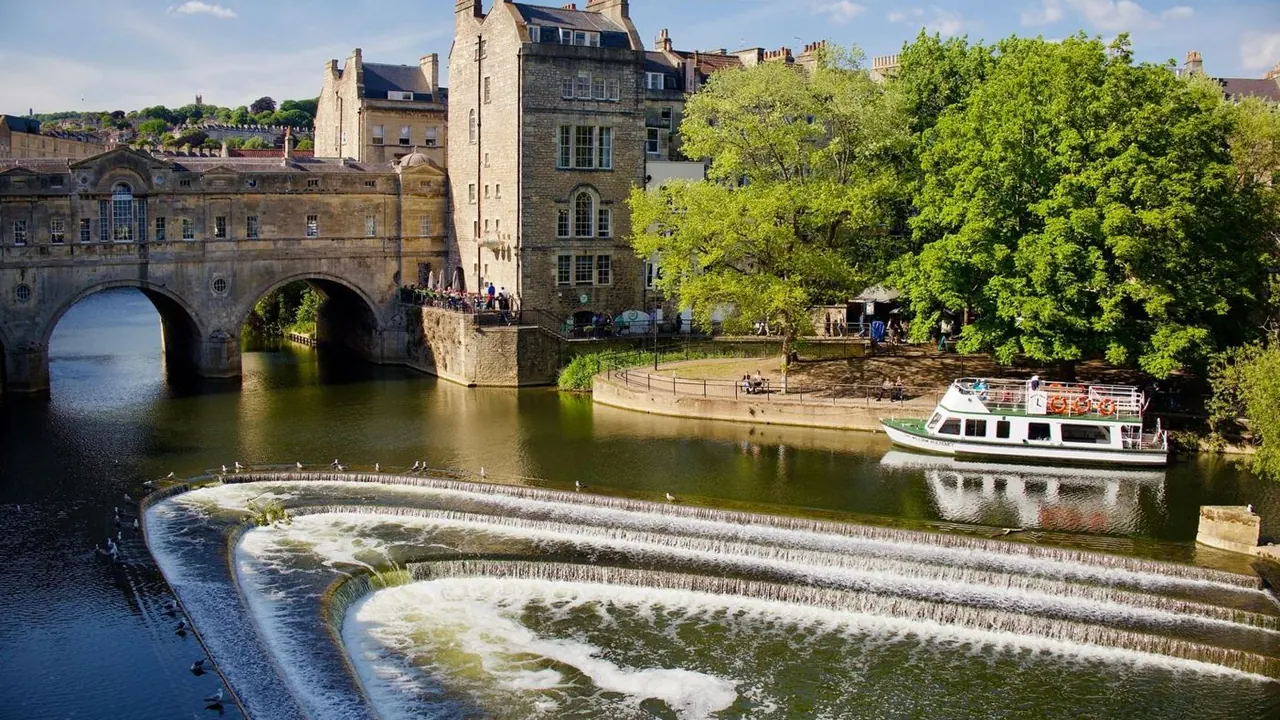
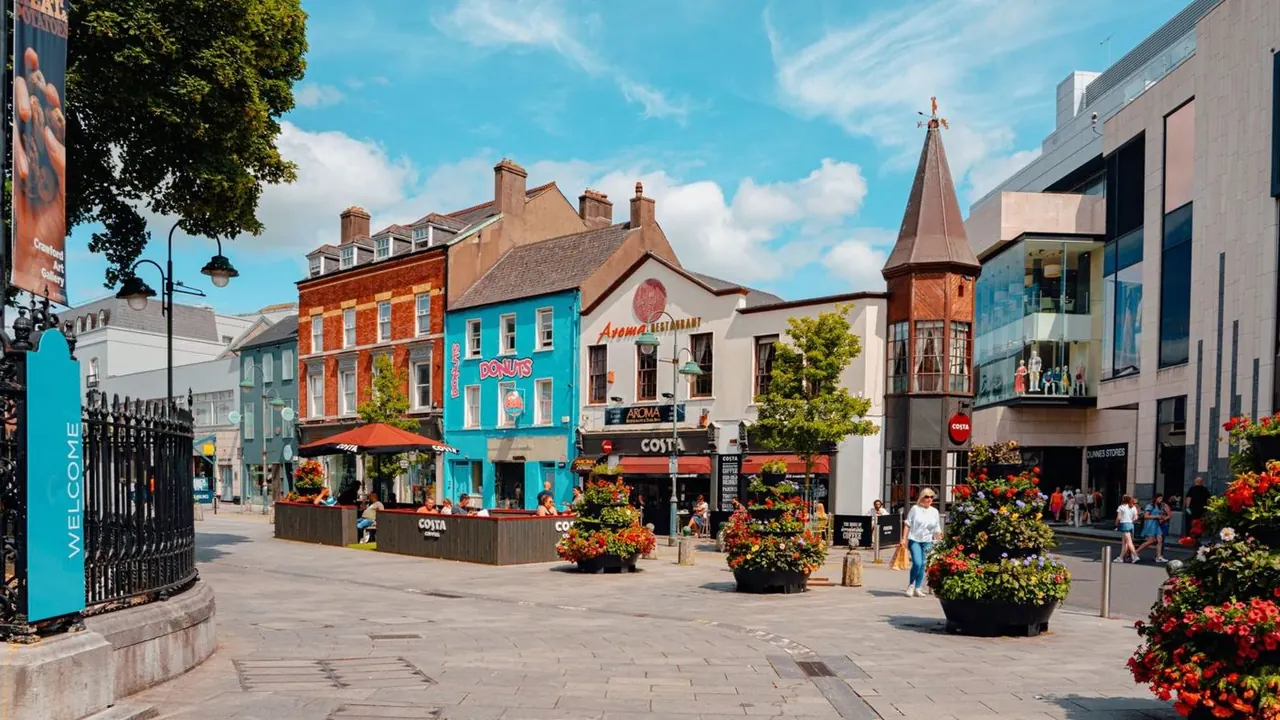
Photos: Bath by Lucas Carlini, Pexels License; Cork by Selim Karadayı, Pexels License.
Bath or Cork?
Our verdict in twelve categories, each scored against the same fixed benchmark cities, and the climate month by month, so you can choose for your trip.
Choose Bath for
- wellness
- culture and sights
- getting around
Bath suits a traveller who wants architecture and slow comfort in one compact package. The Georgian crescents, the Roman Baths and the only natural thermal bathing in Britain are all a short walk apart, and Stonehenge, Wells and the Cotswolds make easy days out. It is the better pick for a culture weekend, a couple's escape or a restful winter break.
Choose Cork for
- beaches
- food and drink
- nightlife
Choose Cork if the evenings matter more than the sightseeing. Its pubs, many with traditional music in a back room, and the produce of the English Market give it the edge for eating and drinking. The harbour, Kinsale and the West Cork coast also put the Atlantic on the doorstep in a way inland Bath cannot. It costs slightly less as well, though neither city is cheap.
Scoreboard
Twelve categories on one fixed scale from 0 to 100. The shaded stretch is the gap between the two.
Your match
Pick a travel style or drag the sliders, and both match scores follow your weighting.
Wins on wellness and culture and sights with your weighting.
Wins on beaches and food and drink with your weighting.
What matters to you?
Category by category
What the scores mean for a trip.
Beaches & swimming
Neither is a beach city, but Cork at least has sand within reach. Myrtleville and Fountainstown on the outer harbour are about half an hour's drive away, and the long strand at Inchydoney is within an hour. The Atlantic stays cool, so these suit hardy swimmers and sunny weekend outings.
Bath is inland. Its nearest seaside, Weston-super-Mare, has brown water and a tide that goes out a very long way. Summer dips in the Avon are the local alternative, and for clear water you face two hours or more to Dorset or Devon.
Food & drink
Cork takes food more seriously. The English Market, a Victorian hall of farmhouse cheeses, smoked fish, spiced beef and drisheen, sets the tone. The kitchens around it and off Oliver Plunkett Street cook with the same suppliers, and Kinsale's seafood is half an hour away.
Bath's strengths are gentler: gastropubs, bakeries, afternoon tea, its own Sally Lunn and Bath buns, Somerset cider and the farmers' market at Green Park station. Both run short on variety and on late eating, so neither suits someone hunting for cuisines from around the world.
Culture & sights
Here Bath is in another league. The whole city is a World Heritage Site. The Royal Crescent, the Circus, Pulteney Bridge and the Roman Baths with their museum are a short walk apart, and the Abbey, the Holburne and No. 1 Royal Crescent add more. It fills two or three days.
Cork's sights are pleasant but modest. You have St Fin Barre's Cathedral, the Shandon bells you can ring yourself, Irish painting at the Crawford and the City Gaol. They make a good day or two rather than a reason for the trip.
Nightlife
Both cities go out to the pub, but Cork's nights have more life. Its wood-panelled bars off Patrick Street and Oliver Plunkett Street often have traditional music in a back room, and students keep the centre busy from Thursday to Saturday.
Bath has fine coaching inns and real-ale houses on Walcot Street, but most weeknights wind down early. Neither city has big clubs. From Bath, the answer is Bristol, fifteen minutes away by train.
Nature & outdoors
Both offer soft, green country rather than wilderness, and the main difference is water. Bath's landscape is hills and canal. You can walk the Skyline loop above the city, follow the Kennet and Avon towpath or cycle the Two Tunnels Greenway, and the Cotswolds and Cheddar Gorge are within an hour.
Cork's landscape is the coast. You can sail and kayak in the harbour and walk the cliffs at Ballycotton and the Old Head of Kinsale, with West Cork and Killarney further out. Pack waterproofs for both, especially for Cork.
Day trips
Bath has the richer choice of days out. Stonehenge and Avebury are about an hour away, with Wells and Glastonbury just beyond. Bristol is fifteen minutes by train, and Lacock, Castle Combe, Salisbury and Stourhead are all within reach, though many are best by car or on a tour.
Cork has fine trips of its own: Cobh's Titanic and emigrant history, Kinsale and Charles Fort, Blarney and the Midleton distillery, several of them on the handy eastern rail line. Its bigger draws further out, Killarney and the Rock of Cashel, take longer to reach.
Good for families
Neither city is built around children, and families end up much the same in both: one or two strong outings and not a great deal more. In Bath that means the steaming Roman Baths and the playground in Royal Victoria Park, with Bristol's science centre and the Longleat safari park nearby. The steep streets are hard on pushchairs.
Cork's highlight is Fota Wildlife Park, a short train ride out, where animals roam with few barriers. Blackrock Castle's observatory is another good outing. Cork's frequent rain makes indoor back-up plans more necessary.
Getting around
Bath is the easier city to get around on foot. Its main sights and shops are within a twenty-minute walk, much of the centre is pedestrianised and the station sits at the bottom of town. Drivers can leave the car at the park-and-ride.
Cork's island centre is compact too, but slow city buses and the steep climb to Shandon make it a little less smooth. Its suburban rail line to Fota, Cobh and Midleton is genuinely useful. In both places the countryside is far easier with a car.
Shopping & style
Bath can fill a whole day of shopping, which Cork cannot. Milsom Street's Georgian shopfronts, the antiques on Bartlett Street, the makers and salvage dealers of Walcot Street, the little shops on Pulteney Bridge and the old Guildhall Market make for real browsing.
Cork has department stores on Patrick Street and some independents in the Huguenot Quarter. It is good for knitwear, whiskey and cheese to take home, but a couple of hours covers it.
Affordability
Both are expensive, and the gap is small. Cork is a little gentler: hotel rooms are costly for a city of its size and pub prices are high, but lunches from the market keep food costs down.
In Bath, central hotels and the entry to the spa and the Roman Baths push the bill higher, especially on summer weekends. Staying midweek, or sleeping in Bristol, makes the biggest difference.
Live music & performing arts
The two are evenly matched, but the stage looks different. Bath's centre is the gilded Georgian Theatre Royal, with touring drama, opera, dance and pantomime. Concerts in the Abbey and festivals of literature, music and Mozart add to it.
Cork's real stage is the pub session, with traditional musicians playing most nights. The Opera House and the Everyman add theatre, and the long-running jazz festival fills the city at the end of October.
Wellness & relaxation
This is the widest gap between them. Bath grew up around hot springs that rise at about 46°C. You can soak in the open-air rooftop pool with the Abbey in view, or more quietly in the Georgian Cross Bath, and then take tea in the Pump Room.
Cork has no bathing tradition at all. Relaxing there means a hotel or resort spa, such as the one on Fota Island, or joining the locals for a bracing swim in the harbour coves at any time of year.
When should you go?
Pick your month. The climate figures are measured averages, not a forecast.
Bath in July
Cork in July
Daytime high, °C
Rainfall in the month, mm
Where the figures come from
Bath's temperatures are measured 29 km from the centre, at Lyneham.
Bath has no rain gauge within 25 km of the centre, so its rainfall comes from a gridded climate dataset read at the city rather than from a gauge further away.
Cork's station stands 153 m above the city centre, so the centre is likely a little warmer than the figures say.
Temperature and rainfall are climate normals, averaged over the years shown. Bath: 1991-2020 normals, Lyneham (29.2 km from centre). Cork: 1991-2020 normals, Cork Airport (5.6 km from centre).
Both cities are at their best from May to September, and neither ever gets too hot for walking the streets. Bath is a little warmer and noticeably sunnier in summer, reaching about 21°C in July and August, and it gets more sunshine than Cork in every month from March to October. Cork peaks a couple of degrees lower and is much wetter all year, most of all in autumn and winter. October brings 140mm there against 87mm in Bath.
Neither has the climate for a beach trip. In late summer the sea reaches about 18°C in the Bristol Channel and 16°C off Cork, cool either way. In winter Cork is a degree or two milder but grey and wet. Bath's cold, dark months are the time for an evening soak in the rooftop thermal pool.
Which traveller are you?
For a relaxing and wellness trip, Bath is the clear choice. It is the one place in Britain where you can bathe in natural hot spring water in the heart of the city, and its gardens and tearooms set a slow pace. Cork offers only hotel spas and cold harbour swims.
On a culture and arts trip, Bath gives you far more to see: a whole Georgian city on the UNESCO list, the Roman Baths, the Abbey and a run of small museums, with Stonehenge and Wells close by. Cork's cathedral, gaol and gallery fill a day or two.
For a food and nightlife trip, Cork has the edge. You get West Cork cheeses and smoked fish at the English Market, local stout and pubs with traditional sessions most nights, so evenings have more life than in Bath, where weeknights end early.
Before you go
| Measure | Bath | Cork |
|---|---|---|
| Official language | English | English, Irish |
| Currency | Pound Sterling (GBP) | Euro (EUR) |
| Sockets | G230 V, 50 Hz | G230 V, 50 Hz |
| Driving side | Left | Left |
| Time zone | UTC, UTC+1 in summer | UTC, UTC+1 in summer |
| Emergency number | 112 or 999 | 112 |
| Elevation | 132 m | 0 m |
| Main airport | Bristol Airport (BRS)25 km from centre117 non-stop destinations | Cork International Airport (ORK)7 km from centre47 non-stop destinations |
| Public holidays this year | 8 days | 11 days |
By the numbers
| Measure | Bath | Cork |
|---|---|---|
| City population | 94,092 | 222,333 |
| People per km² | 3,245 | 5,961 |
| Museums within 10 km | 17 | 5 |
| UNESCO World Heritage sites within 50 km | 2 | 0 |
| Swim season, months above 21 °C | None | None |
Where else could you go?
Every comparison below shares a destination with this one, so you can follow Bath or Cork somewhere new.