Ireland
Limerick
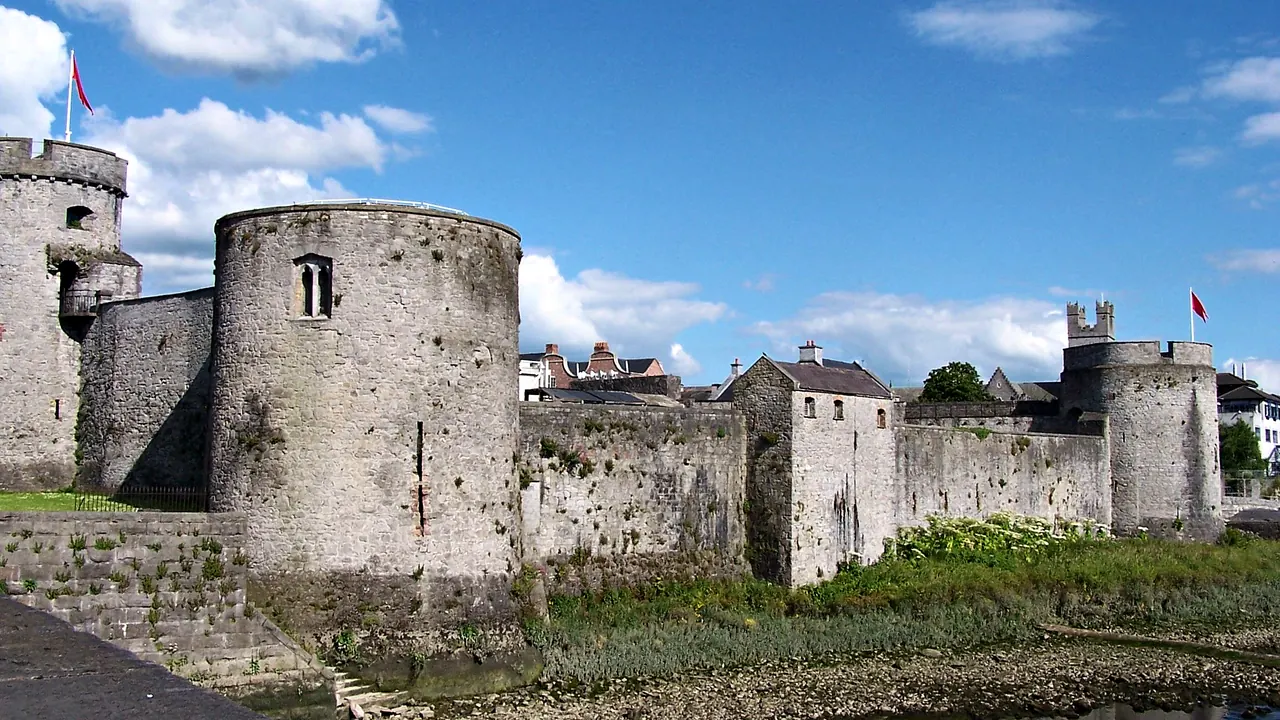
King John's Castle under a blue sky
- Day trips64
- Nature & outdoors62
- Getting around52
Photo: ingawh, CC BY-SA 3.0, cropped
Match
40
Every category weighted equally
- Beach & sun36
- Culture & arts42
- Food & nightlife39
- Family trip40
- Outdoors44
- Relax & unwind37
- Shopping & style39
- On a budget40
Limerick in twelve categories
Our verdict on each, scored 0 to 100 against the same fixed benchmark cities, so a score means the same thing on every page.
Beaches & swimming. Scores 14 out of 100.
Food & drink. Scores 38 out of 100.
Culture & sights. Scores 38 out of 100.
Nightlife. Scores 40 out of 100.
Nature & outdoors. Scores 62 out of 100.
Day trips. Scores 64 out of 100.
Good for families. Scores 40 out of 100.
Getting around. Scores 52 out of 100.
Shopping & style. Scores 32 out of 100.
Affordability. Scores 38 out of 100.
Live music & performing arts. Scores 40 out of 100.
Wellness & relaxation. Scores 20 out of 100.
Limerick category by category
Beaches & swimming
14Limerick is a river city, not a seaside one. The Shannon runs broad and tidal through the centre, and nobody swims in it. The nearest sandy beaches are on the Atlantic coast of Clare and north Kerry, with Kilkee, Lahinch and Ballybunion each about an hour or a little more by car.
Those beaches are handsome, with wide sand and big surf, but the water rarely gets past 16°C even in August, and the weather is changeable. Hardy sea swimmers and surfers will enjoy them in wetsuits; anyone planning a vacation around warm water and lying on the sand should look elsewhere.
Food & drink
38Eating in Limerick is honest rather than exciting. The best of it comes from the surrounding farmland: Munster beef and lamb, dairy and cheese, smoked fish and the city's own long tradition of cured ham. The Milk Market, a covered market in the old Victorian market yard, is the place to see it, liveliest at the weekend with producers, bakers and hot-food stalls.
Around the centre and the Georgian streets there are a few ambitious modern Irish restaurants, comfortable gastropubs and plenty of cafés, plus the usual international takeaways that feed a student city. Pubs pour a good pint of stout. What it lacks is range and a distinctive local cuisine, so a short stay eats well but rarely memorably.
Culture & sights
38Limerick's sights cluster on King's Island, the old medieval core, where King John's Castle stands on the Shannon with its thirteenth-century walls and well-made visitor centre. Nearby, St Mary's Cathedral, founded in 1168, is the oldest building in the city still in daily use, and the Treaty Stone across Thomond Bridge marks the siege that ended in 1691.
The Hunt Museum, in the eighteenth-century Custom House, holds a fine private collection of medieval and antique objects, and the City Gallery of Art covers Irish painting. Newtown Pery, the Georgian Quarter, has orderly brick terraces and the People's Park. A day or two covers it comfortably; this is a pleasant historic city rather than a destination for sightseeing.
Nightlife
40Going out in Limerick means pubs first. The city centre, especially around O'Connell Street, Thomas Street and the lanes near the river, has a good spread of traditional bars with snugs and open fires, along with louder late bars and a small number of nightclubs that stay open into the early hours at weekends.
The city has three higher-education institutions: the University of Limerick, the Technological University of the Shannon and Mary Immaculate College. Their students make weeknights in term busier than you might expect, and a Munster rugby match at Thomond Park fills the pubs. The rest of the time it is a regional city's night out: friendly and good for a few pints and conversation, but not somewhere people travel to party.
Nature & outdoors
62Within the city the outdoors is the Shannon itself: riverside walks along the quays and out towards the University of Limerick campus, and a few kilometres of greenway along the old canal. The real landscapes start a short drive away. Lough Derg, the largest lake on the river, is under an hour north, good for kayaking, sailing and lakeside walking around Killaloe.
To the south-east the Galtee Mountains and the Ballyhoura forest trails offer proper hill walking and mountain biking, while the Clare Glens are a quick escape. About an hour and a quarter away lie the Burren's limestone pavements and the Cliffs of Moher, among Ireland's great coastal scenery. Expect soft light, green fields, frequent rain and wind, and the need for a car.
Day trips
64Limerick is a well-placed base for the west and south of Ireland. Bunratty Castle and its folk park are about twenty minutes away, and Adare, with its thatched cottages, medieval friaries and manor, is a similar distance south. Lough Gur, with its stone circle and prehistoric sites, makes a short outing, and Ennis is a lively market town half an hour north.
Further out, the Rock of Cashel, one of Ireland's great medieval sites, is about an hour by car. Galway and Cork are each roughly an hour and a half, and Kilkenny is reachable within two hours. Killarney is at the far edge of the range. Trains run to some of these, but most visitors drive or join coach tours.
Good for families
40Limerick is easy and unthreatening with children, but it has little made specifically for them. King John's Castle is the best bet in town, with its siege displays, costumed history and battlements to climb. A short drive away, Bunratty Folk Park recreates a nineteenth-century village with farm animals and old cottages to explore, and Lough Gur has gentle walks among ancient sites.
The People's Park has a playground, and the riverside paths suit buggies. There is no zoo, aquarium or theme park nearby, and rain often decides the day, so families tend to use the city for a night or two while touring the region.
Getting around
52The centre of Limerick is compact and flat, and the main sights, from King John's Castle down through the shopping streets to the Georgian Quarter, can all be walked in well under half an hour. City buses link the centre with the university and suburbs, and the railway station is central, with trains to Dublin, Ennis and Galway.
Beyond that, public transport thins out. Rural buses to towns and sights in Clare, Limerick and Tipperary run infrequently, so most visitors who want to see the region hire a car, ideally collected at Shannon Airport, about twenty-five minutes away.
Shopping & style
32Shopping in Limerick is mostly practical. O'Connell Street and the pedestrianised streets around it carry the usual Irish and British high-street names, with a large suburban shopping centre on the edge of the city. A few independent boutiques, bookshops and craft shops are scattered through the centre.
The Milk Market is the most characterful stop, with local food, crafts and secondhand stalls. Limerick lace has a long history, though finding it to buy takes some effort. For Irish woollens, design and crafts, most visitors find more choice in larger cities or the craft shops of Clare and Kerry.
Affordability
38Limerick is a mid-priced city in an expensive country. Hotel rooms are reasonably priced for Western Europe, though they cost more in high summer and on big rugby weekends. Eating out, a round of drinks and car hire are all expensive compared with most of continental Europe, and they add up quickly.
The main sights are modestly priced and the centre is easy to walk, so a stay in town itself costs little to get around. For many visitors the biggest cost is the car they need to explore the surrounding region.
Live music & performing arts
40For a small city, Limerick has a decent year-round programme. The Irish Chamber Orchestra is based at the University of Limerick, and the University Concert Hall hosts classical concerts, touring shows and Irish music. In the city, the Lime Tree Theatre and the Belltable stage drama, comedy and dance.
Traditional Irish music is the most rewarding thing to seek out: several pubs host regular sessions, and the university's strong Irish music and dance programme feeds the scene. There are also a couple of established venues for touring bands. Opera and large-scale theatre mean a trip to Dublin.
Wellness & relaxation
20Limerick has no bathing culture of its own, and relaxation in the city means a hotel spa or a slow afternoon by the river. The pace is unhurried, but it is a working regional city rather than a retreat.
The better options lie outside. Country-house hotels around Adare and Lough Derg have proper spas, and the Atlantic coast keeps up the old Irish tradition of hot seaweed baths, found in seaside towns about an hour or so away. Anyone wanting a restorative vacation would build it around those rather than the city.
When should you go?
Pick a month to see what it is like. The climate figures are measured averages, not a forecast.
Limerick in July
Daytime high, °C
Rainfall in the month, mm
The whole year
Shaded against this city’s own year: the deepest cell is its best month for that figure and the palest its weakest.
Temperature and rainfall are climate normals, averaged over the years shown. Limerick: 1991-2020 normals, Shannon Airport (20.1 km from centre).
Before you go
| Measure | Limerick |
|---|---|
| Official language | English, Irish |
| Currency | Euro (EUR) |
| Sockets | G230 V, 50 Hz |
| Driving side | Left |
| Time zone | UTC, UTC+1 in summer |
| Emergency number | 112 |
| Elevation | 10 m |
| Main airport | Shannon Airport (SNN)21 km from centre39 non-stop destinations |
| Public holidays this year | 11 days |
By the numbers
| Measure | Limerick |
|---|---|
| City population | 62,702 |
| People per km² | 3,015 |
| Museums within 10 km | 6 |
| UNESCO World Heritage sites within 50 km | 0 |
Compare Limerick with
Every comparison with a written verdict behind it.